


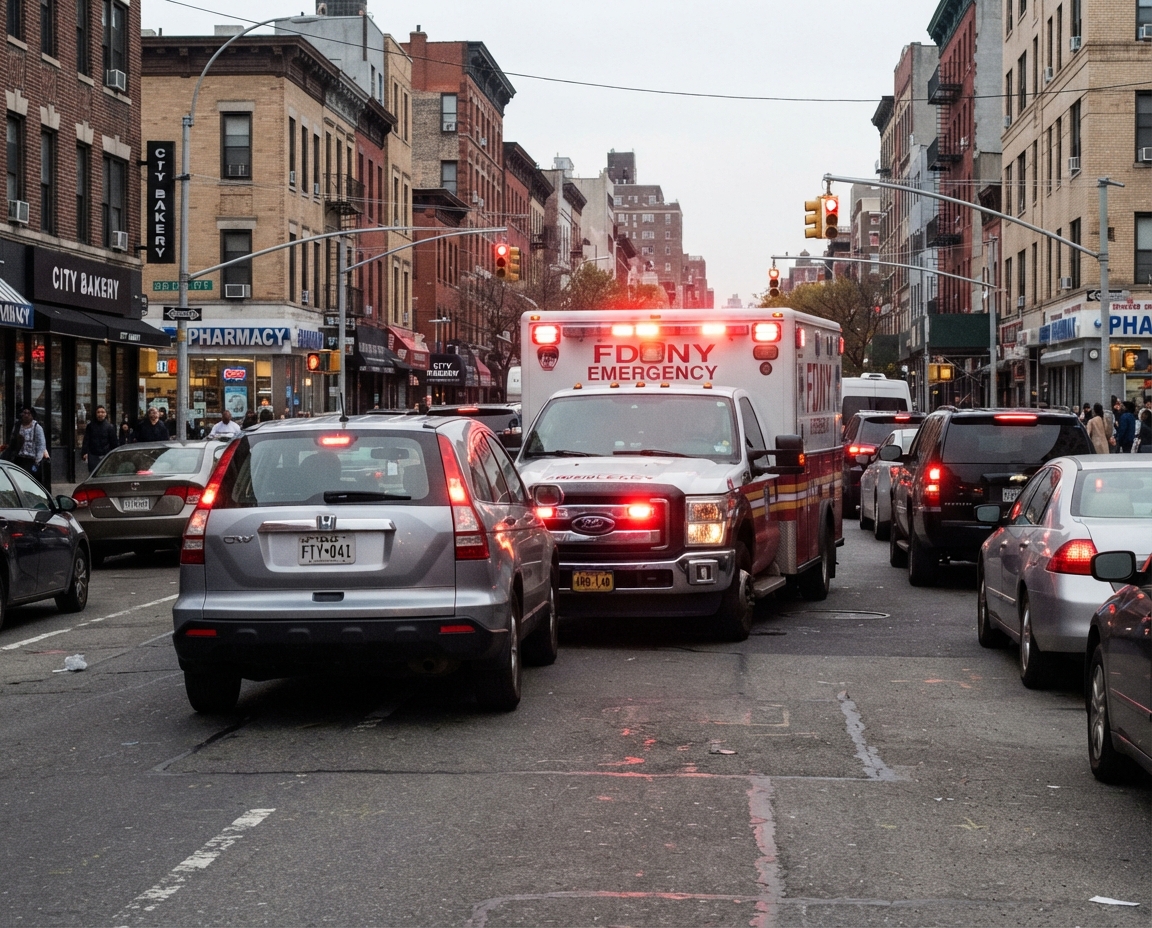
Failure to Yield to an Emergency Vehicle in California is governed primarily by California Vehicle Code § 21806, which requires drivers to yield to an authorized emergency vehicle approaching with its siren sounding and a qualifying red warning light visible from the front. Drivers generally must move to the right-hand edge of the road, clear any intersection, and stop until the emergency vehicle passes, unless a traffic officer directs otherwise.
Violating this law can result in a traffic citation and financial penalties. Understanding California’s emergency vehicle laws can help drivers respond safely, avoid preventable traffic violations, and understand their options if they receive a citation.
What Is California Vehicle Code § 21806?
California Vehicle Code § 21806 establishes duties for drivers, streetcar operators, and pedestrians when an authorized emergency vehicle approaches under specified warning conditions.
The law is intended to help emergency responders move through traffic when responding to urgent situations. Delays can interfere with emergency medical care, firefighting, law enforcement, and other public safety activities.
Under § 21806, the general rule applies when an authorized emergency vehicle immediately approaches while sounding a siren and displaying at least one illuminated red light visible from the front under normal atmospheric conditions from a distance of 1,000 feet.
Unless a traffic officer directs otherwise, drivers generally must:
- Yield the right-of-way to the approaching emergency vehicle.
- Immediately move to the right-hand edge or curb of the road.
- Clear any intersection before stopping.
- Stop and remain stopped until the emergency vehicle has passed.
The statute also addresses certain situations involving exclusive or preferential-use lanes. Drivers using a covered lane must exit it immediately when they determine that doing so can be accomplished with reasonable safety.
These requirements help emergency vehicles proceed through traffic while reducing the risk of collisions and other hazards.
When Must You Yield to an Emergency Vehicle in California?
You generally must yield when an authorized emergency vehicle approaches with the siren and qualifying red warning light described in Vehicle Code § 21806.
The warning conditions matter because not every vehicle displaying flashing lights necessarily presents the same legal situation under this statute. The vehicle’s authorization, warning signals, and circumstances of the approach can all be relevant.
Which emergency vehicles are covered by the law?
Common examples include authorized emergency vehicles operated by:
- Police departments.
- Fire departments.
- Emergency medical services.
- Other agencies or organizations whose vehicles qualify as authorized emergency vehicles under California law.
A vehicle’s appearance alone does not establish whether every statutory requirement has been met. The circumstances surrounding an alleged violation may need to be evaluated individually.
Do emergency vehicles need both a siren and red lights?
Section 21806 specifies an approaching authorized emergency vehicle that is sounding a siren and displaying at least one illuminated red light visible from the front under normal atmospheric conditions from 1,000 feet.
Both warning conditions are part of the statute’s general rule. However, drivers should not assume that an emergency vehicle without an audible siren can always be ignored. Other traffic laws, an officer’s instructions, and the circumstances may still require caution or a different response.
Example: A driver hears a siren and sees a fire engine approaching from behind with red lights flashing. The driver should check surrounding traffic, move right when safe, clear any intersection, and stop. Continuing to drive in a way that prevents the fire engine from passing may result in a citation if the applicable legal requirements are met.
How Should You Pull Over for an Emergency Vehicle?
California drivers should yield the right-of-way, move toward the right-hand edge of the road, clear intersections, and stop as required by law.
The goal is to provide a clear path without creating another traffic hazard. An abrupt or poorly timed maneuver can endanger other motorists, cyclists, pedestrians, and passengers.
When an emergency vehicle approaches, follow these steps:
- Stay calm and assess the situation. Determine where the emergency vehicle is approaching from and observe the traffic around you.
- Check your mirrors and blind spots. Look for nearby vehicles, cyclists, pedestrians, and obstructions.
- Signal when appropriate. Communicate your intended movement to surrounding drivers.
- Move toward the right-hand edge or curb. Make room for the emergency vehicle to pass.
- Clear the intersection. If you are already in an intersection, proceed as necessary to clear it before pulling right and stopping.
- Remain stopped until the emergency vehicle passes. Resume driving only when it is safe and lawful to do so.
What if you are already in an intersection?
Clear the intersection before stopping rather than stopping in the middle of it. Section 21806 requires drivers to move to the right-hand edge or curb, clear of any intersection, and then stop.
For example, imagine you are proceeding through an intersection when you hear an ambulance approaching from behind. Stopping in the middle of the intersection could obstruct cross traffic and prevent the ambulance from passing. You should clear the intersection as necessary, then move right and stop when safe.
The appropriate maneuver depends on the traffic conditions. Avoid sudden movements that could cause a collision.
What if traffic prevents you from pulling over?
Heavy congestion, road construction, a narrow roadway, or a vehicle occupying the space beside you may make it difficult to move right immediately.
Avoid an abrupt maneuver that creates another danger. Assess the available space, move toward a safe position that provides room when possible, and follow directions from traffic officers.
The specific circumstances may be relevant when determining whether your actions complied with the law. A difficult traffic situation does not automatically excuse a violation, but the actual conditions may matter when evaluating the incident.
What Is the Penalty for Failure to Yield to an Emergency Vehicle in California?
A violation of Vehicle Code § 21806 can result in a traffic citation and financial penalties. The amount owed depends on the applicable court bail and penalty schedule, assessments, and other charges authorized by law.
Drivers should not assume that every California court will charge an identical total amount. The citation and the court’s current schedule are the appropriate starting points for determining the amount due.
How much is a failure-to-yield ticket?
The total cost may include:
- A base fine or bail amount.
- Applicable state and local penalty assessments.
- Court-related fees or other authorized charges.
Penalty schedules can change. An amount quoted for a different county or year may not apply to your case. Check the court notice and the applicable schedule before relying on a specific dollar figure.
Can the violation affect your driving record?
A conviction may have consequences for your California driving record. The applicable point classification and reporting requirements should be confirmed for the specific offense.
Accumulating points from reportable traffic violations can lead to negligent-operator consequences, potentially including probation or suspension of driving privileges.
Some drivers may qualify for traffic violator school, which can keep an eligible point from being disclosed to insurers. Eligibility depends on applicable rules and the circumstances of the case. Commercial driver and commercial-vehicle rules may differ.
Insurance consequences are not identical for every driver. They may depend on the driving record, the outcome of the case, traffic-school eligibility, and the insurer’s practices.
Can You Fight a Failure-to-Yield Ticket in California?
Yes. A driver who receives a citation under Vehicle Code § 21806 can review the allegation, examine the available evidence, and use the court procedures available for the case.
Whether contesting a citation is appropriate depends on the facts, the applicable law, and the evidence. Receiving a ticket does not prevent a driver from examining whether the alleged conduct meets the legal requirements of the offense.
What issues may matter when contesting the citation?
Depending on the circumstances, relevant questions may include:
- Were the required warning signals present? Section 21806 specifies a sounding siren and a qualifying visible red light.
- Was the emergency vehicle approaching immediately? The timing and positions of the vehicles may be relevant.
- What were the surrounding traffic conditions? Congestion, construction, road layout, and nearby vehicles may help explain the driver’s actions.
- Was the vehicle already clearing an intersection? The driver’s position and movements may help explain why the vehicle did not stop immediately.
- Did a traffic officer give different directions? The statute recognizes directions from a traffic officer.
- What does the available evidence show? Witness accounts, video footage, and the officer’s observations may be relevant.
These are potential issues to examine, not guaranteed defenses. For example, the absence of a siren may be relevant to the requirements of § 21806, but it does not automatically eliminate every other applicable traffic obligation.
Likewise, limited space or heavy traffic does not automatically invalidate a citation. The facts must be considered in light of the applicable legal requirements.
What evidence should you preserve?
If you intend to contest a citation, organize any information that may help establish what happened.
- Keep the citation and all court notices.
- Write down your recollection of the incident while the details are fresh.
- Identify potential witnesses and preserve their contact information.
- Save relevant dashcam footage or other recordings.
- Note road conditions, traffic congestion, construction, and nearby intersections.
- Review the citation for the alleged code section, response deadline, and available court procedures.
Preserve relevant evidence promptly because recordings may be overwritten or deleted. Keep original files where possible and avoid altering the material.
What Should You Do After Receiving a Vehicle Code § 21806 Citation?
Start by reviewing the citation and identifying the court responsible for the case. The notice should explain the response deadline, amount due, and available options.
Depending on the court and the circumstances, options may include paying the amount due, requesting a court trial, or using another authorized procedure to contest the allegation.
Should you simply pay the ticket?
Paying a traffic ticket generally resolves the case through payment or forfeiture of bail rather than a contested determination of the allegation. Before choosing that option, understand the possible effects on your driving record and whether other procedures may be available.
If you want to contest the citation, review the court’s instructions and comply with the applicable deadlines. Some cases may qualify for a trial by written declaration, while other procedures depend on the court and the type of case.
What happens if you ignore the ticket?
Ignoring a traffic citation can create additional problems. Depending on the circumstances, the court may impose further financial consequences or take action for failure to respond.
If you cannot afford the amount due, ask the court about available options. Depending on eligibility and court procedures, these may include payment plans, additional time to pay, or other forms of relief.
If you have missed a deadline, contact the court listed on the citation promptly and ask about the status of the case and the procedures available to address it.
How Is Vehicle Code § 21806 Different From California’s Move Over Law?
Vehicle Code § 21806 and Vehicle Code § 21809 address different situations involving emergency and other covered vehicles.
Section 21806 generally applies when an authorized emergency vehicle approaches with the specified warning signals. Section 21809 addresses how drivers must approach and pass certain stationary emergency vehicles and other covered roadside vehicles displaying qualifying warning lights or devices.
| Issue | Vehicle Code § 21806 | Vehicle Code § 21809 |
|---|---|---|
| Typical situation | An authorized emergency vehicle is approaching | A covered vehicle is stopped on or beside the highway |
| Main requirement | Yield, move right, clear intersections, and stop | Exercise due caution and comply with applicable move-over or slow-down requirements |
| Primary safety goal | Clear a path for an approaching emergency response | Protect people and vehicles at roadside incidents |
California’s move-over requirements may call for changing lanes when reasonably safe or slowing down as required by law. Drivers should not assume that their safety obligations end once a moving emergency vehicle has passed.
Understanding the distinction between these laws can help drivers respond appropriately to moving emergency vehicles and vehicles stopped at roadside incidents.
Does an Emergency Vehicle Have Unlimited Right-of-Way in California?
No. Emergency vehicles receive specific privileges under California law, but those privileges do not eliminate every safety obligation.
California Vehicle Code § 21807 provides that § 21806 does not relieve the driver of an authorized emergency vehicle from the duty to drive with due regard for the safety of all persons and property.
This means that the law places responsibilities on both emergency responders and other road users.
For example, an ambulance may approach an intersection while responding to an emergency. Other motorists must yield as required by law, while the ambulance operator remains responsible for exercising due regard for safety.
Sections 21806 and 21807 work together to facilitate emergency responses while recognizing the importance of safe driving.
Frequently Asked Questions
1. Do I have to pull over for an ambulance in California?
Generally, yes, when an authorized emergency vehicle approaches under the conditions specified in Vehicle Code § 21806. Drivers must yield, move to the right-hand edge or curb, clear any intersection, and stop until the emergency vehicle passes, unless a traffic officer directs otherwise.
2. Do I have to stop for a police car with flashing lights but no siren?
Section 21806 specifies a sounding siren and a qualifying visible red light. Whether the statute applies to a particular encounter depends on the facts. Other laws or direct instructions from an officer may still require you to stop or take other action.
3. Can I get a ticket for not moving over quickly enough?
Potentially. A citation may be issued if the circumstances support a violation of § 21806. The emergency vehicle’s warning signals, its approach, the traffic conditions, and the driver’s actions may be relevant when evaluating the allegation.
4. What if there is no room to pull over?
Avoid making a sudden or dangerous maneuver. Assess the available space and move toward a safe position that gives the emergency vehicle room when possible. Follow traffic officer directions. The specific circumstances may matter when determining whether the driver complied with the law.
5. Can I stop at a red light to let an emergency vehicle pass?
You should not stop in a way that leaves you blocking an intersection. If you are already in the intersection, clear it as necessary before moving right and stopping. The appropriate action depends on the surrounding traffic and the circumstances.
6. How much does a California failure-to-yield ticket cost?
The total amount depends on the applicable penalty schedule and assessments. Check the citation and the court’s current schedule rather than relying on an amount quoted for a different county or year.
7. Will a failure-to-yield ticket affect my car insurance?
It may, depending on the outcome of the case, the effect on your driving record, traffic-school eligibility, and your insurer’s practices. Confirm whether traffic school is available and how the applicable rules affect your circumstances.
8. Can I contest a failure-to-yield citation?
Yes. You can review the allegation, examine available evidence, and use the court procedures applicable to your case. Potentially relevant information includes warning signals, traffic conditions, your vehicle’s position, officer directions, and available video footage.
9. What is the difference between Vehicle Code §§ 21806 and 21807?
Section 21806 establishes the duties of surrounding traffic when a qualifying emergency vehicle approaches. Section 21807 clarifies that the emergency vehicle’s driver must still exercise due regard for the safety of people and property.
10. What should I do if I missed the deadline to respond to my ticket?
Contact the court listed on your citation as soon as possible. Ask about the status of the case and any available procedures for addressing a missed deadline. Ignoring the notice may lead to additional consequences, so prompt follow-up is important.
Key Takeaways
- California Vehicle Code § 21806 governs the duty to yield to an authorized emergency vehicle approaching with the specified siren and visible red-light warnings.
- Drivers generally must move to the right-hand edge or curb, clear intersections, and stop until the emergency vehicle passes.
- A traffic officer may direct traffic differently from the standard procedure.
- A violation can result in a citation and financial penalties, with possible driving-record consequences.
- The total amount owed depends on the applicable court schedule and assessments.
- Drivers who receive a citation can review the evidence and consider the court procedures available to them.
- Section 21807 preserves the emergency vehicle operator’s duty to exercise due regard for safety.
Contact Southwest Legal
Understand Your Rights and Responsibilities Under California Law
A failure-to-yield citation can raise questions about warning signals, road conditions, the driver’s opportunity to respond, and the legal requirements that apply to the incident. Understanding these details can help you make a more informed decision about what to do next.
Southwest Legal encourages drivers to take traffic citations seriously, preserve relevant information, and seek reliable legal information when questions arise about their rights and responsibilities. If you have received a citation under California Vehicle Code § 21806, understanding the facts and the applicable law can help you evaluate your next steps.
Contact us today for a free consultation to discuss your concerns, understand the legal issues involved, and explore the options that may be available to you. Get clarity on your situation, ask informed questions, and take a thoughtful next step toward resolving your concerns.
Disclaimer: This article is for general informational purposes only and does not constitute legal advice or create an attorney-client relationship unless and until the firm and client enter into an agreement for legal services. Laws may change, and legal outcomes depend on the specific facts of each case. Consult a qualified attorney for advice regarding your situation.