


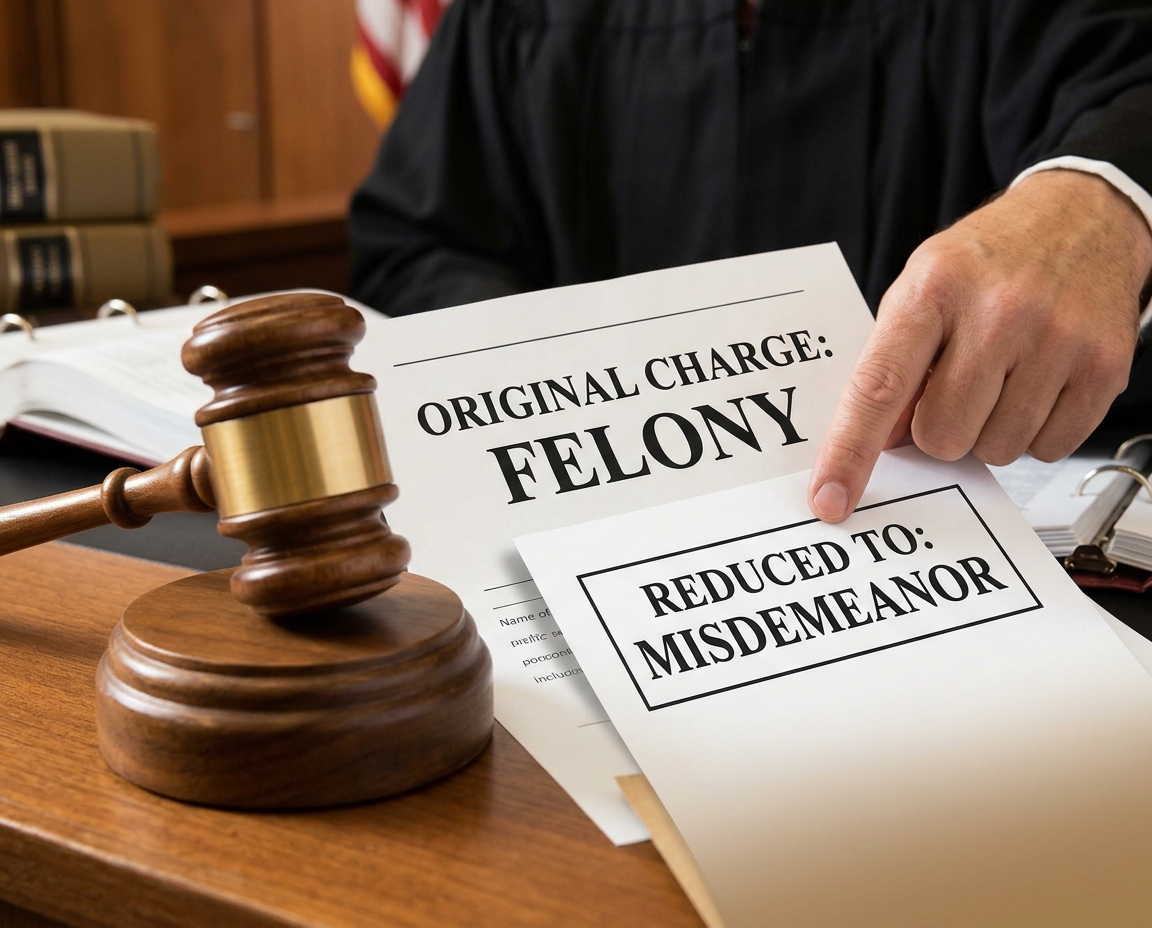
Can you reduce a felony to a misdemeanor in California? Yes. California law provides several ways to reduce certain felony charges or convictions to misdemeanors, depending on the offense, available evidence, criminal history, and stage of the case. Four common approaches include requesting a reduction under Penal Code 17(b), negotiating a plea bargain, challenging the prosecution’s evidence, and seeking relief under Proposition 47.
A felony conviction can affect employment opportunities, housing applications, professional licensing, and other aspects of your life. Reducing an eligible felony to a misdemeanor may lessen some of these consequences and provide an opportunity to move forward.
However, not every felony qualifies for reduction. Understanding California’s laws and available legal options is essential.
1. Can You Reduce a Felony to a Misdemeanor Under Penal Code 17(b)?
Yes. California Penal Code 17(b) allows certain felony offenses, known as wobblers, to be reduced to misdemeanors.
A wobbler is an offense that can legally be charged or punished as either a felony or a misdemeanor, depending on the circumstances and applicable law.
Examples of offenses that may qualify include certain:
- Assault offenses.
- Domestic violence offenses.
- Theft offenses.
- Fraud offenses.
- Criminal threats offenses.
Eligibility depends on the specific criminal statute and circumstances of the case.
How Does Penal Code 17(b) Work?
California Penal Code 17(b) provides several ways for a qualifying wobbler to be treated as a misdemeanor:
- Before trial: Under Penal Code 17(b)(5), the court may declare a qualifying offense a misdemeanor upon a party’s motion or on its own motion.
- Through the prosecutor: Under Penal Code 17(b)(4), a qualifying offense may be filed as a misdemeanor.
- When probation is granted: Under Penal Code 17(b)(3), the court may declare the offense a misdemeanor when granting probation.
- After probation is granted: The defendant or probation officer may apply for the court to declare the offense a misdemeanor.
A judge generally considers the circumstances of the offense, the defendant’s criminal history, and the interests of justice.
What Factors Can Help Support a Felony Reduction?
Relevant considerations may include:
- The seriousness of the offense.
- Whether the defendant has prior criminal convictions.
- Evidence of rehabilitation.
- Employment and community involvement.
- Compliance with probation conditions.
- Completion of court-ordered programs.
Example: Someone convicted of a qualifying wobbler who has completed probation, maintained employment, and demonstrated rehabilitation may ask the court to reduce the conviction to a misdemeanor.
However, approval is not automatic. The judge has discretion under the applicable legal procedure.
2. Can a Plea Bargain Reduce a Felony Charge to a Misdemeanor?
Yes. A plea bargain may allow a defendant to resolve a felony case by pleading guilty or no contest to a misdemeanor or another lesser offense.
A plea bargain is an agreement between the prosecution and defense concerning how criminal charges will be resolved.
Depending on the circumstances, the agreement may involve:
- Reducing a felony charge to a misdemeanor.
- Substituting a lesser criminal offense.
- Dismissing certain charges.
- Removing certain sentencing enhancements when legally permitted.
- Agreeing to a sentencing recommendation.
What Makes a Misdemeanor Plea Possible?
Prosecutors may consider several factors when evaluating a proposed plea agreement, including:
- The strength of the prosecution’s evidence.
- The seriousness of the alleged offense.
- The defendant’s criminal history.
- Whether anyone suffered physical or financial harm.
- Whether restitution has been paid or arranged.
- Evidence of rehabilitation.
Example: A person charged with felony theft may have a defense attorney who identifies weaknesses in the evidence concerning the value of the allegedly stolen property. The attorney may negotiate for a misdemeanor plea if the facts and applicable law support that resolution.
The prosecutor does not have to accept a proposed agreement, and the court must approve the plea.
Before accepting a plea bargain, defendants should understand its potential consequences, including fines, probation, jail time, and other restrictions.
3. Can Challenging the Evidence Help Reduce a Felony Charge?
Yes. Challenging weaknesses in the prosecution’s evidence may create opportunities to negotiate reduced charges, dismiss unsupported allegations, or pursue a lesser offense.
The prosecution must establish the required elements of the charged crime. If the evidence does not support those elements, the defense may have grounds to challenge the felony charge.
What Evidence Can a Criminal Defense Attorney Challenge?
Common areas of investigation include:
Insufficient evidence: The prosecution may lack sufficient evidence to establish an essential element of the alleged felony.
Unlawful searches and seizures: Evidence obtained through an unconstitutional search may be subject to suppression under the Fourth Amendment.
Witness credibility: Inconsistent statements, conflicting accounts, or unreliable testimony may weaken the prosecution’s case.
Incorrect criminal charges: The facts may support a lesser offense rather than the felony originally charged.
Can a Preliminary Hearing Help Reduce Felony Charges?
Yes. In most California felony cases, a preliminary hearing allows the judge to determine whether sufficient evidence exists to hold the defendant to answer for the charges.
The preliminary hearing is not a trial. The judge evaluates whether probable cause exists to believe a crime was committed and the defendant committed it.
The defense may use the hearing to:
- Examine prosecution witnesses.
- Identify inconsistencies in witness testimony.
- Challenge the evidence supporting particular charges.
- Evaluate whether the prosecution can establish the required elements.
- Identify opportunities for further negotiations.
If the court finds insufficient evidence to support a particular charge, it may dismiss that charge at the preliminary hearing stage, although the prosecution may have other legally available options.
Example: A person charged with felony assault may have a defense attorney who identifies insufficient evidence supporting an essential element of the offense. This may create an opportunity to challenge the charge or negotiate a lesser offense.
The outcome depends on the evidence and applicable law.
4. Can Proposition 47 Reduce an Existing Felony Conviction to a Misdemeanor?
Yes. Proposition 47 allows eligible individuals to request resentencing or reclassification of certain felony convictions as misdemeanors under California Penal Code 1170.18.
Unlike Penal Code 17(b), which generally applies to qualifying wobbler offenses, Proposition 47 addresses specifically listed theft and drug-related offenses.
What Offenses May Qualify Under Proposition 47?
Depending on the circumstances and statutory requirements, eligible offenses may include certain forms of:
- Shoplifting.
- Petty theft.
- Receiving stolen property.
- Forgery.
- Certain check-related offenses.
- Drug possession.
For certain qualifying theft offenses, property valued at $950 or less may fall within misdemeanor treatment.
However, the $950 threshold does not automatically make every theft offense a misdemeanor. Proposition 36, approved by California voters in November 2024 and effective December 18, 2024, expanded felony charging options for certain repeat theft and drug offenses.
For example, certain repeat theft offenses may qualify for felony treatment even when the value of the property involved is $950 or less, provided the statutory requirements are met.
Eligibility under Proposition 47 must therefore be evaluated carefully, including applicable exclusions and changes in California law.
How Can You Request Proposition 47 Relief?
There are two primary forms of relief under Penal Code 1170.18:
1. Petition for resentencing
Individuals currently serving a sentence for an eligible felony may petition the court to recall their sentence and request misdemeanor resentencing.
2. Application for reclassification
Individuals who have completed their sentence for an eligible felony may apply to have the conviction redesignated as a misdemeanor.
Certain criminal history restrictions apply.
Is It Too Late to Apply for Proposition 47 Relief?
Not necessarily. Although the original filing deadline was November 4, 2022, Penal Code 1170.18(j) permits late petitions or applications upon a showing of good cause.
Applicants must still satisfy the applicable eligibility requirements, and the court must evaluate the request under the law.
What Is the Difference Between a Felony and a Misdemeanor in California?
A felony generally carries more serious penalties and consequences than a misdemeanor.
| Classification | General punishment |
|---|---|
| Infraction | Generally punishable by a fine. |
| Misdemeanor | Generally punishable by up to six months in county jail, although certain offenses carry up to one year or other penalties. |
| Felony | May carry county jail or state prison sentences, depending on the offense and applicable sentencing law. |
Reducing a felony to a misdemeanor may help lessen the long-term consequences of a criminal conviction.
However, a misdemeanor conviction can still affect employment, housing, professional licensing, and other opportunities.
A reduction also does not automatically erase the criminal record or restore every legal right.
What Factors Affect Your Chances of Getting a Felony Reduced?
The possibility of reducing a felony depends on the applicable law and the circumstances of the case.
Important factors include:
- Type of offense: Whether the charge qualifies as a wobbler or falls under another reduction procedure.
- Criminal history: Prior convictions may affect eligibility and prosecutorial decisions.
- Evidence: Weak or insufficient evidence may create opportunities to challenge the charges.
- Rehabilitation: Employment, treatment programs, and compliance with court requirements may support certain discretionary requests.
- Stage of the case: Available options differ depending on whether the case is pending, resolved, or has already resulted in a conviction.
Not every felony can be reduced, and no particular outcome is guaranteed.
Frequently Asked Questions
1. Can all felonies be reduced to misdemeanors in California?
No. Only certain offenses qualify for specific reduction procedures. Penal Code 17(b) generally applies to wobbler offenses, while Proposition 47 covers specified eligible convictions.
2. How long does it take to reduce a felony to a misdemeanor?
The timeline depends on the procedure, court schedule, and whether the prosecutor contests the request. A negotiated plea may resolve a pending case differently from a post-conviction petition.
3. Can a felony be reduced after conviction?
Yes. Eligible wobbler convictions may qualify under Penal Code 17(b), and certain convictions may qualify for Proposition 47 relief under Penal Code 1170.18.
4. Does reducing a felony automatically erase my criminal record?
No. A felony reduction is different from expungement or record sealing. Additional relief may be available depending on the conviction and circumstances.
5. Can a judge reduce a felony without the prosecutor’s agreement?
Yes, in certain circumstances. Penal Code 17(b) gives judges authority to reduce qualifying wobblers when the statutory requirements are met. A negotiated plea agreement, however, generally requires prosecutorial participation.
6. Does having no prior criminal record help?
It may. A clean criminal history can be a favorable consideration during plea negotiations and certain discretionary reduction requests. However, it does not automatically establish eligibility.
7. Can a domestic violence felony be reduced to a misdemeanor?
Some domestic violence offenses are wobblers, while others are not. Eligibility depends on the specific offense, applicable restrictions, and circumstances.
8. Can a felony be reduced after completing probation?
Yes. A qualifying wobbler may be eligible for reduction under Penal Code 17(b) after probation has been granted. Other post-conviction options may also be available.
Key Takeaways
California law provides several options for eligible defendants seeking to reduce felony charges or convictions:
- Penal Code 17(b: Allows qualifying wobbler offenses to be reduced to misdemeanors.
- Plea bargains: May result in a misdemeanor plea instead of a felony conviction.
- Challenging the evidence: May create opportunities to reduce charges or dismiss unsupported allegations.
- Proposition 47: Allows eligible individuals to seek resentencing or reclassification of certain felony convictions.
The best approach depends on the specific charge, available evidence, criminal history, and stage of the case.
Explore Your Legal Options With Southwest Legal
Facing felony charges in California can be overwhelming, especially when your freedom, reputation, and future are at stake. Understanding your legal rights and available defense strategies is an important first step toward protecting yourself.
You may have options to challenge the charges, negotiate a lesser offense, or pursue a felony-to-misdemeanor reduction depending on the circumstances of your case.
Don’t face felony charges without understanding your legal options. Contact us today for a free consultation. Discuss your situation, learn about potential defense strategies, and take an informed step toward protecting your future.
Disclaimer: This article is for general informational purposes only and does not constitute legal advice or create an attorney-client relationship unless and until the firm and client enter into an agreement for legal services. Laws may change, and legal outcomes depend on the specific facts of each case. Consult a qualified attorney for advice regarding your situation.