


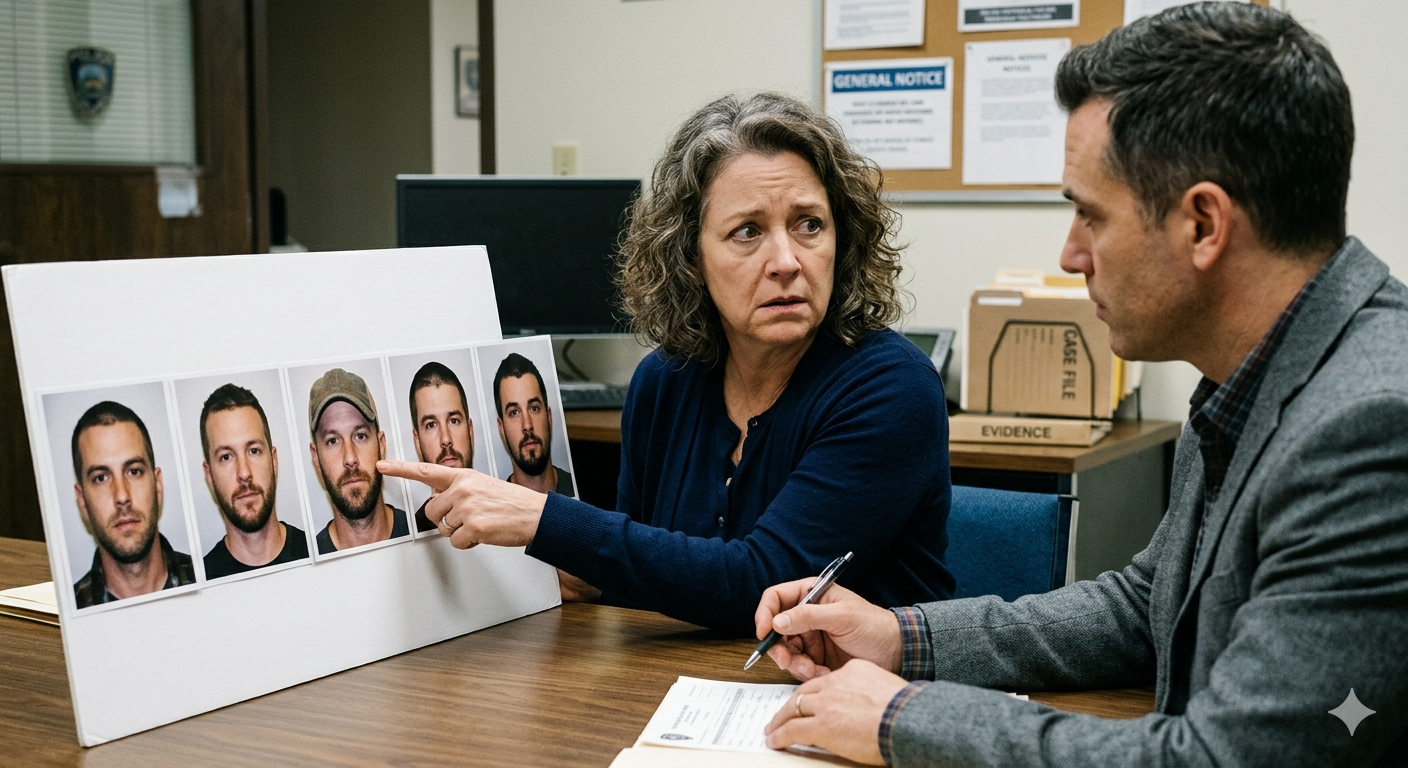
Eyewitness testimony is often viewed as some of the most compelling evidence in a criminal case. When a witness confidently identifies a suspect, jurors may naturally assume that the identification is accurate. However, decades of research and numerous wrongful conviction cases have demonstrated that eyewitnesses can make mistakes—even when they genuinely believe they are identifying the correct person.
Mistaken eyewitness identification remains one of the leading causes of wrongful convictions in the United States. In California, courts and criminal defense attorneys recognize that memory is not always reliable and that identification procedures must be carefully scrutinized to ensure fairness and accuracy.
Understanding how eyewitness misidentification occurs, the factors that contribute to identification errors, and the legal protections available under California law can help individuals better understand their rights and the importance of a strong criminal defense.
What Is Mistaken Eyewitness Identification?
Mistaken eyewitness identification occurs when a witness incorrectly identifies a person as the perpetrator of a crime. These identifications may occur during police investigations, photo lineups, live lineups, show-up procedures, or courtroom proceedings.
In many cases, the witness is not intentionally providing false information. Instead, the witness may sincerely believe that their identification is correct, even though memory errors, environmental conditions, or suggestive procedures have influenced their recollection.
A mistaken identification can have serious consequences, including arrest, criminal charges, incarceration, damage to a person’s reputation, and, in some cases, wrongful conviction.
Why Eyewitness Testimony Is Not Always Reliable
Many people assume that human memory functions like a video recording. In reality, memory is far more complex. Rather than replaying events exactly as they occurred, the brain reconstructs memories based on stored information, perceptions, and experiences.
As a result, several factors can affect the accuracy of eyewitness testimony.
Stress and Fear
Criminal events often occur under stressful circumstances. Victims and witnesses may experience fear, anxiety, shock, or panic during the incident.
Research has shown that high levels of stress can negatively affect a person’s ability to accurately observe and later recall important details, including facial features, clothing, and identifying characteristics.
Poor Viewing Conditions
A witness’s ability to accurately identify a suspect may be compromised by environmental conditions such as:
- Poor lighting
- Long distances
- Brief encounters
- Obstructed views
- Weather conditions
Even a witness who is paying close attention may struggle to accurately identify someone when visibility is limited.
The Passage of Time
Memory naturally fades over time. As days, weeks, or months pass, details can become less clear and more susceptible to distortion.
The longer the delay between an event and an identification procedure, the greater the possibility that memory inaccuracies may affect the witness’s recollection.
Cross-Racial Identification Challenges
Studies have found that people may have greater difficulty accurately identifying individuals of a different race or ethnic background. This phenomenon is commonly referred to as the cross-race effect.
While it does not mean that cross-racial identifications are necessarily incorrect, it is a factor that courts and legal professionals may consider when evaluating eyewitness reliability.
Exposure to Outside Information
Witness memories can sometimes be influenced by information received after the event, including:
- News reports
- Social media posts
- Conversations with others
- Statements made by law enforcement
- Discussions with other witnesses
Even subtle suggestions can affect how a person remembers an event and how confident they feel about their recollection.
How Police Identification Procedures Can Influence Witnesses
The procedures used during a criminal investigation can play a significant role in the accuracy of eyewitness identifications.
When identification procedures are conducted improperly, the risk of misidentification increases.
Photo Lineups
A photo lineup typically involves presenting a witness with several photographs and asking whether the perpetrator is among them.
Problems can arise when:
- One photograph stands out from the others
- The lineup participants do not match the witness’s original description
- Officers unintentionally influence the witness
- The witness feels pressure to select someone
Live Lineups
Live lineups require a witness to view multiple individuals and identify the person believed to have committed the crime.
To reduce the risk of misidentification, lineup participants should generally share similar physical characteristics so that no individual appears noticeably different from the others.
Show-Up Identifications
A show-up occurs when police present a single suspect to a witness shortly after an alleged crime.
While show-ups may sometimes be necessary for investigative purposes, they are often considered more suggestive than traditional lineups because the witness is presented with only one individual rather than several possible choices.
Confirming Feedback
A witness’s confidence can be influenced by feedback received after making an identification.
Comments such as “You picked the right person” or “That’s who we suspected” may unintentionally reinforce a witness’s belief in an identification, even if the witness was initially uncertain.
The Connection Between Eyewitness Errors and Wrongful Convictions
Mistaken eyewitness identification has played a role in numerous wrongful convictions throughout the United States.
In many cases, innocent individuals were convicted based largely on eyewitness testimony before later being exonerated through DNA evidence or other newly discovered evidence.
This can occur because eyewitness testimony is often highly persuasive to jurors. When a witness confidently points to a defendant in court, jurors may give that testimony significant weight, even when other evidence is limited or contradictory.
Unfortunately, confidence does not always equal accuracy.
A witness may be completely sincere while still being mistaken.
California Law and Eyewitness Identification Evidence
California courts recognize that eyewitness identification evidence can be both powerful and potentially unreliable.
As a result, courts may closely examine identification procedures to determine whether they were conducted fairly and whether they created a substantial risk of misidentification.
When evaluating identification evidence, courts may consider factors such as:
- The witness’s opportunity to observe the suspect
- Lighting and visibility conditions
- The witness’s level of attention
- The accuracy of prior descriptions
- The time elapsed between the event and identification
- Whether the procedure was unnecessarily suggestive
If an identification procedure is found to be improperly suggestive, a criminal defense attorney may challenge the admissibility or reliability of the evidence.
How Criminal Defense Attorneys Challenge Eyewitness Identifications
An experienced criminal defense attorney may use a variety of legal strategies to challenge questionable eyewitness testimony.
Investigating Police Procedures
Attorneys often review:
- Police reports
- Body-camera footage
- Surveillance recordings
- Identification records
- Witness interviews
This investigation may reveal procedural flaws that undermine the reliability of an identification.
Examining Witness Conditions
The defense may analyze whether the witness had a meaningful opportunity to observe the perpetrator.
Factors such as distance, lighting, duration of observation, and stress levels may all affect reliability.
Identifying Inconsistencies
Witness statements often evolve over time.
Comparing initial descriptions to later testimony may reveal inconsistencies that call the identification into question.
Presenting Expert Testimony
In some cases, expert witnesses may testify regarding the science of memory, perception, and eyewitness identification.
These experts can help jurors understand why a sincere witness may still make an inaccurate identification.
Warning Signs of a Potentially Unreliable Identification
Certain circumstances may increase the likelihood of mistaken identification, including:
- The witness viewed the suspect for only a brief period.
- The event occurred under poor lighting conditions.
- The witness was under significant stress.
- The witness initially expressed uncertainty.
- The identification occurred long after the incident.
- The witness’s description changed over time.
- The identification procedure was suggestive.
- Multiple witnesses discussed the event before making identifications.
While no single factor automatically renders an identification unreliable, the presence of multiple risk factors may significantly affect its credibility.
Can Criminal Charges Be Dismissed Due to Misidentification?
In some cases, yes.
If eyewitness evidence is shown to be unreliable or obtained through improper procedures, the defense may seek to:
- Exclude identification evidence
- Suppress improperly obtained evidence
- Challenge witness credibility
- Create reasonable doubt at trial
- Pursue dismissal when appropriate
Every case is unique, and the outcome depends on the specific facts, evidence, and legal issues involved.
What Should You Do If You Have Been Wrongly Identified?
If you believe you have been mistakenly identified as a suspect in a criminal investigation, it is important to take the situation seriously.
Consider the following steps:
Exercise Your Right to Remain Silent
Avoid making statements to law enforcement without legal counsel present. Even innocent explanations can sometimes be misunderstood or misinterpreted.
Avoid Discussing the Case
Do not discuss the allegations with friends, coworkers, or on social media. Statements made outside of court may later be used as evidence.
Preserve Potential Evidence
Keep any records that may support your defense, including:
- Receipts
- Phone records
- GPS data
- Surveillance footage
- Witness information
Consult a Criminal Defense Attorney
Early legal representation can help protect your rights, preserve evidence, and ensure that any identification procedures are carefully reviewed.
Conclusion
Mistaken eyewitness identification continues to be a significant issue within the criminal justice system. Factors such as stress, poor visibility, memory decay, suggestive police procedures, and cross-racial identification challenges can all contribute to inaccurate identifications.
Because eyewitness testimony can carry substantial weight with juries, even a well-intentioned mistake can result in serious consequences for an innocent person. California courts recognize these risks and allow defense attorneys to challenge unreliable identification evidence when appropriate.
If you are facing criminal allegations based on eyewitness testimony, understanding your rights and obtaining experienced legal representation may be critical to protecting your future.
Contact Southwest Legal
An eyewitness identification is not proof of guilt. Mistakes happen, and those mistakes can lead to arrests, criminal charges, and wrongful convictions. If you have been accused of a crime based on eyewitness testimony, it is essential to have a knowledgeable criminal defense attorney evaluate the evidence and protect your rights.
At Southwest Legal, we understand the complexities of eyewitness identification cases and the serious consequences that can result from inaccurate witness testimony. Our legal team thoroughly investigates every aspect of a case, including police procedures, witness statements, identification methods, and other evidence that may impact the outcome.
Whether you are under investigation, have been arrested, or are currently facing criminal charges, Southwest Legal is prepared to provide the strategic and aggressive representation you deserve.
Contact us today for a free consultation and learn how our experienced criminal defense attorneys can help protect your rights, your reputation, and your future.
Disclaimer: This article is for general informational purposes only and does not constitute legal advice or create an attorney-client relationship. No attorney-client relationship is formed unless and until the firm and client enter into an agreement for legal services. Laws may change, and legal outcomes depend on the specific facts of each case. Consult a qualified attorney for advice regarding your situation.