


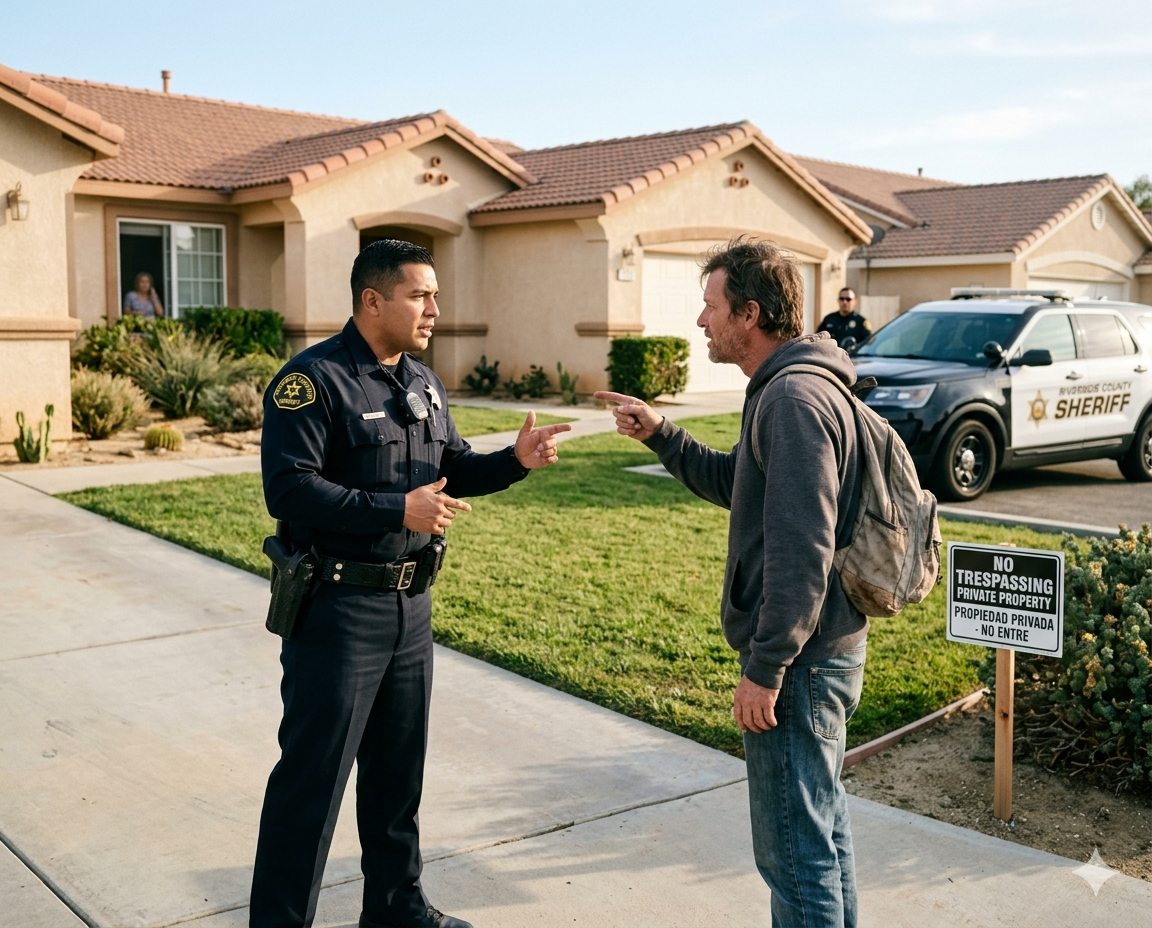
Trespass cases in California often arise in everyday situations such as stores, apartment complexes, workplaces, or private residences. One of the most common legal issues occurs when a person refuses to leave a property after being asked to do so.
In California, these situations are generally governed by California Penal Code Section 602, which defines various forms of trespassing. In some cases, California Penal Code Section 602.5 may also apply, especially when the incident involves residential property.
Understanding how these laws work is important for anyone facing trespass allegations or property owners dealing with unwanted individuals on their premises.
What Is California Trespass Law?
California trespass law is primarily found in the following statutes:
- California Penal Code Section 602, which covers general trespassing on private and public property
- California Penal Code Section 602.5, which specifically applies to residential property trespass
Under these laws, trespass generally means entering or remaining on someone else’s property without permission or legal right.
Importantly, California law does not require illegal entry alone. A person may also be charged with trespass if they initially enter legally but later remain on the property after permission has been revoked.
Refusing to Leave Property Under California Law
One of the most common forms of trespass occurs when a person refuses to leave property after being asked to do so by the property owner, lawful occupant, or authorized agent.
Under California Penal Code Section 602, a person may be guilty of trespass if they willfully refuse or fail to leave private property immediately after being asked to do so by someone with legal authority over the property.
This means that even if a person originally had permission to be on the property, that permission can be revoked at any time. Once permission is revoked, remaining on the property without a lawful reason may result in criminal charges.
Examples of Refusing to Leave Property
Refusal-to-leave trespass situations can occur in many real-world scenarios, including:
- A customer refusing to leave a store after being instructed by management
- A guest refusing to leave a private home after being asked by the homeowner
- A person remaining in a business lobby after being told to exit
- A protester refusing to leave private commercial property after permission is withdrawn
In each situation, the key issue is whether the individual remained on the property after a lawful request to leave was made.
What Prosecutors Must Prove in a Trespass Case
To secure a conviction for trespass based on refusal to leave, prosecutors generally must prove the following elements:
- The defendant was on property owned or controlled by another person
- The defendant was asked to leave by someone with legal authority
- The defendant willfully refused or failed to leave
- The defendant did not have a legal right to remain on the property
The requirement of willfulness is important. The prosecution must show that the refusal was intentional and not caused by misunderstanding or confusion.
If any of these elements cannot be proven beyond a reasonable doubt, the case may be dismissed or result in an acquittal.
Trespass by Entry vs Trespass by Refusal to Leave
California law recognizes two main types of trespass conduct.
Trespass by unlawful entry occurs when a person enters property without permission in the first place.
Trespass by refusal to leave occurs when a person initially enters with permission but remains after that permission is revoked.
Many criminal cases involve the second type, especially in disputes involving businesses, residences, or shared property spaces.
California Penal Code Section 602.5: Residential Trespass
California Penal Code Section 602.5 applies specifically to residential property. It makes it unlawful to enter or remain in an occupied dwelling without permission.
This statute is commonly used in situations involving:
- Homes or apartments
- Disputes between guests and homeowners
- Individuals refusing to leave a residence after being asked
Because residential property is given additional protection under the law, these cases are often treated seriously by prosecutors.
Penalties for Trespassing in California
Trespass charges can result in different penalties depending on the circumstances of the case.
Misdemeanor trespass under California Penal Code Section 602 may result in:
- Up to six months in county jail
- Fines of up to one thousand dollars
- Probation
- Community service or court-ordered programs
In less serious cases, trespass may be charged as an infraction, which usually results in a fine rather than jail time.
More serious cases involving threats, property damage, or restricted areas may lead to enhanced penalties.
Common Legal Defenses to Trespass Charges
There are several potential defenses that may apply in trespass cases involving refusal to leave property.
No clear request to leave is one defense. If the individual was not clearly instructed to leave, the prosecution may not be able to prove trespass.
Lack of intent is another defense. The prosecution must show that the refusal to leave was willful and intentional.
Legal right to remain may also apply in situations involving tenants, contracts, or other legal agreements.
Improper authority is another defense. The person requesting removal must have legal control over the property.
Finally, issues involving public access or unclear restrictions may also be relevant depending on the facts.
Why Trespass Cases Are Often Disputed
Trespass cases involving refusal to leave are frequently disputed because they depend heavily on facts and circumstances.
Common areas of disagreement include:
- Whether permission was clearly revoked
- Whether the person understood the request
- Whether the property was private or open to the public
- Whether law enforcement was properly involved
Because of these issues, many trespass cases are resolved through dismissal, charge reduction, or negotiation rather than trial.
What to Do If You Are Accused of Trespass in California
If you are accused of trespassing or refusing to leave property, it is important to handle the situation carefully.
You should avoid arguing or escalating the situation. If instructed by law enforcement or the property owner, it is generally best to leave the property immediately.
Do not make statements without legal advice, as anything said may be used in court.
It is also important to contact a criminal defense attorney as soon as possible to understand your rights and legal options.
Conclusion
California trespass law, primarily governed by California Penal Code Section 602 and in some cases Section 602.5, covers both unlawful entry and refusal to leave property after permission has been revoked.
These cases often depend on specific facts such as notice, intent, and legal authority. Because of this, trespass charges should always be taken seriously and evaluated with the help of an experienced criminal defense attorney.
Contact Southwest Legal
If you or a loved one is facing trespass charges or any criminal allegation involving refusal to leave property, legal guidance is critical.
Southwest Legal is committed to protecting your rights and providing strong criminal defense representation in Southern California. Our legal team understands how trespass cases are prosecuted and will work to build a strong defense strategy tailored to your situation.
Contact us today for a free consultation to discuss your case with an experienced criminal defense attorney.
Disclaimer: This article is for general informational purposes only and does not constitute legal advice or create an attorney-client relationship. No attorney-client relationship is formed unless and until the firm and client enter into an agreement for legal services. Laws may change, and legal outcomes depend on the specific facts of each case. Consult a qualified attorney for advice regarding your situation.