


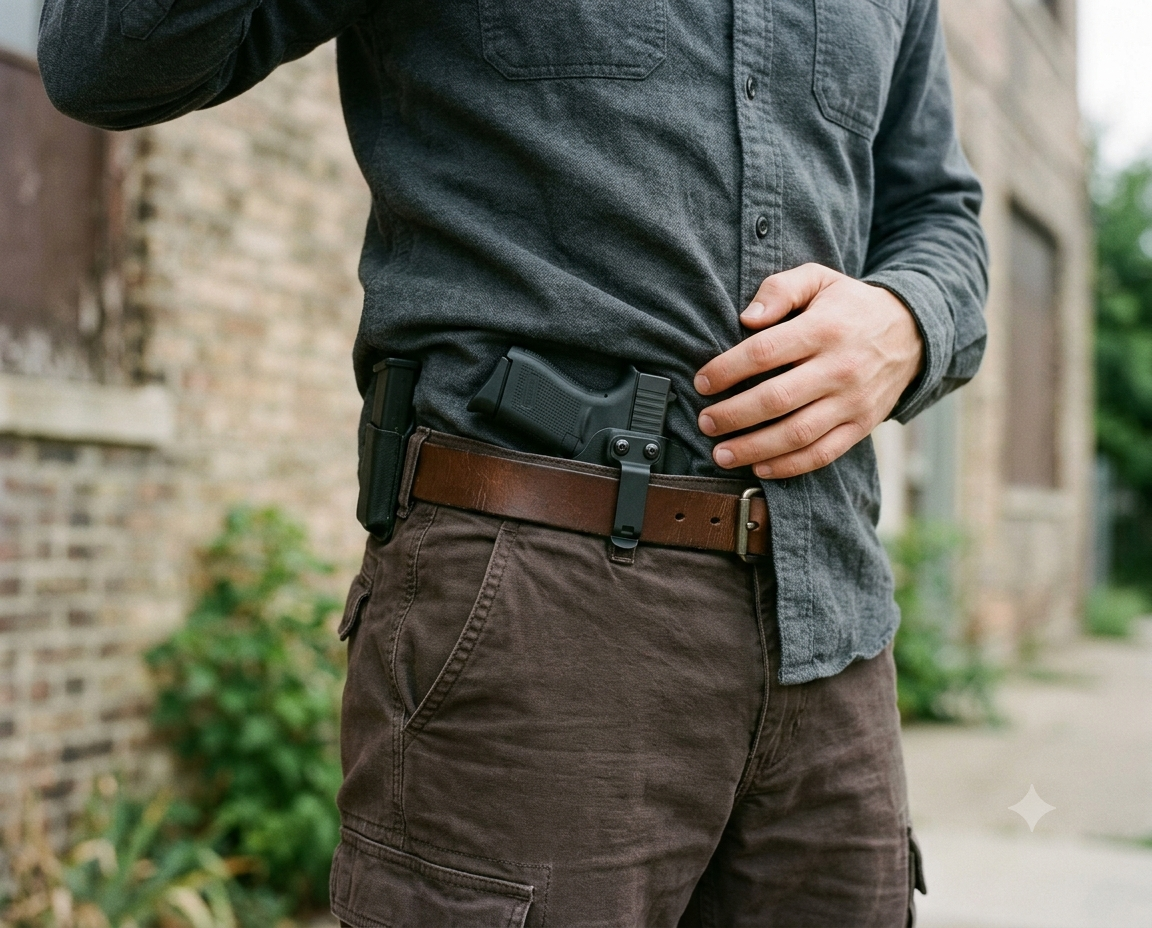
California Penal Code § 25400 makes it a crime in many situations to carry a concealed firearm on your person or inside a vehicle without legal authorization. California has some of the strictest firearm laws in the United States, and understanding when a concealed weapon is lawful—and when it is not—is essential for anyone who owns or carries a firearm.
This guide explains California Penal Code § 25400 including what the law prohibits, possible penalties, common legal defenses, exceptions, and answers to frequently asked questions.
What Is California Penal Code § 25400?
California Penal Code § 25400 generally prohibits carrying a concealed weapon on your person or inside a vehicle when certain legal requirements are not met.
The law is intended to regulate concealed firearms while allowing lawful possession in situations specifically authorized under California law, such as possessing a valid concealed carry permit (CCW permit) or transporting firearms in compliance with applicable regulations.
A concealed firearm may include:
- A handgun
- A revolver
- A pistol
- Any firearm capable of being concealed upon the person
The statute primarily applies to concealable firearms rather than long guns such as standard rifles or shotguns.
What Does “Concealed” Mean?
A firearm is generally considered concealed when it is hidden from ordinary observation.
Examples may include:
- Inside a jacket or coat pocket
- Under clothing
- In a purse or handbag
- Inside a backpack
- Hidden in a waistband
- Under a vehicle seat
- Inside a glove compartment or center console
The firearm does not necessarily need to be completely invisible. If it is substantially hidden from normal view, prosecutors may argue that it was concealed.
What Must the Prosecutor Prove?
To obtain a conviction under California Penal Code § 25400, prosecutors generally must establish each required element beyond a reasonable doubt.
Depending on the circumstances, they may need to prove that:
- The defendant carried a concealable firearm.
- The firearm was substantially concealed.
- The firearm was carried on the person’s body or inside a vehicle under the person’s control or direction.
- The defendant knew the firearm was present.
Knowledge is often an important element. Someone who genuinely did not know a firearm was in a borrowed vehicle, for example, may have a legal defense.
Carrying a Concealed Firearm in a Vehicle
California law does not only apply to firearms carried on a person’s body.
A concealed handgun located inside a vehicle may also result in criminal charges.
Examples include:
- Inside the glove compartment
- Under the driver’s seat
- Inside a backpack on the passenger seat
- In the center console
- Hidden beneath clothing or other objects
Even if the firearm is not physically on the driver’s person, it may still qualify as carrying a concealed firearm under certain circumstances.
Is an Unloaded Firearm Still Covered?
Yes.
A firearm generally does not need to be loaded for prosecutors to file charges under Penal Code § 25400.
Separate California laws may apply to loaded firearms, but a concealed unloaded handgun can still lead to criminal liability if carried unlawfully.
What Are the Penalties for Violating Penal Code § 25400?
The penalties depend on the facts of the case.
California law treats many violations of Penal Code § 25400 as “wobbler” offenses, meaning prosecutors may file them as either misdemeanors or felonies depending on factors such as:
- The defendant’s criminal history
- Whether the firearm was stolen
- Whether the person was prohibited from possessing firearms
- Gang-related allegations
- Other aggravating circumstances
Possible Misdemeanor Penalties
A misdemeanor conviction may include:
- Up to one year in county jail
- Fines
- Informal (summary) probation
- Firearm restrictions
- Other court-ordered conditions
Possible Felony Penalties
When charged as a felony, penalties can include:
- State prison or county jail under California sentencing laws
- Larger fines
- Formal probation in qualifying cases
- Loss of firearm rights
- A permanent felony criminal record unless later reduced or otherwise modified by law
Actual sentencing depends on numerous legal and factual considerations.
Can You Carry a Concealed Firearm With a Permit?
Yes.
California allows qualified individuals to obtain licenses authorizing the concealed carry of firearms, commonly called a CCW permit.
However, the permit holder must:
- Possess a valid permit.
- Follow all restrictions listed on the permit.
- Carry only authorized firearms if required.
- Comply with all applicable state and local laws.
A permit does not create unlimited authority to carry firearms in every location.
Are There Exceptions to Penal Code § 25400?
Yes.
California law recognizes several exceptions.
Examples may include:
Law Enforcement Officers
Peace officers acting within the scope of their authority generally are exempt from many provisions that apply to the public.
Licensed Concealed Carry Permit Holders
Individuals with valid concealed carry licenses may legally carry concealed firearms within the scope of their permit.
Lawful Transportation
California law allows firearms to be transported under specific conditions.
For example, a handgun generally must be unloaded and secured in a locked container or the locked trunk of a vehicle unless another legal exception applies.
Failure to follow transportation requirements may result in criminal charges.
Common Legal Defenses
Every criminal case is unique, and available defenses depend on the evidence.
Some commonly raised defenses include:
The Firearm Was Not Concealed
If the firearm was openly visible rather than concealed, prosecutors may not be able to prove an essential element of the offense.
Lack of Knowledge
The prosecution generally must show that the defendant knew the firearm existed.
Someone unaware that another person left a firearm in their vehicle may have a viable defense.
Illegal Search and Seizure
The Fourth Amendment protects individuals against unreasonable searches.
If law enforcement officers discovered the firearm through an unconstitutional search, a court may exclude important evidence.
Without that evidence, prosecutors may have difficulty proving their case.
Valid Concealed Carry License
A valid concealed carry permit may provide a complete defense when the firearm was carried lawfully and within the permit’s terms.
False Accusations
Witnesses sometimes misunderstand events or make inaccurate allegations.
Video footage, physical evidence, or witness testimony may contradict the prosecution’s version of events.
How Is Penal Code § 25400 Different From Other California Firearm Laws?
California has numerous firearm statutes that address different conduct.
For example:
- Some laws prohibit carrying loaded firearms.
- Others prohibit firearm possession by certain individuals.
- Additional statutes regulate assault weapons, prohibited locations, firearm transfers, and storage requirements.
A single incident may lead to charges under multiple firearm laws depending on the circumstances.
Can Non-Residents Be Charged?
Yes.
Visitors to California must comply with California firearm laws while inside the state.
Firearm laws from another state do not automatically authorize someone to carry a concealed firearm in California.
Travelers should understand California’s requirements before bringing firearms into the state.
Does a Conviction Affect Firearm Rights?
Potentially, yes.
Depending on the offense and sentence, a conviction may result in:
- Temporary firearm restrictions
- Long-term firearm prohibitions
- Permanent loss of firearm rights in certain felony cases
The exact consequences depend on the conviction and applicable federal and California law.
Immigration Consequences
For non-U.S. citizens, criminal convictions sometimes create immigration consequences.
The impact depends on multiple factors, including:
- Immigration status
- Criminal history
- Exact criminal conviction
- Federal immigration law
Individuals facing both criminal and immigration issues should obtain legal advice promptly.
Frequently Asked Questions
Can I keep a handgun in my car?
California law permits transportation of handguns under specific rules. Generally, the firearm should be unloaded and secured in a locked container or locked trunk unless another legal exception applies.
Does the firearm have to be loaded?
No. An unloaded concealed handgun may still violate Penal Code § 25400.
Can I carry a handgun in my backpack?
If the handgun is concealed inside a backpack and no legal exception applies, doing so may violate California law.
What if someone else owns the gun?
Ownership is not always the deciding factor. A person may face charges for carrying another person’s firearm if the statutory requirements are satisfied.
What happens if the gun is found during a traffic stop?
Officers may investigate depending on the circumstances. Whether charges are filed depends on factors including where the firearm was located, whether it was lawfully transported, and whether any legal exceptions apply.
Can first-time offenders avoid jail?
Possibly.
Many factors influence sentencing, including:
- Criminal history
- The facts of the case
- Prosecutorial discretion
- Eligibility for probation
- Court decisions
Not every conviction results in incarceration.
Is carrying a concealed firearm always a felony?
No. Many violations may be prosecuted as misdemeanors, while certain aggravating circumstances may lead to felony charges.
Tips for Lawful Firearm Owners
Responsible firearm owners should:
- Learn California firearm laws before carrying a handgun.
- Transport firearms according to state requirements.
- Keep firearms secured when not in use.
- Understand permit requirements before carrying concealed.
- Stay informed because firearm laws can change through legislation or court decisions.
When to Contact a Criminal Defense Attorney
Anyone arrested or investigated for carrying a concealed firearm should seek legal advice as early as possible.
An attorney can evaluate:
- Whether police conducted a lawful search
- Whether the prosecution can prove every required element
- Whether constitutional rights were violated
- Possible defenses
- Potential plea negotiations or diversion options when available
Early legal representation may significantly affect how a criminal case develops.
Conclusion
California Penal Code § 25400 regulates the carrying of concealed firearms and imposes potentially serious criminal penalties for violations. Whether a person is carrying a handgun on their body or transporting it in a vehicle, understanding California’s firearm laws is essential.
The outcome of any case depends on its specific facts, including whether the firearm was actually concealed, whether the individual knew it was present, whether a legal exception applies, and whether law enforcement acted within constitutional limits.
Because firearm laws are complex and violations can have lasting consequences—including criminal penalties, firearm restrictions, and possible immigration issues—individuals facing allegations under Penal Code § 25400 should obtain legal guidance tailored to their particular circumstances.
Contact Southwest Legal
If you or someone you care about has been arrested or charged with carrying a concealed firearm under California Penal Code § 25400, it is important to act quickly. A criminal conviction can affect your freedom, your criminal record, your firearm rights, and your future opportunities.
Every case is different, and the best defense strategy depends on the specific facts, the evidence, and whether your constitutional rights were respected during the investigation or arrest. An experienced criminal defense attorney can review your case, explain your legal options, and work to protect your rights at every stage of the legal process.
Southwest Legal is committed to providing knowledgeable and aggressive criminal defense representation for individuals facing firearm-related charges throughout Southern California. Whether you have been accused of carrying a concealed weapon, unlawfully possessing a firearm, or another weapons offense, our legal team is prepared to evaluate your case and pursue the strongest defense available.
Don’t wait to get the legal guidance you need. Contact us today to schedule a free consultation and learn how we can help protect your rights and your future.
Disclaimer: This article is for general informational purposes only and is not legal advice. Laws change over time, and every case involves unique facts. Anyone facing criminal charges should consult a qualified California criminal defense attorney. Reading this article does not create an attorney-client relationship.