


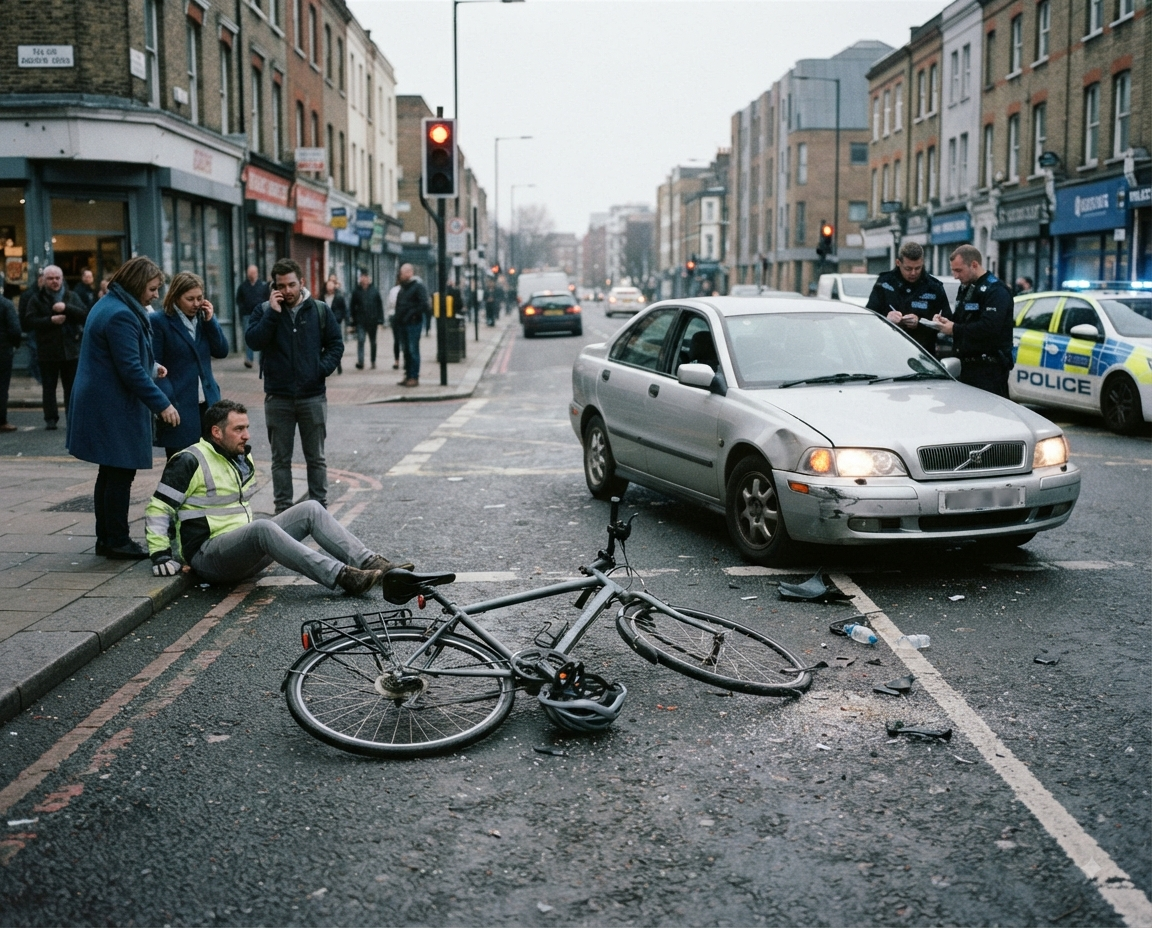
A bicycle accident can happen in an instant, but the physical, emotional, and financial consequences can continue long after the crash. A cyclist struck by a car may face broken bones, head injuries, spinal injuries, road rash, internal injuries, or other serious harm. Even when injuries are not immediately obvious, medical treatment, missed work, bicycle repairs, and other expenses can quickly add up.
If you were injured in a bicycle accident in California, a bicycle accident injury lawyer can help you understand your legal rights and options. You may be wondering: Who is responsible? Can I recover compensation? What does California law say about bicyclists’ rights? How does insurance work? And how long do I have to file a claim?
Understanding your rights can help you make informed decisions about what to do next.
This guide explains important California bicycle accident laws, potential sources of compensation, insurance issues, evidence, legal deadlines, and common questions about bicycle injury claims.
California Bicycle Accident Laws: What Rights Do Cyclists Have?
California law generally gives people riding bicycles many of the same rights and responsibilities that apply to drivers of vehicles.
California Vehicle Code section 21200 provides that a person riding a bicycle on a highway generally has the same rights and is subject to the same applicable provisions of the Vehicle Code as a driver, except for provisions that cannot reasonably apply to bicycles.
In practical terms, motorists generally cannot treat cyclists as though they have no legal right to use the roadway. Drivers and cyclists both have obligations to follow applicable traffic laws and operate with reasonable care.
Bicyclists also have responsibilities. For example, California Vehicle Code section 21202 generally requires a cyclist traveling slower than normal traffic to ride as close as practicable to the right-hand curb or edge of the roadway. However, the law provides important exceptions, including when passing, preparing for a left turn, avoiding unsafe conditions, or approaching a location where a right turn is authorized. The law also addresses one-way roads with multiple marked lanes.
This means a cyclist’s position on the roadway must be evaluated in context. Simply being outside the far-right edge of a lane does not necessarily establish that the cyclist violated California law.
What Causes Bicycle Accidents in California?
Bicycle crashes can happen for many reasons. Common causes include:
- Drivers failing to yield the right of way
- Distracted driving
- Unsafe left or right turns
- Speeding
- Driving too closely to a cyclist
- Failing to check for cyclists before changing lanes
- Opening a vehicle door into a cyclist’s path
- Entering a bicycle lane improperly
- Dangerous roadway conditions
- Poor visibility
- Defective bicycle components
- Negligent conduct by another cyclist or pedestrian
For example, suppose a cyclist is traveling through an intersection with the right of way when an approaching motorist turns left across the cyclist’s path. If evidence shows that the motorist failed to yield and that the failure caused the collision, the driver’s conduct may support a negligence claim.
However, liability is not determined solely by who appears to have made the first mistake. The circumstances of the entire accident may need to be examined.
Who Can Be Liable for a Bicycle Accident?
The person responsible for a bicycle accident depends on the facts.
A potentially responsible party may include:
- A private motorist
- A commercial vehicle driver
- A rideshare driver
- Another cyclist
- A pedestrian
- A business or property owner in certain circumstances
- A government entity responsible for a dangerous public property condition
- A manufacturer or other party when a defective product contributed to the accident
In some cases, more than one party may share responsibility.
For example, a cyclist could be struck by a delivery vehicle while riding near a roadway defect. Depending on the evidence, the driver and another potentially responsible party could become part of the legal investigation.
Identifying every potentially responsible party can be particularly important when insurance coverage or the ability to pay damages differs between defendants.
What Is Negligence in a Bicycle Accident Case?
Many bicycle accident injury claims are based on negligence.
In general terms, negligence involves failing to use reasonable care under the circumstances, resulting in harm to another person.
A bicycle accident claim may require evidence concerning:
- Whether the defendant owed the cyclist a duty of reasonable care
- Whether the defendant breached that duty
- Whether the conduct caused the accident or injury
- What damages resulted from the accident
Consider a motorist approaching an intersection while looking at a phone instead of watching traffic. The motorist fails to notice a cyclist crossing the intersection and causes a collision.
Evidence such as witness statements, traffic-camera footage, photographs, vehicle damage, or other records could help establish what happened.
An accident itself does not automatically prove negligence. The evidence and circumstances matter.
Can a Cyclist Recover Compensation if They Were Partly at Fault?
Potentially, yes.
California follows a pure comparative negligence system. The California Supreme Court adopted this approach in Li v. Yellow Cab Co., holding that a person’s recovery can be reduced according to that person’s share of fault rather than being automatically eliminated because the person was also negligent.
For example, suppose an injured cyclist has $100,000 in damages but is found to have been 20% responsible for the accident. If the applicable legal determination resulted in a 20% reduction, the cyclist’s recovery could be reduced accordingly.
This does not mean that every claim will result in a particular percentage of fault. Determining comparative fault is fact-specific.
California law also distinguishes between economic and non-economic damages. California Civil Code section 1431.2 defines economic damages to include objectively verifiable losses such as medical expenses and lost earnings, while non-economic damages can include losses such as pain, suffering, inconvenience, mental suffering, and emotional distress.
What Compensation Can You Seek After a Bicycle Accident?
Depending on the circumstances, a bicycle accident injury claim may involve several categories of damages.
Medical Expenses
Accident-related medical losses can include expenses associated with:
- Emergency treatment
- Hospitalization
- Surgery
- Diagnostic testing
- Prescription medications
- Physical therapy
- Rehabilitation
- Follow-up appointments
- Other reasonably necessary medical care
Serious injuries may also involve future medical expenses.
Lost Wages and Lost Earning Capacity
A significant injury may prevent someone from working temporarily or may affect their ability to earn income in the future.
Documentation such as pay records, employment information, tax documents, and medical evidence may be relevant when evaluating these losses.
Pain and Suffering
Non-economic damages can address harms that do not have a simple price tag, including physical pain, emotional distress, inconvenience, and limitations caused by an injury.
Property Damage
A bicycle collision can damage or destroy:
- The bicycle
- Helmet
- Cycling equipment
- Clothing
- Electronic devices
- Other personal property
Photographs, receipts, repair estimates, and replacement documentation may help establish property losses.
What Should You Do After a Bicycle Accident in California?
Knowing what to do after a bicycle crash can help protect your health and preserve evidence.
1. Seek Medical Attention
Your health should be the first priority. Seek appropriate medical evaluation after a serious crash or when symptoms develop.
Some injuries may not be immediately apparent, so medical follow-up can be important when recommended by a healthcare professional.
2. Report the Accident
Depending on the circumstances, the collision should be reported to the appropriate authorities.
California Vehicle Code section 20001 requires a driver involved in an accident resulting in injury or death to stop at the scene and comply with specified duties.
California law also requires a driver involved in an injury accident to provide specified identifying information and render reasonable assistance to an injured person when required by the circumstances.
3. Document the Scene
If you are physically able, consider photographing:
- Your injuries
- The bicycle
- The vehicle involved
- Damage to the vehicle
- Road markings
- Traffic signals
- Traffic signs
- Bicycle lanes
- Road conditions
- Nearby hazards
- The surrounding area
Photographs can be particularly valuable because roadway conditions, vehicle positions, and other evidence can change.
4. Get Witness Information
If people witnessed the accident, obtain their names and contact information when possible.
Independent witnesses may have information that helps establish how the collision occurred.
5. Preserve Physical Evidence
Do not unnecessarily discard or alter a damaged bicycle, helmet, clothing, or other potentially relevant evidence.
A damaged bicycle can sometimes provide information about the direction and nature of an impact.
6. Keep Records
Keep copies of:
- Medical bills
- Medical records
- Prescription receipts
- Repair estimates
- Bicycle replacement costs
- Wage-loss documentation
- Insurance correspondence
- Accident reports
- Photographs
- Other accident-related expenses
Organized documentation can make it easier to evaluate the scope of a claim.
How Does Insurance Work After a Bicycle Accident?
If a motor vehicle caused the collision, the driver’s applicable automobile liability insurance may be an important source of compensation.
The insurance company may investigate the accident and evaluate questions such as liability, injuries, damages, and available coverage.
However, an insurance company’s investigation does not necessarily determine a person’s legal rights. An insurer may dispute liability, question the extent of an injury, or offer an amount that does not account for all potentially recoverable damages.
Other insurance coverage may sometimes be relevant as well.
For example, depending on the policy language and circumstances, an injured cyclist may have potential access to applicable uninsured or underinsured motorist coverage through an automobile insurance policy. Whether coverage exists and applies is highly fact-specific and should not be assumed.
What If the Driver Who Hit the Cyclist Leaves the Scene?
A hit-and-run bicycle accident can make a personal injury claim more difficult because identifying the driver may be challenging.
California Vehicle Code section 20001 generally requires a driver involved in an accident causing injury or death to stop and fulfill specified duties. For property-damage-only accidents, Vehicle Code section 20002 establishes separate requirements.
If the driver leaves, potentially useful evidence can include:
- Witness accounts
- Security-camera footage
- Traffic-camera footage
- Nearby business surveillance
- Vehicle fragments
- Photographs
- License plate information
- Police investigation records
If a driver is eventually identified, available insurance coverage and other legal options may need to be evaluated.
What If a Dangerous Road Condition Caused the Bicycle Accident?
Not every bicycle accident is caused by a motorist.
A cyclist could potentially be injured because of a dangerous condition involving public property, such as a roadway defect or another hazardous condition.
Claims against public entities are subject to special rules in California.
Under California Government Code section 911.2, a claim relating to injury to a person or personal property generally must be presented to the applicable public entity within six months after the cause of action accrues.
There are additional rules concerning late claims and subsequent lawsuits. For example, Government Code section 911.4 addresses certain applications for permission to present a late claim, while Government Code section 913 explains that a rejected claim may trigger another important deadline for filing a court action.
Because claims involving public entities have specialized procedural requirements, a person considering such a claim should not assume that the ordinary personal injury deadline applies.
How Long Do You Have to File a Bicycle Accident Lawsuit in California?
California Code of Civil Procedure section 335.1 generally provides a two-year statute of limitations for an action for injury to an individual caused by the wrongful act or neglect of another.
However, “two years” should not be treated as a universal deadline for every bicycle accident case.
Different rules can apply depending on:
- The identity of the defendant
- Whether a government entity is involved
- The type of legal claim
- When the claim accrued
- The age or legal status of the injured person
- Other circumstances that may affect the limitations period
For this reason, someone injured in a bicycle accident should investigate applicable deadlines as soon as reasonably possible.
Do You Need a Bicycle Accident Injury Lawyer in California?
Not every bicycle accident requires an attorney.
A relatively minor accident involving limited property damage, minor injuries, and undisputed responsibility may potentially be handled through the insurance process.
Legal guidance may become especially useful when:
- Injuries are serious
- The injury may require long-term treatment
- Liability is disputed
- The cyclist is accused of causing the accident
- Multiple parties may be responsible
- An insurance company disputes the claim
- An insurance settlement does not account for the full scope of the claimed losses
- The cyclist cannot work because of the injury
- A hit-and-run driver is involved
- A government entity may be responsible
- A lawsuit may be necessary
A bicycle accident attorney can help investigate the circumstances, identify potentially responsible parties, evaluate evidence, communicate with insurers, and explain the legal options that may be available.
The appropriate approach depends on the facts of the individual case.
What Evidence Can Help Prove a Bicycle Accident Claim?
Evidence can be important when determining how a bicycle accident occurred and what losses resulted.
Potential evidence includes:
- Police reports
- Photographs
- Video recordings
- Traffic-camera footage
- Surveillance footage
- Eyewitness testimony
- Medical records
- Medical bills
- Employment records
- Wage information
- Bicycle repair estimates
- Bicycle replacement costs
- Vehicle damage
- Accident reconstruction evidence
- Insurance information
- Relevant communications
For example, suppose a motorist claims that a cyclist suddenly entered traffic. A nearby surveillance camera might show that the cyclist had been traveling lawfully before the vehicle entered the cyclist’s path.
Objective evidence can sometimes help resolve disputes about what actually happened.
Frequently Asked Questions
Can I sue a driver who hit me while I was riding my bicycle?
Potentially. If the driver’s negligent or otherwise legally actionable conduct caused your injuries, you may have a basis for pursuing a personal injury claim. The facts and available evidence determine whether a claim exists and what damages may be recoverable.
Do bicyclists have the same rights as cars in California?
California Vehicle Code section 21200 generally gives bicyclists riding on a highway the rights applicable to drivers of vehicles, while also making them subject to applicable traffic laws. Certain provisions cannot reasonably apply to bicycles.
Do cyclists have to ride on the far right side of the road?
Not always. California Vehicle Code section 21202 establishes a general rule for slower-moving cyclists but provides several exceptions, including passing, preparing for a left turn, avoiding unsafe conditions, and approaching an authorized right turn.
Is wearing a bicycle helmet required in California?
California Vehicle Code section 21212 requires people under 18 to wear a properly fitted and fastened bicycle helmet when engaging in the activities covered by the statute. California also has specific helmet rules for certain electric-bicycle riders, including Class 3 e-bike riders.
Therefore, it is not accurate to state that California’s statewide law generally requires every adult bicyclist to wear a helmet.
Helmet use can nevertheless be relevant to accident investigations and injury-related issues, depending on the facts.
Can I recover compensation if I was partly responsible?
Potentially. California applies pure comparative negligence principles, meaning an injured person’s recovery is generally reduced according to their share of responsibility rather than automatically being eliminated because they were partly at fault.
The specific allocation of fault depends on the evidence and circumstances.
What if the driver says the accident was my fault?
The driver’s statement does not necessarily determine legal responsibility.
Evidence such as photographs, traffic-camera footage, witness statements, police reports, roadway markings, vehicle damage, bicycle damage, and other information may help establish what happened.
How long do I have to file a bicycle accident injury lawsuit?
The general California statute of limitations for an action for personal injury caused by another’s wrongful act or neglect is two years under Code of Civil Procedure section 335.1.
But exceptions and different deadlines may apply. Claims involving public entities can have substantially shorter claim-presentation requirements, including the six-month period generally applicable under Government Code section 911.2.
Should I accept an insurance settlement after a bicycle accident?
There is no universal answer.
Before accepting a settlement, it may be important to understand the extent of the injuries, medical expenses, lost income, property damage, potential future losses, available insurance coverage, and any legal claims that may exist.
A settlement can involve a release of claims, so it is important to understand what rights you may be giving up before signing settlement documents.
Protecting Your Rights After a California Bicycle Accident
A bicycle accident can raise complicated questions about negligence, comparative fault, insurance, medical expenses, lost income, property damage, and legal deadlines.
The most important early priorities are generally to take care of your health, document the accident, preserve relevant evidence, keep records of your losses, identify applicable insurance coverage, and determine what deadlines may apply.
You do not have to determine every legal issue immediately after a crash. However, waiting too long to investigate an injury claim can make evidence harder to preserve and can create deadline problems.
Contact Southwest Legal
The personal injury lawyers at Southwest Legal handle bicycle accident cases along with other accident and injury matters. A consultation can provide an opportunity to learn more about the legal process, discuss the circumstances of your accident, and understand what information may be important to your situation. Every bicycle accident case is different, and no particular outcome can be guaranteed.
If you or a loved one has been injured in a bicycle accident in Southern California, contact us today for a free consultation to discuss your situation and learn more about the legal options that may be available.
Disclaimer: This article is for general informational purposes only and does not constitute legal advice or create an attorney-client relationship. No attorney-client relationship is formed unless and until the firm and client enter into an agreement for legal services. Laws may change, and legal outcomes depend on the specific facts of each case. Consult a qualified attorney for advice regarding your situation.