


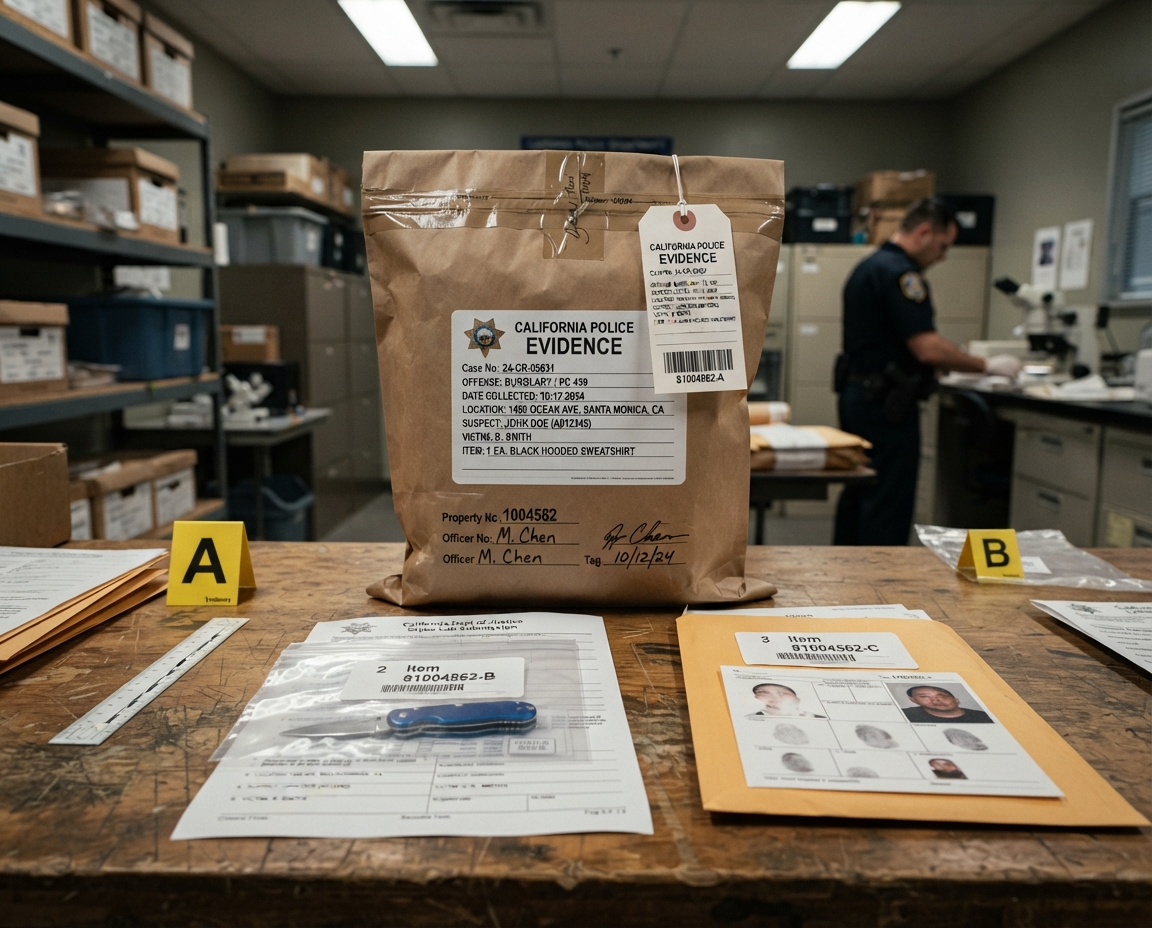
Insufficient evidence can change the outcome of a California criminal case by preventing a conviction, supporting a motion for acquittal, or providing grounds to challenge a conviction on appeal. The prosecution must prove every essential element of a charged crime beyond a reasonable doubt, and a defendant cannot lawfully be convicted when the evidence fails to meet that standard.
For individuals facing criminal charges, understanding insufficient evidence is important because an accusation is not proof of guilt. The strength of the prosecution’s evidence can determine whether a case proceeds to trial, results in an acquittal, or leads to a conviction that may be challenged.
What Does Insufficient Evidence Mean in a California Criminal Case?
Insufficient evidence means the prosecution has not presented enough legally adequate evidence to support a finding of guilt under the applicable legal standard.
To obtain a conviction, the prosecution must establish every essential element of the charged offense. Depending on the crime, these elements may include the defendant’s identity, a specific act, criminal intent, or other facts required by law.
For example, suppose someone is accused of stealing a laptop from an office. Investigators establish that the laptop disappeared and that the defendant worked in the building, but they cannot establish that the defendant took the property or participated in the theft.
The defendant’s presence in the building does not automatically prove guilt. The prosecution must present evidence connecting the defendant to the alleged crime and establishing the required elements beyond a reasonable doubt.
Insufficient evidence may arise when:
- The prosecution cannot reliably identify the person who committed the crime.
- Evidence fails to establish an essential element of the offense.
- Witness testimony is unreliable or contradicted by other evidence.
- Forensic evidence does not support the prosecution’s allegations.
- The prosecution relies on speculation rather than reasonable inferences from the evidence.
However, a lack of physical evidence does not automatically make a case insufficient. California courts may consider witness testimony and circumstantial evidence when determining whether the prosecution has met its burden.
What Must the Prosecution Prove to Obtain a Conviction?
In California, the prosecution must prove every essential element of a criminal offense beyond a reasonable doubt. The defendant is presumed innocent and does not have to prove innocence.
This standard requires more than suspicion or a belief that the defendant probably committed the offense. The evidence must establish guilt to the level of certainty required by criminal law.
For example, a person may be suspected of assault because they were present during a confrontation. However, presence alone does not necessarily establish that the person committed the assault. The prosecution must prove the defendant’s involvement and the other elements of the charged offense.
Can someone be convicted without physical evidence?
Yes. California law does not require physical evidence in every criminal case. A conviction may be based on credible witness testimony, circumstantial evidence, or a combination of evidence.
For example, an eyewitness may provide evidence about an alleged assault even if no video recording exists. Conversely, surveillance footage showing a defendant near a crime scene may not establish that the defendant committed the offense.
The question is whether the evidence as a whole proves guilt beyond a reasonable doubt.
Can Insufficient Evidence Lead to the Dismissal of Criminal Charges?
Yes. Depending on the stage of the case and the applicable legal standard, insufficient evidence may support a challenge to the charges or a request for acquittal.
The available procedure depends on whether the case is at a preliminary hearing, during trial, or on appeal.
Can a felony charge be challenged at a preliminary hearing?
Yes. At a California felony preliminary hearing, the prosecution generally must establish probable cause to believe the defendant committed the charged offense. This standard is lower than proof beyond a reasonable doubt.
If the evidence does not establish the required basis for holding the defendant to answer on a charge, the court may decline to hold the defendant to answer for that offense.
California Penal Code section 995 also provides a procedure for challenging an indictment or information in specified circumstances, including when a defendant was committed without reasonable or probable cause.
A preliminary hearing is not a final determination of guilt. It evaluates whether sufficient grounds exist for the case to proceed.
What is a motion for acquittal under Penal Code section 1118.1?
A motion under California Penal Code section 1118.1 asks the court to enter a judgment of acquittal in a jury trial because the evidence is insufficient to sustain a conviction.
The motion may be made at the close of the prosecution’s evidence or at the close of all evidence, before the case is submitted to the jury. The court evaluates whether the evidence meets the applicable legal standard.
For example, suppose the prosecution presents evidence that a prohibited item was discovered but fails to present sufficient evidence that the defendant knowingly possessed it. If the legal requirements are met, the court may grant an acquittal on that charge.
A successful motion can prevent a charge from proceeding to a jury verdict. It does not necessarily resolve other charges supported by sufficient evidence.
Can Insufficient Evidence Overturn a Criminal Conviction in California?
Yes. A defendant may challenge a conviction on the ground that the evidence presented at trial was legally insufficient to support the verdict.
In People v. Johnson (1980) 26 Cal.3d 557, the California Supreme Court explained the substantial evidence standard used to review criminal convictions.
Under this standard, an appellate court examines the entire record to determine whether substantial evidence supports the finding of guilt beyond a reasonable doubt. The court generally views the evidence in the light most favorable to the judgment rather than retrying the case or reweighing conflicting testimony.
For example, suppose a defendant is convicted based on an identification that the defense argues was unreliable. The appellate court will examine the full record and apply the appropriate legal standard. It will not reverse simply because the defendant disagrees with the jury’s assessment of the witness.
A conviction may be reversed if the evidence is legally insufficient, but the outcome depends on the record and applicable law.
How long does a defendant have to appeal?
Under California Rules of Court, rule 8.308, a notice of appeal in an ordinary criminal case generally must be filed within 60 days after the judgment or appealable order, subject to applicable exceptions.
Because criminal appeal deadlines are strict, anyone considering an appeal should promptly determine the deadline that applies to their case.
What Types of Evidence Problems Can Affect a Criminal Case?
Certain evidence problems may weaken the prosecution’s case or raise questions about whether it can prove the charged offense.
Unreliable eyewitness identification
A witness may have had limited visibility, observed the suspect briefly, or provided inconsistent descriptions. These issues may affect the reliability of an identification.
Conflicting witness statements
Significant inconsistencies may undermine the prosecution’s account of what happened. However, conflicting testimony does not automatically make the evidence insufficient because the jury generally determines witness credibility.
Lack of evidence connecting the defendant to the crime
Evidence that a crime occurred does not necessarily establish who committed it. The prosecution must present evidence supporting the defendant’s involvement in the alleged offense.
Missing evidence of criminal intent
Some offenses require proof of a particular mental state, such as an intent to steal or defraud. If the prosecution cannot establish the required mental state, its case may be weakened.
Intent can be inferred from conduct and surrounding circumstances, so the absence of a confession does not automatically establish insufficient evidence.
How Can a Criminal Defense Attorney Challenge Insufficient Evidence?
A criminal defense attorney can examine whether the prosecution’s evidence establishes each required element and determine which legal challenges may be available.
Depending on the circumstances, this may involve:
- Reviewing the charges and identifying the elements the prosecution must prove.
- Examining police reports, witness statements, recordings, and forensic evidence.
- Identifying inconsistencies or weaknesses in witness identification.
- Evaluating whether the evidence actually connects the defendant to the alleged crime.
- Filing appropriate motions, including a motion for acquittal when the legal requirements are met.
- Reviewing whether an evidentiary sufficiency challenge may be available after a conviction.
Not every weakness in the prosecution’s case justifies dismissal or acquittal. The appropriate approach depends on the evidence, the charges, and the stage of the proceedings.
Frequently Asked Questions
1. What is considered insufficient evidence in a criminal case?
Evidence is insufficient when it fails to support a legally required finding of guilt under the applicable standard. This may occur when the prosecution cannot establish an essential element of the charged offense.
2. Does insufficient evidence mean the defendant is innocent?
Not necessarily. It means the prosecution has not established guilt to the required legal standard. The defendant does not have to prove innocence.
3. Can a California criminal case be dismissed without physical evidence?
Yes, if the evidence is legally insufficient and the applicable procedural requirements are met. However, witness testimony and circumstantial evidence may support a conviction even without physical evidence.
4. Can a judge dismiss a charge because the prosecution has insufficient evidence?
Yes. Depending on the stage of the case, the court may grant an appropriate motion or decline to hold the defendant to answer on a charge. The applicable legal standard varies by procedure.
5. Can someone be convicted based only on circumstantial evidence?
Yes. Circumstantial evidence may support a conviction if the evidence as a whole establishes guilt beyond a reasonable doubt.
6. Can insufficient evidence overturn a California criminal conviction?
Yes. A conviction may be reversed on appeal if the evidence is legally insufficient to support the verdict under the applicable standard of review.
7. Does the prosecution have to prove every element of a crime?
Yes. The prosecution must prove every essential element of the charged offense beyond a reasonable doubt.
8. How can a criminal defense attorney identify insufficient evidence?
An attorney can review the charges, discovery, witness statements, and other evidence to determine whether the prosecution can establish every required element and whether an appropriate legal challenge is available.
Key Takeaways
- Insufficient evidence can prevent a conviction when the prosecution fails to prove every essential element beyond a reasonable doubt.
- Preliminary hearings apply a probable-cause standard, which is lower than the standard required at trial.
- Penal Code section 1118.1 provides a procedure for seeking acquittal in a criminal jury trial.
- Physical evidence is not always necessary; testimony and circumstantial evidence may be sufficient.
- A criminal conviction may be challenged on appeal if the evidence is legally insufficient.
- The appropriate defense strategy depends on the charges, evidence, and procedural stage.
Discuss Your Criminal Defense Options With Southwest Legal
When facing criminal charges, understanding the strength of the prosecution’s evidence can be an important part of evaluating your legal options. Questions about witness credibility, missing evidence, and whether the prosecution can prove every element deserve careful attention.
Southwest Legal encourages individuals facing criminal allegations to seek reliable information about their rights and the legal process.
Contact us today for a free consultation. Discuss your concerns, learn what the prosecution must prove, and explore the legal options that may be available in your California criminal case.
Disclaimer: This article is for general informational purposes only and does not constitute legal advice or create an attorney-client relationship unless and until the firm and client enter into an agreement for legal services. Laws may change, and legal outcomes depend on the specific facts of each case. Consult a qualified attorney for advice regarding your situation.