


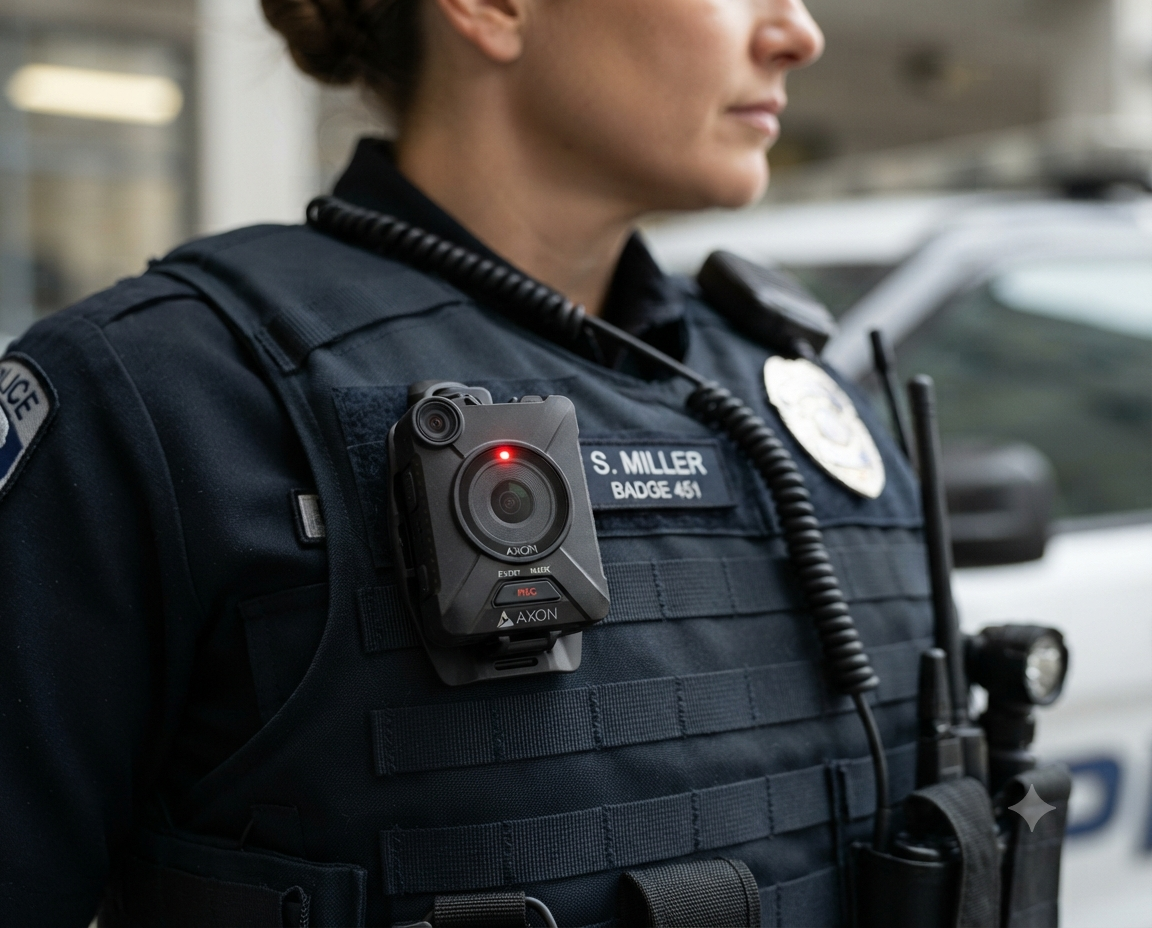
When police body camera footage is missing, incomplete, improperly handled, or inconsistent with an officer’s report, it can raise important questions in a California criminal case. Police body camera violations do not automatically result in dismissed charges or excluded evidence, but they may affect how the facts are evaluated and whether the prosecution’s version of events can be challenged.
Body-worn cameras have become an important tool in modern law enforcement. These recordings may provide valuable evidence about arrests, searches, questioning, use-of-force incidents, and interactions between officers and members of the public.
When used properly, police body camera footage can help establish what actually happened. However, when officers fail to follow body camera policies, fail to activate their cameras, or allow important recordings to become unavailable, those issues may become significant during the criminal process.
Understanding how police body camera violations work under California law can help people better understand the role video evidence may play in a criminal case.
What Are Police Body Camera Violations?
A police body camera violation occurs when a law enforcement officer or agency fails to follow applicable body-worn camera laws, department policies, or evidence-handling procedures.
Examples of potential police body camera violations include:
- Failing to activate a body camera when agency policy requires recording
- Turning off a camera during an important part of an encounter without proper justification
- Failing to document why recording was interrupted or unavailable
- Improperly storing or preserving video footage
- Losing or deleting recordings
- Failing to follow procedures for reviewing or maintaining recordings
- Not properly handling body camera evidence during an investigation
However, a police body camera violation does not automatically mean that a criminal case will be dismissed. Courts generally examine the circumstances surrounding the violation, including whether the missing footage was important, whether a person’s constitutional rights were affected, and whether the evidence presented in court remains reliable.
Why Police Body Camera Footage Matters in California Criminal Cases
Criminal cases often involve disagreements about what happened during an encounter with police. An officer’s report provides one account of events, but police body camera footage may provide additional context or a different perspective.
Body camera recordings may capture:
- Statements made by officers, suspects, and witnesses
- The actions and behavior of individuals involved
- How an arrest or detention was conducted
- Whether commands or warnings were given
- The timing of events
- The circumstances surrounding an alleged crime
For example, a person charged with resisting arrest may disagree with an officer’s claim that they acted aggressively. If body camera footage shows that the person was attempting to comply, that officers gave unclear instructions, or that the interaction unfolded differently than described, the recording may become important evidence.
Similarly, in an alleged assault case, body camera footage may provide information about who initiated a confrontation, what statements were made, and whether the police report accurately describes the incident.
Does California Require Police Officers to Use Body Cameras?
California does not require every law enforcement agency to use body-worn cameras. However, many police departments and sheriff’s offices throughout the state have adopted body camera programs with policies governing when officers should record, how footage should be stored, and how recordings should be reviewed.
These policies are influenced by California law, including California Penal Code § 832.18, which addresses considerations for law enforcement agencies when developing body-worn camera policies.
How California Penal Code § 832.18 Relates to Police Body Camera Violations
California Penal Code § 832.18 establishes recommended practices and considerations for law enforcement agencies creating and maintaining body-worn camera policies.
These guidelines are directed toward law enforcement agencies and officers responsible for operating body-worn camera programs. They address important areas agencies should consider, including:
- When officers should activate body-worn cameras
- Circumstances when recording may be stopped
- Procedures for documenting missed recordings
- Storage and preservation of video footage
- Access to recordings
- Supervision and compliance review
The purpose of these guidelines is to encourage consistent use of body cameras, improve accountability, and promote proper management of recordings that may later become evidence.
It is important to understand that Penal Code § 832.18 does not require officers to record every interaction and does not automatically create a defense whenever a police body camera policy is violated.
Instead, the impact of a violation depends on the facts of the situation.
For example, suppose an officer responds to an alleged domestic violence incident and writes a report describing statements and actions that support an arrest. If department policy required body camera activation but no recording exists, the defense may examine whether the missing footage could have provided additional information or contradicted parts of the officer’s report.
Important questions may include:
- Was the failure to record intentional or accidental?
- Was the officer required to activate the camera?
- Was the missing footage likely to contain important evidence?
- Did the agency properly document the issue?
- Does the missing recording affect the reliability of the evidence?
Can Missing Police Body Camera Footage Help a Criminal Defense Case?
Missing police body camera footage may become an important issue in a criminal case, especially when the recording could have helped explain disputed events.
A defense attorney may examine:
- Whether a recording should have existed
- Whether officers followed department policies
- Whether the footage could support the defense
- Whether the absence of video creates questions about credibility
- Whether other evidence confirms or contradicts the available information
For example, imagine a person is charged with resisting arrest. The officer’s report states that the person ignored commands and became physically aggressive. However, there is no body camera footage because the camera was not activated. The defense may investigate whether the missing recording could have shown a different version of events.
Missing footage does not automatically prove wrongdoing. Cameras may fail because of technical problems, equipment issues, or mistakes. The reason the footage is unavailable is an important factor.
Can Missing Police Body Camera Footage Be Considered Suppressed Evidence?
A common question in criminal cases is whether missing police body camera footage means police or prosecutors failed to provide evidence.
In California criminal proceedings, prosecutors generally have obligations to disclose certain evidence to the defense. This includes information that may be favorable or relevant to the accused under applicable discovery rules.
If police body camera footage existed and contained information that could help the defense, the handling and disclosure of that evidence may become an important issue.
However, not every missing recording automatically qualifies as improper evidence suppression. Courts may consider factors such as:
- Whether the footage actually existed
- Whether law enforcement knew about the evidence
- Whether the evidence was potentially helpful to the defense
- Whether the loss was intentional or accidental
- Whether other evidence is available
The significance of missing footage depends on the circumstances of each case.
Can Police Body Camera Violations Lead to Evidence Being Thrown Out?
Many people assume that if police violate body camera rules, evidence must automatically be excluded. That is not always the case.
Generally, courts focus on whether law enforcement violated a person’s constitutional rights and whether evidence was obtained unlawfully.
For example, if police conduct an unlawful search, the legal issue may involve protections against unreasonable searches and seizures. The fact that an officer also failed to activate a body camera may be relevant, but it does not automatically determine whether evidence can be used.
However, police body camera issues may still influence a case by affecting:
- The credibility of police testimony
- The reliability of reports
- The strength of the prosecution’s evidence
- Whether reasonable doubt exists
What Happens If Police Lose or Delete Body Camera Footage?
The consequences of lost or deleted police body camera footage depend on the facts surrounding the situation.
Courts may consider:
- Whether the footage was intentionally destroyed
- Whether proper evidence procedures were followed
- Whether the recording could have affected the outcome of the case
- Whether alternative evidence exists
Intentional destruction of potentially important evidence may raise different concerns than an accidental equipment failure.
For example, if officers recorded an incident but the footage later disappears without explanation, questions may arise about how the evidence was stored and handled.
How Can Police Body Camera Footage Be Used in a California Criminal Case?
Police body camera footage may be useful in several ways.
Challenging Police Reports
Police reports are summaries of events. Video footage may reveal details that were omitted, misunderstood, or described differently.
Supporting a Defense Position
If footage supports a person’s explanation of events, it may help challenge allegations or provide important context.
Examining Police Conduct
Body camera recordings may reveal issues involving:
- Arrest procedures
- Police questioning
- Searches
- Use of force
- Compliance with department policies
Evaluating Witness Credibility
When accounts conflict, video evidence may help determine whether statements are consistent with what occurred.
Can You Request Police Body Camera Footage in California?
Access to police body camera footage depends on the circumstances, including whether there is an active criminal case, the type of incident involved, and applicable disclosure rules.
In criminal cases, prosecutors may have obligations to provide certain evidence to the defense through the discovery process. The defense may seek relevant recordings as part of preparing a case.
Members of the public may also request certain police records under California transparency laws, although some recordings may be restricted because of privacy concerns, ongoing investigations, or legal exemptions.
What If an Officer Says the Police Body Camera Was Not Working?
An officer’s statement that a police body camera malfunctioned does not necessarily resolve the issue.
The circumstances surrounding the malfunction may still be examined, including:
- Whether the equipment was properly maintained
- Whether the officer knew about the problem beforehand
- Whether the malfunction was documented
- Whether the agency followed equipment procedures
- Whether other evidence exists
A legitimate equipment problem and an unexplained failure to record may have very different implications.
Frequently Asked Questions
Do police body camera violations automatically dismiss criminal charges in California?
No. A police body camera violation does not automatically dismiss criminal charges. The effect depends on the facts of the case, the importance of the missing footage, and whether any legal rights were affected.
Can missing police body camera footage create reasonable doubt?
Potentially. If missing footage affects important evidence or creates questions about the accuracy of testimony, it may become relevant when evaluating reasonable doubt.
Can police body camera footage contradict a police report?
Yes. Video evidence may sometimes show details that differ from a written police report, including timing, statements, or actions during an encounter.
Are police officers required to record every interaction in California?
No. Recording requirements depend on applicable laws, agency policies, and the circumstances of the encounter.
Can police delete body camera footage in California?
Police body camera footage is generally subject to evidence management policies and legal requirements. Improper deletion or loss of important evidence may raise legal issues depending on the circumstances.
How long do police departments keep body camera footage?
Retention periods vary depending on the type of recording, agency policies, and applicable laws. Some recordings may be retained longer because of their connection to criminal investigations or legal proceedings.
What should I do if I believe police body camera footage is missing?
If police body camera footage may be important to a criminal case, understanding the available legal procedures for obtaining and reviewing evidence can be important.
How Police Body Camera Violations May Affect the Outcome of a California Criminal Case
Police body camera recordings can play an important role in helping courts understand what happened during a law enforcement encounter. They may support an officer’s account, challenge allegations, reveal inconsistencies, or provide additional context that written reports do not capture.
When officers fail to follow body camera policies, the issue may become important in evaluating the reliability and completeness of the evidence. California Penal Code § 832.18 provides guidance regarding body-worn camera policies, but the effect of any violation depends on the specific facts involved.
Contact Southwest Legal
Every criminal case involves different evidence, legal issues, and circumstances. If you have questions about how police body camera violations, missing footage, or evidence issues may relate to a California criminal matter, Southwest Legal can help you better understand the legal process and the factors that may affect your situation.
Contact us today for a free consultation to discuss your situation and learn how police body camera evidence and potential violations may affect your criminal case.
Disclaimer: This article is for general informational purposes only and does not constitute legal advice or create an attorney-client relationship. No attorney-client relationship is formed unless and until the firm and client enter into an agreement for legal services. Laws may change, and legal outcomes depend on the specific facts of each case. Consult a qualified attorney for advice regarding your situation.