


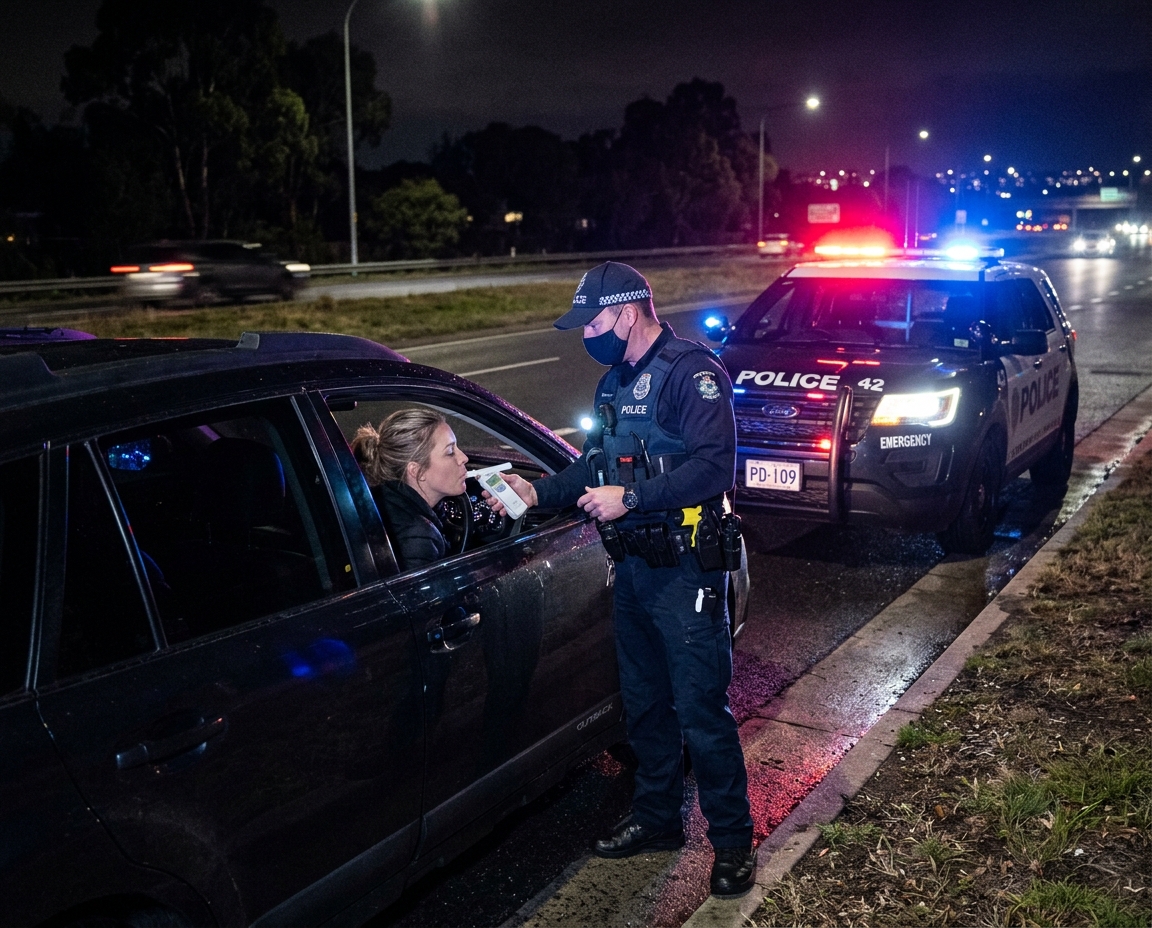
Being arrested or convicted of driving under the influence (DUI) in another state can create consequences that extend beyond the state where the incident occurred. For California residents and people who hold a California driver’s license, an out-of-state DUI may affect their California driving record, driving privilege, insurance, and potentially how a future DUI is treated.
The situation can be confusing because two different legal systems may become involved. The state where the DUI occurred generally handles the criminal case, while the California Department of Motor Vehicles (DMV) may separately address the person’s California driving privilege.
Understanding how these systems interact can help you recognize what an out-of-state DUI may mean for your California driver’s license.
The consequences of an out-of-state DUI depend on the particular offense, the state involved, the final disposition of the case, and the driver’s history.
What Is an Out-of-State DUI?
An out-of-state DUI is a DUI-related arrest or conviction that occurs outside the state where the driver is licensed or normally resides.
For example, imagine a California resident who travels to Arizona for vacation. If that person is arrested for allegedly driving under the influence in Arizona, the Arizona authorities generally handle the criminal prosecution under Arizona law.
However, if the person has a California driver’s license, the matter can potentially have consequences in California as well.
This is because a driver’s criminal case and driving privilege are not necessarily handled by the same authority.
The state where the incident occurred may determine:
- Whether criminal charges are filed
- Whether the driver is convicted
- The criminal penalties imposed
- Court-ordered DUI programs or treatment
- Fines, probation, or other sentencing requirements
California DMV may separately determine whether the out-of-state matter affects a California-issued driving privilege.
Does an Out-of-State DUI Affect a California Driver’s License?
Yes, it can.
California DMV evaluates certain traffic convictions that California drivers receive in other states. California law allows DMV to determine whether an out-of-state violation would have resulted in negligent-operator points or grounds for suspension or revocation if the same violation had occurred in California.
As a result, a DUI conviction from another state should not automatically be assumed to have no effect on a California driver’s license.
The specific consequences depend on the circumstances, including the nature of the out-of-state conviction and the driver’s existing record.
Example: California Driver Convicted in Nevada
Suppose a California driver is convicted of DUI in Nevada.
Nevada handles the criminal case. The driver may have Nevada-specific requirements resulting from the conviction.
At the same time, California DMV may receive information about the conviction and evaluate its effect on the person’s California driving privilege.
The driver therefore may need to deal with both Nevada requirements and California DMV requirements.
Can California DMV Take Action After an Out-of-State DUI?
Potentially, yes.
California DMV assesses negligent-operator points for qualifying traffic convictions that California drivers receive outside California. Out-of-state convictions may therefore contribute to a driver’s California driving record and, depending on the driver’s overall history, may play a role in a negligent-operator action.
This does not mean every out-of-state DUI automatically results in the same California suspension.
The outcome can depend on the particular conviction and the driver’s record.
California’s Negligent Operator Treatment System, commonly called NOTS, evaluates a driver’s record under California’s point system. Out-of-state convictions can be considered when determining whether a driver should be treated as a negligent operator.
Is an Out-of-State DUI Automatically the Same as a California DUI?
Not necessarily.
Different states use different terminology and have different DUI statutes. An offense that is called DUI, DWI, OUI, OWI, or another term in another state may have different legal elements and consequences.
California DMV may nevertheless evaluate an out-of-state conviction under California requirements when determining its effect on a California driving privilege.
For that reason, the actual offense and final conviction can be more important than the label used by the other state.
Example
A driver may be convicted under another state’s law for an alcohol-related driving offense. If the driver later has a DUI matter in California, the earlier conviction may become relevant depending on whether it qualifies as a prior offense under California law.
That determination should not be made solely from the name of the offense.
Can an Out-of-State DUI Count as a Prior DUI in California?
It potentially can.
California DUI law imposes different consequences on repeat offenses, and California recognizes certain prior DUI-related convictions when determining whether a later offense is a repeat violation.
California DMV states that DUI offenses are used as priors for subsequent DUIs for a 10-year period measured from the previous violation date.
Whether a particular out-of-state conviction qualifies as a prior under California law can depend on the nature of that conviction and the applicable legal requirements.
Why This Matters
Consider two drivers.
Driver A has never previously been convicted of DUI.
Driver B was convicted of a qualifying DUI-related offense in another state several years earlier and later faces a new DUI matter in California.
The two drivers may not face the same consequences because the earlier out-of-state conviction may be relevant to Driver B’s case.
This is one reason an out-of-state DUI should not simply be treated as an isolated incident.
Will an Out-of-State DUI Appear on a California Driving Record?
It can.
California DMV receives and records qualifying information concerning traffic convictions and driving-related actions. California DMV specifically states that it assesses negligent-operator points for traffic convictions California drivers receive in other states, as well as certain other jurisdictions.
A driver can request a copy of their California driving record to determine what reportable information appears.
It is important to distinguish between the length of time information can be relevant to DUI laws and the precise reporting periods used for different types of information on a DMV record.
California DMV currently explains that DUI convictions are reportable for 10 years from the violation date. DUI-related departmental actions have separate reporting rules, and certain unresolved DUI-related suspensions or revocations can remain on the public driving record longer.
Therefore, saying simply that “a DUI stays on your record for 10 years” can be an oversimplification.
How Long Does an Out-of-State DUI Affect You in California?
There is no single time period that applies to every consequence.
Different aspects of an out-of-state DUI may have different timelines.
For example:
- A DUI conviction may be relevant for California’s 10-year DUI prior period.
- A conviction may have a particular reporting period on a California driving record.
- A suspension or revocation may have its own duration.
- An unresolved DUI-related suspension or revocation can affect the driving record differently from a completed action.
- Insurance companies may use their own underwriting criteria when evaluating driving history.
The exact timeline therefore depends on which consequence you are asking about.
Can You Lose Your California License Because of an Out-of-State DUI?
An out-of-state DUI can potentially lead to action against a California driving privilege.
However, it would be inaccurate to say that every out-of-state DUI automatically results in a specific suspension period.
California DMV evaluates the circumstances and applicable California requirements. The driver’s previous record can also matter.
A driver who receives a notice from California DMV should pay close attention to the notice because it may explain the proposed action, effective date, and available procedures.
Can You Get an Ignition Interlock Device Requirement for an Out-of-State DUI?
Possibly.
This is an especially important issue for California drivers.
California DMV specifically states that a person who was convicted of DUI in another state while holding a California-issued driver’s license may need to install an ignition interlock device (IID) for California even if the person was not convicted of DUI in California.
An IID is a device connected to a vehicle’s ignition system that generally requires the driver to provide a breath sample before the vehicle can be started.
If California requires an IID, failing to comply can prevent a person from obtaining or maintaining the driving privilege associated with the IID requirement.
The exact requirements depend on the driver’s circumstances and the applicable DMV action.
What Happens if You Do Not Install a Required IID?
If California DMV requires an IID and the driver does not comply, the driver may not receive the driving privilege associated with the IID requirement.
California DMV explains that a person who does not comply with a mandatory IID installation requirement will not be issued a driver’s license and cannot legally drive.
This makes it important to understand exactly what California DMV requires rather than assuming that completing the court requirements in another state automatically resolves the California DMV matter.
Does an Out-of-State DUI Affect Auto Insurance?
It may.
A DUI conviction can affect insurance because insurers may consider driving history when evaluating policies and determining premiums.
The amount of any increase can vary considerably. Different insurers use different underwriting criteria, and the effect can depend on the driver’s overall record and other factors.
An out-of-state DUI therefore should not be assumed to have no insurance consequences simply because the conviction occurred outside California.
What If You Move to Another State After an Out-of-State DUI?
Moving does not necessarily eliminate the consequences of a DUI.
Driver licensing authorities exchange information about driving records and license actions. California DMV uses systems that help identify drivers whose driving privileges have been suspended, revoked, or otherwise affected in another jurisdiction.
Consequently, obtaining a new license in another state may involve review of a person’s existing driving status.
A person generally should not assume that moving to another state automatically clears a prior suspension, revocation, or DUI-related driving issue.
What If You Have an Out-of-State License and a California DUI?
The situation can work in the opposite direction.
Someone who lives outside California but receives a DUI conviction in California may have a California driving-related action even though they hold an out-of-state license.
California has a specific process for certain out-of-state residents who have received a California DUI conviction and are subject to a California suspension or revocation.
California Vehicle Code section 13353.5 allows DMV, under specified circumstances, to terminate a California DUI suspension or revocation for a person who resides in another state after the applicable suspension or revocation period has ended.
This process is not automatic. Eligibility requirements apply, and the person may need to submit the appropriate DMV application and proof of out-of-state residency.
What Should You Do After an Out-of-State DUI?
If you have a California driver’s license and receive an out-of-state DUI, there are several practical steps that may help you understand your situation.
1. Keep Your Court Documents
Keep copies of the citation, charging documents, plea documents, judgment, sentencing paperwork, and any documents concerning your driving privilege.
The final disposition of the case can be important when determining what consequences may follow.
2. Check Your California Driving Record
You can request your California driver record from DMV.
Reviewing the record can help you determine whether the out-of-state conviction or related action has been reported and whether there are California DMV actions affecting your driving privilege.
3. Read Every DMV Notice Carefully
If California DMV sends you a notice concerning your driving privilege, pay attention to deadlines and instructions.
A DMV administrative process can be separate from the criminal case in the other state.
4. Determine Whether California Requirements Apply
Do not assume that satisfying the requirements imposed by the state where you were convicted automatically satisfies California requirements.
California DMV may have separate requirements concerning your California driving privilege.
5. Consider Getting Legal Guidance
If the interaction between an out-of-state DUI conviction and your California driving privilege is unclear, consider consulting an attorney who handles California DUI and DMV matters.
An attorney can review the specific conviction and DMV documents rather than relying on assumptions based on the general term “DUI.”
Frequently Asked Questions
Does an out-of-state DUI affect a California license?
It can. California DMV evaluates qualifying out-of-state traffic convictions and may take action affecting a California driving privilege depending on the circumstances.
Can California suspend my license for a DUI in another state?
Potentially. An out-of-state DUI can lead to California DMV consequences, but the exact result depends on the conviction, applicable California law, and the driver’s record.
Does an out-of-state DUI go on my California driving record?
It can. California DMV receives information about qualifying out-of-state convictions and assesses certain out-of-state convictions for California driving-record purposes.
How long does a DUI remain relevant in California?
California DMV states that DUI convictions are used as priors for subsequent DUIs for 10 years from the previous violation date. DUI conviction reporting and reporting of DUI-related administrative actions can have different timelines.
Can an out-of-state DUI count as a prior DUI in California?
It may. Whether an out-of-state conviction qualifies as a prior under California law depends on the nature of the conviction and the applicable legal requirements.
Do I need an IID for an out-of-state DUI?
Possibly. California DMV specifically states that a person convicted of DUI in another state may need an IID for California even if the person was not convicted in California.
Does moving out of California make an out-of-state DUI disappear?
No. Moving does not automatically erase a conviction, driving record information, or a suspension or revocation.
Will an out-of-state DUI increase my insurance?
It may. Insurers can consider DUI convictions and driving history when determining eligibility and rates.
Is an out-of-state DUI the same as a California DUI?
Not necessarily. The other state may have different laws and offense classifications. California may separately evaluate the conviction for purposes of your California driving privilege and future DUI consequences.
What if I was arrested but never convicted?
An arrest is not the same as a conviction. The consequences can depend on how the criminal case was ultimately resolved and whether a separate administrative driving action occurred.
Key Takeaways
An out-of-state DUI can have consequences in California even though the incident occurred somewhere else.
The most important points are:
- The state where the DUI occurred generally handles the criminal prosecution.
- California DMV may separately evaluate the effect of the matter on a California driver’s license.
- Qualifying out-of-state traffic convictions can result in California negligent-operator points.
- An out-of-state DUI conviction may affect a California driving record.
- An out-of-state DUI may potentially be relevant as a prior DUI in California.
- California DMV states that an out-of-state DUI conviction involving a California-issued driver’s license may result in an IID requirement for California.
- DUI convictions and DUI-related DMV actions can have different reporting periods, so the statement that every DUI simply “stays on your record for 10 years” is not always precise.
- Moving to another state does not automatically eliminate a DUI conviction or unresolved driving-related action.
- Insurance consequences are possible and vary by insurer.
- Completing the requirements imposed by the state where the DUI occurred does not necessarily resolve separate California DMV requirements.
Understanding Your Options After an Out-of-State DUI
An out-of-state DUI can involve more than one jurisdiction and more than one set of requirements. The criminal case, the other state’s driving consequences, and California DMV’s treatment of the conviction may all need to be considered separately.
If you are unsure how an out-of-state DUI may affect your California driving privilege, reviewing the actual court and DMV documents is often more useful than relying on general information.
Contact Southwest Legal
An out-of-state DUI can create complicated questions about your California driver’s license, DMV record, IID requirements, and future driving privileges. Because the consequences can depend on the specific conviction and your driving history, understanding what applies to your situation is an important first step.
Southwest Legal can help you understand the potential California DMV consequences associated with an out-of-state DUI and what information may be important to your situation.
If you have questions about an out-of-state DUI or how it may affect your California driving privilege, contact us today for a free consultation.
Disclaimer: This article is for general informational purposes only and does not constitute legal advice or create an attorney-client relationship. No attorney-client relationship is formed unless and until the firm and client enter into an agreement for legal services. Laws may change, and legal outcomes depend on the specific facts of each case. Consult a qualified attorney for advice regarding your situation.