


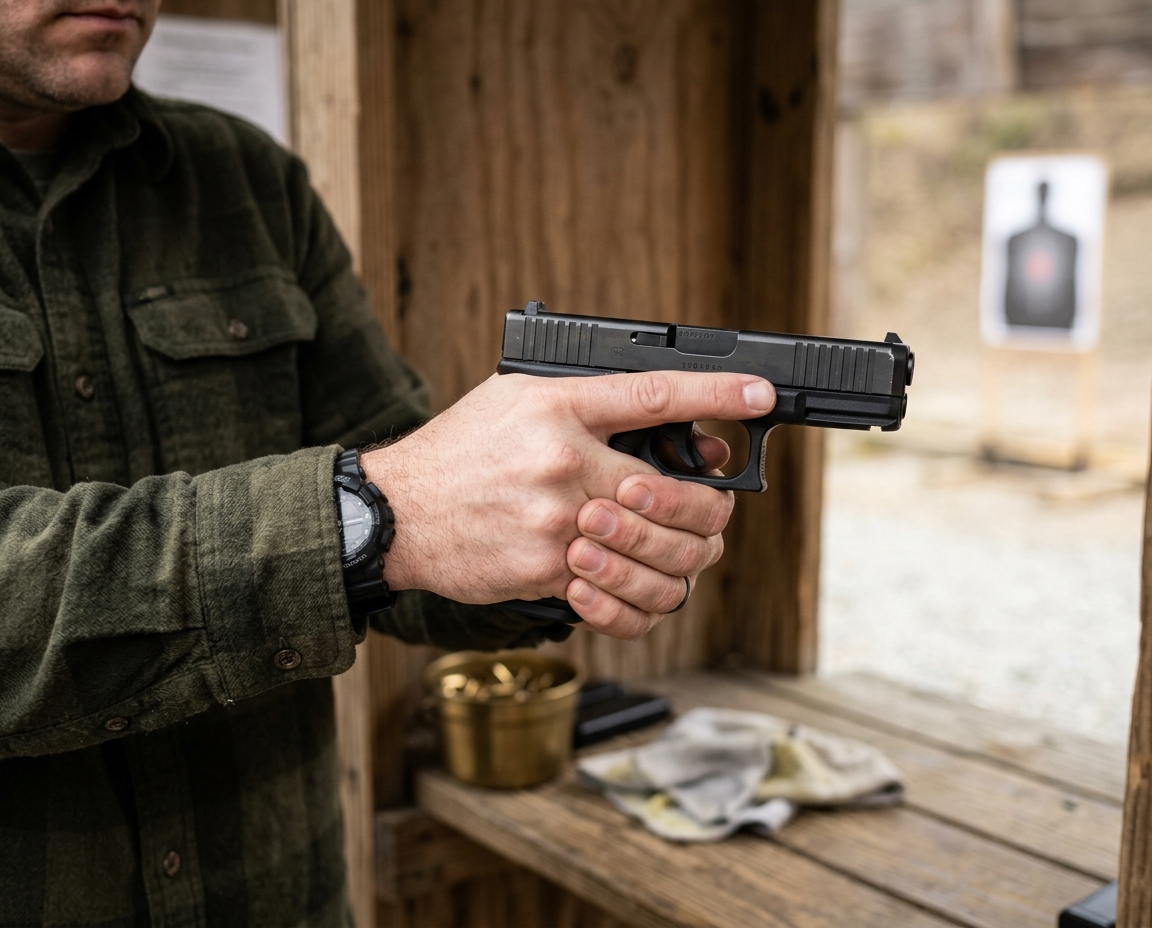
California Penal Code § 29800 is one of the state’s most important firearm-possession laws. It generally prohibits people with qualifying felony convictions from owning, purchasing, receiving, possessing, or having custody or control of a firearm.
The offense is commonly called “felon in possession of a firearm,” “felon with a gun,” or “possession of a firearm by a convicted felon.”
A § 29800 case can be more complicated than simply asking whether a person with a felony conviction was near a firearm. California law looks at issues such as whether the person actually possessed the firearm, whether the person knew about the firearm, whether the prior conviction qualifies under the statute, and whether law enforcement lawfully obtained the evidence.
This article explains California Penal Code § 29800, including the elements of the offense, potential penalties, constructive possession, common questions, and important issues involving prior convictions.
What Is California Penal Code § 29800?
California Penal Code § 29800 makes it a felony for certain prohibited people to own, purchase, receive, possess, or have custody or control of a firearm.
The law applies most commonly to people who have been convicted of a qualifying felony. It can also apply to certain other categories of prohibited persons identified by the statute.
For someone with a qualifying felony conviction, the basic rule is straightforward: the person generally cannot lawfully possess a firearm in California.
Importantly, possession does not necessarily mean physically holding a gun.
A person may potentially be considered in possession of a firearm if the evidence establishes that the person knowingly exercised control over it, even if the firearm was located somewhere else.
Who Can Be Charged Under Penal Code § 29800?
The most familiar category involves a person who has previously been convicted of a felony.
California’s statute addresses qualifying felony convictions under California law as well as certain convictions under federal law, the laws of other states, and the laws of other governments or countries.
The statute also contains provisions covering certain other prohibited categories, including:
- People with two or more convictions for certain violations involving brandishing a firearm.
- Certain people with qualifying outstanding warrants who know about the warrant.
- Certain individuals whose felony or other qualifying conviction resulted from being prosecuted as an adult following juvenile-court certification.
- Certain people covered by the statute’s provisions concerning narcotic-drug addiction.
The precise subsection matters. Not every firearm prohibition under California law operates in exactly the same way.
For purposes of an article about felon possession of a firearm, however, the most commonly discussed provision is Penal Code § 29800(a)(1).
What Are the Elements of Felon in Possession of a Firearm?
In a typical prosecution involving a qualifying felony conviction, the prosecution generally must prove the required elements beyond a reasonable doubt.
The elements can be summarized in simple terms:
- The defendant owned, purchased, received, or possessed a firearm.
- The defendant knew that they owned, purchased, received, or possessed the firearm.
- The defendant had a qualifying prior conviction or otherwise fell within a category covered by the firearm prohibition.
The exact elements can vary depending on the subsection being charged and whether the prior conviction is admitted or stipulated to in the case.
The requirement concerning knowledge is important.
A person is not necessarily guilty merely because a firearm happens to be located somewhere nearby. The prosecution must establish the knowledge and possession elements required by the applicable law and jury instructions.
Does a Person Have to Be Holding the Gun?
No.
One of the most common misunderstandings about Penal Code § 29800 is the assumption that possession requires physically holding the firearm.
California law recognizes circumstances involving actual possession and constructive possession.
Actual possession
Actual possession generally involves direct physical possession.
For example, suppose police search a person and discover a handgun in the person’s waistband. The prosecution could argue that the person actually possessed the firearm.
Another example would be a firearm being carried in a backpack that the person knowingly controls.
Constructive possession
Constructive possession is different.
A person may potentially have constructive possession when they do not physically hold the firearm but knowingly exercise control over it or have the right to control it.
For example, imagine a firearm is located inside a locked safe in a person’s bedroom. If the evidence shows that the person knows about the firearm, controls the safe, and has the ability to access and control the firearm, the prosecution may argue that the person constructively possessed it.
But the fact that a firearm is found in a particular location does not automatically establish constructive possession.
The prosecution still has to prove the required elements based on the evidence.
What If the Gun Belongs to Someone Else?
Another person’s ownership of the firearm does not automatically resolve a § 29800 case.
For example, suppose a person with a qualifying felony conviction lives with a roommate who legally owns several firearms.
The roommate’s ownership may be relevant, but the important question is whether the prohibited person knowingly possessed, controlled, or otherwise exercised the type of possession covered by § 29800.
Simply being in the same house as a firearm is not necessarily the same thing as possessing it.
This distinction can become especially important when firearms are found in:
- Shared bedrooms
- Common areas
- Vehicles
- Garages
- Storage areas
- Closets
- Gun safes
- Bags or containers accessible to multiple people
The circumstances surrounding the firearm can therefore matter significantly.
Does the Gun Have to Be Loaded?
Generally, no.
A firearm does not ordinarily have to be loaded for Penal Code § 29800 to apply.
The statute concerns the prohibited person’s ownership, possession, custody, control, purchase, or receipt of a firearm. It is not limited to loaded guns.
For example, a person with a qualifying felony conviction generally cannot avoid the firearm prohibition simply because the firearm has no ammunition in it.
Other California firearm laws may apply differently depending on whether a firearm is loaded, where it is located, or how it is carried.
Does Ammunition Count as a Firearm?
No.
A firearm and ammunition are legally distinct.
California has separate laws addressing ammunition possession by people who are prohibited from possessing firearms.
Consequently, a case involving a prohibited person and ammunition can potentially involve additional legal issues beyond Penal Code § 29800.
What Are the Penalties for Penal Code § 29800?
A violation of Penal Code § 29800 is a felony.
For the standard offense, the statute provides for punishment pursuant to California’s sentencing provisions, with the applicable sentencing triad generally being:
- 16 months
- Two years
- Three years
The standard sentencing provision is connected to Penal Code § 1170(h), which generally concerns felony sentences served in county jail rather than automatically meaning a sentence in state prison.
However, sentencing can become more complicated when a defendant has qualifying prior convictions, including serious or violent felony convictions, or when other sentencing laws apply.
A § 29800 case can also involve additional criminal charges depending on the circumstances.
For example, prosecutors might consider other firearm-related offenses involving:
- Ammunition
- Carrying a concealed firearm
- Carrying a loaded firearm in prohibited circumstances
- Firearm possession in restricted locations
- Possession of certain prohibited firearms
- Use of a firearm during another alleged offense
The possible consequences therefore cannot always be determined by looking at § 29800 alone.
Is Felon in Possession of a Firearm a Strike?
A Penal Code § 29800 conviction is not automatically a “strike” merely because it is a felony.
California’s Three Strikes law focuses on qualifying serious or violent felony convictions.
However, a defendant’s prior serious or violent felony convictions can affect sentencing in a later § 29800 case.
This distinction is important. The classification of the current offense and the classification of a person’s prior convictions are separate questions.
Can a Felon Possess a Gun for Self-Defense?
A person who is prohibited from possessing firearms generally cannot simply possess a gun because they believe they need it for protection.
The desire to use a firearm for self-defense does not ordinarily eliminate the firearm prohibition created by a qualifying felony conviction.
There are limited and fact-specific legal doctrines concerning temporary possession in certain circumstances, but these should not be interpreted as a general exception allowing a prohibited person to keep a firearm for protection.
Someone who is prohibited from possessing firearms should not assume that a perceived safety concern gives them permission to possess a gun.
What If a Gun Is Found in a Car?
A firearm discovered inside a vehicle can create significant legal questions when one of the occupants is prohibited from possessing firearms.
But simply being inside a vehicle where a firearm is found does not necessarily establish possession.
Consider this example:
Three people are riding in a vehicle. A firearm is discovered underneath a seat. One passenger has a prior felony conviction, while the other occupants do not.
The location of the firearm is evidence that prosecutors may examine, but the prosecution may still need to establish who knew about the firearm and who possessed or controlled it.
Evidence concerning ownership, statements, fingerprints, DNA, accessibility, location, and other circumstances could potentially become relevant.
What If a Gun Is Found in a House?
The same general principle applies to a residence.
A prohibited person can potentially face a § 29800 charge if the evidence establishes knowing possession or control of a firearm.
However, merely living at an address where another person owns firearms does not automatically establish that every resident possesses every firearm in the home.
For example, suppose a person with a prior felony conviction lives with a spouse who legally owns firearms. The firearms are stored in a secured area controlled by the spouse, and there is no evidence that the prohibited person knew about or exercised control over them.
That situation is different from one in which the prohibited person knowingly keeps firearms in a bedroom, controls the firearm storage, or otherwise exercises possession or control.
The facts matter.
Does the Prosecution Have to Prove the Person Knew About the Gun?
Yes, knowledge is an important part of the offense as reflected in California’s criminal jury instructions for prohibited firearm possession.
The prosecution generally must establish that the defendant knew they possessed, owned, purchased, or received the firearm, depending on the conduct alleged.
This means that an accidental or completely unknown presence of a firearm is not necessarily enough to establish criminal possession.
For example, imagine someone borrows a friend’s vehicle without knowing that a firearm was left inside a closed compartment. The mere discovery of the firearm does not automatically establish that the borrower knowingly possessed it.
Whether the evidence actually establishes knowledge and possession is a factual and legal question.
What Are Common Legal Issues in a § 29800 Case?
Several issues can arise in a prosecution involving Penal Code § 29800.
Whether the defendant possessed the firearm
The prosecution must establish the required possession element.
This can become complicated when multiple people had access to the location where the firearm was discovered.
Whether the defendant knew about the firearm
Knowledge is another important issue.
A person may dispute that they knew the firearm was present or that they possessed it.
Whether the prior conviction qualifies
The government must establish that the defendant falls within a category prohibited from possessing firearms under the applicable statute.
Questions about the nature and jurisdiction of an old conviction can therefore matter.
Whether the firearm was actually a firearm
The prosecution must establish that the object involved qualifies as a firearm under California law.
Whether the search was lawful
If law enforcement discovered the firearm during a search, constitutional search-and-seizure issues may arise.
For example, depending on the circumstances, a defense attorney may examine whether police had a warrant, probable cause, consent, or another lawful basis for conducting the search.
If evidence was obtained unlawfully, there may be legal grounds to challenge its admissibility.
Can an Old Felony Still Prohibit Firearm Possession?
An old felony conviction can continue to affect firearm rights.
There is generally no simple rule that says a felony conviction stops mattering for firearm possession merely because a certain number of years have passed.
However, the legal effect of a conviction can depend on what happened to that conviction afterward.
Issues that can matter include:
- Whether the conviction was reduced or otherwise modified
- Whether a conviction was dismissed or set aside
- Whether the conviction occurred in California or another jurisdiction
- Whether the person received a qualifying pardon
- Whether the applicable law recognizes the post-conviction relief
- Whether federal firearm restrictions independently apply
People should therefore be cautious about assuming that an old conviction automatically means either permanent prohibition or automatic restoration of firearm rights.
What Changed to Penal Code § 29800 in 2026?
California Penal Code § 29800 was amended effective January 1, 2026, to address certain nonviolent felony convictions from other states.
The amendments create limited circumstances in which the California firearm prohibition does not apply to a qualifying nonviolent out-of-state felony conviction.
Among other requirements, the conviction generally must have been vacated, set aside, expunged, or otherwise dismissed under the law of the state where the conviction occurred. Additional requirements apply when the original conviction created a firearm prohibition in that state.
The amended statute also addresses certain qualifying out-of-state felony convictions affected by a full and unconditional pardon that restored firearm rights.
These provisions are narrower than a general restoration of firearm rights for anyone with an old felony.
The term “nonviolent felony” is also specifically addressed by the amended law. Certain offenses involving serious injury, death, kidnapping, firearm discharge, carjacking, assault with a deadly weapon, and other specified conduct are excluded from the statutory definition.
Because these provisions are relatively new, the precise details of an out-of-state conviction and the relief obtained in that state can be especially important.
Can a Felony Be Reduced to a Misdemeanor and Restore Gun Rights?
This is a complicated area of California law.
Some felony convictions may qualify for reduction or other post-conviction relief under California law. However, the effect of a particular form of relief on firearm rights depends on the applicable statutes and the nature of the conviction.
A person should not assume that every reduction, dismissal, expungement, or other form of record relief automatically restores the right to possess firearms.
Federal firearm restrictions can also exist independently of California law.
For that reason, someone considering firearm-rights restoration should determine whether the particular legal relief actually affects both state and federal firearm restrictions.
Can a Federal Felony Affect Firearm Rights in California?
Potentially, yes.
California Penal Code § 29800 contains specific rules concerning federal felony convictions and warrants.
A federal conviction is not simply treated as qualifying under every circumstance without further analysis. The statute contains requirements concerning the nature of the federal offense and, in certain circumstances, the sentence imposed.
Federal law may also independently prohibit firearm possession.
This means that someone with a federal conviction should not assume that California’s rules are the only rules that matter.
Can Someone With a Felony Live With Someone Who Owns Guns?
There is no simple rule that every person with a felony conviction is prohibited from living in a home where another person legally owns firearms.
The important issue is whether the prohibited person possesses, controls, or otherwise exercises the type of control over a firearm prohibited by law.
For example, a prohibited person may live with a spouse who owns firearms. The legal risk can be very different depending on whether the firearms are secured and controlled exclusively by the lawful owner or whether the prohibited person has access to and exercises control over them.
Because constructive possession can be fact-specific, household firearm arrangements should be handled carefully.
What Is the Difference Between Possession and Ownership?
Ownership and possession are related but different concepts.
A person can potentially own property without physically possessing it at a particular moment. Conversely, a person can potentially possess property without being its legal owner.
Penal Code § 29800 addresses several forms of conduct, including ownership, purchase, receipt, possession, custody, and control.
That is why saying “the gun isn’t mine” does not automatically answer whether the statute has been violated.
At the same time, the fact that a prohibited person is near another person’s firearm does not automatically establish unlawful possession.
The evidence must be considered as a whole.
What Defenses May Arise in a Penal Code § 29800 Case?
The appropriate defense depends entirely on the facts and evidence. Potential issues can include:
- The defendant did not possess the firearm.
- The defendant did not know the firearm was present.
- Another person exclusively possessed or controlled the firearm.
- The prior conviction does not qualify under the statute.
- The object was not legally a firearm.
- Law enforcement conducted an unlawful search or seizure.
- The prosecution cannot establish one or more required elements beyond a reasonable doubt.
- A statutory exception or other legal issue applies.
These are examples of issues that may arise; they are not guarantees of a particular defense or result.
Frequently Asked Questions
Is possession of a firearm by a felon a felony in California?
Yes. A violation of Penal Code § 29800 can be prosecuted as a felony when the statutory requirements are met.
How long can you go to jail for a § 29800 conviction?
The standard sentencing triad associated with the offense is generally 16 months, two years, or three years under California’s applicable felony sentencing provisions. The actual sentence can depend on the facts, prior convictions, and other sentencing laws.
Does an unloaded firearm count?
Generally, yes. The firearm does not ordinarily have to be loaded for § 29800 to apply.
Can a felon possess a firearm if it belongs to someone else?
Generally, a prohibited person cannot possess a firearm simply because another person owns it. Ownership by someone else does not automatically prevent a possession violation.
Can a felon have a gun in the house?
A prohibited person cannot knowingly possess or exercise prohibited custody or control over a firearm. Simply sharing a residence with someone who lawfully owns firearms does not automatically establish possession, but the circumstances are important.
Can a felon touch a firearm?
A prohibited person should not assume that temporarily touching or handling a firearm is automatically lawful. Whether conduct constitutes prohibited possession can depend on the circumstances, including knowledge, control, purpose, and the duration and nature of the possession.
Does a felony conviction permanently take away gun rights?
A qualifying felony can result in a long-term or permanent prohibition under California and/or federal law, but the effect of post-conviction relief can vary. Certain legal procedures and statutory exceptions may affect firearm rights in specific circumstances.
Can an out-of-state felony affect gun rights in California?
Yes. California Penal Code § 29800 addresses qualifying convictions from other states and jurisdictions. The 2026 amendments also create limited exceptions involving certain nonviolent out-of-state felony convictions that have been vacated, dismissed, expunged, or otherwise set aside under specified conditions.
Does federal law matter too?
Yes. Federal firearm restrictions can apply independently of California law. A person should not assume that satisfying one jurisdiction’s requirements necessarily restores firearm rights under the other.
What happens if someone is accused of violating § 29800?
A person accused of felony firearm possession may face a criminal investigation, arrest, or prosecution. The case can involve questions concerning the prior conviction, possession, knowledge, the firearm itself, the circumstances of the search, and any additional charges.
Anyone facing such an allegation should consider obtaining advice from a qualified California criminal defense attorney as soon as possible.
Key Takeaways
California Penal Code § 29800 is a serious firearm-possession law that generally prohibits people with qualifying felony convictions from possessing firearms.
The most important points to understand are:
- A qualifying felony conviction can prohibit firearm possession.
- The prohibition is not limited to physically holding a firearm.
- Constructive possession can become an issue when a person allegedly exercises control over a firearm.
- The prosecution generally must establish the defendant’s knowledge of the prohibited possession.
- A firearm does not generally have to be loaded.
- Another person’s ownership of a firearm does not automatically make possession lawful for a prohibited person.
- Simply being near a firearm does not automatically establish possession.
- The standard felony sentencing triad associated with § 29800 is generally 16 months, two years, or three years under applicable California sentencing provisions.
- Prior convictions can affect the consequences of a new case.
- California and federal firearm restrictions can operate independently.
- The legal effect of post-conviction relief depends on the specific conviction and the applicable law.
- California’s 2026 amendments created limited provisions concerning certain nonviolent felony convictions from other states.
- The specific facts of the case can make a substantial difference.
Conclusion
California Penal Code § 29800 is commonly known as California’s felon-in-possession-of-a-firearm law. Although the basic rule is relatively straightforward, actual cases can involve complicated questions about possession, knowledge, prior convictions, constructive possession, searches, and additional firearm offenses.
A person with a qualifying felony conviction generally should not assume that a firearm is lawful to possess simply because the firearm belongs to someone else, is unloaded, is kept inside a residence, or is intended for protection.
Likewise, the presence of a firearm near someone with a felony conviction does not automatically establish criminal possession. The prosecution must prove the required elements of the charged offense.
The 2026 changes concerning certain nonviolent out-of-state felony convictions also demonstrate why older information about California firearm restrictions may not accurately describe the current law.
Contact Southwest Legal
If you or a family member is dealing with an allegation involving California Penal Code § 29800, obtaining information from a qualified California criminal defense attorney can help you understand the charges, the applicable law, and the legal process.
Southwest Legal provides legal information and assistance concerning criminal defense matters. Contact us today for a free consultation to discuss your situation and learn more about the legal process.
Disclaimer: This article is for general informational purposes only and does not constitute legal advice or create an attorney-client relationship. No attorney-client relationship is formed unless and until the firm and client enter into an agreement for legal services. Laws may change, and legal outcomes depend on the specific facts of each case. Consult a qualified attorney for advice regarding your situation.