


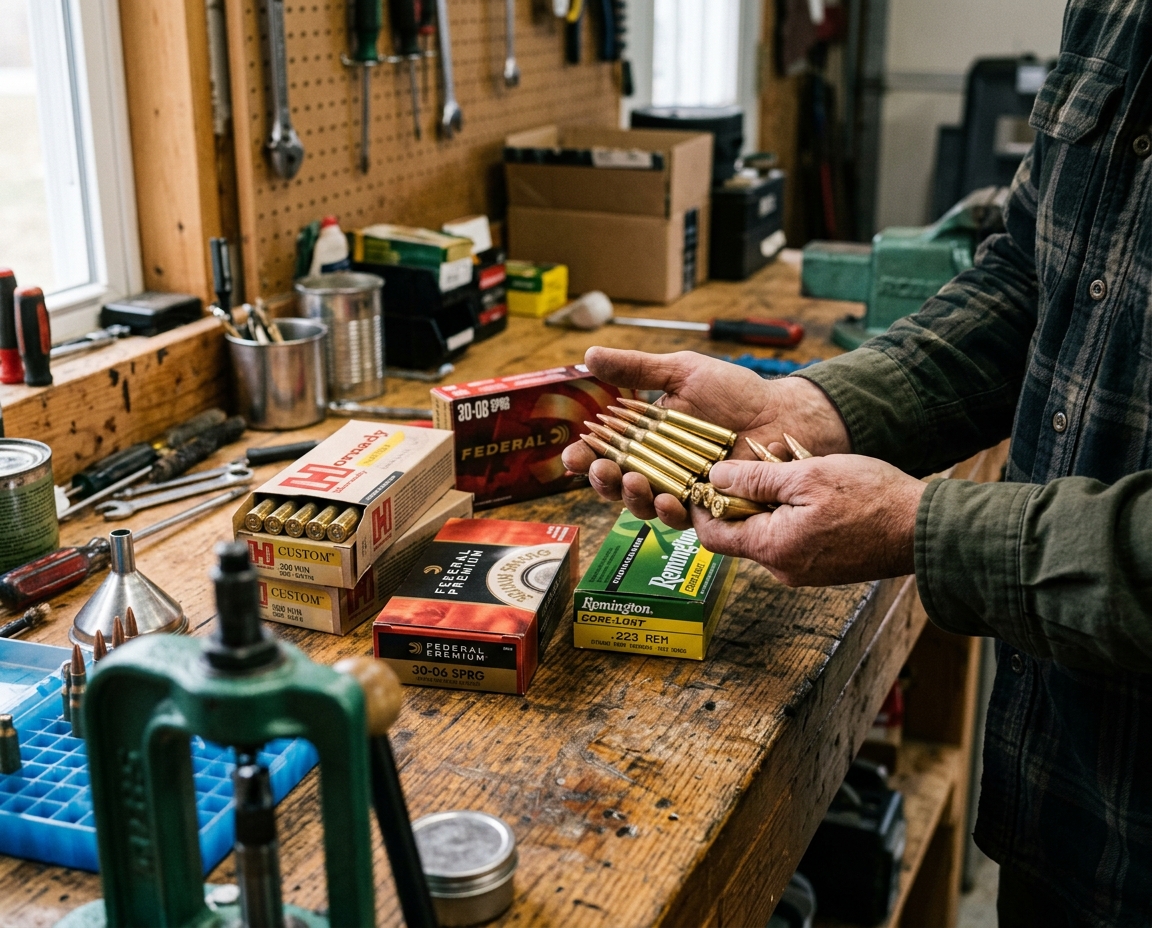
California Penal Code § 30305(a)(1) PC makes it unlawful for certain people who are prohibited from possessing firearms to own, possess, or have ammunition or reloaded ammunition under their custody or control.
The law is sometimes described as “felon in possession of ammunition,” but that description is incomplete. California Penal Code § 30305(a)(1) applies to people prohibited from possessing firearms under specific California laws, which can include certain felony and misdemeanor convictions as well as particular mental-health-related prohibitions.
Importantly, a person can potentially be charged with unlawful ammunition possession even if no firearm is found.
This article explains what California Penal Code § 30305(a)(1) means, who can be prohibited from possessing ammunition, what qualifies as ammunition, what prosecutors must prove, potential penalties, and answers to common questions about prohibited-person ammunition possession in California.
What Is California Penal Code § 30305(a)(1)?
California Penal Code § 30305(a)(1) prohibits a person from owning, possessing, or having ammunition or reloaded ammunition under their custody or control when that person is prohibited from owning or possessing a firearm under:
- Chapter 2 of Division 9 of Title 4 of Part 6 of the California Penal Code, beginning with Penal Code § 29800;
- Chapter 3 of that division, beginning with Penal Code § 29900; or
- California Welfare and Institutions Code § 8100 or § 8103.
The statute therefore does not simply prohibit every person with any criminal history from possessing ammunition. The person must fall within one of the specific firearm-prohibited categories identified by the law.
The distinction is important because California has several different firearm prohibitions, and the duration and legal consequences of a prohibition can vary depending on the underlying circumstances.
Is Penal Code § 30305(a)(1) the Same as “Felon in Possession of Ammunition”?
Not exactly.
People commonly refer to § 30305(a)(1) as California’s “felon in possession of ammunition” law because a felony conviction can result in a firearm prohibition under Penal Code § 29800.
However, § 30305(a)(1) is broader than a simple felony rule.
For example, California law contains firearm prohibitions based on certain misdemeanor convictions, certain juvenile findings, and particular mental-health-related circumstances. The current California criminal jury instructions recognize several possible bases for a § 30305(a) charge.
As a result, having a felony conviction is not the only circumstance that can potentially make someone prohibited from possessing ammunition.
Who Is Prohibited From Possessing Ammunition?
Whether someone is prohibited depends on the specific law creating the firearm prohibition.
People prohibited because of certain convictions
Some people become prohibited from possessing firearms because of prior felony convictions. California Penal Code § 29800 addresses firearm possession by certain people convicted of qualifying felonies or otherwise falling within its provisions.
Other firearm prohibitions can arise from specified misdemeanor convictions or other qualifying criminal records.
The exact offense, date of conviction, and circumstances can matter. A person should not assume that every misdemeanor creates the same prohibition or that every firearm prohibition lasts for the same period.
People prohibited because of certain mental-health-related circumstances
California Welfare and Institutions Code § 8100 and 8103 establish firearm prohibitions in specified circumstances involving mental health treatment or commitments.
Because § 30305(a)(1) specifically incorporates these provisions, a person can potentially be subject to an ammunition prohibition without having a felony conviction.
The legal requirements and duration of a mental-health-related prohibition depend on the particular statutory provision and circumstances involved.
People subject to other firearm prohibitions
California has numerous laws governing firearm eligibility and possession. However, it is important not to assume that every firearm restriction automatically creates liability under § 30305(a)(1).
For purposes of § 30305(a)(1), the statute specifically identifies the firearm prohibitions in Penal Code Chapters 2 and 3 and Welfare and Institutions Code § 8100 and 8103.
That distinction is particularly important when evaluating whether a particular charge has been properly brought under this subsection.
What Counts as Ammunition Under California Law?
California uses a specific definition of “ammunition” for Penal Code § 30305(a).
Under Penal Code § 16150(b), ammunition for purposes of § 30305 includes, among other things:
- Bullets;
- Cartridges;
- Magazines;
- Clips;
- Speed loaders;
- Autoloaders;
- Ammunition feeding devices; and
- Projectiles capable of being fired from a firearm with a deadly consequence.
The definition also expressly includes reloaded ammunition.
Blanks are excluded from the statutory definition.
This broad definition is significant because a prohibited person does not necessarily have to possess a conventional box of live cartridges for § 30305(a)(1) to become relevant.
Example
Imagine that police discover several cartridges in a prohibited person’s bedroom.
That situation is straightforward if the evidence shows the person knowingly possessed the cartridges.
But suppose the ammunition is discovered inside a magazine or another item covered by the statutory definition. The fact that it is not simply a loose cartridge does not necessarily take it outside § 30305.
Can Someone Be Charged With Possessing Ammunition Without Possessing a Gun?
Yes.
Penal Code § 30305(a)(1) separately prohibits qualifying prohibited persons from possessing ammunition.
The prosecution therefore does not necessarily have to prove that the defendant also possessed a firearm.
For example, suppose someone is legally prohibited from possessing firearms because of a qualifying prior conviction. Police later discover ammunition in an area that prosecutors claim was under that person’s control.
Even if investigators do not find a firearm, the ammunition allegation can potentially be prosecuted separately.
This is one of the most important things to understand about California’s prohibited-person ammunition law.
What Does “Possession” Mean?
Possession does not necessarily require someone to physically hold ammunition in their hand.
California criminal law recognizes that possession can occur through actual possession or constructive possession, depending on the circumstances.
Actual possession generally involves having physical possession of an item.
Constructive possession can involve having control over an item, or the right to control it, even when the person is not physically holding it.
California’s current criminal jury instructions explain that a person does not have to physically touch an item to possess it. They also recognize that two or more people can possess the same item at the same time.
Example: Ammunition in a Bedroom
Suppose ammunition is found inside a dresser in a bedroom.
If the prosecution claims that the prohibited person controlled the bedroom and knew the ammunition was there, it may argue that the person constructively possessed the ammunition.
But simply finding ammunition somewhere in a residence does not automatically establish that every person living there possessed it.
The evidence concerning knowledge, control, access, location, and other circumstances can become important.
Example: Ammunition in a Shared Vehicle
Suppose two people regularly use the same vehicle and police find ammunition underneath a seat.
The fact that the ammunition is inside the vehicle does not necessarily establish which person possessed it.
The prosecution may consider evidence concerning who knew about the ammunition, who exercised control over it, where it was found, and other surrounding facts.
What Does the Prosecution Have to Prove?
The precise elements can depend on the reason the defendant allegedly was prohibited from possessing a firearm.
For a typical § 30305(a) prosecution based on a qualifying conviction or mental-health-related prohibition, California’s current CALCRIM instructions identify several important elements.
Generally, the prosecution must establish that:
- The defendant owned, possessed, or had ammunition under their custody or control.
- The defendant knew they owned, possessed, or had custody or control of the ammunition.
- The defendant was subject to the applicable firearm prohibition.
- Where the particular prohibition requires additional facts—such as certain misdemeanor convictions or juvenile findings—the prosecution must establish those additional requirements.
The prosecution has the burden of proving the required elements of the charged offense beyond a reasonable doubt.
This is important because being a prohibited person alone is not enough. The prosecution must also establish the required possession and knowledge elements.
Does a Person Have to Know the Ammunition Is There?
Knowledge can be a critical issue.
The current California jury instructions for § 30305(a) specifically include the requirement that the defendant knew they owned, possessed, or had custody or control of the ammunition.
Consider two hypothetical situations.
Situation one: A prohibited person knowingly keeps ammunition in a dresser and has access to it.
Situation two: Another person secretly leaves ammunition in the prohibited person’s vehicle without the prohibited person’s knowledge.
Those circumstances raise very different factual questions.
A person should not assume that merely being near ammunition automatically establishes criminal possession.
Can Two People Possess the Same Ammunition?
Potentially, yes.
California law recognizes that more than one person can possess an item simultaneously.
For example, if two people knowingly exercise control over ammunition stored in a location accessible to both of them, prosecutors could potentially argue that both individuals possessed it.
On the other hand, the presence of ammunition in a shared residence or vehicle does not automatically establish possession by everyone who has access to that location.
The evidence concerning knowledge and control is important.
Is Penal Code § 30305(a)(1) a Felony or Misdemeanor?
This question requires some care.
The text of Penal Code § 30305(a)(2) provides that a violation of subdivision (a) is punishable by imprisonment in a county jail for up to one year or in state prison, by a fine of up to $1,000, or by both imprisonment and the fine.
The statute itself does not simply label subdivision (a)(1) as “always a felony” or “always a misdemeanor.”
The classification and sentencing treatment can depend on the charging and sentencing provisions applicable to the particular case.
For that reason, it is inaccurate to tell every reader that a § 30305(a)(1) violation automatically carries a particular felony sentence.
What Are the Penalties for Penal Code § 30305(a)(1)?
Under the current statutory language, a violation of subdivision (a) may be punished by:
- Imprisonment in county jail for up to one year;
- Imprisonment in state prison;
- A fine of up to $1,000; or
- Both imprisonment and the fine.
The actual sentence in a particular case can depend on the way the charge is prosecuted, the defendant’s criminal history, applicable sentencing laws, probation considerations, and other circumstances.
A criminal charge is also not the same thing as a conviction. The filing of a charge does not establish that a person committed the offense.
Does the Amount of Ammunition Matter?
California Penal Code § 30305(a)(1) does not establish a minimum number of rounds that must be possessed before the offense applies.
In other words, the statute is not written as though a prohibited person may legally possess a small quantity of ammunition but becomes criminally liable after possessing a larger quantity.
The legal issue is whether the person knowingly owned, possessed, or had custody or control of ammunition covered by the statute while subject to the applicable prohibition.
The quantity and circumstances can nevertheless be relevant evidence in a particular case.
What If the Ammunition Belongs to Someone Else?
Ownership and possession are not always identical concepts.
California’s statute prohibits owning, possessing, or having ammunition under one’s custody or control.
Consequently, ammunition belonging to another person can still create a legal issue if prosecutors contend that the prohibited person knowingly exercised possession or control over it.
At the same time, ammunition belonging to someone else does not automatically establish that a prohibited person committed the offense.
Example
Three adults live in the same house. One resident legally owns ammunition and stores it in a locked container to which the other two residents have no access.
If one of the other residents is prohibited from possessing ammunition, the mere fact that ammunition exists somewhere in the home does not necessarily establish that prohibited person’s possession.
The specific facts and evidence matter.
What If Ammunition Is Found in a Car?
Ammunition found inside a vehicle can raise similar constructive-possession questions.
For example, a prohibited person may drive a vehicle that is also regularly used by another family member. If ammunition is discovered inside the vehicle, prosecutors may examine:
- Who owns the vehicle;
- Who regularly uses it;
- Where the ammunition was located;
- Who had access to that location;
- Whether the defendant knew the ammunition was present;
- Whether the defendant exercised control over it; and
- Other evidence surrounding the discovery.
There is no universal rule that the driver automatically possesses everything found inside a vehicle.
What If Someone Accidentally Finds Ammunition?
Penal Code § 30305(c) contains a narrow justifiable possession provision.
Under the statute, possession can be justified when specific conditions are satisfied. Among other requirements, the person must have found the ammunition or taken it from someone committing a crime against them, and must possess it no longer than necessary to deliver or transport it to a law enforcement agency for lawful disposition.
The provision is limited and does not create a general exception allowing prohibited people to keep ammunition temporarily for convenience.
The statute also places the burden on the defendant to establish the exemption by a preponderance of the evidence.
That is a different burden from the prosecution’s general obligation to prove the elements of the criminal offense beyond a reasonable doubt.
Do Restraining Orders Automatically Create a § 30305(a)(1) Charge?
This point is important because it was too broadly stated in the earlier version of this article.
Not every firearm or ammunition prohibition arising from a restraining order is automatically a § 30305(a)(1) offense.
The text of § 30305(a)(1) specifically identifies firearm prohibitions under Penal Code Chapters 2 and 3 and Welfare and Institutions Code § 8100 and 8103.
Other California laws can separately prohibit a person subject to certain protective or restraining orders from possessing firearms or ammunition.
Therefore, a person subject to a restraining order may have firearm or ammunition restrictions under another law, but the legal basis for a particular criminal charge must be identified rather than assuming that § 30305(a)(1) applies.
This distinction can be especially important when evaluating the exact statute listed on a charging document.
Can Mental Health Restrictions Lead to an Ammunition Charge?
Potentially, yes.
Penal Code § 30305(a)(1) expressly includes people prohibited from possessing firearms under Welfare and Institutions Code §§ 8100 or 8103.
Those provisions concern specified mental-health-related circumstances.
The particular facts and statutory requirements matter, including the nature of the underlying proceeding or treatment and whether the applicable prohibition was in effect at the relevant time.
Therefore, a person does not necessarily need a felony conviction to face an ammunition-possession allegation under § 30305(a).
What Are Some Possible Issues in a § 30305(a)(1) Case?
Every case is different, but common legal issues can include:
- Whether the defendant was actually prohibited from possessing a firearm.
- Whether the particular prohibition was still in effect.
- Whether the ammunition falls within the statutory definition.
- Whether the defendant knew the ammunition was present.
- Whether the defendant actually possessed or controlled it.
- Whether another person had exclusive or shared control over the ammunition.
- Whether the prosecution can establish all required elements beyond a reasonable doubt.
- Whether a statutory justification applies.
- Whether the search or seizure complied with constitutional requirements.
- Whether the charging document accurately identifies the applicable prohibition.
These are examples of issues that can arise in litigation. They are not guarantees that a particular defense will succeed.
What Should You Do If You Are Accused of Possessing Ammunition?
A § 30305(a)(1) allegation can involve both the current possession allegation and the underlying reason for the firearm prohibition.
Someone facing a charge may therefore need to determine exactly why the government claims they were prohibited from possessing firearms.
Relevant documents may include prior conviction records, court orders, probation records, and other documents establishing the alleged prohibition.
Because criminal cases can involve important constitutional, evidentiary, and sentencing issues, anyone facing an actual charge should consider obtaining advice from a qualified California criminal defense attorney who can evaluate the specific facts.
Frequently Asked Questions
Can a convicted felon possess ammunition in California?
A person whose conviction places them within a California firearm-prohibited category generally cannot lawfully possess ammunition covered by § 30305(a)(1).
However, whether a particular conviction creates a current prohibition must be determined under the applicable firearm-prohibition law.
Can you be charged under § 30305(a)(1) if no gun was found?
Yes. The statute separately prohibits qualifying prohibited persons from possessing ammunition. A firearm does not have to be found for an ammunition-possession charge to potentially apply.
Does ammunition include magazines?
For purposes of Penal Code § 30305(a), California’s definition of ammunition includes magazines and several other ammunition-related items, including clips, speed loaders, autoloaders, ammunition feeding devices, and qualifying projectiles.
Does reloaded ammunition count?
Yes. Penal Code § 30305(a)(1) expressly applies to ammunition and reloaded ammunition.
Does a person have to physically touch ammunition to possess it?
No. Possession can potentially be established through constructive possession. A person may possess an item through control or the right to control it even without physically holding it.
Can ammunition in a shared home result in criminal charges?
It can, depending on the circumstances and evidence. The prosecution generally must establish the defendant’s knowledge and possession or control rather than simply showing that ammunition existed somewhere in a residence.
Is § 30305(a)(1) automatically a felony?
The statute’s punishment provision does not simply state that every violation is automatically a felony. The applicable charging and sentencing rules must be considered in the particular case.
Can someone be prohibited from ammunition possession without a felony conviction?
Yes. Section 30305(a)(1) covers certain firearm prohibitions arising from qualifying circumstances other than a felony conviction, including specified misdemeanor-related and mental-health-related prohibitions.
Does a restraining order automatically mean someone violated § 30305(a)(1)?
No. A restraining order can create firearm or ammunition restrictions under other California laws, but § 30305(a)(1) specifically identifies the firearm prohibitions that trigger that subsection.
What is the difference between possession and ownership?
Ownership generally concerns having a legal ownership interest in an item. Possession concerns having physical possession, custody, control, or the right to control an item. Under § 30305(a)(1), California prohibits owning, possessing, or having covered ammunition under a person’s custody or control.
Key Takeaways
California Penal Code § 30305(a)(1) is an important ammunition-possession law that applies to specific categories of people who are prohibited from possessing firearms.
The most important points are:
- A person can potentially violate § 30305(a)(1) without possessing a firearm.
- The law applies to people prohibited from firearm possession under specifically identified California laws.
- A felony conviction is one possible reason for a firearm prohibition, but it is not the only one.
- California’s definition of ammunition for § 30305 is broad and includes items such as cartridges, bullets, magazines, clips, and certain ammunition feeding devices.
- Reloaded ammunition is also covered.
- The prosecution generally must establish knowing possession, custody, or control.
- Constructive possession can potentially satisfy the possession requirement.
- Finding ammunition in a shared home or vehicle does not automatically establish possession by every person with access to the location.
- The statute provides a narrow justifiable-possession provision for specific circumstances involving ammunition found or taken during a crime.
- The statutory punishment for a violation of subdivision (a) can include up to one year in county jail, state-prison imprisonment, a fine of up to $1,000, or both imprisonment and the fine.
- The exact legal consequences depend on the particular charge, underlying prohibition, criminal history, evidence, and applicable sentencing law.
Contact Southwest Legal
A charge involving California Penal Code § 30305(a)(1) can raise complicated questions about ammunition possession, knowledge and control, prior convictions, firearm prohibitions, and the evidence used by the prosecution.
Understanding the exact source of the alleged firearm prohibition is especially important because California law contains different types of firearm and ammunition restrictions.
If you or someone you know is facing an allegation involving prohibited possession of ammunition, getting accurate information about the applicable law and the legal process can be an important first step. Southwest Legal is here to help.
Contact us today for a free consultation to discuss your situation and learn more about the legal process and potential options available under California law.
Disclaimer: This article is for general informational purposes only and does not constitute legal advice or create an attorney-client relationship. No attorney-client relationship is formed unless and until the firm and client enter into an agreement for legal services. Laws may change, and legal outcomes depend on the specific facts of each case. Consult a qualified attorney for advice regarding your situation.