


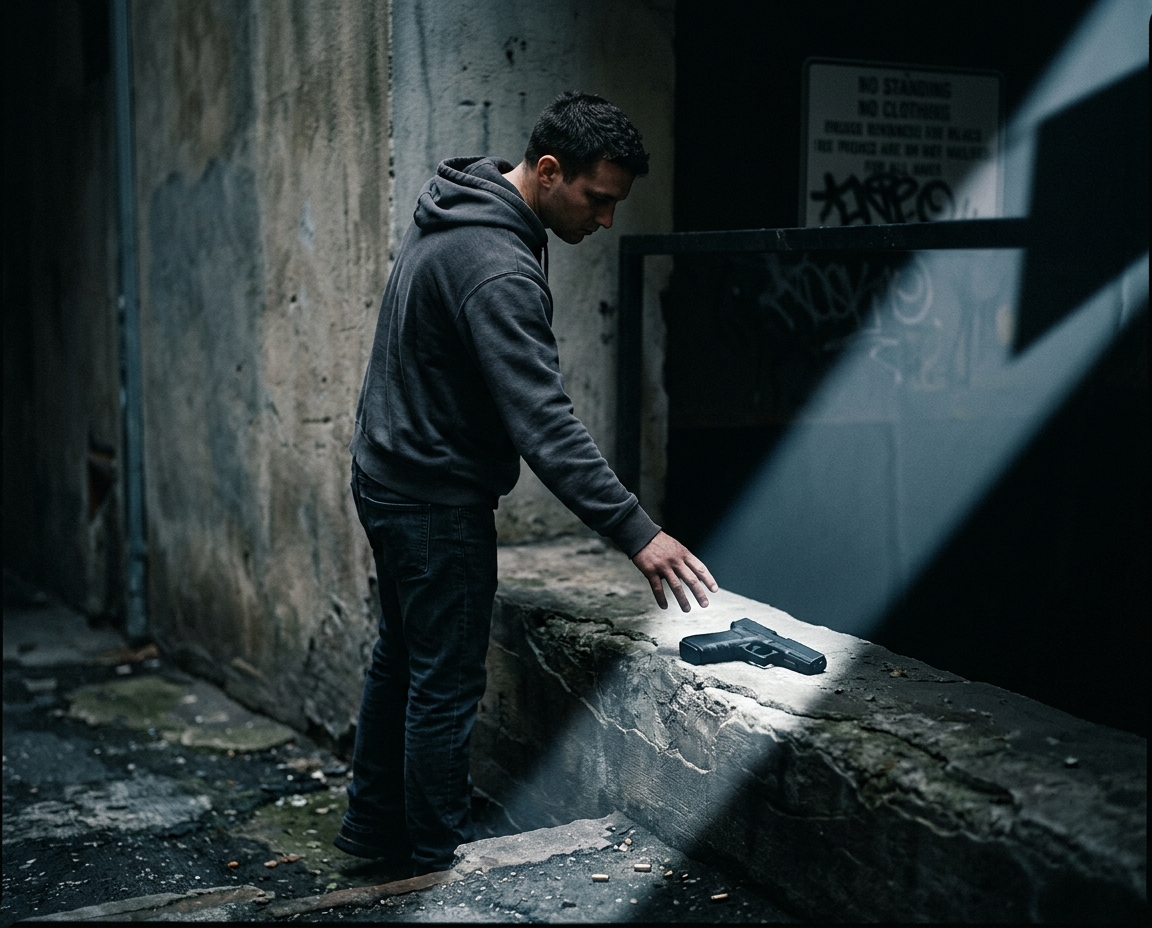
California Penal Code § 23515 PC is an important California firearms statute because it identifies certain criminal offenses that involve the violent use of a firearm. A conviction for one of the offenses identified in this section can have serious consequences, including restrictions on a person’s ability to legally possess, purchase, receive, or control a firearm.
However, there is an important distinction to understand: Penal Code § 23515 does not create a separate criminal offense by itself. Instead, it classifies certain existing offenses as offenses involving the violent use of a firearm for purposes of other provisions of California’s firearms laws.
The underlying offenses include certain forms of assault with a firearm, shooting at an inhabited dwelling or other occupied target, and certain forms of firearm brandishing.
This article explains what California Penal Code § 23515 means, which offenses it covers, how those offenses can affect firearm rights, and answers common questions about the law.
What Is California Penal Code § 23515?
California Penal Code § 23515 provides a statutory definition for an “offense that involves the violent use of a firearm.”
The statute identifies four categories:
- Certain violations of Penal Code § 245 involving assault with a firearm.
- Violations of Penal Code § 246 involving shooting at an inhabited dwelling, building, vehicle, aircraft, or other specified occupied target.
- Violations of Penal Code § 417(a)(2), involving certain threatening displays or unlawful uses of a firearm.
- Violations of Penal Code § 417(c), involving the threatening display of a firearm in the presence of a peace officer or firefighter under the circumstances specified by law.
The exact wording and subsection matter. Not every firearm-related offense in California is automatically an offense described by Penal Code § 23515.
Is Penal Code § 23515 a Crime?
No.
This is one of the most important things to understand about Penal Code § 23515.
A person is generally not prosecuted simply for “violating Penal Code § 23515.” Instead, prosecutors charge an underlying offense, such as assault with a firearm under Penal Code § 245 or shooting at an inhabited dwelling under Penal Code § 246.
Section 23515 then becomes relevant because California law uses that classification in determining certain firearm-related consequences.
For example, someone could be charged with assault with a firearm under Penal Code § 245(a)(2). If the person is convicted, the conviction may fall within Penal Code § 23515(a). That classification can then become relevant when determining whether the person is prohibited from possessing firearms in the future.
What Offenses Are Covered by Penal Code § 23515?
Assault With a Firearm – Penal Code § 245(a)(2)
One of the offenses identified in Penal Code § 23515 is a violation of Penal Code § 245(a)(2).
This provision concerns assault with a firearm.
California assault law does not necessarily require that a person actually be shot or physically injured. An assault generally involves an act performed with the required intent and circumstances that could result in the application of force.
For example, imagine that during a confrontation, a person points a loaded handgun at another individual and takes an action that could result in the gun being fired at that person.
Even if no shot is fired and no physical injury occurs, the circumstances could potentially support an assault-with-a-firearm prosecution, depending on the evidence and the elements of the charged offense.
The prosecution still has the burden of proving the required elements beyond a reasonable doubt.
Assault With Certain Specialized Firearms – Penal Code § 245(a)(3)
Penal Code § 23515 also includes Penal Code § 245(a)(3).
This provision addresses assault involving a machinegun, assault weapon, or .50 BMG rifle.
The type of firearm can therefore matter significantly in a California firearm case.
A case involving an ordinary firearm and a case involving a firearm specifically identified in Penal Code § 245(a)(3) can have different legal consequences.
Assault With a Firearm Against Certain Protected Persons – Penal Code § 245(d)
Penal Code § 23515 also includes specified violations of Penal Code § 245(d).
This subsection addresses assaults involving firearms against certain peace officers, firefighters, and other protected persons while they are performing specified official duties.
The statute contains different provisions depending on the type of firearm involved and the circumstances.
Because of these distinctions, it is important to identify the exact subsection of Penal Code § 245 involved rather than simply referring to a case as “assault with a firearm.”
Shooting at an Inhabited Building or Occupied Vehicle – Penal Code § 246
Another offense specifically identified by Penal Code § 23515 is Penal Code § 246.
Penal Code § 246 generally makes it a felony to maliciously and willfully discharge a firearm at an inhabited dwelling, occupied building, occupied motor vehicle, occupied aircraft, inhabited housecar, or inhabited camper.
The offense can apply even when nobody is physically injured.
What Does “Inhabited” Mean?
The word “inhabited” is especially important.
A dwelling can generally qualify as inhabited even if the residents are temporarily away when the shooting occurs, as long as the dwelling is being used for residential purposes.
For example, suppose a person intentionally fires a gun at a house where a family lives. The family happens to be on vacation and nobody is home when the shots are fired.
The fact that the house was temporarily empty does not necessarily prevent a prosecution under Penal Code § 246.
The law focuses on whether the dwelling is being used as a residence, rather than simply whether someone was physically inside at that particular moment.
Does the Bullet Have to Hit the Building?
Not necessarily.
Penal Code § 246 concerns the discharge of a firearm at specified inhabited or occupied targets. The prosecution does not necessarily have to prove that a person was struck or that the bullet entered the building.
The circumstances surrounding the discharge, including the alleged target and the defendant’s conduct and intent, can be critical.
Brandishing a Firearm – Penal Code § 417(a)(2)
Penal Code § 23515 also identifies Penal Code § 417(a)(2).
This provision concerns certain situations in which a person draws or exhibits a firearm in the presence of another person in a rude, angry, or threatening manner, outside the circumstances of lawful self-defense. It also addresses certain unlawful firearm use during a fight or quarrel.
This offense is commonly described as brandishing a firearm.
Importantly, a firearm does not necessarily have to be fired for § 417(a)(2) to apply.
Example of Potential Brandishing
Consider a situation in which two people get into an argument in a parking lot.
One person becomes angry, pulls out a handgun, and displays it in a threatening manner toward the other person.
If the required legal elements are established and the conduct was not lawful self-defense, the person could potentially face a brandishing charge.
The absence of a gunshot or physical injury does not automatically eliminate criminal liability.
Brandishing a Firearm in the Presence of a Peace Officer or Firefighter – Penal Code § 417(c)
Penal Code § 23515 also identifies Penal Code § 417(c).
This provision concerns the threatening exhibition of a firearm in the presence of a peace officer or firefighter under circumstances specified by the statute.
The circumstances surrounding the encounter can be important, including whether the person knew or reasonably should have known the identity of the officer or firefighter and whether that individual was performing official duties.
Because this is a separate subsection of Penal Code § 417, the precise facts and statutory elements matter.
Does Penal Code § 23515 Automatically Ban Someone From Owning a Gun?
Not by itself.
Penal Code § 23515 is a classification statute. Other California laws determine whether a conviction results in a firearm prohibition.
One particularly important statute is Penal Code § 29800.
Under § 29800, a person convicted of a felony generally may not possess a firearm. The statute also specifically identifies convictions for offenses listed in Penal Code § 23515(a), (b), or (d).
This means that certain convictions classified under § 23515 can independently create serious firearm-possession consequences even when the particular conviction is not being treated simply as a generic felony conviction.
What About Penal Code § 23515(c)?
This is an important distinction.
Penal Code § 23515(c) covers violations of Penal Code § 417(a)(2).
However, Penal Code § 29800 separately provides that a person with two or more convictions for violating § 417(a)(2) who subsequently possesses a firearm can be guilty of a felony.
Therefore, it would be inaccurate to state that every single conviction under § 417(a)(2) automatically results in the same firearm prohibition under § 29800.
The number and nature of prior convictions can matter.
Can a Misdemeanor Conviction Affect Firearm Rights?
Yes.
California firearm restrictions are not limited to felony convictions.
Penal Code § 29805 establishes a separate firearm prohibition involving numerous specified misdemeanor convictions. The statute generally addresses firearm possession occurring within 10 years of the qualifying misdemeanor conviction, subject to statutory exceptions and other applicable provisions.
The list includes certain misdemeanor violations of Penal Code §§ 245, 246, and 417, among other offenses.
This creates an important distinction:
- Some firearm-related convictions can result in restrictions through Penal Code § 29800.
- Certain misdemeanor convictions can trigger a 10-year prohibition under Penal Code § 29805.
- Other California or federal laws may impose additional firearm restrictions depending on the circumstances.
The exact conviction should therefore be reviewed before assuming that a person may legally possess a firearm.
What Happens If a Prohibited Person Possesses a Firearm?
Possessing a firearm while prohibited can result in a separate criminal charge.
For example, imagine that a person has a qualifying conviction under one of the categories covered by Penal Code § 23515 and consequently becomes prohibited from possessing firearms.
Several years later, that person knowingly keeps a handgun in their home.
The original conviction and the later firearm possession are separate legal events. The later possession may create additional criminal exposure under California’s prohibited-person firearm laws.
This is why firearm rights can remain an important issue even after a person has completed the sentence associated with the original criminal case.
What Does “Possession” Mean Under California Firearm Law?
Firearm possession can involve more than physically holding a gun.
Depending on the applicable statute and circumstances, possession can include having a firearm under a person’s custody or control.
For example, a person does not necessarily avoid a firearm-possession issue simply because the firearm is stored in a location rather than carried on their body.
Questions concerning knowledge, control, access, ownership, and the surrounding circumstances can become important.
The prosecution must prove the elements required by the specific possession statute being charged.
What Are Possible Defenses to an Underlying Violent Firearm Charge?
The appropriate defense depends on the exact charge and evidence. Potential legal issues can include:
Self-Defense or Defense of Another
Self-defense can be relevant when a person claims that displaying or using a firearm was legally justified because of an immediate threat.
California law contains specific requirements governing lawful self-defense and defense of others. Whether those requirements are satisfied depends on the circumstances.
Lack of Required Intent
Some firearm offenses require proof of a particular mental state.
For example, Penal Code § 246 involves willful and malicious discharge of a firearm at a specified target.
If the prosecution cannot prove an element required by the statute, that can become a significant issue in the case.
Mistaken Identity
In some cases, the issue may be whether the accused person was actually responsible for the alleged conduct.
Witness identification, surveillance footage, forensic evidence, photographs, digital evidence, and other information may become relevant.
Insufficient Evidence
The prosecution has the burden of proving every required element of a criminal offense beyond a reasonable doubt.
Disputes about what happened, who possessed or used the firearm, what was intended, or where the firearm was directed can all potentially affect the prosecution’s case.
Disputes About the Firearm or Circumstances
The identity and characteristics of the firearm can matter in certain charges.
For example, Penal Code § 245 contains provisions that distinguish among different categories of firearms. Determining exactly what firearm was involved may therefore have legal significance.
These are general examples of legal issues and are not predictions about the outcome of any particular case.
What Are the Penalties for an Offense Listed in Penal Code § 23515?
There is no single penalty for violating Penal Code § 23515, because § 23515 is not itself a standalone criminal offense.
The potential punishment depends on the underlying offense.
For example:
- Assault with a firearm is prosecuted under Penal Code § 245.
- Shooting at an inhabited dwelling or other specified occupied target is prosecuted under Penal Code § 246.
- Certain forms of brandishing are prosecuted under Penal Code § 417.
Each statute has its own elements, sentencing provisions, and potential consequences.
Additional sentencing enhancements or firearm-related provisions may also apply depending on the facts of a case.
Is Shooting a Gun Required for a § 23515 Offense?
No.
This is another common misconception.
Some offenses identified by Penal Code § 23515 involve the discharge of a firearm, such as the conduct addressed by Penal Code § 246.
Other offenses do not necessarily require the firearm to be fired.
For example, Penal Code § 417(a)(2) can apply to certain threatening displays of a firearm.
Likewise, an assault-with-a-firearm charge under Penal Code § 245 does not necessarily require that the firearm actually be discharged.
Does Anyone Have to Be Injured?
No.
A physical injury is not necessarily required for an offense covered by Penal Code § 23515.
A person could potentially face an assault-with-a-firearm charge without physically injuring anyone.
Similarly, Penal Code § 246 can apply to shooting at an inhabited dwelling or other specified occupied target even when no one is struck.
The absence of physical injury therefore does not automatically mean that a firearm-related criminal prosecution cannot occur.
How Is Penal Code § 23515 Different From Penal Code § 29800?
The two statutes serve different purposes.
Penal Code § 23515 identifies certain offenses involving the violent use of a firearm.
Penal Code § 29800 establishes criminal restrictions on firearm possession by certain prohibited persons, including people with qualifying convictions identified by § 23515.
A simplified way to understand the relationship is:
Underlying criminal offense → § 23515 classification → potential firearm-possession consequences under another statute.
The actual legal analysis can be more complicated because different subsections and different types of convictions can trigger different restrictions.
Frequently Asked Questions
Is Penal Code § 23515 a felony?
No. Penal Code § 23515 is not itself a felony or misdemeanor. It identifies specified underlying offenses as offenses involving the violent use of a firearm.
What crimes are listed under Penal Code § 23515?
The statute identifies specified violations of Penal Code § 245, § 246, and § 417. Specifically, it includes Penal Code § 245(a)(2), § 245(a)(3), § 245(d), § 246, § 417(a)(2), and § 417(c).
Does Penal Code § 23515 prohibit firearm ownership?
Section 23515 itself does not impose the prohibition. Other firearm statutes use the offenses identified in § 23515 to determine whether a person is prohibited from possessing firearms.
Can a person be charged under § 23515 without firing a firearm?
Yes. Some of the underlying offenses identified by § 23515 do not require the firearm to be discharged. Certain forms of brandishing and assault, for example, can involve a firearm without an actual shooting.
Can someone be charged if nobody was injured?
Yes. Physical injury is not a required element of every offense identified in § 23515.
Does self-defense matter in a firearm case?
It can. Whether self-defense applies depends on the particular facts and the requirements of California law.
Can a misdemeanor affect a person’s firearm rights?
Yes. California law provides firearm restrictions for certain misdemeanor convictions. Penal Code § 29805 is particularly important because it establishes a 10-year prohibition for specified qualifying misdemeanor convictions.
How long does a California firearm prohibition last?
There is no single answer for every case. The duration depends on the conviction and the statute that creates the prohibition. Some restrictions can be long-term or effectively permanent, while others apply for a specified period, such as the 10-year restriction associated with certain misdemeanors.
Can a person who has completed probation or jail time possess a firearm?
Not necessarily. Completing a criminal sentence does not automatically restore firearm rights. A separate firearm prohibition may continue after the sentence is completed.
What should someone do if they are unsure whether they are prohibited from possessing a firearm?
Because firearm restrictions depend on the precise conviction and applicable law, a person who is uncertain about their firearm status should consider consulting a qualified California criminal defense attorney before possessing, purchasing, receiving, or controlling a firearm.
Key Takeaways
California Penal Code § 23515 is an important provision within California’s firearms laws, but it is frequently misunderstood.
The most important points are:
- Penal Code § 23515 is not a standalone criminal offense.
- It identifies certain offenses involving the violent use of a firearm.
- The statute includes specified violations of Penal Code § 245, 246, and 417.
- Some covered offenses involve actually firing a firearm, while others can involve displaying or using a firearm without firing it.
- A person does not necessarily have to injure another person to be convicted of an offense covered by § 23515.
- The underlying offense determines the applicable criminal penalties.
- Certain § 23515 convictions can affect a person’s ability to legally possess firearms under Penal Code § 29800.
- Penal Code § 29800 specifically addresses convictions under § 23515(a), (b), and (d), while two qualifying § 417(a)(2) convictions can independently trigger the prohibition described in § 29800(a)(2).
- Certain misdemeanor convictions can also result in firearm restrictions under Penal Code § 29805.
- Completing a sentence does not necessarily mean that firearm rights have automatically been restored.
Contact Southwest Legal
A California firearm-related criminal case can involve both the underlying criminal charge and separate questions about future firearm possession. Understanding the exact Penal Code subsection involved can be critical because different offenses and convictions can carry different consequences.
If you are facing a California criminal charge involving a firearm or have questions about how a prior conviction may affect your firearm rights, consider speaking with a qualified California criminal defense attorney about your situation.
Southwest Legal is available to help you understand the legal issues that may apply to your case. Contact us today for a free consultation.
Disclaimer: This article is for general informational purposes only and does not constitute legal advice or create an attorney-client relationship. No attorney-client relationship is formed unless and until the firm and client enter into an agreement for legal services. Laws may change, and legal outcomes depend on the specific facts of each case. Consult a qualified attorney for advice regarding your situation.