


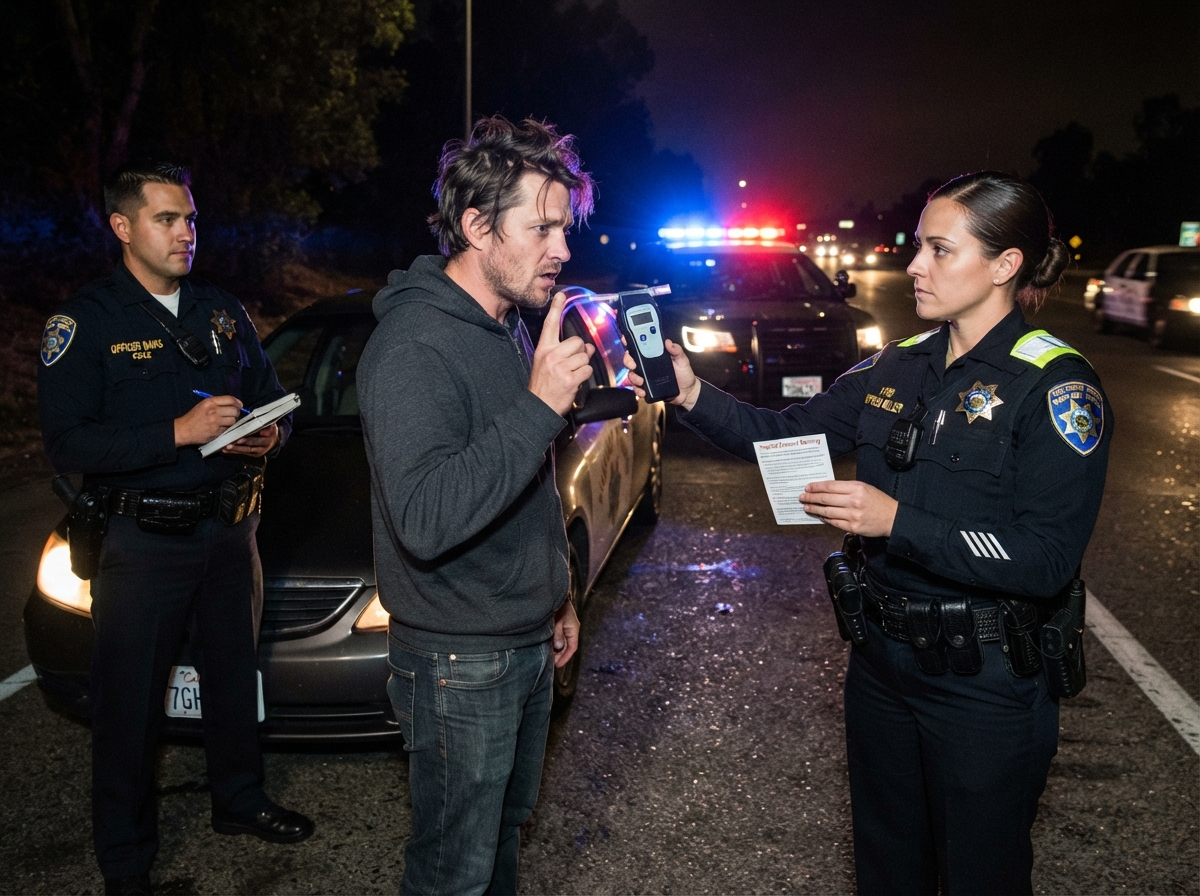
California Vehicle Code § 23612 is commonly known as California’s implied consent law. It establishes the rules governing chemical testing after certain DUI arrests and explains the consequences of refusing or failing to complete a required chemical test.
For California drivers, a DUI chemical test refusal can result in a driver’s license suspension or revocation through the California Department of Motor Vehicles (DMV). A refusal may also have consequences in a related criminal DUI case.
The potential DMV penalty generally depends on the driver’s prior DUI-related history. A qualifying first refusal can result in a one-year suspension, while qualifying repeat refusals can result in a two-year or three-year revocation.
This guide explains California Vehicle Code § 23612, the penalties for refusing a DUI chemical test, the DMV hearing process, and common questions about chemical test refusals.
What Is California Vehicle Code § 23612?
California Vehicle Code § 23612 provides that a person who drives a motor vehicle in California is generally deemed to have consented to certain chemical testing after a qualifying DUI arrest.
The law applies to arrests involving specified DUI offenses, including driving under the influence under Vehicle Code § 23152 and DUI causing injury under Vehicle Code § 23153.
The implied consent requirement applies after the circumstances specified by the statute are met. It is not a general requirement that drivers submit to every type of test at any time.
For an alcohol-related DUI arrest, California law generally provides a choice between a blood test and a breath test, subject to statutory exceptions. Drug-related DUI cases can involve different testing requirements.
What Happens If You Refuse a DUI Chemical Test?
Refusing a required chemical test can result in two separate consequences:
-
DMV license suspension or revocation
-
Potential consequences in the criminal DUI case
The DMV process is separate from the criminal prosecution.
A chemical test refusal does not automatically mean that a person is guilty of DUI. However, California law permits a qualifying refusal to have evidentiary consequences in court.
California DUI Chemical Test Refusal Penalties
The DMV penalties for refusing a required chemical test generally become more serious when a driver has qualifying prior DUI convictions or administrative actions.
First DUI Chemical Test Refusal
A qualifying first refusal generally results in a one-year driver’s license suspension.
This is an administrative action imposed through the DMV. It is separate from any criminal penalties that could result from a DUI conviction.
Second Refusal Within 10 Years
A qualifying second refusal within the applicable 10-year period can result in a two-year driver’s license revocation.
The law considers certain prior DUI convictions and prior DMV administrative actions when determining whether the enhanced penalty applies.
Third or Subsequent Refusal Within 10 Years
A qualifying third or subsequent refusal within the applicable 10-year period can result in a three-year driver’s license revocation.
Because California law contains specific rules concerning qualifying prior convictions and administrative actions, the applicable penalty depends on the driver’s individual record.
California DUI Refusal Penalty Chart
| Qualifying refusal history | General DMV consequence |
|---|---|
| First refusal | 1-year suspension |
| Second refusal within 10 years | 2-year revocation |
| Third or subsequent refusal within 10 years | 3-year revocation |
These are general consequences for qualifying cases. The exact penalty can depend on the driver’s prior record and the specific circumstances of the refusal.
What Counts as a Chemical Test Refusal?
A refusal does not necessarily require the driver to simply say, “I refuse.”
California Vehicle Code § 23612 also addresses situations where a person fails to complete the required chemical test.
For example, a driver may initially agree to provide a breath sample but repeatedly fail to provide an adequate sample. Depending on the circumstances, that conduct may be treated as a failure to complete the required test.
Whether conduct legally constitutes a refusal or failure to complete testing depends on the circumstances of the particular case.
Is a Preliminary Alcohol Screening Test the Same as a Chemical Test?
No.
A Preliminary Alcohol Screening (PAS) test is generally a roadside investigative test used by an officer to help determine whether there is reasonable cause to believe a driver is under the influence.
A PAS test is different from the chemical testing required after a qualifying DUI arrest.
California Vehicle Code § 23612 specifically distinguishes the PAS test from the post-arrest chemical test. Taking a PAS test does not automatically satisfy the separate chemical-testing requirement.
Example
A driver is stopped because an officer suspects alcohol impairment. The driver provides a breath sample using a roadside PAS device.
The driver is then arrested for DUI and asked to provide a post-arrest chemical test.
The earlier PAS test does not necessarily fulfill the post-arrest testing requirement under Vehicle Code § 23612.
Can You Choose Blood or Breath?
For an alcohol-related DUI arrest, California law generally gives the driver a choice between blood and breath testing.
There are exceptions.
If a selected test cannot be completed, the law provides for another available test in applicable circumstances.
Drug-related DUI cases can involve additional blood-testing requirements. Certain medical circumstances can also affect which testing method applies.
For this reason, the type of test requested and the circumstances surrounding the request can be important when evaluating an alleged refusal.
Can You Refuse a DUI Chemical Test and Keep Your License?
Refusing a required chemical test can result in DMV suspension or revocation.
However, a driver who receives a suspension or revocation order generally has an opportunity to challenge the DMV action through an Administrative Per Se (APS) hearing.
The California DMV generally requires a hearing request within 10 days of receiving the suspension or revocation order.
This deadline is separate from the criminal DUI court case.
What Is a DMV Administrative Per Se Hearing?
An APS hearing is a DMV administrative proceeding concerning the driver’s privilege to operate a motor vehicle.
In a chemical-test refusal case, the issues can include whether:
-
The officer had reasonable cause to believe the driver was violating a qualifying DUI law;
-
The driver was lawfully arrested;
-
The driver was properly advised of the consequences of refusing or failing to complete the chemical test; and
-
The driver actually refused or failed to complete the required test.
The DMV hearing does not determine whether the driver is criminally guilty of DUI.
How Long Do You Have to Request a DMV Hearing?
Generally, a person has 10 days after receiving the suspension or revocation order to request a DMV administrative hearing.
This is one of the most important deadlines following a DUI chemical test refusal.
For example, a driver might receive a refusal-related license suspension notice immediately after an arrest but have a criminal court date several weeks later. The DMV hearing deadline can arrive before the criminal court date.
Failing to address the DMV deadline can affect the driver’s ability to challenge the administrative action.
Can a Chemical Test Refusal Be Used Against You in Court?
Yes.
California Vehicle Code § 23612 requires an officer to advise a person that refusing the required chemical test may be used against that person in court.
A refusal therefore can become evidence in a criminal DUI proceeding.
However, a refusal does not automatically establish guilt. The criminal case involves the underlying DUI charge and the evidence supporting that charge.
Do You Have the Right to Speak With a Lawyer Before Taking the Test?
California Vehicle Code § 23612 requires an advisement that a person does not have the right to have an attorney present before deciding whether to submit to the required chemical test, before choosing which test to take, or during administration of the test.
The statute also requires the person to be advised about the potential consequences of refusing the test.
This makes the advisements given by the officer an important part of a chemical-test refusal case.
What If You Have a Medical Condition?
California law contains specific exceptions concerning certain medical conditions.
For example, the statute provides exceptions from blood testing for individuals with hemophilia and certain people with qualifying heart conditions who use anticoagulant medication under a physician’s direction. In applicable circumstances, urine testing may be required instead.
A medical condition does not automatically eliminate California’s chemical-testing requirements. The specific condition and circumstances must be considered under the statute.
Is the DMV Case Separate From the DUI Criminal Case?
Yes.
The DMV proceeding and criminal DUI prosecution are separate legal processes.
The DMV proceeding concerns the driver’s privilege to operate a motor vehicle.
The criminal case concerns whether the prosecution can establish the charged DUI offense under the applicable criminal standard.
As a result, a DMV suspension or revocation does not automatically mean that the person has been convicted of DUI.
Likewise, the outcome of the criminal case does not necessarily resolve every issue involving a separate DMV administrative action.
What Should You Know After a DUI Chemical Test Refusal?
The most important points about California Vehicle Code § 23612 include:
-
California’s implied consent law generally requires qualifying drivers to submit to specified chemical testing after a qualifying DUI arrest.
-
Refusing or failing to complete a required chemical test can trigger DMV penalties.
-
A first qualifying refusal can result in a one-year suspension.
-
A second qualifying refusal within 10 years can result in a two-year revocation.
-
A third or subsequent qualifying refusal can result in a three-year revocation.
-
Prior DUI convictions and qualifying DMV actions can affect the applicable penalty.
-
A PAS test is different from the post-arrest chemical test.
-
A refusal may be used as evidence in a criminal DUI case.
-
A driver generally has 10 days to request a DMV administrative hearing after receiving the suspension or revocation order.
-
The DMV proceeding is separate from the criminal DUI case.
Frequently Asked Questions
What is the penalty for refusing a DUI chemical test in California?
A qualifying first refusal generally results in a one-year driver’s license suspension. A second qualifying refusal within 10 years can result in a two-year revocation, and a third or subsequent qualifying refusal can result in a three-year revocation.
Is refusing a DUI breath test worse than refusing a blood test?
California’s refusal penalties generally focus on refusing or failing to complete a required chemical test rather than simply whether the test was blood or breath. However, the circumstances surrounding the requested test can affect the legal analysis.
Does refusing a DUI test automatically mean you lose your license?
A qualifying refusal can result in an administrative suspension or revocation. The driver may have an opportunity to challenge the DMV action through an administrative hearing.
How long do you have to fight a DUI refusal suspension?
The DMV generally allows 10 days from receipt of the suspension or revocation order to request an administrative hearing.
Can a DUI refusal be used in a criminal case?
Yes. California law requires an advisement that a refusal may be used against the driver in court.
Does a PAS test count as the required DUI chemical test?
No. A preliminary alcohol screening test is legally distinct from the post-arrest chemical test required under California’s implied consent law.
Can you refuse a DUI chemical test because you want an attorney?
Vehicle Code § 23612 requires an advisement that a person does not have the right to have an attorney present before deciding whether to submit to the required chemical test, before selecting a test, or during the test.
Conclusion
California Vehicle Code § 23612 can have significant consequences for drivers accused of DUI. A qualifying chemical-test refusal can lead to a one-year suspension for a first refusal, with more serious two-year or three-year revocations for qualifying repeat offenses.
The law also creates important distinctions between a roadside PAS test and the post-arrest chemical test, between DMV proceedings and criminal DUI cases, and between an outright refusal and a failure to complete testing.
Because the DMV generally imposes a short 10-day deadline for requesting an administrative hearing, understanding the paperwork received after a DUI arrest is particularly important.
Contact Southwest Legal
If you have received a California DUI chemical-test refusal notice or are facing a related license suspension or revocation, Southwest Legal can help you understand the process and the legal issues that may apply to your situation.
Contact us today for a free consultation to learn more about your rights and available options.
Disclaimer: This article is for general informational purposes only and does not constitute legal advice or create an attorney-client relationship unless and until the firm and client enter into an agreement for legal services. Laws may change, and legal outcomes depend on the specific facts of each case. Consult a qualified attorney for advice regarding your situation.