


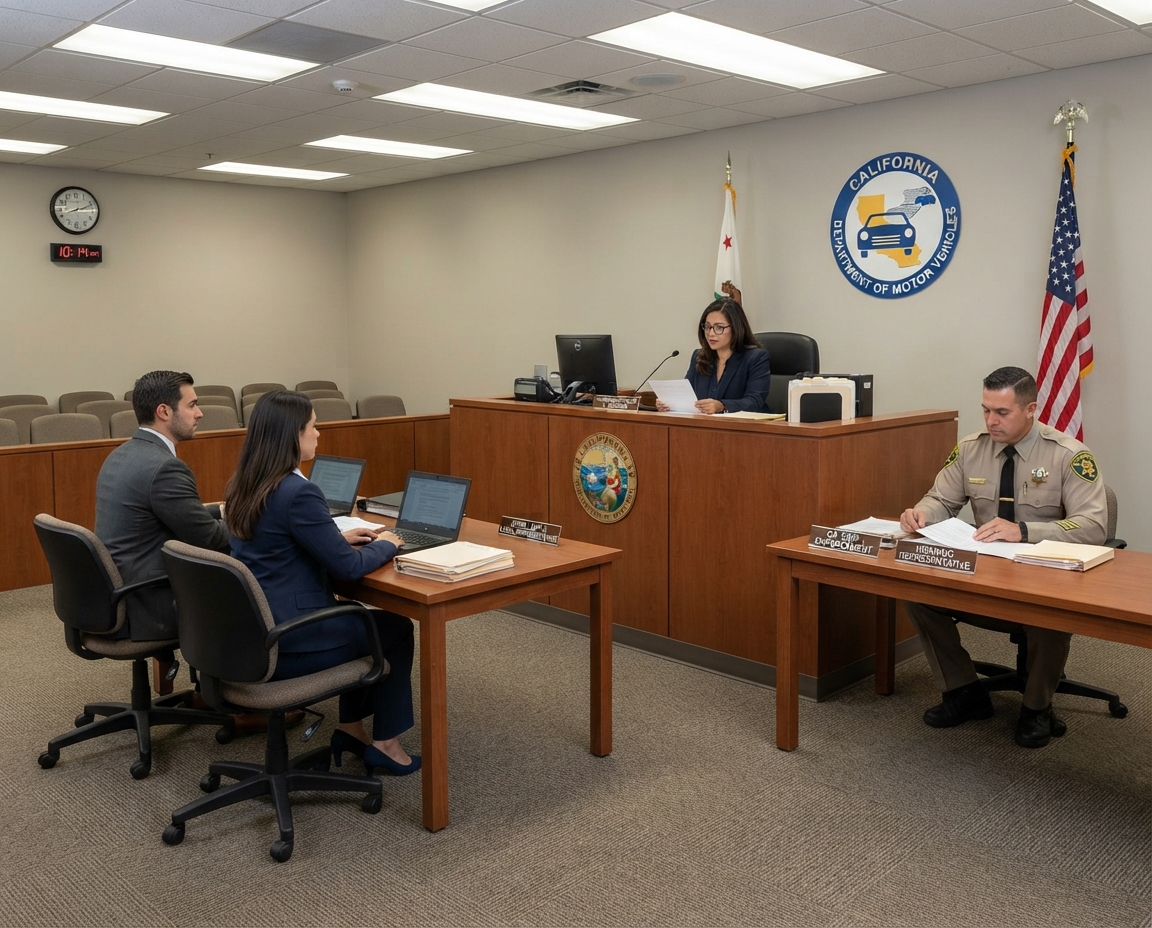
If you were arrested for DUI in California, you may have received paperwork from the California Department of Motor Vehicles (DMV) regarding your driver’s license. This often raises an important question: Do you have to attend a DMV hearing after a DUI arrest in California?
The answer depends on whether you choose to request a hearing.
You are not required to request a DMV hearing. However, if you want to challenge a DUI-related driver’s license suspension or revocation, you generally need to request a DMV hearing within the applicable deadline. If you request a hearing and one is scheduled, you should attend or promptly contact the DMV if you cannot appear.
A California DMV DUI hearing is separate from your criminal DUI case in court. Understanding this distinction is important because the deadlines and consequences can be different.
Do You Have to Attend a DMV Hearing After a DUI Arrest?
No. California law does not require every person arrested for DUI to request or attend a DMV hearing.
However, choosing not to request a hearing can affect your ability to challenge the DMV’s administrative action against your driving privilege.
After certain DUI arrests, the DMV may take administrative action to suspend or revoke a driver’s license. If you want to contest that action, you generally need to request a hearing within the applicable time limit.
For DUI-related administrative actions, the California DMV states that a hearing request generally must be made within 10 days of receiving the suspension or revocation order.
Because the applicable deadline can depend on the circumstances and the notice you received, carefully review your DMV paperwork for the specific deadline that applies to you.
What if you do not request a hearing?
If you do not request a hearing within the applicable deadline, you may lose the opportunity to challenge the DMV’s administrative action through that hearing process.
Not requesting a DMV hearing does not mean you are pleading guilty to DUI.
The DMV proceeding and criminal DUI case are separate matters.
What Is a California DMV DUI Hearing?
A DMV DUI hearing is an administrative proceeding about your driving privilege.
It is not a criminal trial.
The purpose of the hearing is to determine whether the DMV’s administrative action against your driver’s license should remain in effect based on the evidence and applicable California law.
Depending on the circumstances, the DMV may consider issues such as:
-
Whether the officer had reasonable cause to believe you were driving under the influence.
-
Whether you were lawfully arrested.
-
Whether you were driving with a blood-alcohol concentration (BAC) at or above the applicable legal limit.
-
Whether you were properly advised about the consequences of refusing a chemical test, when applicable.
-
Whether you refused or failed to complete a required chemical test, when applicable.
The issues considered can vary depending on the circumstances of the arrest.
Is a DMV Hearing the Same as a DUI Court Hearing?
No.
This is one of the most important things to understand after a California DUI arrest.
The DMV hearing concerns your driver’s license and driving privilege.
The criminal DUI case concerns the criminal charges filed in court.
These proceedings are separate and can happen at the same time.
Example
Suppose you are arrested for DUI on January 1.
You may receive a DMV notice concerning your driver’s license while also receiving information about a future criminal court date.
Your court date does not replace the DMV process.
Likewise, dealing with the DMV does not resolve the criminal DUI charge.
You may need to address both matters separately.
How Long Do You Have to Request a DMV Hearing?
For a DUI-related administrative suspension or revocation, the California DMV generally gives you a short period of time to request a hearing.
The DMV’s DUI guidance states that you generally have 10 days from receiving the suspension or revocation order to request a hearing.
Because the exact rules can vary depending on the administrative action and how notice was provided, do not rely solely on a general deadline. Check the paperwork you received from the DMV and follow the deadline stated there.
Why is the deadline important?
If you miss the deadline, you may lose your opportunity to challenge the suspension through a DMV hearing.
For example, someone might assume that their upcoming DUI court date gives them plenty of time to deal with their driver’s license. That assumption can be incorrect because the DMV process has its own deadlines.
What Happens If You Request a DMV Hearing?
If you timely request a hearing, the DMV will schedule the administrative proceeding.
The hearing gives you an opportunity to challenge the proposed or existing administrative action.
Depending on the circumstances, you may be able to:
-
Review evidence related to the DMV action.
-
Present relevant evidence.
-
Challenge evidence presented by the DMV.
-
Question witnesses when permitted.
-
Present witnesses when appropriate.
-
Have an attorney represent you.
The specific procedures depend on the type of DMV action and the circumstances of your case.
What Happens If You Miss a DMV DUI Hearing?
If you request a hearing and then fail to attend, do not assume the DMV will automatically reschedule it.
If you cannot attend the scheduled hearing, contact the DMV as soon as possible and ask whether you can obtain a continuance.
A continuance is a request to postpone the hearing to another date.
If the DMV does not grant a continuance and you do not attend, the DMV may proceed with the hearing in your absence.
The DMV can then issue a decision based on the evidence available to the hearing officer.
Can you reschedule a DMV hearing?
A continuance may be available in appropriate circumstances, but it is not automatic.
If you know you cannot attend your hearing, contact the DMV promptly rather than simply missing the appointment.
Can a Lawyer Attend the DMV Hearing for You?
California DMV allows drivers to have an attorney or other representative appear on their behalf in an administrative hearing.
An attorney is not required for every DMV hearing.
However, a DUI DMV hearing can involve evidence, chemical-test issues, arrest procedures, and other legal questions. A driver who wants representation can discuss the circumstances with a qualified California DUI attorney.
Remember that representation at a DMV hearing does not automatically handle the separate criminal DUI case.
What Can the DMV Hearing Decide?
The DMV hearing focuses on whether the administrative requirements for the license suspension or revocation have been established.
Depending on the case, the hearing officer may consider evidence concerning:
-
The circumstances of the DUI stop and arrest.
-
The officer’s observations and reports.
-
Chemical-test results.
-
Whether the driver was properly advised about chemical testing.
-
Whether the driver refused or failed to complete a required test.
-
Other evidence relevant to the specific administrative action.
The hearing officer may ultimately sustain or set aside the administrative action, depending on the evidence and applicable law.
No particular result is guaranteed.
Does a DMV Hearing Determine Whether You Are Guilty of DUI?
No.
A DMV hearing does not determine criminal guilt or innocence.
The DMV is addressing your driving privilege, while the criminal court addresses the DUI charge.
For example, a driver could challenge a license suspension through a DMV hearing while the criminal DUI case is still pending.
Likewise, a criminal DUI case can continue even if the DMV administrative proceeding reaches a different result.
Does Winning a DMV Hearing Dismiss Your DUI Case?
No.
Even if the DMV sets aside an administrative suspension, that does not automatically dismiss the criminal DUI case.
The two proceedings are separate.
Similarly, resolving the criminal DUI charge does not necessarily resolve every DMV issue involving your driver’s license.
What Should You Do After Receiving a DMV DUI Suspension Notice?
If you receive a California DMV suspension or revocation notice after a DUI arrest, pay close attention to the paperwork.
1. Check the deadline
Look for the deadline to request a DMV hearing.
Do not assume that your criminal court date is the relevant deadline.
2. Decide whether you want to challenge the DMV action
If you want to contest the suspension or revocation, you generally need to request a hearing within the applicable deadline.
3. Do not ignore the hearing date
If you request a hearing, keep track of the scheduled date and instructions.
If you cannot attend, contact the DMV promptly about a possible continuance.
4. Understand that the DMV and court cases are separate
Your DMV hearing concerns your driving privilege.
Your criminal DUI case concerns the criminal charges.
You may need to address both separately.
Frequently Asked Questions
Is a DMV hearing mandatory after a DUI?
No. You are not required to request a DMV hearing. However, a hearing may be necessary if you want to challenge the DMV’s administrative action against your driver’s license.
How long do I have to request a California DMV DUI hearing?
The DMV generally states that a DUI hearing must be requested within 10 days of receiving the suspension or revocation order. Always check your specific DMV notice for the applicable deadline.
What happens if I do not request a DMV hearing?
You may lose your opportunity to challenge the administrative suspension or revocation through the DMV hearing process.
What happens if I miss my DMV hearing?
If you fail to attend and the DMV does not grant a continuance, the DMV may proceed with the hearing without you.
Can I reschedule my DMV hearing?
You may be able to request a continuance. Contact the DMV as soon as possible if you cannot attend. A continuance is not automatically guaranteed.
Is the DMV hearing the same as my DUI court case?
No. The DMV hearing concerns your driver’s license. The criminal DUI case concerns the criminal charges filed in court.
Can a lawyer represent me at the DMV hearing?
Yes. California DMV allows a driver to be represented by an attorney or other representative at the driver’s expense.
Can a DMV hearing stop my license from being suspended?
A DMV hearing gives you an opportunity to challenge the administrative action. The hearing officer will make a decision based on the evidence and applicable law. The outcome depends on the circumstances of the individual case.
Key Takeaway
You do not have to attend a DMV hearing simply because you were arrested for DUI in California. However, if you want to challenge the DMV’s suspension or revocation of your driver’s license, you generally need to request a hearing within the applicable deadline.
If you request a hearing, do not ignore the scheduled date. If you cannot attend, contact the DMV promptly to ask about a continuance. Otherwise, the DMV may proceed with the hearing without you.
Most importantly, remember that a California DMV DUI hearing is separate from your criminal DUI case. Your court date does not replace your DMV obligations, and your DMV hearing does not resolve your criminal case.
Because DMV deadlines can be short, carefully review your suspension notice and understand what action is required.
Contact Southwest Legal
Have Questions About Your DMV DUI Hearing?
A California DUI arrest can create immediate questions about your driver’s license, DMV deadlines, and what you need to do next. Southwest Legal can help you understand the DMV process and the legal issues that may affect your case.
Don’t let an important DMV deadline pass without understanding your options. Contact us today for a free consultation and learn more about the steps you may need to take after a California DUI arrest.
Disclaimer: This article is for general informational purposes only and does not constitute legal advice or create an attorney-client relationship unless and until the firm and client enter into an agreement for legal services. Laws may change, and legal outcomes depend on the specific facts of each case. Consult a qualified attorney for advice regarding your situation.