


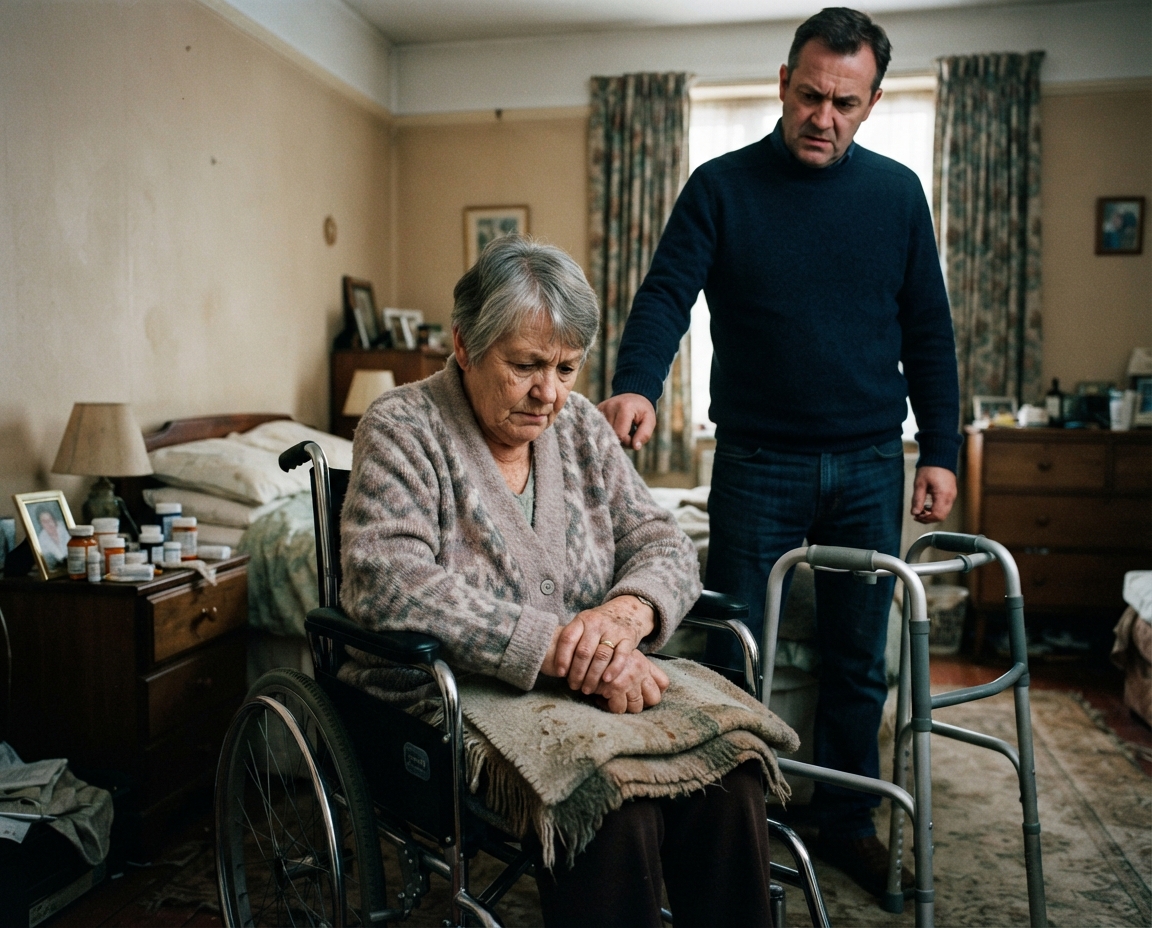
California Penal Code § 368(b) makes certain abuse of an elder or dependent adult a crime when the abuse occurs under circumstances or conditions likely to produce great bodily harm or death. Although commonly described as domestic violence against a disabled person, the statute specifically addresses abuse of qualifying elders and dependent adults, including certain adults with physical or mental disabilities.
What Is California Penal Code § 368(b)?
California Penal Code § 368(b)(1) makes it a crime to abuse an elder or dependent adult under circumstances or conditions likely to produce great bodily harm or death.
The law can apply when a person:
Willfully causes or permits an elder or dependent adult to suffer.
Willfully inflicts unjustifiable physical pain or mental suffering.
While having care or custody of the person, willfully causes or permits their health or person to be injured.
While having care or custody of the person, willfully causes or permits them to be placed in a situation where their health or safety is endangered.
The prosecution generally must also establish that the defendant knew or reasonably should have known that the alleged victim was an elder or dependent adult.
Because the law protects people who may be particularly vulnerable to abuse, Penal Code § 368(b) can apply to conduct involving a family member, spouse, partner, caregiver, or another person who has a qualifying relationship with the victim.
Who Is a “Dependent Adult” Under California Law?
Not every person with a disability automatically qualifies as a dependent adult under Penal Code § 368.
Generally, a dependent adult is a person between 18 and 64 years old whose physical or mental limitations restrict the person’s ability to carry out normal activities or protect their rights.
The statutory definition includes people with qualifying:
Physical disabilities
Developmental disabilities
Mental limitations
Other physical or mental conditions that restrict normal activities or the ability to protect their rights
Certain people between 18 and 64 who are inpatients in qualifying 24-hour health facilities may also meet the definition.
A person who is 65 or older is generally classified as an elder under Penal Code § 368 rather than a dependent adult based on disability.
Why Does Dependent-Adult Status Matter?
The victim’s legal status is an important element of a § 368(b) prosecution.
For example, a person may have a physical disability but still not automatically qualify as a dependent adult under the statute. The prosecution must establish that the person falls within the statutory definition.
Does Penal Code § 368(b) Apply to Domestic Violence?
Yes, it can apply to conduct occurring within a domestic relationship, but Penal Code § 368(b) is not technically a general domestic violence statute.
California’s domestic violence laws generally focus on relationships such as spouses, former spouses, dating partners, cohabitants, and certain family members.
Penal Code § 368 instead focuses on the victim’s status as an elder or dependent adult and the nature of the alleged abuse.
This means a disabled spouse, parent, family member, or partner could potentially be protected under § 368(b) if the statutory requirements are met.
For example, if a spouse has a qualifying disability that makes them a dependent adult and the other spouse allegedly subjects them to serious abuse, Penal Code § 368(b) could potentially apply in addition to other domestic violence laws.
What Types of Abuse Can Result in a § 368(b) Charge?
Penal Code § 368(b) can cover more than physical assault.
Depending on the facts, allegations may involve:
Physical abuse
Unjustifiable physical pain
Mental suffering
Injury
Dangerous living conditions
Placing a dependent adult in circumstances that endanger their health or safety
Causing or permitting another person to abuse or endanger a dependent adult in circumstances covered by the statute
The circumstances or conditions must be likely to produce great bodily harm or death for a violation of § 368(b)(1).
Example of Physical Abuse
A dependent adult with a developmental disability lives with a family member who provides daily care. The family member allegedly punches the dependent adult, causing significant pain and injuries.
If the prosecution can establish the required elements, the conduct could potentially constitute dependent adult abuse under Penal Code § 368(b).
Example of Endangerment
A dependent adult has significant mobility limitations and cannot safely move without assistance. A person responsible for the individual’s care allegedly places them in a dangerous situation that creates a serious risk of substantial injury.
If the statutory requirements are established, the conduct could potentially support a § 368(b) charge even if the dependent adult does not ultimately suffer a serious injury.
What Must the Prosecution Prove Under Penal Code § 368(b)?
The exact elements depend on the theory of abuse alleged.
Generally, a § 368(b)(1) prosecution may require proof that:
The alleged victim was an elder or dependent adult.
The defendant knew or reasonably should have known that the person was an elder or dependent adult.
The defendant engaged in conduct prohibited by § 368(b)(1).
The defendant acted willfully where the applicable theory requires willful conduct.
The conduct occurred under circumstances or conditions likely to produce great bodily harm or death.
Some theories also require that the defendant had care or custody of the elder or dependent adult.
When an allegation involves causing or permitting another person’s conduct, additional legal requirements can apply.
Because different factual theories can result in different elements, the exact language of the criminal charge matters.
Does the Defendant Have to Be a Caregiver?
No. A defendant does not necessarily have to be a professional caregiver.
However, certain forms of liability under § 368(b)(1) specifically involve a person who has care or custody of the elder or dependent adult.
A person may have a qualifying caregiving relationship without being a professional caregiver. For example, a family member may provide substantial daily care to a disabled relative.
The statute can therefore apply to circumstances involving:
Family members
Spouses
Partners
Caregivers
People in positions of trust
Others whose conduct meets the statutory requirements
Is Penal Code § 368(b) a Felony?
Penal Code § 368(b)(1) is a wobbler, meaning it can be punished as either a misdemeanor or a felony.
For a violation of § 368(b)(1), the statute provides for:
Up to one year in county jail;
A fine of up to $6,000;
Both a fine and county jail imprisonment; or
State prison imprisonment for two, three, or four years.
The potential punishment depends on the circumstances of the case and how the offense is charged and resolved.
What Happens If the Disabled Person Suffers Great Bodily Injury?
Additional punishment may apply when an elder or dependent adult suffers great bodily injury in connection with a § 368(b)(1) offense.
Under California Penal Code § 368(b)(2), an additional state prison term may apply:
Three years when the victim is under 70 years old; or
Five years when the victim is 70 or older.
The basic § 368(b)(1) offense does not require the victim to actually suffer great bodily injury. The statute instead requires that the circumstances or conditions be likely to produce great bodily harm or death.
Actual great bodily injury can create additional sentencing consequences.
What If the Victim Dies?
Additional punishment can apply if the defendant proximately causes the death of an elder or dependent adult during the commission of a § 368(b)(1) offense.
The statute provides for an additional state prison term of:
Five years when the victim is under 70; or
Seven years when the victim is 70 or older.
Other criminal charges may also be possible depending on the circumstances.
Can a Spouse or Family Member Be Charged Under § 368(b)?
Yes.
California Penal Code § 368(b) does not exclude spouses or family members.
For example, suppose a person has a qualifying disability and depends on their spouse for assistance with daily activities. If the spouse allegedly engages in conduct that satisfies the requirements of § 368(b), the marital relationship does not prevent prosecution.
Likewise, an adult child, parent, sibling, or other family member could potentially face a § 368(b) charge if the statutory requirements are satisfied.
The existence of a family or domestic relationship may also make other California domestic violence laws relevant.
Can Mental Abuse or Emotional Abuse Lead to a § 368(b) Charge?
Potentially, yes.
Penal Code § 368(b)(1) expressly addresses unjustifiable mental suffering.
However, not every argument, disagreement, or upsetting interaction constitutes criminal abuse under the statute. The prosecution must establish the applicable statutory elements, including the required circumstances or conditions.
The specific conduct, the defendant’s mental state, the victim’s status, and the surrounding circumstances all matter.
Can Other Criminal Charges Apply?
Yes.
A single incident involving alleged abuse of a disabled or dependent adult may potentially result in charges under more than one California criminal statute.
Depending on the circumstances, other charges could involve:
Assault or battery
Criminal threats
False imprisonment
Homicide
Other forms of abuse or violence
Penal Code § 368 does not prevent prosecution under other applicable criminal laws.
The actual charges depend on the facts and evidence in the case.
Can a Protective Order Be Issued?
Yes.
Following a qualifying conviction under Penal Code § 368, the court must consider issuing an order restricting the defendant’s contact with the victim.
Under § 368(l), such an order can remain in effect for up to 10 years.
A protective order can therefore become an important consequence of a § 368(b) conviction in addition to criminal penalties.
What Evidence May Be Used in a § 368(b) Case?
The evidence in a dependent adult abuse case depends on the allegations. Potential evidence may include:
Medical records
Photographs of injuries
Videos or photographs of living conditions
Witness testimony
Emergency calls
Text messages and other communications
Caregiving records
Statements made by the alleged victim
Evidence concerning the victim’s disability or limitations
Evidence concerning the defendant’s relationship with the victim
The prosecution must prove the required elements beyond a reasonable doubt in a criminal case.
The relevance and admissibility of particular evidence depend on the circumstances.
What Is the Difference Between Domestic Violence and Dependent Adult Abuse?
The two concepts can overlap, but they are not identical.
Domestic violence generally concerns abuse involving people in specified intimate or family relationships.
Dependent adult abuse under Penal Code § 368 focuses on the victim’s status as an elder or dependent adult and the nature of the alleged abuse.
For example:
| Issue | Domestic Violence | Penal Code § 368(b) |
|---|---|---|
| Focus | Specified domestic relationships | Elder or dependent adult status |
| Disability required? | No | Not always, but disability can establish dependent-adult status |
| Victim must be 65+? | No | Victim may be an elder or qualifying dependent adult |
| Family relationship required? | Generally relevant to the applicable domestic violence statute | No |
| Serious danger requirement | Depends on the specific offense | Circumstances or conditions likely to produce great bodily harm or death |
A single incident can potentially implicate both domestic violence laws and Penal Code § 368(b).
Frequently Asked Questions
1. What is domestic violence against a disabled person in California?
California does not have a single offense formally titled “domestic violence against a disabled person.” Penal Code § 368(b) addresses certain abuse of elders and dependent adults. A disabled adult may qualify as a dependent adult if the statutory requirements are met.
2. Does every disabled person qualify as a dependent adult?
No. Generally, a dependent adult is between 18 and 64 and has physical or mental limitations that restrict the person’s ability to perform normal activities or protect their rights. Other statutory requirements can also apply.
3. Can a spouse be charged with dependent adult abuse?
Yes. A spouse can potentially be prosecuted under Penal Code § 368(b) if the statutory requirements are satisfied.
4. Is Penal Code § 368(b) a felony?
It can be. Section 368(b)(1) is a wobbler and may be punished as either a misdemeanor or felony, depending on the circumstances and resolution of the case.
5. Does the victim have to suffer a serious injury?
No. The basic offense requires circumstances or conditions likely to produce great bodily harm or death. Actual great bodily injury is not required, although it can result in additional punishment.
6. Can emotional or mental abuse qualify?
Potentially. Penal Code § 368(b)(1) specifically addresses unjustifiable mental suffering when the other statutory requirements are met.
7. Does the alleged abuser have to be a caregiver?
No. However, certain theories under § 368(b)(1) require that the defendant had care or custody of the elder or dependent adult.
8. Can someone face additional criminal charges?
Yes. Other criminal statutes can potentially apply to the same conduct depending on the circumstances.
9. Can a protective order be issued?
Yes. Following a qualifying conviction, the court must consider a protective order that can remain in effect for up to 10 years.
10. What should I do if I am accused of Penal Code § 368(b)?
A § 368(b) allegation can carry significant criminal consequences. Anyone accused of dependent adult abuse should have the specific charge and circumstances reviewed by a California criminal defense attorney.
Key Takeaways
Penal Code § 368(b) addresses certain abuse of elders and dependent adults.
A disabled adult may qualify as a dependent adult if the statutory requirements are satisfied.
The law can apply to abuse involving spouses, family members, caregivers, and others.
Prohibited conduct can include physical pain, mental suffering, injury, and dangerous circumstances.
The circumstances must be likely to produce great bodily harm or death for a § 368(b)(1) offense.
Penal Code § 368(b)(1) can be prosecuted as a misdemeanor or felony.
Great bodily injury or death can result in additional punishment.
A protective order lasting up to 10 years may also be considered following a qualifying conviction.
Domestic violence and dependent adult abuse are distinct legal concepts, but the laws can overlap.
Contact Southwest Legal
If you are facing an allegation involving domestic violence against a disabled person or a charge under California Penal Code § 368(b), understanding the specific allegations and potential consequences is critical. Southwest Legal can help you understand the California law applicable to your situation and the legal issues that may need to be addressed.
Contact us today for a free consultation.
Disclaimer: This article is for general informational purposes only and does not constitute legal advice or create an attorney-client relationship unless and until the firm and client enter into an agreement for legal services. Laws may change, and legal outcomes depend on the specific facts of each case. Consult a qualified attorney for advice regarding your situation.