


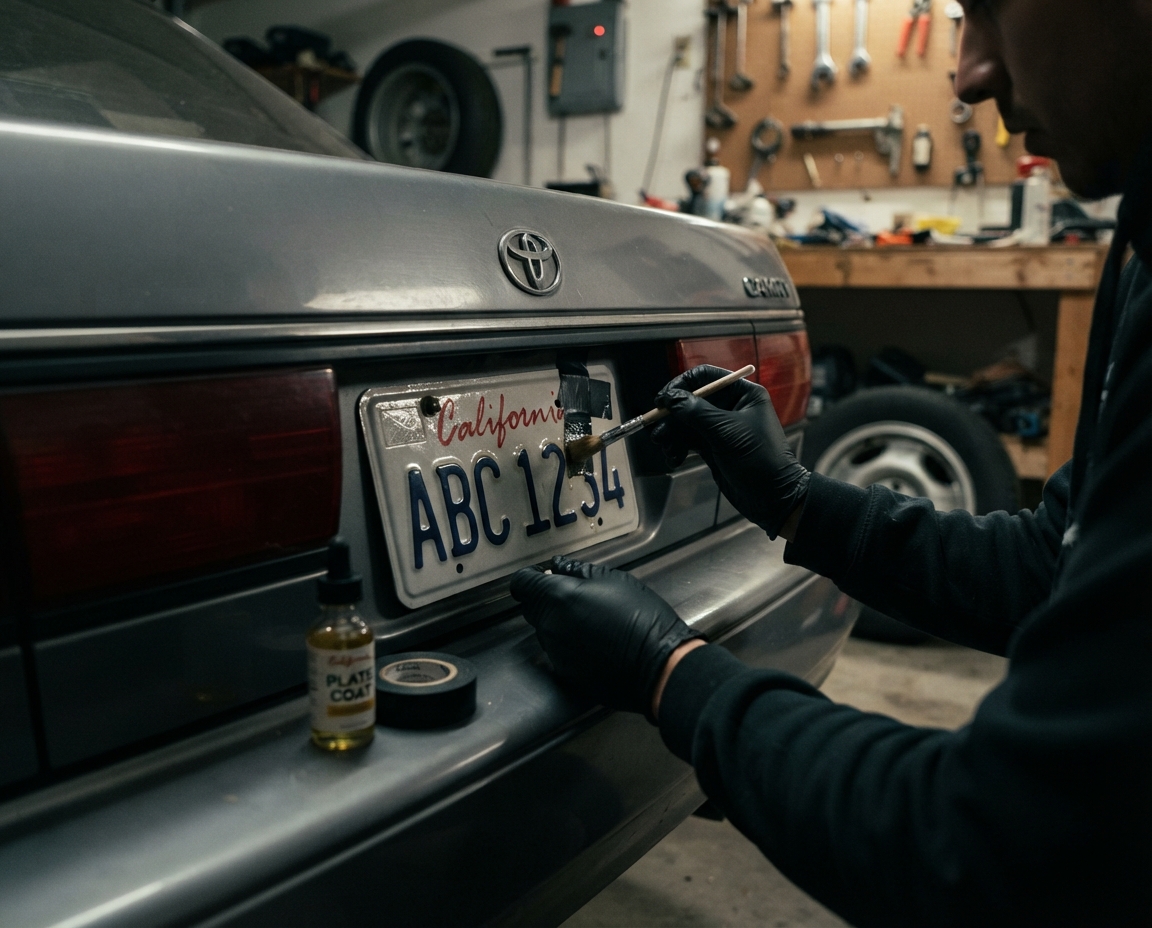
A California license plate may seem like a simple identification tag, but modifying its surface can create a legal issue. California Vehicle Code § 5201.1(c) prohibits altering a license plate to avoid visual or electronic capture of the plate or its characters, including erasing or painting over its reflective coating for that purpose.
If you are searching for information about altering a license plate in California, the important question is not simply whether a plate has been changed. The statute focuses on whether the plate was erased, painted over, or otherwise altered to avoid visual or electronic capture.
That distinction can matter in situations involving modified reflective coating, intentional changes to a plate’s surface, or attempts to make a license plate more difficult to read. It can also help distinguish an alleged violation of § 5201.1(c) from other California laws concerning license plate covers and obscuring devices.
This article explains what California Vehicle Code § 5201.1(c) prohibits, what may constitute an alteration, the meaning of visual or electronic capture, the applicable penalty, and common examples of conduct covered by the law.
What Does California Vehicle Code § 5201.1(c) Prohibit?
California Vehicle Code § 5201.1(c) states that a person may not:
-
Erase the reflective coating of a license plate;
-
Paint over the reflective coating of a license plate; or
-
Alter a license plate to avoid visual or electronic capture of the plate or its characters.
The statute therefore specifically addresses alterations intended to interfere with the visual or electronic capture of a license plate.
The law is not limited to changing the letters or numbers printed on the plate. An alteration involving the plate’s reflective coating or other physical characteristics may fall within the statute when it is made to avoid capture.
What Does “Visual or Electronic Capture” Mean?
“Visual or electronic capture” generally refers to the ability to see, photograph, read, or electronically recognize a license plate or its characters.
Visual capture can involve a person or camera seeing or recording the plate. Electronic capture can involve technology designed to read or recognize the plate’s identifying information.
Section 5201.1(c) focuses on altering the license plate itself in a way intended to avoid that capture.
For example, a person who intentionally changes the reflective surface of a plate so that its characters are more difficult for an electronic system to recognize could potentially fall within § 5201.1(c).
What Counts as Altering a License Plate?
The statute expressly identifies erasing or painting over the reflective coating. It also uses broader language prohibiting the alteration of a license plate to avoid visual or electronic capture.
Potential examples include:
-
Erasing reflective material from the plate;
-
Painting over reflective portions of the plate;
-
Modifying the plate’s surface to interfere with recognition; or
-
Making another physical alteration intended to prevent the plate or its characters from being visually or electronically captured.
The statute does not provide an exhaustive list of every possible alteration. The specific facts surrounding the modification can therefore matter.
Does the License Plate Number Have to Be Changed?
No. Changing the license plate number is not required for § 5201.1(c) to potentially apply.
The statute specifically addresses the reflective coating and also prohibits altering a license plate to avoid visual or electronic capture. It therefore covers more than simply changing the letters or numbers appearing on a plate.
Example
Suppose a driver modifies the reflective surface of a license plate so that an electronic recognition system has difficulty reading it. The driver does not change any letters or numbers.
The fact that the plate number remains unchanged does not necessarily take the conduct outside § 5201.1(c). The statute also addresses alterations that are intended to prevent capture of the plate or its characters.
Is Painting Over a License Plate Illegal in California?
Painting over the reflective coating of a license plate can violate Vehicle Code § 5201.1(c) when it is done to avoid visual or electronic capture.
The statute specifically identifies painting over the reflective coating as prohibited conduct when undertaken for that purpose.
For example, intentionally painting over a reflective portion of a license plate to make its characters more difficult for a camera or electronic system to capture could fall within the statute.
That does not mean every mark, scratch, discoloration, or change to a license plate automatically violates § 5201.1(c). The circumstances and purpose of the alteration matter.
Is Removing the Reflective Coating From a License Plate Illegal?
California Vehicle Code § 5201.1(c) specifically prohibits erasing the reflective coating of a license plate to avoid visual or electronic capture.
For example, if a person deliberately removes reflective material from a plate because the person wants the plate to be more difficult for a camera or electronic system to capture, that conduct could constitute a violation.
The statute is directed at the prohibited purpose identified in the law rather than every instance in which a plate’s reflective surface becomes damaged.
What Is the Penalty for Altering a License Plate in California?
A conviction for violating Vehicle Code § 5201.1(c) is punishable by a $250 fine per violation.
The statute separately establishes penalties for other conduct covered by § 5201.1. For example, subdivision (a) concerns selling or manufacturing certain products or devices that obscure or are intended to obscure license plates and carries a different penalty.
For a violation of subdivision (c), however, the statutory fine is $250 per violation.
The total amount shown on a court notice may be different from the base statutory fine because additional assessments or charges may apply.
Is Vehicle Code § 5201.1(c) an Infraction?
Yes. Vehicle Code § 5201.1 is treated as an infraction under California law.
For subdivision (c), the statute specifically establishes a $250 fine per violation.
An infraction is different from a misdemeanor or felony. A citation involving § 5201.1(c) should identify the specific offense alleged and provide information about the applicable court process.
Does the Law Focus on the Purpose of the Alteration?
Yes. Section 5201.1(c) specifically prohibits erasing, painting over, or altering a license plate to avoid visual or electronic capture.
That language is important when distinguishing the conduct addressed by this statute from ordinary wear, accidental damage, or other changes to a license plate.
Consider two hypothetical situations.
Intentional alteration: A person deliberately paints over reflective material because the person wants the plate to be harder for a camera to capture.
Accidental damage: A license plate becomes scratched during a collision, without the person attempting to interfere with its capture.
Those situations are not necessarily legally equivalent. Section 5201.1(c) specifically addresses alterations made to avoid visual or electronic capture.
What Are Examples of Altering a License Plate?
Example 1: Painting over reflective coating
A driver paints over part of the reflective coating on a license plate specifically to make the plate harder for a camera or electronic system to read.
This is the type of conduct expressly addressed by § 5201.1(c).
Example 2: Removing reflective material
A vehicle owner deliberately removes reflective material from a plate because the owner wants the plate to be more difficult to capture electronically.
That conduct could violate § 5201.1(c).
Example 3: Altering the plate without changing its characters
A person modifies the physical surface of a plate while leaving all letters and numbers intact. The purpose of the modification is to interfere with visual or electronic capture.
The fact that the characters remain unchanged does not necessarily prevent § 5201.1(c) from applying.
Example 4: Accidental damage
A license plate is scratched or damaged during an accident, and there was no attempt to make the plate more difficult to capture.
That is different from deliberately altering a plate for the purpose described in § 5201.1(c). Whether another California license plate requirement applies would depend on the circumstances.
How Is § 5201.1(c) Different From a License Plate Cover?
A license plate alteration is different from using a license plate cover or other device.
Vehicle Code § 5201.1(c) specifically addresses altering the license plate itself to avoid visual or electronic capture.
Vehicle Code § 5201 separately addresses certain coverings, frames, shields, borders, and other devices that can obstruct or impair the reading or recognition of a license plate.
For example:
| Situation | Potentially relevant law |
|---|---|
| Painting over reflective coating to avoid capture | Vehicle Code § 5201.1(c) |
| Erasing reflective coating to avoid capture | Vehicle Code § 5201.1(c) |
| Altering the plate to interfere with visual or electronic capture | Vehicle Code § 5201.1(c) |
| Using a prohibited covering or device | Vehicle Code § 5201 |
The exact facts determine which provision applies.
Did California Recently Change the License Plate Alteration Law?
Yes. California’s license plate laws have been amended in recent years.
The current version of Vehicle Code § 5201.1(c) addresses altering a license plate to avoid visual or electronic capture of the license plate or its characters.
The statute was amended effective January 1, 2026, and the current version also contains revised penalties for the different types of conduct covered by § 5201.1.
Because the law has changed, older online articles may describe a prior version of the statute or outdated penalties.
For an allegation involving § 5201.1(c), it is important to look at the version of the law applicable to the conduct at issue.
Frequently Asked Questions
1. Is altering a license plate illegal in California?
Yes. California Vehicle Code § 5201.1(c) prohibits erasing, painting over, or otherwise altering a license plate to avoid visual or electronic capture of the plate or its characters.
2. What is the fine for altering a license plate in California?
A violation of § 5201.1(c) carries a statutory $250 fine per violation.
3. Can I paint over my California license plate?
Painting over the reflective coating can violate § 5201.1(c) when it is done to avoid visual or electronic capture of the plate or its characters.
4. Is removing the reflective coating illegal?
California law specifically prohibits erasing the reflective coating when it is done to avoid visual or electronic capture.
5. Do I have to change the license plate number to violate § 5201.1(c)?
No. The statute is not limited to changing the plate’s letters or numbers. It also covers alterations intended to avoid visual or electronic capture.
6. Is Vehicle Code § 5201.1(c) a misdemeanor?
No. Vehicle Code § 5201.1 is treated as an infraction under California law. Subdivision (c) carries a $250 statutory fine per violation.
7. Does accidental damage to a license plate violate § 5201.1(c)?
Not necessarily. The statute addresses erasing, painting over, or altering a plate to avoid visual or electronic capture. Accidental damage is not automatically the same conduct.
8. Are license plate covers covered by the same law?
Not necessarily. California Vehicle Code § 5201 separately addresses certain coverings and devices that obstruct or impair license plate reading or recognition. Section 5201.1(c) specifically addresses alterations to the plate itself.
Key Takeaways
California Vehicle Code § 5201.1(c) specifically addresses altering a license plate to avoid visual or electronic capture.
The key points are:
-
Erasing the reflective coating for the prohibited purpose can violate the law.
-
Painting over the reflective coating for that purpose can violate the law.
-
Other alterations intended to avoid visual or electronic capture can also fall within § 5201.1(c).
-
The license plate’s letters or numbers do not necessarily have to be changed.
-
A violation of subdivision (c) carries a $250 fine per violation.
-
Vehicle Code § 5201.1 is treated as an infraction.
-
License plate covers and other obscuring devices may be governed by separate provisions.
-
California has amended its license plate laws, so older information may not accurately reflect the current statute.
Contact Southwest Legal
If you are dealing with a California citation involving an altered license plate, the exact language of the citation and the circumstances surrounding the alleged alteration matter.
Southwest Legal can help you understand the California law that applies to your license plate citation, explain the legal issue, and help you understand the process ahead. Contact us today for a free consultation.
Disclaimer: This article is for general informational purposes only and does not constitute legal advice or create an attorney-client relationship unless and until the firm and client enter into an agreement for legal services. Laws may change, and legal outcomes depend on the specific facts of each case. Consult a qualified attorney for advice regarding your situation.