


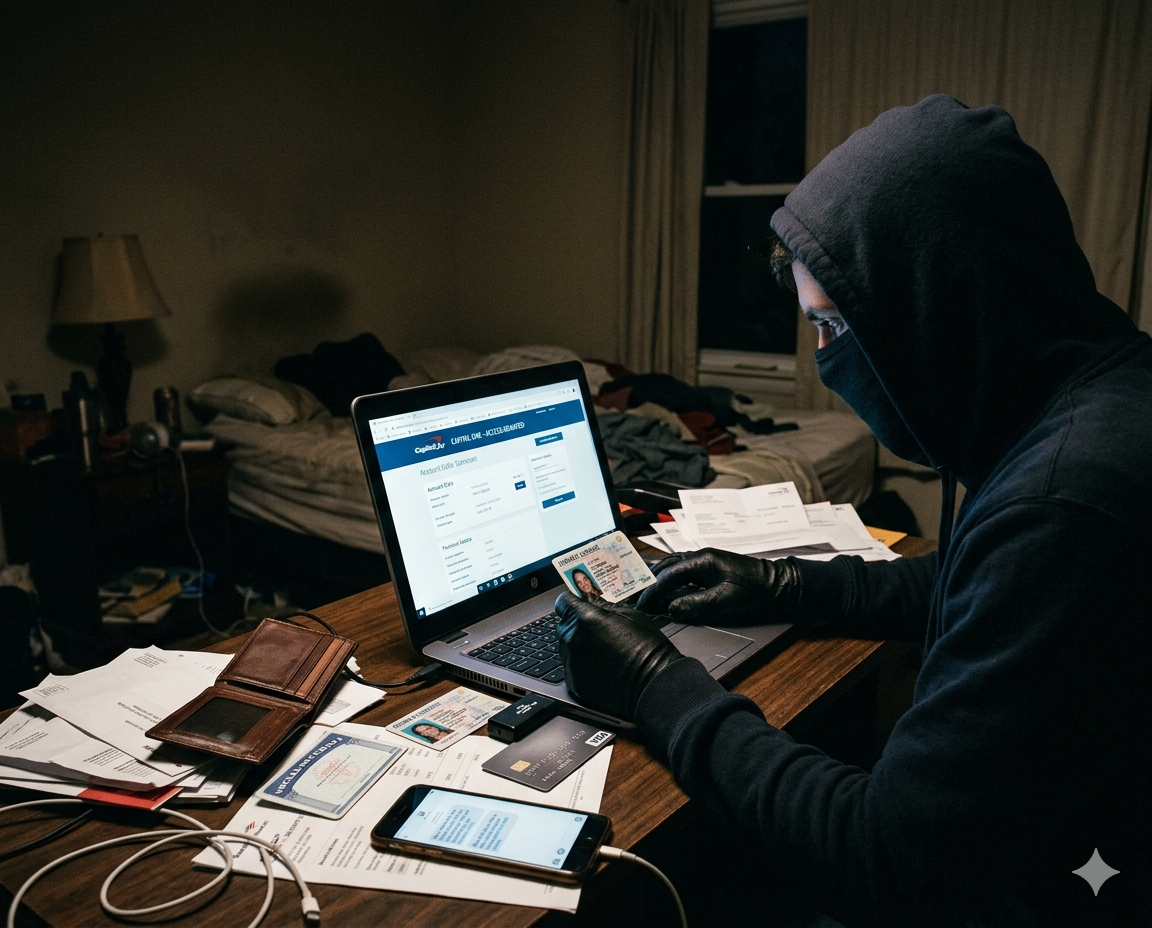
Being accused of identity theft in California is a serious legal matter that can affect your freedom, reputation, employment opportunities, and long-term future. Even before a conviction, a charge under California Penal Code § 530.5(c) can create significant stress and legal consequences.
Understanding what the law actually means, what prosecutors must prove, and what defenses may apply is critical if you are facing this type of accusation.
What Is Identity Theft Under California Law?
In California, identity theft laws are primarily found under Penal Code § 530.5. These laws make it illegal to use, obtain, or possess another person’s personal identifying information without consent and with unlawful intent.
Personal identifying information may include:
- Full name combined with other identifying details
- Social Security numbers
- Driver’s license or state identification numbers
- Bank account or credit card numbers
- Online account usernames and passwords
- Medical or insurance information
- Any other information used to identify or impersonate a person
Identity theft does not always require that financial loss occurs. In many cases, intent alone may be enough for criminal charges.
Understanding Penal Code § 530.5(c)
California Penal Code § 530.5(c) specifically targets the possession or retention of another person’s identifying information with intent to commit fraud.
In simple terms, this section makes it a crime to:
Obtain or keep someone else’s personal identifying information with the intent to use it unlawfully.
Unlike other parts of the identity theft statute, this section does not always require actual use of the information. Instead, prosecutors focus on whether there was intent to commit fraud.
Intent is the key factor in most cases under this law.
What the Prosecutor Must Prove
To convict someone under Penal Code § 530.5(c), the prosecution must prove all of the following beyond a reasonable doubt:
- The defendant possessed or obtained another person’s personal identifying information
- The information belonged to a real person
- The defendant did not have permission to use or keep the information
- The defendant intended to commit fraud or unlawful activity
Intent is often the most heavily disputed element. Because intent cannot be seen directly, prosecutors rely on circumstantial evidence such as messages, behavior, or surrounding facts.
Common Examples of Identity Theft Cases
Identity theft charges can arise in many different situations, including:
- Possessing someone’s Social Security number to open credit accounts
- Collecting stolen personal data for future financial use
- Downloading customer or employee data without authorization
- Using another person’s identity to avoid financial obligations
- Storing stolen personal information obtained through scams or phishing
Even if no fraud actually occurs, possession with intent can still lead to charges.
Misdemeanor vs Felony Charges
Identity theft under California law is a “wobbler” offense, meaning it can be charged as either a misdemeanor or a felony.
Misdemeanor penalties may include:
- Up to one year in county jail
- Fines
- Probation
- Restitution to victims
Felony penalties may include:
- 16 months, 2 years, or 3 years in state prison
- Higher fines
- Formal probation
- Long-term criminal record consequences
Prosecutors decide how to charge the case based on factors such as financial loss, number of victims, criminal history, and the seriousness of the conduct.
Situations That Often Lead to Charges
Identity theft cases can arise from a variety of situations, including:
- Misuse of a friend or family member’s personal information
- Employee access to confidential data at work
- Online scams or phishing schemes
- Mistaken identity or false accusations
- Disputes involving shared financial accounts
Many cases involve digital evidence, which can sometimes be misinterpreted or incomplete.
Possible Defenses to Identity Theft Charges
Several legal defenses may be available depending on the facts of the case.
Lack of intent to commit fraud
If there was no intent to deceive or gain unlawfully, the charge may not be proven.
Consent
If the alleged victim gave permission to use their information, this may be a strong defense.
Insufficient evidence
The prosecution must prove every element beyond a reasonable doubt. Weak evidence may result in dismissal or reduction.
Mistaken identity
Digital evidence can sometimes point to the wrong person, especially in shared devices or networks.
Lack of knowledge
If the accused did not know the information was stolen or unlawfully obtained, criminal liability may not apply.
Why These Charges Are Serious
A conviction for identity theft can have long-term consequences beyond jail or fines.
It may affect:
- Employment opportunities
- Professional licenses
- Immigration status
- Financial reputation and credit
- Personal and professional relationships
Because identity theft is considered a crime involving dishonesty, it can follow a person for years.
Importance of Early Legal Representation
Identity theft cases often involve complex digital evidence and intent-based arguments. Early legal intervention can make a significant difference in the outcome.
A criminal defense attorney may be able to:
- Challenge unlawful searches or seizures
- Analyze digital forensic evidence
- Negotiate reduced charges or dismissal
- Present evidence of lack of intent
- Identify weaknesses in the prosecution’s case
Early action often provides more defense options.
Conclusion
Being accused under California Penal Code § 530.5(c) is a serious legal matter, but it is also a charge that often depends heavily on intent and the strength of the evidence. Many cases involve misunderstandings, insufficient proof, or circumstances that may not meet the legal requirements for identity theft.
Understanding the law is an important first step, but developing a strong defense strategy is key to protecting your rights, reputation, and future.
Contact Southwest Legal
If you or a loved one has been accused of identity theft under California Penal Code § 530.5(c), taking prompt action can help protect your rights. Southwest Legal provides dedicated criminal defense representation focused on challenging the evidence, protecting your interests, and pursuing the best possible outcome for your case.
Contact us today for a free consultation to discuss your situation and get the legal guidance you need to move forward with confidence.
Disclaimer: This article is for general informational purposes only and does not constitute legal advice or create an attorney-client relationship. No attorney-client relationship is formed unless and until the firm and client enter into an agreement for legal services. Laws may change, and legal outcomes depend on the specific facts of each case. Consult a qualified attorney for advice regarding your situation.