


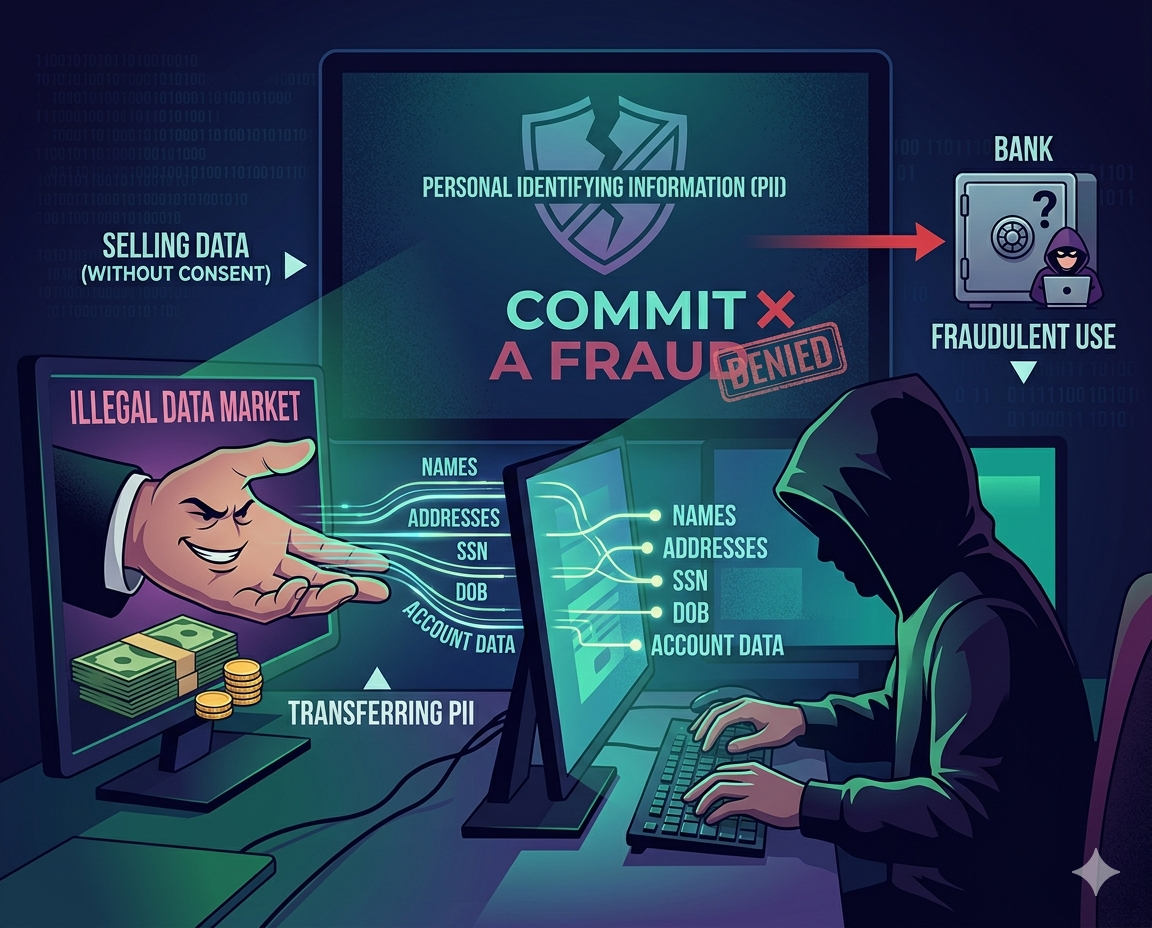
In California, identity theft laws extend beyond those who directly commit fraud. Authorities also investigate and prosecute individuals who handle or distribute personal identifying information when that information is connected to fraudulent activity. As data breaches, online transactions, and digital communication continue to grow, these types of cases are becoming more common.
California Penal Code 530.5(d)(1) specifically makes it a crime to sell, transfer, or provide another person’s personal identifying information without their consent, with the intent that it be used to commit fraud. This means you can face criminal charges even if you never personally used the information or completed any fraudulent act.
Because many cases involve emails, shared files, or account access, individuals are sometimes charged based on how information was handled or passed along, not just how it was used. Understanding how this law works is essential if you are under investigation or facing charges.
What the Law Prohibits
Under this section, it is illegal to:
- Sell personal identifying information belonging to another person
- Transfer or share that information with someone else
- Provide access to personal data without permission
- Do any of the above with intent to commit fraud or assist fraudulent activity
A completed fraud is not required. The intent behind the transfer is enough for a criminal charge.
What Qualifies as Personal Identifying Information?
Personal identifying information includes any data that can be used to identify or access another person’s identity. This may include:
- Full name combined with identifying details
- Social Security number
- Driver’s license or identification number
- Bank account or credit card information
- Online account usernames and passwords
- Email accounts tied to financial or personal data
- Medical or insurance information
Even partial or incomplete information may qualify if it can be used to identify or impersonate someone.
Elements the Prosecution Must Prove
To convict someone under California Penal Code 530.5(d)(1), the prosecution must prove:
- You sold, transferred, or provided personal identifying information
- The information belonged to another person
- You acted without that person’s consent
- You intended for the information to be used to commit fraud
The issue of intent is often the most important and most contested part of the case.
Common Examples
Examples of conduct that may lead to charges include:
- Selling or sharing stolen credit card or banking details
- Providing login credentials to financial or online accounts
- Sending personal data to someone planning to open fraudulent accounts
- Distributing customer or client information without authorization
- Exchanging personal data for money, services, or other benefits
Digital transfers—such as emails, messages, or file sharing—can all be used as evidence.
Misdemeanor or Felony
A violation of PC 530.5(d)(1) is generally a wobbler, meaning it can be charged as either:
Misdemeanor:
- Up to 1 year in county jail
- Fines
- Probation
Felony:
- 16 months, 2 years, or 3 years in county jail
- Higher fines
- Formal probation
More serious cases are typically filed as felonies, especially when multiple victims or large amounts of data are involved.
Factors That Can Increase the Severity
Certain factors may lead to more serious charges:
- Multiple victims
- Large-scale data distribution
- Financial gain from selling information
- Prior criminal history
- Organized or ongoing activity
These factors may increase the likelihood of felony prosecution.
Related Charges
Charges under this section are often combined with other offenses, such as:
- Fraud-related crimes
- Conspiracy
- Computer or cybercrime offenses
- Theft-related offenses
This can significantly increase potential penalties.
Legal Defenses
Possible defenses depend on the facts of the case and may include:
Lack of Intent
If there was no intent to commit fraud, the charge may not be proven.
Consent
If the individual gave permission to share their information, it may not be unlawful.
Lack of Knowledge
If you were unaware the information belonged to another person or would be used unlawfully.
Insufficient Evidence
The prosecution must prove every element beyond a reasonable doubt.
Mistaken Identity
Digital evidence may sometimes incorrectly identify a person as responsible.
How These Cases Are Investigated
Investigations often rely on:
- Emails, text messages, and online communications
- Financial and transaction records
- File transfers and cloud storage activity
- Device and account data
These cases may involve multiple individuals and detailed digital evidence.
Consequences Beyond Criminal Penalties
A conviction can have long-term consequences, including:
- Permanent criminal record
- Difficulty obtaining employment
- Loss of professional licenses
- Financial and reputational harm
- Potential civil liability
Because the offense involves fraud-related conduct, it may affect future opportunities.
What To Do If You Are Charged
If you are facing allegations under California Penal Code 530.5(d)(1):
- Do not speak to law enforcement without legal counsel
- Avoid discussing the case with others
- Preserve any relevant documents or communications
- Seek legal advice as soon as possible
Early action can influence how the case is handled.
Final Thoughts
California Penal Code 530.5(d)(1) focuses on the transfer and distribution of personal identifying information connected to fraud. Because the law centers on intent rather than completed fraud, individuals may face charges based on how information was shared, not just how it was used.
Understanding the elements of the offense and responding promptly to allegations can be critical to protecting your rights, reputation, and future. Seeking experienced legal guidance can help you better understand your options and determine the appropriate next steps for your situation.
Contact Southwest Legal
If you or a loved one is facing charges related to identity theft or the transfer of personal information, having experienced legal guidance is essential. Southwest Legal provides dedicated criminal defense representation focused on analyzing the evidence, protecting your rights, and developing a strategy tailored to your situation.
Don’t face serious allegations without professional support. Contact us today for a free consultation and learn more about your legal options.
Disclaimer: This article is for general informational purposes only and does not constitute legal advice or create an attorney-client relationship. No attorney-client relationship is formed unless and until the firm and client enter into an agreement for legal services. Laws may change, and legal outcomes depend on the specific facts of each case. Consult a qualified attorney for advice regarding your situation.