


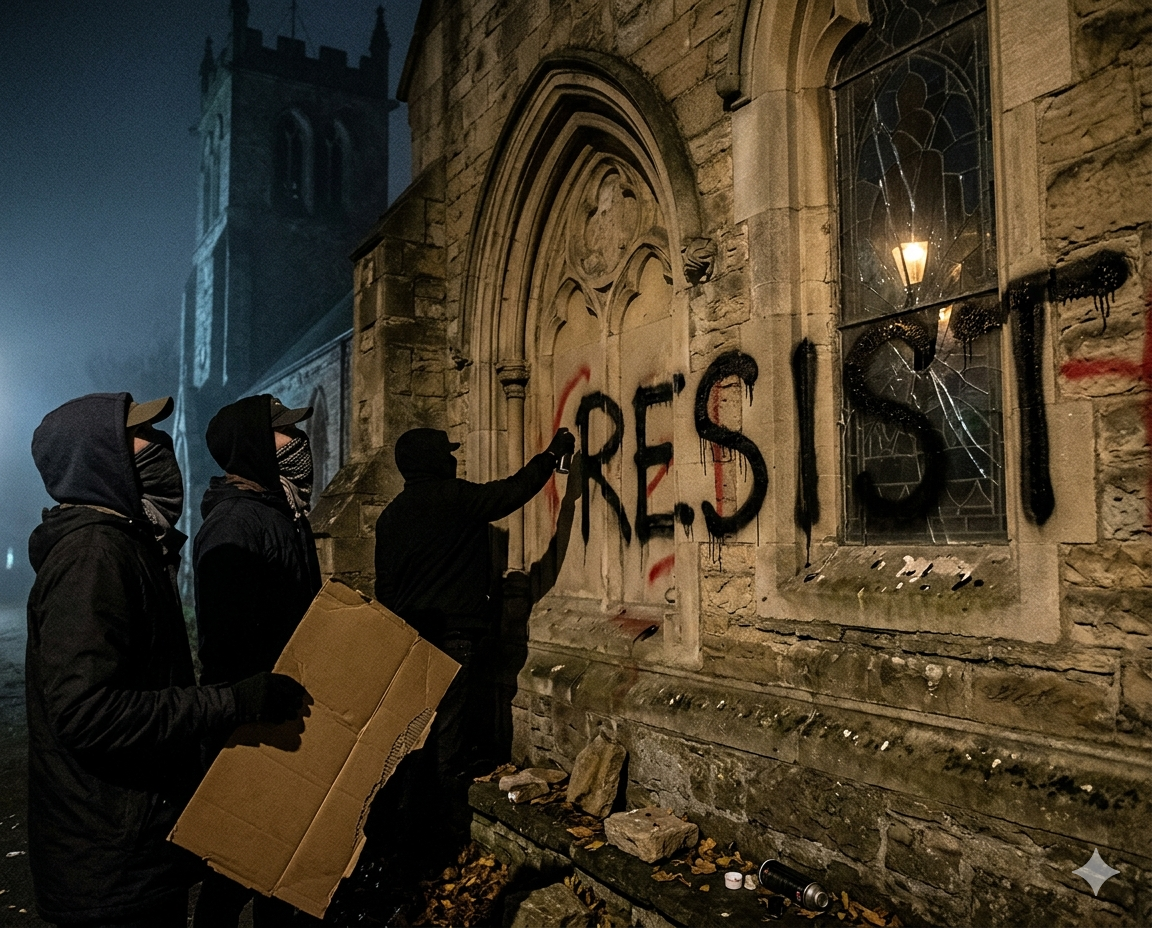
California law imposes serious penalties for crimes involving damage to religious property. Under California Penal Code § 594.3, vandalizing a church, synagogue, mosque, temple, cemetery, or other protected religious property can result in misdemeanor or felony criminal charges, substantial fines, restitution, and possible jail or prison time.
This law exists to protect religious institutions and ensure that individuals can practice their faith without fear, intimidation, or targeted attacks against sacred spaces. Prosecutors and law enforcement agencies throughout California often pursue these cases aggressively, particularly when the alleged conduct appears motivated by religious bias or intimidation.
This guide explains California Penal Code § 594.3 in detail, including what the prosecution must prove, potential penalties, examples of prohibited conduct, available defenses, and how the statute differs from standard vandalism laws.
What Is California Penal Code § 594.3?
California Penal Code § 594.3 specifically addresses vandalism involving religious buildings and cemeteries. The statute makes it unlawful to intentionally damage, destroy, or deface property associated with religious worship or burial grounds.
The law applies to:
- Churches
- Synagogues
- Mosques
- Temples
- Religious schools
- Religious educational facilities
- Cemeteries
- Other structures used for religious purposes
The statute also allows for enhanced criminal penalties when the offense is intended to intimidate people from practicing their religion freely.
Understanding Vandalism Under California Law
Under California law, vandalism generally means maliciously damaging, destroying, or defacing someone else’s property.
Examples of vandalism may include:
- Graffiti or spray painting
- Breaking windows
- Damaging walls or doors
- Destroying statues or memorials
- Defacing religious symbols
- Smashing gravestones
- Damaging religious artifacts
- Destroying landscaping or exterior fixtures
For purposes of Penal Code § 594.3, the prosecution must typically prove that the defendant acted intentionally and knowingly.
Accidental property damage usually does not qualify as criminal vandalism.
What Qualifies as a Religious Building?
A religious building is not limited to traditional churches. California courts generally look at how the property is used and whether it serves a religious purpose.
Protected properties may include:
- Buildings used for worship services
- Religious education facilities
- Chapels
- Prayer centers
- Monasteries
- Religious retreat facilities
- Burial grounds connected to faith organizations
Even if services are not held every day, a property may still qualify if it is regularly used for religious activities.
Examples of Conduct That Could Lead to Charges
Many different actions may result in charges under California Penal Code § 594.3.
Examples include:
- Spray-painting offensive messages on a synagogue
- Breaking stained-glass windows at a church
- Defacing a mosque with hateful symbols
- Destroying crosses, statues, or religious artwork
- Smashing gravestones in a cemetery
- Damaging religious school property
- Destroying sacred books or ceremonial items
In some cases, even relatively minor damage can lead to criminal prosecution if the property is religious in nature.
Is Vandalizing a Religious Building a Felony?
It can be.
California Penal Code § 594.3 is often treated as a “wobbler” offense, meaning prosecutors may file the case as either:
- A misdemeanor, or
- A felony
The decision usually depends on factors such as:
- The amount of property damage
- Whether threats or intimidation were involved
- The defendant’s criminal history
- Whether the conduct appears motivated by religious bias
- The overall seriousness of the offense
When prosecutors allege the crime was committed to intimidate individuals because of religion or discourage religious worship, felony charges become more likely.
Penalties for Violating Penal Code § 594.3
The penalties for vandalizing a religious building can be severe.
Misdemeanor Penalties
If charged as a misdemeanor, consequences may include:
- Up to one year in county jail
- Fines
- Informal probation
- Community service
- Restitution for property damage
Judges may also order counseling, educational programs, or additional conditions depending on the circumstances of the case.
Felony Penalties
If charged as a felony, potential penalties may include:
- 16 months, 2 years, or 3 years in county jail
- Formal probation
- Significant fines
- Restitution payments
- A permanent felony conviction
A felony record can negatively affect:
- Employment opportunities
- Professional licenses
- Immigration status
- Housing applications
- Firearm ownership rights
Hate Crime Allegations and Enhanced Penalties
One of the most serious aspects of Penal Code § 594.3 involves hate crime-related accusations.
If prosecutors believe the alleged vandalism was intended to intimidate or target people because of religion, the case may involve additional penalties and sentencing enhancements.
Evidence prosecutors may use to support hate crime allegations includes:
- Religious slurs or threatening language
- Hate symbols or extremist imagery
- Social media posts
- Prior statements targeting religious groups
- Repeated attacks on faith-based institutions
These allegations can significantly increase the seriousness of the case and may influence charging decisions, sentencing, and bail conditions.
How Prosecutors Prove the Case
To secure a conviction, prosecutors generally need evidence showing:
- The defendant committed vandalism;
- The property was religious in nature; and
- The conduct was intentional.
Evidence commonly used in these cases may include:
- Surveillance footage
- Eyewitness testimony
- Police reports
- Social media activity
- Fingerprints or forensic evidence
- Photographs of damage
- Confessions or admissions
The prosecution must prove guilt beyond a reasonable doubt.
Common Legal Defenses
Every criminal case is unique, and several defenses may apply depending on the facts.
False Accusation
A person may be wrongly accused due to mistaken assumptions, personal disputes, or unreliable witness testimony.
Lack of Intent
Accidental property damage generally is not criminal vandalism. The defense may argue there was no intent to damage the property.
Mistaken Identity
Many vandalism incidents occur at night or involve obscured faces, making mistaken identification possible.
Insufficient Evidence
Weak evidence, unclear surveillance footage, or inconsistent witness statements may create reasonable doubt.
No Religious Targeting
In cases involving hate crime allegations, the defense may argue there was no intent to intimidate or target religion.
Difference Between Penal Code § 594 and § 594.3
California has both a general vandalism law and a specific law protecting religious property.
This statute applies to vandalism involving general property such as:
- Homes
- Cars
- Businesses
- Schools
- Public property
Penal Code § 594.3
This law specifically protects:
- Religious buildings
- Places of worship
- Religious educational institutions
- Cemeteries
Because these offenses may affect constitutional religious freedoms and community safety, prosecutors often seek harsher penalties.
Juvenile Cases Involving Religious Vandalism
Minors accused of vandalizing religious property may face proceedings in juvenile court.
Possible consequences for juveniles include:
- Juvenile probation
- Counseling
- Community service
- Restitution
- Juvenile detention in serious cases
Judges often consider the juvenile’s age, prior record, and the severity of the damage.
Civil Liability for Property Damage
In addition to criminal penalties, a person accused of vandalizing religious property may also face civil lawsuits.
Religious organizations may seek compensation for:
- Repair costs
- Cleanup expenses
- Property restoration
- Replacement of damaged items
- Other financial losses related to the incident
Insurance companies may also pursue reimbursement claims.
Why California Treats Religious Vandalism Seriously
Crimes targeting places of worship often impact entire communities rather than only the property owner.
Acts of vandalism against religious institutions can create fear, emotional distress, and concerns about safety among worshippers and community members.
Because of these concerns, law enforcement agencies frequently dedicate significant resources to investigating these cases.
Can Federal Charges Apply?
In certain situations, federal authorities may also investigate vandalism involving religious property.
Federal charges are more likely when:
- Civil rights violations are alleged
- Threats accompany the vandalism
- Organized hate groups are involved
- The conduct crosses state lines
- Religious intimidation is a major factor
A person may potentially face both state and federal legal consequences.
Frequently Asked Questions
Is graffiti on a church considered vandalism?
Yes. Graffiti on a religious building may qualify as vandalism under California Penal Code § 594.3.
Does the amount of damage matter?
Yes. The extent of the damage may influence whether the case is charged as a misdemeanor or felony.
Are cemeteries protected under this law?
Yes. Cemeteries and burial grounds are specifically protected.
Can someone face charges without hate crime allegations?
Yes. Hate crime intent is not required for prosecutors to file charges under the statute.
What if the property was abandoned?
Courts typically examine whether the property still serves or is intended to serve a religious purpose.
Final Thoughts
California Penal Code § 594.3 provides strong legal protections for religious buildings, cemeteries, and sacred property. A conviction can carry serious consequences, including jail time, fines, restitution, probation, and a permanent criminal record.
Because these cases often involve allegations of bias, intimidation, or hate crimes, prosecutors tend to pursue them aggressively. Anyone accused of vandalizing a religious building should understand the seriousness of the charges and the importance of obtaining experienced legal representation.
Contact Southwest Legal
If you or a loved one is facing charges under California Penal Code § 594.3 or any vandalism-related offense, Southwest Legal may be able to help.
An experienced criminal defense attorney can evaluate the facts of your case, explain your legal options, and work to protect your rights throughout the legal process. Contact us today for a free consultation and learn more about your defense options.
Disclaimer: This article is for general informational purposes only and does not constitute legal advice or create an attorney-client relationship. No attorney-client relationship is formed unless and until the firm and client enter into an agreement for legal services. Laws may change, and legal outcomes depend on the specific facts of each case. Consult a qualified attorney for advice regarding your situation.