


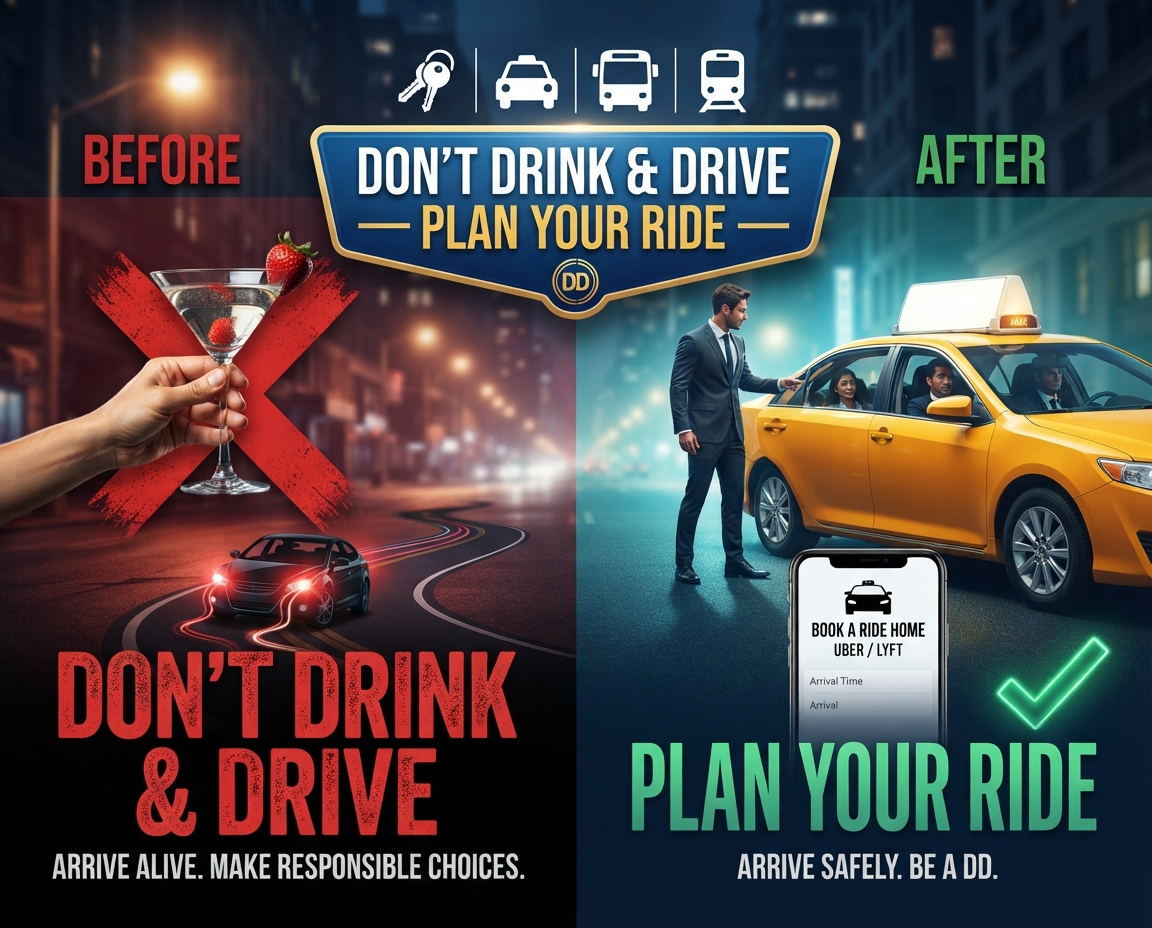
Weekend plans often involve dinner, parties, concerts, sporting events, or time with friends. If alcohol is part of the evening, one decision should be made before the first drink: how will you get home safely?
Driving after drinking can affect judgment, coordination, attention, and reaction time. It can also lead to a DUI arrest, a collision, injuries, and potentially serious legal and financial consequences.
The safest choice is: if you plan to drink, arrange a sober ride before you start drinking.
Why Is Drinking and Driving Dangerous?
Alcohol can affect driving ability even when a person does not feel intoxicated. Someone may believe they are alert enough to drive while their reaction time, decision-making, or coordination has already been affected.
For example, a person might have drinks at a restaurant and feel perfectly capable of driving home. If another vehicle suddenly stops in front of them, impaired reaction time could make it more difficult to respond safely.
There is no reliable way to determine whether you are safe to drive simply by judging how you feel. If you have been drinking, the safest option is not to drive.
How Can You Avoid a DUI This Weekend?
Planning transportation in advance can eliminate the need to make a difficult decision after drinking.
Choose a Sober Driver
Pick a designated driver before the first drink. The sober driver should agree to avoid alcohol for the entire outing and be prepared to drive everyone home safely.
Don’t assume that someone will volunteer later or that you can decide who is driving after the evening is underway.
Use a Rideshare or Taxi
If you have been drinking, leave your vehicle where it is and use a rideshare service, taxi, or another sober transportation option.
If possible, make transportation arrangements before going out. Having a plan makes it easier to follow through when the evening ends.
Stay Overnight
If you are at a friend’s home, hotel, or another safe location, staying overnight may be a better option than attempting to drive.
Your vehicle can remain parked until you are sober and able to drive safely.
Never Rely on Feeling “Fine”
One of the most dangerous assumptions is that being awake or feeling alert means you can safely drive.
Alcohol affects people differently, and a person’s perception of their own impairment is not a dependable safety test. If you have been drinking, don’t drive.
What Are the DUI Laws in California?
California law prohibits driving a vehicle while under the influence of alcohol or certain drugs. California also has laws addressing driving with specified alcohol concentrations, including a 0.08% blood alcohol concentration (BAC) threshold for many drivers age 21 and older operating noncommercial vehicles.
Different rules can apply to commercial drivers, drivers under 21, and people who are driving while subject to DUI probation.
A DUI case is not determined solely by whether someone personally believes they were too impaired to drive. The circumstances of the traffic stop, investigation, chemical testing, and other evidence can all be relevant.
What Happens After a DUI Arrest in California?
A California DUI can involve two separate processes: a DMV proceeding concerning driving privileges and a criminal case in court.
After a DUI arrest, the California Department of Motor Vehicles may take administrative action against a person’s driving privilege. This process is commonly referred to as an Administrative Per Se, or APS, action.
A person generally has 10 days from receiving the suspension or revocation order to request a DMV administrative hearing. Missing the applicable deadline can affect the opportunity to challenge the administrative action.
The DMV proceeding is separate from the criminal court case. A result in one proceeding does not automatically determine the outcome of the other.
What Are the Possible Consequences of a DUI?
The consequences of a California DUI depend on the circumstances, including whether there are prior DUI convictions, whether anyone was injured, the driver’s age and license status, chemical-test results, and other factors.
Potential consequences may include:
- Fines and court-related financial obligations
- Driver’s license suspension or revocation
- DUI education or treatment requirements
- Probation
- Ignition interlock device requirements
- Increased insurance costs
- Vehicle-related expenses
- Jail in certain cases
- More serious criminal consequences when a DUI involves injury or death
California’s ignition interlock rules can also depend on the driver’s prior DUI history and whether the offense involved an injury. Certain repeat and injury-involved DUI convictions can result in mandatory ignition interlock requirements.
Because DUI penalties can vary substantially, information about another person’s DUI should not be assumed to apply to your situation.
Does a DUI Automatically Mean You Will Lose Your License?
A DUI arrest can result in DMV action affecting driving privileges, and a DUI conviction can result in additional consequences.
The DMV process and criminal court process are separate. Depending on the circumstances, a person may have an opportunity to challenge a DMV action through an administrative hearing.
For someone who has recently been arrested for DUI, paying attention to the paperwork received at the time of the arrest is important because it may contain deadlines and information about the person’s driving privileges.
What Should You Do If You Are Facing a DUI Charge?
If you are facing a DUI charge in California, consider obtaining legal advice from a qualified attorney who can review the specific facts of your case.
A DUI case can involve issues such as the traffic stop, the reason for the stop, field sobriety testing, chemical testing, the arrest, DMV proceedings, prior DUI history, and whether an accident or injuries were involved.
The available legal options depend on the circumstances. No attorney or online article can guarantee a particular result.
Plan Your Ride Before You Go Out
The best way to avoid the dangers and legal consequences associated with drinking and driving is to make a transportation plan before drinking begins.
Before heading out this weekend:
- Choose a sober driver.
- Arrange a rideshare or taxi.
- Keep your vehicle parked if you have been drinking.
- Stay overnight when appropriate.
- Never assume you are safe to drive simply because you feel alert.
Contact Southwest Legal
If you are facing a DUI charge, the experienced DUI defense attorneys at Southwest legal can discuss your circumstances and explain the legal process and potential options that may be available.
For more information about California DUI matters and to discuss your circumstances with a legal professional, contact us today for a free consultation to learn more about the legal process and what steps may be available in your situation.
Disclaimer: This article is for general informational purposes only and does not constitute legal advice or create an attorney-client relationship unless and until the firm and client enter into an agreement for legal services. Laws may change, and legal outcomes depend on the specific facts of each case. Consult a qualified attorney for advice regarding your situation.