


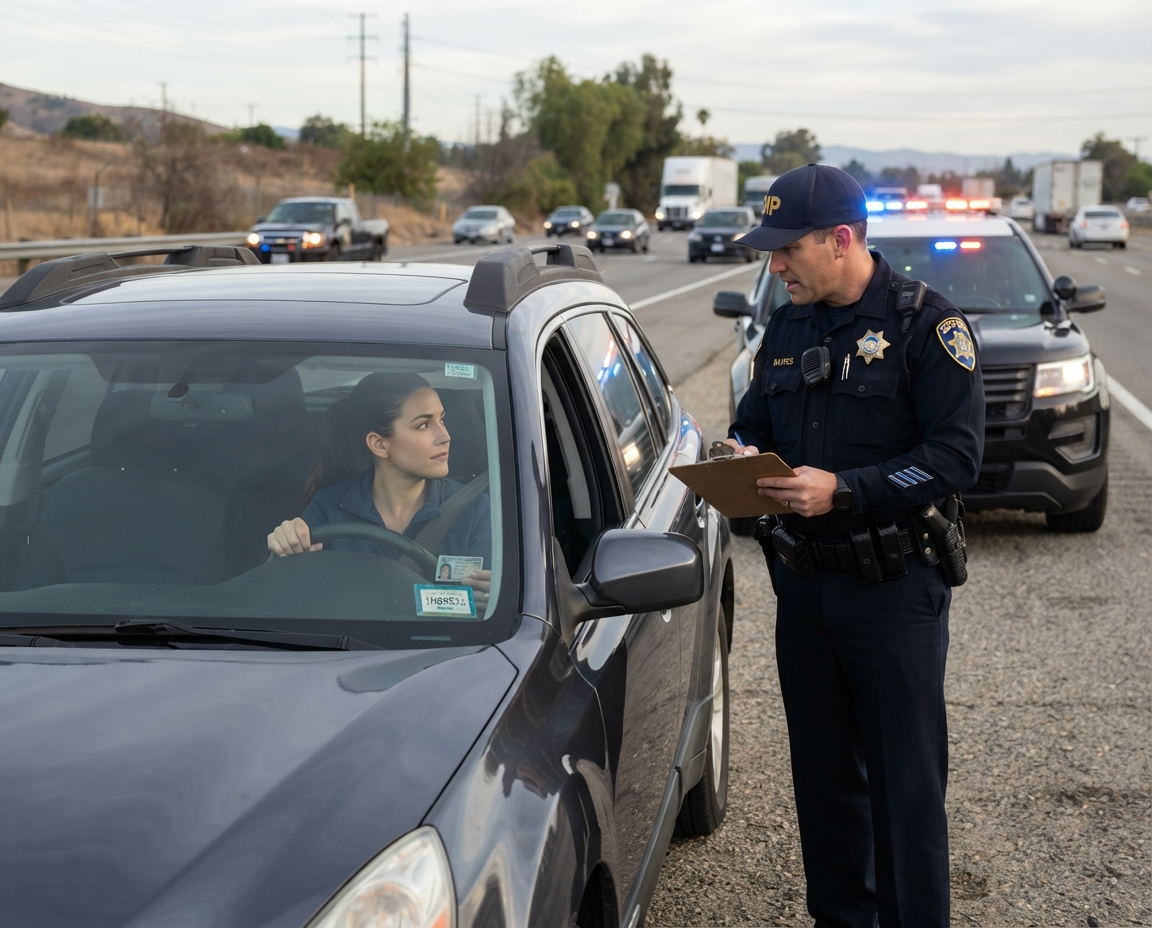
If you have been arrested for driving under the influence (DUI) in California, you may soon receive paperwork from the California Department of Motor Vehicles (DMV) concerning the suspension or revocation of your driver’s license.
This is where Admin Per Se (APS) comes into play.
A California DUI arrest can lead to two separate proceedings: a criminal DUI case in court and an administrative action by the DMV against your driving privilege. These proceedings are separate, which means the DMV can take action against your license even before your criminal DUI case has been resolved.
For drivers, understanding the California APS process is important because it involves strict deadlines and can affect when and whether you are legally permitted to drive.
This guide explains what an APS suspension is, what can trigger it, how long a suspension may last, how the DMV hearing process works, and what options may be available after a DUI arrest.
What Does Admin Per Se (APS) Mean in California?
Admin Per Se, commonly called APS, is California’s administrative license suspension program for certain drivers arrested for DUI.
The program allows the California DMV to suspend or revoke a person’s driving privilege based on specified circumstances following a DUI arrest. The DMV action is administrative rather than criminal.
In general, APS can apply when a driver:
- Has a qualifying alcohol concentration shown by a chemical test; or
- Refuses to take or fails to complete a required chemical test after a DUI arrest.
For a noncommercial driver who is age 21 or older and not subject to a special DUI probation rule, a chemical test showing a BAC of 0.08% or higher can trigger an APS action.
Different thresholds and rules can apply to other drivers. For example, California has stricter BAC rules for drivers under 21, drivers on DUI probation, and people operating certain commercial or passenger-for-hire vehicles.
The key point is that APS is a DMV process, not a criminal conviction.
Is an APS Suspension the Same as a DUI Conviction?
No.
An APS suspension is an administrative action involving your driving privilege. A DUI conviction is a criminal court outcome.
This distinction is one of the most important things to understand after a California DUI arrest.
A person may have:
- A DMV APS case concerning their driving privilege; and
- A separate criminal DUI case in court.
The two cases can proceed independently.
For example, someone could challenge an APS suspension at a DMV hearing while the criminal DUI charge is still pending in court. Likewise, a criminal case could eventually be dismissed without automatically eliminating every DMV consequence arising from the arrest.
A DMV decision concerning an APS action does not determine whether someone is criminally guilty or innocent.
What Can Trigger an APS Suspension in California?
California’s APS rules apply to several different situations. The consequences depend on the driver’s circumstances.
BAC of 0.08% or Higher
For drivers who are at least 21 years old and operating a noncommercial vehicle, an APS action can be triggered when a qualifying chemical test shows a BAC of 0.08% or higher.
This is commonly associated with a standard adult DUI arrest involving alcohol.
However, a BAC of 0.08% is not the only circumstance that can result in DMV action.
Drivers on DUI Probation
California has a lower BAC threshold for certain drivers who are already on DUI probation.
A driver on DUI probation can face DMV consequences for a BAC of 0.01% or higher under the applicable rules.
This means someone on DUI probation should not assume that the ordinary 0.08% threshold applies to their situation.
Commercial Drivers
Different BAC rules can apply when a person is operating a commercial vehicle.
California generally applies a 0.04% BAC threshold for drivers operating vehicles that require a commercial driver’s license under the applicable DUI provisions.
Commercial drivers can also face additional consequences affecting their commercial driving privileges.
Refusing or Failing to Complete a Chemical Test
California’s implied-consent laws require drivers arrested for DUI to submit to a required chemical test under specified circumstances.
Refusing a required chemical test—or failing to complete it—can result in an APS suspension or revocation.
Refusal cases are treated differently from ordinary BAC-result cases, and the consequences can be more severe, particularly for drivers with prior DUI-related actions.
What Happens to Your License After a DUI Arrest?
When a driver is arrested for DUI and an APS action applies, the arresting officer may take possession of the driver’s California driver’s license.
The officer generally provides an Order of Suspension and Temporary License.
For a qualifying driver, the temporary license generally permits driving for 30 days following the arrest, subject to the terms of the temporary license and any other restrictions or suspensions affecting the person’s driving privilege.
The temporary license is important because it does not mean the DMV has decided that the driver will ultimately keep the license.
Instead, it provides a temporary driving period while the DMV process moves forward.
Example: Temporary License After a DUI Arrest
Suppose a driver is arrested on September 1 following a DUI investigation. The officer takes the driver’s physical license and issues the appropriate temporary license.
The driver may generally be permitted to drive during the temporary period identified by the DMV paperwork.
That driver should not assume that the temporary license remains valid indefinitely or that the criminal court date determines when the DMV action takes effect.
The DMV paperwork should be reviewed carefully because the dates and instructions are critical.
How Long Do You Have to Request an APS Hearing?
One of the most important parts of the California APS process is the deadline for requesting a DMV hearing.
The California DMV states that a driver generally has 10 days to request an administrative hearing after receiving the suspension or revocation order.
Because this is a short deadline, waiting until the criminal court date can be a serious mistake.
The DMV hearing is separate from the criminal case, so the fact that a court date is weeks or months away does not necessarily give a driver additional time to address the DMV action.
If you want to challenge an APS suspension, it is important to review the documents you received and act promptly.
What Is a California APS Hearing?
An APS hearing is an administrative proceeding conducted by the DMV.
It is not a criminal trial.
The purpose of the hearing is to determine whether the legal requirements for the administrative suspension or revocation have been established.
Depending on the circumstances, the DMV may consider issues such as:
- Whether the officer had reasonable cause to believe the driver was operating a vehicle while violating applicable DUI laws.
- Whether the driver was lawfully arrested or otherwise subject to the applicable chemical-testing requirements.
- Whether the driver was operating a motor vehicle.
- Whether the driver had a qualifying BAC.
- Whether the driver refused or failed to complete a required chemical test.
- Whether the driver was properly advised of the consequences of refusing a required chemical test, when that issue applies.
The specific issues considered depend on the type of APS action.
Can You Challenge an APS License Suspension?
Yes.
California provides a process through which a driver can request a DMV administrative hearing and challenge an APS suspension or revocation.
At the hearing, the DMV reviews the evidence and determines whether the administrative action should remain in effect.
If the DMV determines that the requirements for the suspension or revocation have not been established, the action can be set aside.
However, there is no guarantee that a hearing will result in the suspension being overturned.
The outcome depends on the facts, evidence, applicable law, and circumstances of the individual case.
What Evidence Is Considered at an APS Hearing?
The DMV’s review can involve evidence generated during the DUI investigation and arrest.
Depending on the circumstances, this may include:
- The officer’s reports.
- Chemical-test results.
- Information concerning the arrest.
- Documents concerning the driver’s license.
- Evidence relating to whether a chemical test was requested or completed.
- Records concerning prior DUI-related actions.
- Other evidence relevant to the issues the DMV is authorized to consider.
The DMV hearing process is different from a criminal DUI trial, so the evidence and procedures should not be viewed as identical to what occurs in criminal court.
What Happens If You Do Not Request an APS Hearing?
The hearing deadline is important because a driver who does not timely request a hearing can lose the opportunity to challenge the administrative action through that hearing process.
For that reason, someone who receives an APS suspension or revocation order should pay close attention to the deadline stated in the DMV paperwork.
Do not assume that hiring a lawyer later or waiting for the criminal court date will automatically preserve the right to a DMV hearing.
How Long Is an APS Suspension in California?
There is no single APS suspension period that applies to every California driver.
The length can depend on factors such as:
- Whether the driver completed or refused the chemical test.
- Whether the driver has prior DUI-related offenses or APS actions.
- Whether the driver was on DUI probation.
- Whether the driver was operating a commercial vehicle.
- The driver’s age.
- Other circumstances affecting the applicable DMV action.
For a qualifying first APS offense involving a BAC of 0.08% or higher and no refusal, the standard suspension period is generally four months.
For a second or subsequent qualifying offense within 10 years, the APS suspension is generally one year.
Refusal cases can involve longer suspension or revocation periods.
For example, a first qualifying refusal can generally result in a one-year suspension, while repeat refusal-related actions can result in longer suspensions or revocations.
Because the consequences can differ substantially, it is important not to assume that another person’s DUI suspension will be the same as yours.
What If You Refused the Chemical Test?
California’s implied-consent law is particularly important in DUI cases involving an alleged refusal.
If you are lawfully arrested for DUI and refuse or fail to complete a required chemical test, the DMV can impose a suspension or revocation based on the refusal.
A refusal can also create consequences separate from those associated with a BAC result.
For example, a driver with no prior qualifying refusal may face a one-year suspension, while a driver with qualifying prior DUI-related history may face a longer suspension or revocation.
Whether a refusal occurred—and whether the statutory requirements for a refusal action were satisfied—can be issues in an APS hearing.
Can You Get a Restricted License After an APS Suspension?
In some circumstances, California drivers may have options for obtaining a restricted driving privilege or an ignition interlock device (IID) restriction.
However, eligibility is not automatic.
The available option can depend on the driver’s history, the type of DUI-related action, whether there was a refusal, whether the driver has prior offenses, and other requirements.
An IID is a device installed in a vehicle that requires the driver to provide a breath sample before the vehicle can be started. Depending on the applicable program, the device can also require additional breath samples while the vehicle is being driven.
California has specific IID-restriction rules for certain DUI-related license actions.
A driver who may qualify for an IID restriction generally must satisfy applicable DMV requirements, which can include installing an approved device and providing required documentation.
Can an IID Let You Drive Instead of Serving a Suspension?
For certain APS situations, California allows eligible drivers to choose an IID restriction.
For example, eligible first-time non-refusal APS offenders may be able to obtain an IID restriction rather than serving the applicable APS suspension period without driving.
Repeat non-refusal APS offenders may also have IID options under applicable California rules.
However, this does not mean that every person with a DUI arrest can immediately obtain an IID restriction.
Eligibility depends on the specific DMV action and the driver’s circumstances.
Does an APS Suspension Affect Your Criminal DUI Case?
An APS suspension and a criminal DUI case are separate matters.
The DMV hearing officer does not decide whether a person is criminally guilty of DUI.
Likewise, a criminal court does not simply erase an APS action because the DMV proceeding is separate.
Example
Imagine that a driver receives an APS suspension following a DUI arrest.
The driver challenges the DMV action, and the DMV ultimately sets aside the suspension.
That decision concerns the person’s driving privilege. It does not automatically dismiss the criminal DUI charge.
The opposite can also occur. A driver could have an APS suspension sustained by the DMV even though the criminal case later ends in a different result.
This is why it is important to understand the DMV and court cases as separate legal processes.
What If My DUI Case Is Dismissed?
A dismissal of a criminal DUI case does not necessarily mean that an APS suspension automatically disappears.
The APS process is an administrative proceeding involving the driver’s privilege to drive.
Similarly, winning a DMV APS hearing does not automatically resolve the criminal DUI prosecution.
There may be circumstances in which the outcome of one proceeding affects another, but the two processes should not be treated as interchangeable.
APS Suspension vs. DUI Conviction Suspension
It is helpful to distinguish between the initial APS action and a potential DMV action following a criminal DUI conviction.
An APS action is generally triggered by the DUI arrest and qualifying circumstances surrounding the arrest.
A separate DMV action can occur after a court reports a DUI conviction.
This means one DUI incident can potentially result in more than one DMV action.
For example, a driver could first face an APS suspension based on the arrest and later face a separate license suspension or revocation based on a DUI conviction.
The fact that one suspension has ended does not necessarily mean there are no other restrictions or actions affecting the driver’s privilege.
How Long Does a DUI Stay on Your California Driving Record?
California DMV generally treats DUI convictions differently from APS administrative actions when determining how long information remains on a driving record.
California DUI convictions generally remain on a driver’s record for 10 years for purposes of California’s DUI lookback period.
An APS action has its own reporting rules and should not automatically be assumed to remain on the record for the same period as a DUI conviction.
This distinction matters because the terms “DUI on your record” and “APS action on your record” do not necessarily refer to the same thing.
What Happens After an APS Suspension Ends?
When an APS suspension ends, a driver may still need to satisfy applicable DMV requirements before the driving privilege is fully reinstated.
Depending on the circumstances, requirements can include:
- Paying the applicable DMV reissue fee.
- Providing proof of financial responsibility.
- Completing any required DUI-related program.
- Maintaining an IID when an IID restriction applies.
- Satisfying other DMV requirements associated with the particular suspension or restriction.
Drivers should also check whether another suspension, revocation, restriction, or court order is affecting their driving privilege.
Simply reaching the end of one suspension period does not necessarily mean a person is legally permitted to drive if another action remains in effect.
What Should You Do After Receiving an APS Suspension Notice?
Because the California APS process involves strict deadlines, taking the paperwork seriously is important.
After receiving an APS notice, consider these general steps:
- Read the suspension or revocation order carefully. Look for the effective date, temporary license information, and hearing deadline.
- Act quickly if you want an APS hearing. The DMV generally requires a hearing request within 10 days of receiving the suspension or revocation order.
- Keep all DMV and court documents. These documents may contain important dates and information about your case.
- Do not confuse the DMV deadline with your criminal court date. They are separate proceedings.
- Check your driving privilege before driving. A person should not assume that a temporary license or expired suspension automatically means they are authorized to drive.
- Understand the type of DMV action involved. APS, DUI conviction suspensions, refusal actions, and other license actions can have different requirements.
- Consider speaking with a qualified California DUI or driver’s license attorney if you need help understanding the DMV process or your available options.
Frequently Asked Questions
What does APS stand for at the California DMV?
APS stands for Administrative Per Se. It refers to California’s administrative program for suspending or revoking a person’s driving privilege after certain DUI-related circumstances.
How long do I have to request an APS hearing?
The California DMV generally gives drivers 10 days from receipt of the suspension or revocation order to request an APS hearing.
Because the deadline is short, it is important to review the DMV paperwork immediately.
Does an APS suspension mean I was convicted of DUI?
No. An APS action is an administrative DMV matter and is separate from a criminal DUI conviction.
Can I still drive after a DUI arrest?
A qualifying driver may generally receive a temporary license that permits driving for 30 days, subject to the conditions of the temporary license and any other action affecting the person’s driving privilege.
How long is a first APS suspension?
For a qualifying first APS offense involving a BAC of 0.08% or higher without a refusal, the standard suspension is generally four months.
How long is an APS suspension for a repeat offense?
A second or subsequent qualifying non-refusal APS offense within 10 years generally results in a one-year suspension.
Refusal cases and other circumstances can result in different and potentially longer consequences.
Can I fight an APS suspension?
Yes. A driver generally has the right to request a DMV administrative hearing to challenge a qualifying APS suspension or revocation.
The hearing must be requested within the applicable deadline.
Will winning my APS hearing dismiss my DUI?
No. The DMV hearing and criminal DUI prosecution are separate proceedings.
Will a DUI dismissal automatically remove my APS suspension?
Not necessarily. An APS action is a separate administrative matter, so a criminal court outcome does not automatically determine the DMV’s administrative action.
Can I get an ignition interlock restriction?
Some drivers may qualify for an IID restriction, depending on the type of APS action and their driving history. Eligibility and requirements vary.
Final Thoughts
An Admin Per Se (APS) suspension in California can have a significant effect on your driving privilege following a DUI arrest. Importantly, the DMV process begins separately from the criminal court case, which means drivers need to pay attention to DMV deadlines even when their criminal case has not yet been resolved.
The most important points to remember are:
- APS is an administrative DMV action, not a criminal conviction.
- A qualifying BAC result or refusal to complete a required chemical test can trigger DMV action.
- For many drivers, a BAC of 0.08% or higher can trigger an APS action.
- Different BAC thresholds apply to certain drivers, including some drivers under 21, drivers on DUI probation, and commercial drivers.
- A temporary license may generally allow qualifying drivers to drive for 30 days after the arrest.
- The DMV generally provides 10 days from receipt of the suspension or revocation order to request an APS hearing.
- A first qualifying non-refusal APS suspension is generally four months.
- A second or subsequent qualifying non-refusal APS offense within 10 years generally results in a one-year suspension.
- Refusal cases can result in longer suspension or revocation periods.
- APS proceedings and criminal DUI cases are separate.
- Some drivers may qualify for an IID restriction or other driving privileges depending on their circumstances.
Because California DUI and DMV laws are detailed and can change, drivers should rely on the current DMV requirements and obtain appropriate legal guidance when they need help evaluating their particular situation.
Contact Southwest Legal
If you have received an APS suspension, DUI-related license suspension, or DMV notice after a California DUI arrest, understanding your options quickly can make an important difference. Southwest Legal can help you understand the DMV process, the significance of an APS action, and the steps that may be available based on the circumstances of your case.
Contact us today for a free consultation to discuss your situation and learn more about how our legal team can help you navigate the California DMV process.
Disclaimer: This article is for general informational purposes only and does not constitute legal advice or create an attorney-client relationship unless and until the firm and client enter into an agreement for legal services. Laws may change, and legal outcomes depend on the specific facts of each case. Consult a qualified attorney for advice regarding your situation.