


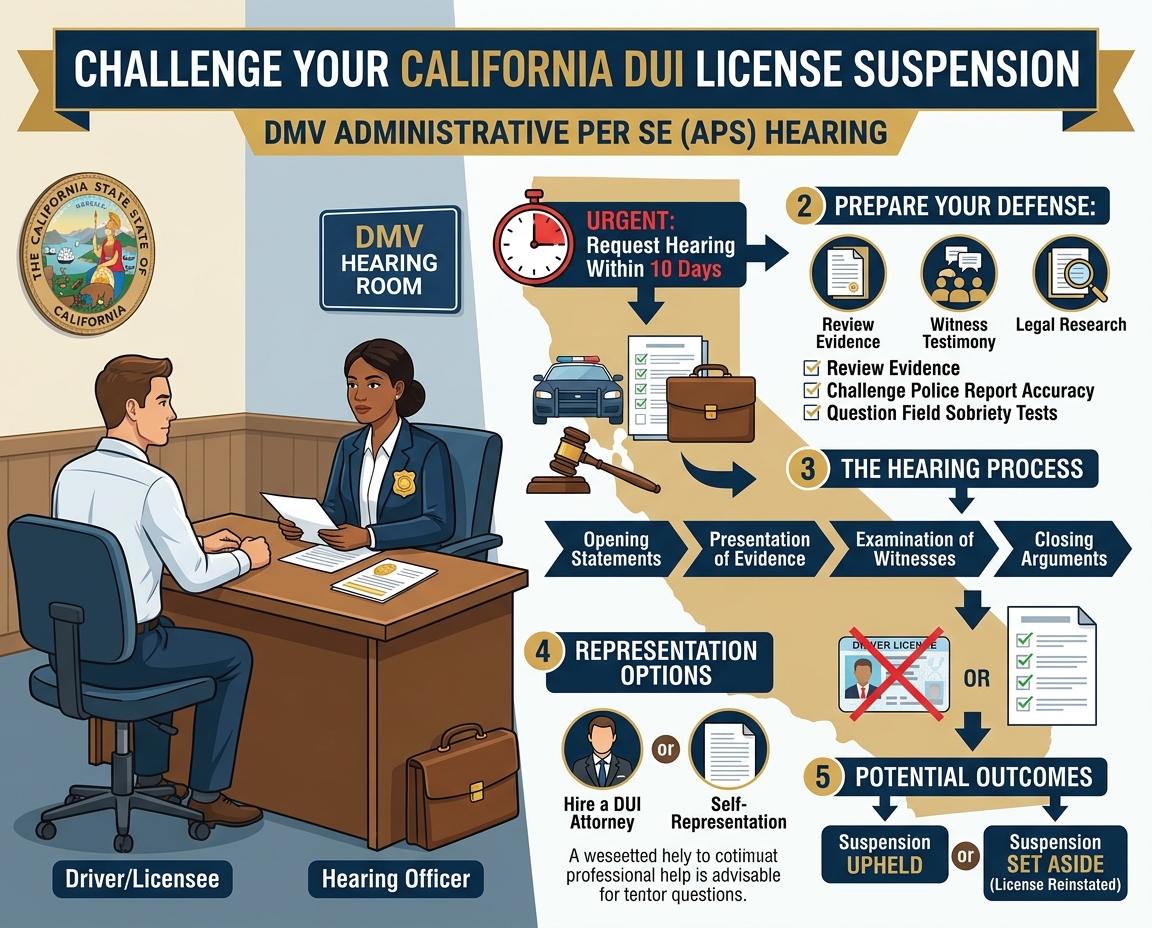
California Vehicle Code § 13558 establishes procedures for requesting a DMV administrative hearing to challenge certain driver’s license suspensions or revocations. Understanding the applicable deadlines, hearing procedures, and review options can help drivers protect their rights when the California Department of Motor Vehicles (DMV) takes action against their driving privileges.
What Is California Vehicle Code § 13558?
California Vehicle Code § 13558 governs administrative hearings for specified DMV suspension and revocation actions. It addresses hearing requests, hearing procedures, and certain rights to challenge the DMV’s decision.
These proceedings may involve DUI-related administrative actions, chemical test refusals, and other matters covered by the statute.
A DMV administrative hearing is separate from a criminal court case. The hearing determines whether the DMV’s action against a driver’s license is supported by the applicable law and evidence. It does not determine whether the driver is criminally guilty of DUI.
Who Can Request a DMV Administrative Hearing?
Drivers who receive a qualifying DMV suspension or revocation notice may be eligible to request a hearing under Vehicle Code § 13558.
Eligibility depends on the type of action and the statutory provision identified in the notice. Not every DMV decision falls under this section.
A hearing may allow an eligible driver to:
- Challenge the basis for the suspension or revocation.
- Review the evidence supporting the DMV’s action.
- Present relevant documents and testimony.
- Question witnesses when permitted by the applicable procedures.
- Seek to have the action set aside when supported by the evidence and law.
The issues considered depend on the specific type of proceeding.
What Is the Deadline for Requesting a DMV Hearing?
Drivers should request a hearing as soon as possible after receiving a DMV notice. Under Vehicle Code § 13558(b), a person seeking a hearing before the effective date of a covered suspension or revocation generally must request it within 10 days of receiving the notice.
The DMV also describes different timing rules for certain proceedings, including a general 10-day period after personal service and a 14-day period from the date of a mailed notice. The applicable deadline depends on the type of action and the governing requirements.
Review the notice carefully and contact the appropriate DMV Driver Safety office promptly.
What happens if you miss the deadline?
Missing the applicable deadline may mean losing the opportunity to obtain a hearing before the suspension or revocation takes effect. Other review options should not be assumed to be available.
For example, if a driver waits several weeks after receiving a suspension notice before requesting a hearing, the deadline may have passed. The consequences depend on the specific proceeding and applicable law.
Does requesting a hearing stop the suspension?
No. Under Vehicle Code § 13558(e), requesting a hearing does not automatically stay a suspension or revocation.
The statute provides for a stay in certain circumstances when the DMV fails to conduct the required hearing and make a determination within the applicable statutory period.
Drivers should verify their current license status rather than assume they can continue driving while a hearing request is pending.
What Happens During a DMV Administrative Hearing?
A DMV administrative hearing gives an eligible driver an opportunity to challenge the suspension or revocation before a DMV hearing officer.
The process generally involves the following steps:
- Request the hearing. Submit the request within the applicable deadline and retain confirmation.
- Review the evidence. Request relevant DMV records and supporting documents.
- Prepare your case. Identify relevant evidence, inconsistencies, and potential witnesses.
- Attend the hearing. Present relevant arguments and evidence under the applicable procedures.
- Receive the decision. The DMV provides written notice of its determination.
The hearing format and specific procedures depend on the type of administrative action.
What Issues Can Be Challenged at a DMV Hearing?
The issues a hearing officer may consider depend on the statutory basis for the suspension or revocation.
In certain DUI-related administrative proceedings, relevant issues may include:
- Whether the officer had reasonable cause to believe the driver was violating applicable DUI laws.
- Whether the driver was lawfully arrested or, where relevant, detained.
- Whether the driver had a blood alcohol concentration at or above the applicable legal threshold.
- Whether a driver refused or failed to complete a required chemical test, when that issue applies.
The applicable law determines which questions may be considered. A hearing is not an unrestricted opportunity to challenge every aspect of a related arrest or criminal case.
Example: Challenging chemical test evidence
Suppose a driver receives a suspension notice based on a chemical test result but identifies inconsistencies in the available testing records.
Depending on the proceeding, the driver may be able to review relevant records and present arguments about the reliability or significance of the evidence. Whether those arguments affect the outcome depends on the facts and applicable legal standards.
What Evidence Can Be Presented at a DMV Hearing?
Evidence may help establish whether the DMV’s action is supported by the record and applicable law.
Depending on the issues involved, relevant evidence may include:
- Police reports and sworn statements.
- Breath or blood test results.
- Relevant testing and maintenance records.
- Video footage or photographs.
- Witness testimony.
- Other documents relevant to the suspension or revocation.
Drivers may generally request relevant records and, subject to applicable procedures, cross-examine witnesses or subpoena relevant witnesses and documents.
Evidence must relate to the issues the hearing officer is authorized to decide. Not every document will be relevant or persuasive in every case.
What Happens if You Lose Your DMV Administrative Hearing?
If the DMV hearing officer sustains the suspension or revocation, the action generally remains in effect or proceeds according to the applicable legal requirements.
Under Vehicle Code § 13558(f), the DMV must provide written notice of its determination. For covered actions, the statute generally provides that a suspension or revocation sustained after a hearing becomes effective five days after notice is given, subject to the statute’s terms and applicable circumstances.
Drivers should review the written decision to understand the effective date and any requirements that apply to their license.
Can you appeal a DMV hearing decision?
A driver may be entitled to seek judicial review under California Vehicle Code § 13559. Additional administrative review may be available depending on the proceeding.
The applicable procedure and deadline depend on the type of action. Review the written decision promptly and determine which options are available.
A request for review does not automatically authorize a driver to operate a vehicle while a suspension or revocation remains in effect.
Is a DMV Administrative Hearing Different From a DUI Trial?
Yes. A DMV administrative hearing concerns the driver’s license, while a criminal DUI proceeding determines criminal charges and potential penalties.
The proceedings are separate and may reach different outcomes. Winning a DMV hearing does not automatically dismiss a criminal DUI case.
California Vehicle Code § 13558(g) provides that the DMV’s factual determination at a hearing does not have collateral estoppel effect in a subsequent criminal prosecution.
Frequently Asked Questions
1. What is California Vehicle Code § 13558?
It establishes procedures for requesting administrative hearings to challenge specified DMV license suspensions or revocations.
2. How long do I have to request a DMV hearing?
Under § 13558(b), the general deadline for requesting a hearing before the effective date of a covered action is 10 days after receiving the notice. Other timing rules may apply to certain proceedings, so check your notice.
3. Can I drive while my DMV hearing is pending?
Not automatically. Requesting a hearing does not, by itself, stay a suspension or revocation. Verify your current driving status with the DMV.
4. What evidence can I present at a DMV hearing?
Depending on the issues, evidence may include police reports, chemical test records, witness testimony, and other relevant documents.
5. Can I represent myself at a DMV hearing?
Generally, yes. You may represent yourself or choose an attorney or another representative at your own expense.
6. Can the DMV reverse a suspension after a hearing?
Yes. The DMV may set aside an action when the evidence and applicable law support that result. However, reversal is not guaranteed.
7. Can I appeal if I lose my DMV hearing?
Judicial review may be available under Vehicle Code § 13559, and other review procedures may apply depending on the proceeding. Deadlines and filing requirements should be checked promptly.
8. Does winning a DMV hearing dismiss my DUI case?
No. DMV proceedings and criminal DUI cases are separate. The outcome of one does not automatically determine the outcome of the other.
Key Takeaways
- California Vehicle Code § 13558 governs administrative hearings for specified DMV suspension and revocation actions.
- Hearing requests must be submitted within the applicable deadline.
- Requesting a hearing does not automatically stop a suspension.
- Relevant evidence may help challenge the DMV’s action.
- Judicial review may be available after an adverse decision.
- A DMV hearing is separate from a criminal DUI proceeding.
Contact Southwest Legal
Understand Your DMV Administrative Hearing Rights
A driver’s license suspension can affect your ability to work, commute, and manage daily responsibilities. Understanding California Vehicle Code § 13558 can help you identify the procedures, deadlines, and potential review options relevant to your situation.
Southwest Legal can help you better understand the California DMV administrative hearing process and the legal questions that may arise when your driving privileges are at risk.
Contact us today for a free consultation to discuss your concerns and learn what considerations may apply to your DMV administrative hearing. Take the next step toward understanding your rights and available options.
Disclaimer: This article is for general informational purposes only and does not constitute legal advice or create an attorney-client relationship unless and until the firm and client enter into an agreement for legal services. Laws may change, and legal outcomes depend on the specific facts of each case. Consult a qualified attorney for advice regarding your situation.