


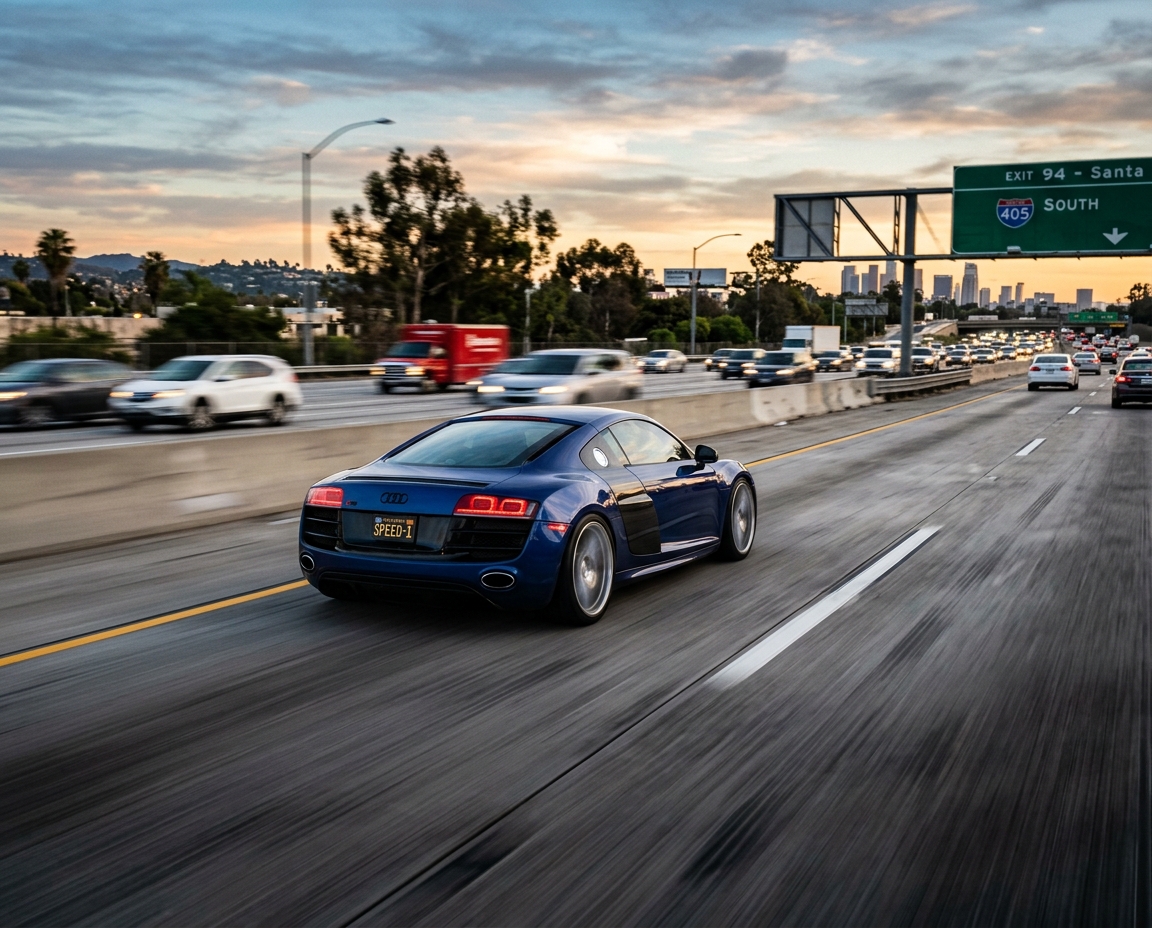
Speeding on the Freeway in California can result in a traffic ticket, fines, and points on your driving record. California Vehicle Code § 22354 authorizes the California Department of Transportation (Caltrans) to establish lower speed limits on qualifying portions of state highways when an engineering and traffic survey determines that the standard 65 mph limit is unreasonable or unsafe.
Understanding this law can help drivers determine which speed limits apply, what penalties they may face, and what options are available after receiving a speeding citation.
What Is California Vehicle Code § 22354?
California Vehicle Code § 22354 allows Caltrans to establish lower speed limits on qualifying portions of state highways where a 65 mph limit applies and a lower speed is determined to be reasonable and safe.
The statute authorizes prima facie speed limits ranging from 15 mph to 60 mph, depending on the findings of an engineering and traffic survey. Appropriate signs must be installed to notify drivers of the reduced limit.
For example, a freeway section with challenging curves, limited visibility, or other roadway safety concerns may have a posted 55 mph limit instead of the usual 65 mph maximum.
Does Vehicle Code § 22354 apply to every California freeway?
No. Section 22354 does not establish one speed limit for every California freeway. It authorizes reduced limits on qualifying state highway sections where the standard 65 mph limit applies.
The applicable speed limit depends on the specific roadway, posted signs, and other relevant traffic laws. Drivers should not assume that the limit remains the same throughout an entire freeway.
What Is the Speed Limit on California Freeways?
California’s general maximum speed limit is 65 mph on highways covered by Vehicle Code § 22349, unless another applicable provision establishes a different limit. Certain designated highway sections may have a 70 mph maximum, while other sections may have lower posted limits.
The following laws address different aspects of California speed restrictions:
| Vehicle Code | Purpose |
|---|---|
| § 22349 | Establishes general maximum speed limits, including 65 mph on covered highways |
| § 22354 | Authorizes lower speed limits on qualifying state highway sections |
| § 22356 | Authorizes a 70 mph maximum on qualifying state highway sections |
| § 22350 | Prohibits driving faster than is reasonable or prudent for the conditions |
Can you get a ticket for driving 65 mph in a 55 mph zone?
Yes. If a 55 mph limit has been properly established and posted, driving 65 mph may result in a speeding citation.
For example, a driver traveling at 65 mph in a posted 55 mph zone is exceeding the applicable limit by 10 mph. The fact that other vehicles are traveling at the same speed does not automatically make the driver’s speed lawful.
Drivers must follow the applicable posted limit and adjust their speed when road or traffic conditions require it.
What Are the Penalties for Speeding on the Freeway in California?
The penalties for a freeway speeding ticket depend on the alleged speed, the applicable limit, and the specific violation charged. Consequences may include fines, court assessments, and points on a driver’s record.
How much is a freeway speeding ticket in California?
There is no single fine for every freeway speeding violation. The total amount depends on the alleged offense and the applicable court fine and bail schedule, including any required assessments.
For example, a driver accused of traveling 70 mph in a 55 mph zone may face a different financial penalty from a driver accused of traveling 85 mph in a 65 mph zone.
Drivers should check their citation and contact the court listed on the notice for the amount due in their specific case.
Can speeding on the freeway add points to your driving record?
Yes. A speeding conviction can add a point to a California driving record, depending on the offense and applicable DMV rules.
Accumulating points can lead to additional DMV scrutiny and potentially affect driving privileges. Insurance companies may also consider a driver’s record when evaluating coverage and premiums.
A single speeding conviction does not automatically result in license suspension. The consequences depend on the driver’s record and the applicable rules.
What happens if you drive over 100 mph in California?
California Vehicle Code § 22348(b) specifically addresses driving faster than 100 mph on a highway.
A first conviction carries a fine of up to $500, and the court may suspend driving privileges for up to 30 days. Qualifying repeat convictions can result in higher fines and mandatory DMV suspensions.
This is a separate offense from violating a reduced speed limit under Section 22354.
How Can You Contest a California Freeway Speeding Ticket?
Drivers who believe a speeding citation is incorrect may be able to contest it through the court identified on the ticket. Depending on the case, available procedures may include a court trial or a trial by written declaration.
1. Review the citation
Check the citation for the alleged Vehicle Code violation, recorded speed, applicable speed limit, location, and response deadline.
Confirming these details helps you understand the specific allegation and identify potential issues that may warrant further review.
2. Check the posted speed limit
If the citation involves a reduced speed zone, determine which limit applied at the alleged violation location.
For a citation involving Section 22354, the legal basis for the reduced limit and the required signage may be relevant, depending on the circumstances.
3. Preserve relevant evidence
Depending on the case, useful evidence may include:
- Photographs of speed limit signs.
- Dashcam footage or other relevant video.
- Information identifying the location of the alleged violation.
- Witness statements.
- Relevant speed-measurement records, if available through appropriate procedures.
For example, photographs and location information may help clarify whether a driver was in a posted 55 mph zone or a different speed zone.
Evidence must be relevant and reliable to assist in evaluating a citation. Not every error or discrepancy automatically invalidates a ticket.
4. Respond before the deadline
Follow the instructions on your citation and comply with the court’s response deadline. Depending on eligibility and court procedures, you may be able to pay the ticket, request traffic school, or contest the allegation.
Ignoring a citation can create additional complications.
Can You Attend Traffic School for a Freeway Speeding Ticket?
Possibly. Eligible California drivers may be able to attend traffic violator school to keep a qualifying citation point confidential on their driving record.
Eligibility depends on the violation, the alleged speed, the driver’s circumstances, and applicable court rules. Under California Rules of Court, rule 4.104, speeding more than 25 mph above the applicable limit is generally ineligible for clerk-approved traffic school, although a judge may have discretion in certain circumstances.
Drivers should confirm their eligibility with the court before enrolling in traffic school.
Frequently Asked Questions
1. What does California Vehicle Code § 22354 mean?
Section 22354 authorizes Caltrans to establish lower speed limits on qualifying state highway sections where a 65 mph limit applies and an engineering and traffic survey supports a lower limit. Appropriate signs must be installed.
2. Is the California freeway speed limit always 65 mph?
No. The general maximum is 65 mph on covered highways, but certain sections may have a properly established 70 mph limit or a lower posted limit.
3. Can I get a ticket for driving 5 mph over the speed limit?
Yes. Driving above the applicable speed limit can result in a citation, even if you exceed the limit by only 5 mph.
4. Can I fight a ticket under Vehicle Code § 22354?
You may be able to contest the citation through the court’s procedures. The relevant issues depend on the charge, applicable speed limit, and available evidence. No outcome is guaranteed.
5. Will a freeway speeding ticket add a point to my record?
A speeding conviction can result in a point on your California driving record, depending on the offense and applicable rules.
6. Is a 55 mph freeway speed limit legal in California?
Yes. A lower limit may be established on qualifying highway sections when the statutory requirements are satisfied.
7. Can I attend traffic school after a freeway speeding ticket?
Possibly. Eligibility depends on the violation, alleged speed, driving history, and applicable court rules. Confirm eligibility with the court handling the citation.
8. What happens if I drive over 100 mph on a California freeway?
Vehicle Code § 22348(b) provides additional penalties for driving over 100 mph, including fines and possible license suspension. Repeat qualifying convictions can result in higher fines and mandatory suspensions.
Key Takeaways
- California Vehicle Code § 22354 authorizes reduced speed limits on qualifying state highway sections where a 65 mph limit applies.
- California freeway speed limits vary by location and may be lower or higher than 65 mph when properly established.
- Speeding convictions may result in fines, points, and other consequences.
- Drivers may be able to contest a citation or qualify for traffic school, depending on the circumstances.
- Reviewing the citation, preserving relevant evidence, and meeting court deadlines are important steps after receiving a ticket.
Contact Southwest Legal
Understand Your Options With Southwest Legal
A freeway speeding ticket can raise questions about the applicable speed limit, the validity of a reduced speed zone, and the potential consequences for your driving record. Understanding California Vehicle Code § 22354 can help you make informed decisions about how to respond.
Southwest Legal is here to help you understand your rights, review your options, and navigate the legal process after receiving a California freeway speeding citation.
Contact us today for a free consultation. Let us help you better understand your situation and determine the next steps toward addressing your speeding ticket.
Disclaimer: This article is for general informational purposes only and does not constitute legal advice or create an attorney-client relationship unless and until the firm and client enter into an agreement for legal services. Laws may change, and legal outcomes depend on the specific facts of each case. Consult a qualified attorney for advice regarding your situation.