


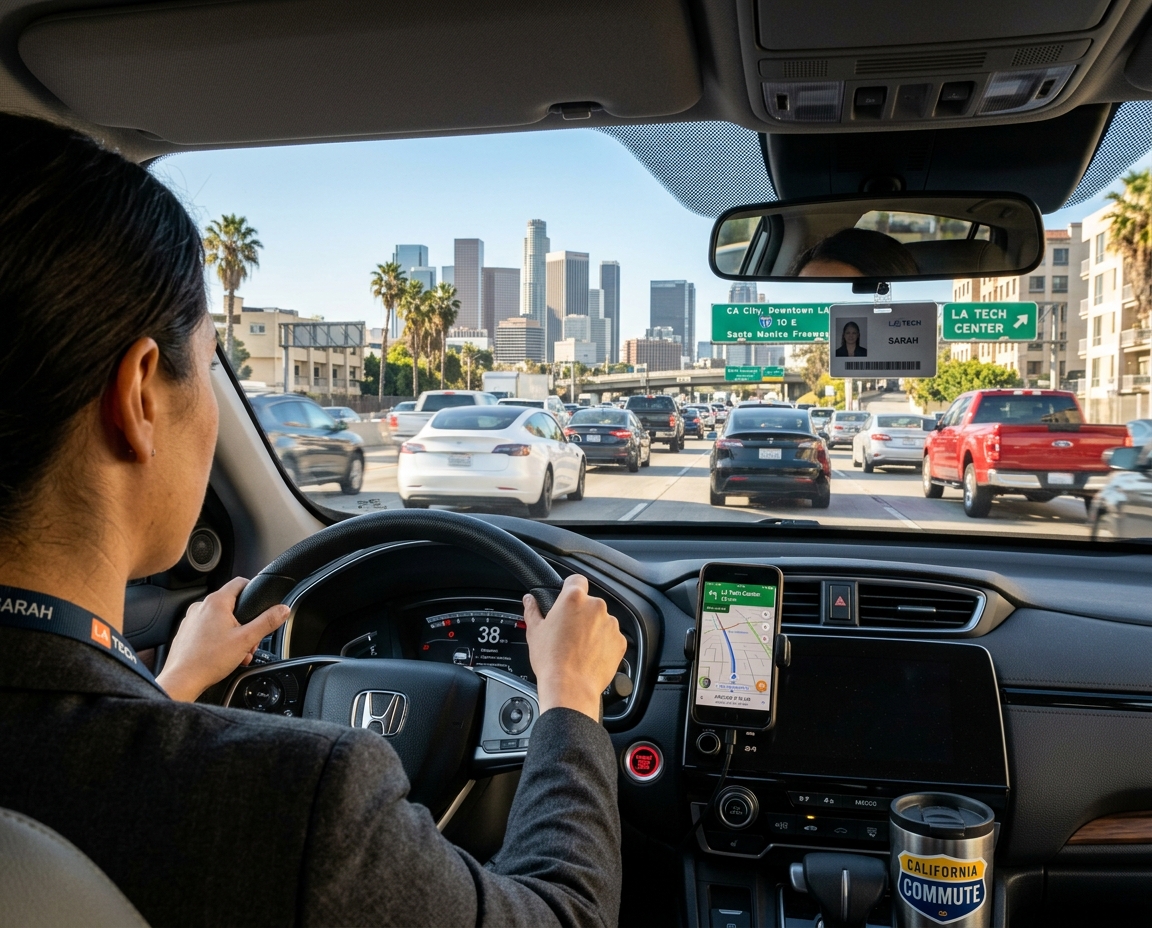
A California DUI can create immediate concerns about how you will get to work, keep your job, attend required DUI classes, and handle everyday responsibilities. One of the most common questions after a DUI arrest or conviction is: Can you still drive to work with a California DUI restricted license?
In many cases, yes. California offers certain restricted-license options that can allow an eligible driver to travel to and from employment, drive during the course of employment, and travel to and from a qualifying DUI program. However, eligibility depends on the type of DUI-related suspension or conviction, the driver’s prior DUI history, whether the case involved injury or a chemical-test refusal, and whether an ignition interlock device (IID) is required.
This guide explains the current California DUI restricted-license rules, with examples of how they can affect commuting and work-related driving.
Quick Answer: Can You Drive to Work After a DUI in California?
Yes, an eligible driver may be able to drive to and from work with a California DUI restricted license.
The California DMV currently describes an Employment/Treatment Program restriction that can allow an eligible driver to operate a vehicle:
- To and from employment;
- During the course of employment; and
- To and from the driver’s DUI program.
The restriction is different from an unrestricted driver’s license. A driver with this type of restriction cannot simply assume that every personal trip is permitted.
Another option may be an IID-restricted license. Depending on the circumstances, an IID restriction can provide broader driving privileges as long as the driver operates a vehicle equipped with the required ignition interlock device.
What Is a California DUI Restricted License?
A restricted driver’s license is a limited driving privilege available to certain people whose regular driving privileges have been suspended or restricted following a DUI.
The important point is that not every DUI suspension produces the same licensing options.
For example, the DMV currently identifies different possibilities for:
- Certain first-time DUI offenders;
- Certain repeat DUI offenders;
- Drivers subject to an Administrative Per Se (APS) suspension;
- Drivers subject to California’s statewide IID requirements; and
- Certain drivers with drug-only DUI offenses.
The applicable option can depend on whether the DUI involved alcohol, drugs, or both; whether there was an injury; whether the driver refused a chemical test; and whether there are prior DUI convictions or APS actions.
This is why a general statement such as “everyone with a DUI can get a work-restricted license” would be inaccurate.
What Does a California Employment/Treatment Restricted License Allow?
For qualifying drivers, the employment/treatment restriction is specifically designed to allow necessary driving connected with work and DUI treatment.
The DMV describes this restriction as permitting driving to, from, and during the course of employment, as well as driving to and from the DUI program.
That distinction is important.
Driving to work
Suppose you work at an office from Monday through Friday and normally commute by car.
If you have a valid employment/treatment restricted license that authorizes driving to and from employment, your commute can generally fall within the permitted driving activity.
Driving home from work
The same restriction can allow the qualifying trip from employment back to an appropriate destination.
Driving during work
The DMV’s wording also addresses driving during the course of employment.
This can matter for employees whose jobs require them to drive between work locations, customers, clients, job sites, or other places as part of their job duties.
However, the fact that a trip happens during normal working hours does not automatically make it authorized. The nature of the trip and the terms of the applicable restriction still matter.
Example: Office Employee
Imagine someone is convicted of a qualifying first-time DUI and receives an employment/treatment restricted license.
The person:
- Drives from home to work;
- Works an eight-hour shift;
- Drives home afterward; and
- Drives to the required DUI program on an assigned evening.
Those trips can fit within the types of driving the DMV identifies for an eligible employment/treatment restriction.
But if the same person leaves work and drives to a recreational event unrelated to employment or the DUI program, the person should not automatically assume that trip is authorized.
A restricted license is not the same thing as having full driving privileges.
Example: Who Drives as Part of the Job
Consider a home-service employee who travels from one customer’s location to another during the workday.
If the person has a restriction that permits driving during the course of employment, work-related driving can be treated differently from a personal trip.
The precise circumstances still matter, particularly if the employee drives a company vehicle or operates a commercial vehicle.
Can You Drive Anywhere With a DUI Restricted License?
Not necessarily.
This is one of the most important points for anyone considering a California DUI restricted license.
An employment/treatment restriction is limited to the driving activities authorized by that restriction. It should not be treated as a temporary version of a normal California driver’s license.
For example, an employment/treatment restriction does not automatically mean you can drive:
- On a personal road trip;
- To recreational activities;
- To visit friends;
- On unrelated shopping trips; or
- Anywhere else simply because you have a restricted license.
The permitted purposes depend on the particular restriction issued by the DMV.
By contrast, an IID-restricted license can provide substantially broader driving privileges. The DMV states that qualifying drivers with an IID restriction may drive anytime or anywhere as long as the vehicle is equipped with the required IID.
What Is an Ignition Interlock Device?
An ignition interlock device, commonly called an IID, is a breath-testing device connected to a vehicle’s ignition system.
Before starting the vehicle, the driver generally must provide a breath sample. The device prevents the vehicle from starting if it detects alcohol above its programmed threshold. California’s IID program also requires periodic calibration and inspection by a certified installer.
An IID restriction is different from an employment-only restriction.
Under the statewide IID program, qualifying offenders may be able to obtain an IID-restricted license and drive more broadly while operating an IID-equipped vehicle.
Does Everyone With a DUI Have to Install an IID?
No. The answer depends on the type of DUI and the circumstances.
California’s statewide IID program requires specified repeat and injury-involved DUI offenders to install an IID for periods generally ranging from one to four years, depending on the offense history and circumstances. The current program applies to specified DUI offenses occurring through December 31, 2032.
Certain first-time alcohol-related DUI offenders have different options.
The DMV currently states that, in specified first-time alcohol-related DUI cases without injury, a driver may have the option of an IID restriction or an employment/treatment-program restriction when the applicable requirements are met.
Because the rules vary, it is important not to assume that a first DUI automatically means either “IID required” or “no IID allowed.”
First DUI: Can You Get a Restricted License to Drive to Work?
For certain first-time DUI offenders, yes.
The DMV’s current statewide IID information states that eligible first-time alcohol-related offenders may choose an employment/treatment-program restriction allowing driving to, from, and during employment and to and from the DUI program for one year.
The DMV also provides separate information for certain APS suspensions. For eligible first offenders with an APS suspension, the employment/treatment-program restriction can be available for up to five months.
These are different situations, which is why the phrase “first DUI” alone is not enough to determine exactly what restriction is available.
What Is an APS Suspension?
APS stands for Administrative Per Se.
California’s APS system is an administrative DMV process that can suspend or revoke driving privileges following a DUI arrest under specified circumstances. It is separate from the criminal court case.
The DMV explains that a driver arrested for DUI may receive a temporary license and generally has a limited period to request a DMV administrative hearing to challenge the APS action. The DMV currently states that a hearing request generally must be made within 10 days of the arrest.
The APS process matters because the available restricted-license options can differ from those following a DUI conviction.
How Long Is a California DUI Restricted License Valid?
There is no single duration that applies to every California DUI restricted license.
For example, the DMV currently identifies:
- Up to five months for an employment/treatment restriction in certain first-offender APS cases;
- Up to four months for an IID restriction for certain first-offender APS cases;
- Up to 12 months for an IID restriction for certain repeat APS offenders; and
- A one-year employment/treatment restriction for certain eligible first-time alcohol-related DUI offenders after conviction.
Other DUI situations involve different restriction periods, including mandatory IID periods for certain repeat and injury-related convictions.
Therefore, the duration should be determined from the driver’s particular DMV action and DUI circumstances rather than from a general online estimate.
Can You Get a Restricted License After a Second DUI?
A second DUI generally brings more serious licensing consequences.
The California DMV states that a driver with a second DUI offense within 10 years may, after satisfying specified requirements and serving the applicable period, obtain a restriction allowing driving to and from an alcohol program and to, from, and during work.
The statewide IID program also imposes IID requirements on qualifying repeat offenders. Under the current program, qualifying repeat offenders may be subject to mandatory IID restrictions for periods depending on their prior DUI history.
Consequently, someone with a second DUI should not assume that the rules applicable to a first offense will apply to their case.
Can You Get a Restricted License After a Third DUI?
This is an area where accuracy is especially important.
The California DMV’s current DUI information states that a driver with a third or subsequent DUI offense within 10 years is not entitled to apply for a restricted license under the multiple-offense restriction described by the DMV.
At the same time, certain qualifying repeat offenders can be subject to mandatory IID requirements under California’s statewide IID program.
Because the distinction between a traditional restricted license and an IID-restricted license can matter, a person with multiple DUI convictions should review the exact DMV action and applicable requirements rather than relying on a general statement about “restricted licenses.”
Can You Drive an Employer’s Vehicle With an IID Restriction?
California provides a specific employer-vehicle exception for qualifying IID-restricted drivers.
The DMV states that a person who currently possesses an IID-restricted driver’s license may drive an employer’s vehicle during the scope of employment without an IID installed in that employer vehicle if the required procedure is followed.
The driver must complete the Notice to Employers Ignition Interlock Restriction (DL 923) and provide it to the employer. The driver must also keep a copy as required by the DMV.
This can be particularly important for people whose jobs require them to operate company vehicles.
However, the exception does not mean a driver can operate any vehicle without an IID. It is a specific employer-vehicle exception with its own requirements.
What If Driving Is an Essential Part of Your Job?
Your employment situation can make the choice of restriction especially important.
Examples include:
- Delivery employees;
- Field technicians;
- Home-service workers;
- Sales representatives;
- Construction workers traveling between job sites;
- Employees who regularly visit customers; and
- Workers who operate employer-owned vehicles.
Someone who only commutes to a fixed workplace may have different needs from someone whose job requires driving throughout the workday.
For qualifying IID-restricted drivers, the employer-vehicle exception can be particularly relevant because California permits qualifying employment-related operation of an employer’s vehicle without installing an IID in that vehicle, provided the DMV’s notice requirements are followed.
What If You Have a Commercial Driver’s License?
Commercial drivers need to be particularly careful.
The DMV states that a person with a commercial driver’s license (CDL) generally must downgrade to a Class C noncommercial license to obtain a restricted license. The DMV also identifies specific rules for CDL holders who were not operating a commercial vehicle at the time of the offense.
A person who drives commercially should therefore avoid assuming that the standard DUI restricted-license rules apply in exactly the same way.
Can You Drive to DUI Classes With a Restricted License?
For qualifying employment/treatment-program restrictions, yes.
The DMV specifically identifies driving to and from the DUI program as an authorized activity under this type of restriction.
This is important because completion of a DUI program can be one of the requirements associated with restoring driving privileges.
However, being enrolled in a DUI program does not by itself authorize unrestricted driving.
Can You Run Personal Errands While Going to or From Work?
This is an area where drivers should exercise caution.
Suppose your restricted license permits you to drive from work to home.
You decide to stop at a store for a personal purchase. The fact that you started the trip at your workplace does not necessarily mean the entire trip is covered by the employment restriction.
Similarly, a driver should not assume that stopping at a friend’s home, restaurant, gym, or entertainment venue is permitted merely because it happens on the way home.
The safest general rule is to understand the exact scope of the restriction before making a trip that is not clearly connected to employment or the DUI program.
Can You Drive to a Second Job?
A second job can raise additional questions.
A person with multiple employers, multiple work locations, irregular schedules, or self-employment should not automatically assume that every work-related destination is covered in the same way.
The DMV describes employment restrictions in terms of driving to, from, and during the course of employment.
Because the specific circumstances can matter, someone with more complicated employment arrangements should verify the applicable restriction before relying on it.
What Happens if You Drive Outside the Restriction?
A restricted driver’s license is conditional. Driving outside the authorized scope can expose a driver to additional licensing or legal consequences.
The consequences depend on the particular restriction and circumstances.
For IID-restricted drivers, California’s DMV specifically explains that failing to comply with IID requirements can result in further action against the driving privilege. The DMV also states that failure to comply with DUI-program requirements can, in many cases, result in suspension or revocation for the remainder of the original period until proof of program completion is provided.
The important takeaway is simple: do not treat a restricted license as a normal driver’s license.
What Do You Need to Obtain a California DUI Restricted License?
The requirements depend on the type of restriction, but the DMV identifies several requirements that commonly appear in the process.
These can include:
- Proof of enrollment in an appropriate DUI program;
- Proof of California insurance through an SR-22;
- Payment of applicable DMV fees;
- Installation and verification of an IID when required;
- Clearing other outstanding suspensions or revocations; and
- Satisfying applicable suspension or restriction requirements.
For an IID-restricted license, the DMV specifically identifies proof of IID installation, DUI-program documentation, SR-22 insurance, payment of applicable fees, and clearance of other outstanding suspensions or revocations.
The exact requirements should be confirmed with the DMV because they can differ based on the driver’s circumstances.
Before You Drive With a DUI Restricted License: A Practical Checklist
Before getting behind the wheel, make sure you understand what the DMV has actually authorized.
1. Confirm that the restricted license has been issued
Do not assume that completing a DUI program or installing an IID automatically means you are legally authorized to drive.
2. Check the type of restriction
Determine whether you have:
- An employment/treatment restriction;
- An IID restriction; or
- Another type of limited driving privilege.
3. Review the effective dates
Make sure the restriction is currently effective and that you understand when it begins and ends.
4. Complete the required DUI program
Failure to comply with DUI-program requirements can affect your driving privilege.
5. Maintain required insurance
An SR-22 or other proof of financial responsibility may be required depending on the circumstances.
6. Follow IID requirements
If an IID is required, make sure it is properly installed, maintained, calibrated, and used as required.
7. Understand your employment-related driving
If your job involves driving during work, determine whether your specific restriction covers those activities.
8. Be careful with personal trips
Do not assume that an employment restriction permits unrelated personal driving.
Common Questions About California DUI Restricted Licenses
Can I drive to work after a DUI in California?
Possibly. Eligible drivers may obtain a restriction that permits driving to and from employment and, in qualifying circumstances, during the course of employment.
Can I drive home from work with a restricted license?
If your restriction authorizes driving to and from employment, driving home can fall within the permitted employment-related activity.
Can I drive during work hours?
Potentially. An employment/treatment restriction may authorize driving during the course of employment. The specific job-related activity still needs to fall within the scope of the restriction.
Can I drive anywhere with an IID?
For qualifying IID-restricted drivers, the DMV states that the driver may drive anytime or anywhere as long as the vehicle is equipped with the IID. Other legal requirements still apply.
Can I drive my employer’s vehicle without an IID?
A qualifying driver with an IID-restricted license may be able to drive an employer’s vehicle during the scope of employment without an IID in that vehicle, provided the DMV’s DL 923 employer-notice requirements are followed.
Does a DUI automatically mean I cannot drive to work?
No. California provides restricted-license options for certain eligible drivers. But a person cannot legally drive simply because they need transportation to work. They must have an applicable legal driving privilege.
Can I get a restricted license after a second DUI?
Certain second-offense drivers may qualify for a work-related restriction after satisfying applicable requirements. Repeat offenders may also be subject to IID requirements.
Can I get a restricted license after a third DUI?
The DMV states that a driver with a third or subsequent DUI within 10 years is not entitled to apply for the ordinary multiple-offense restricted license. Separate IID rules can apply to qualifying repeat offenders.
Do I need an IID after a first DUI?
Not necessarily. The answer depends on the type of first DUI and the circumstances. Certain first-time offenders have options that include an IID restriction or an employment/treatment restriction.
Key Takeaways
The answer to “Can I still drive to work after a DUI in California?” is often yes—but only when the driver qualifies for and receives an appropriate restricted driving privilege.
The most important points are:
- A DUI suspension does not automatically give you permission to drive to work.
- Certain eligible drivers can obtain an employment/treatment-program restriction.
- That restriction can allow driving to and from employment and during the course of employment.
- Certain restrictions also permit driving to and from a DUI program.
- An IID-restricted license can provide broader driving privileges for qualifying drivers.
- California has specific rules concerning employer vehicles and IID restrictions.
- First, second, and subsequent DUI offenses can have different licensing consequences.
- A third or subsequent DUI within 10 years generally does not qualify for the ordinary multiple-offense restricted license identified by the DMV.
- APS suspensions have their own rules and should not be confused with the consequences of a criminal DUI conviction.
- Chemical-test refusal can significantly affect eligibility for restricted driving privileges.
- Commercial drivers can face additional requirements and restrictions.
- A restricted license should never be treated as an unrestricted driver’s license.
California DUI licensing law can be complicated because the outcome depends on the type of DMV action, DUI offense history, chemical-test circumstances, injury status, IID requirements, and other facts specific to the driver’s record.
Contact Southwest Legal
Need Guidance About a California DUI Restricted License?
If you are trying to determine whether you can legally drive to work after a California DUI, reviewing the exact terms of your DMV action and understanding the available restricted-license options is important.
Southwest Legal can help you understand the legal issues surrounding your California DUI and restricted driving privileges. Contact us today for a free consultation to discuss your situation and learn more about the options that may be available to you.
Disclaimer: This article is for general informational purposes only and does not constitute legal advice or create an attorney-client relationship. No attorney-client relationship is formed unless and until the firm and client enter into an agreement for legal services. Laws may change, and legal outcomes depend on the specific facts of each case. Consult a qualified attorney for advice regarding your situation.