


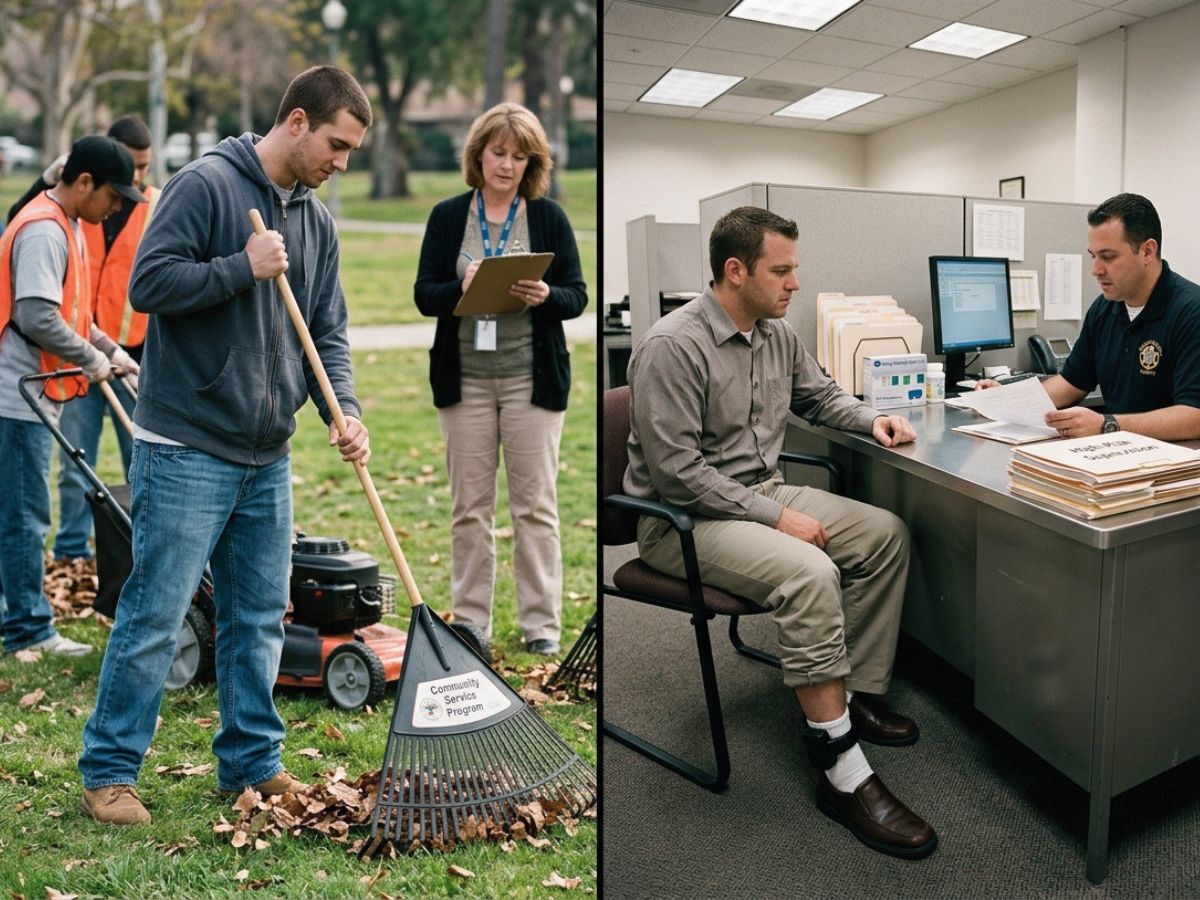
If you have been convicted of a crime in California, you may be wondering what happens next. In some cases, a court may order probation instead of requiring a person to serve all or part of a potential custodial sentence. However, misdemeanor probation and felony probation are not necessarily the same.
The differences may involve the length of probation, the type of supervision, the conditions imposed by the court, what can happen after an alleged violation, and whether probation is available in the first place.
One important point is that the terms “misdemeanor probation” and “felony probation” do not tell you everything about a person’s obligations. For example, a misdemeanor case can involve formal probation, while a felony case does not automatically mean every defendant will receive identical supervision.
California probation law also contains important exceptions for certain offenses and circumstances. Therefore, general rules should not be treated as a substitute for reviewing the specific sentencing order and applicable law.
Here are five key differences between misdemeanor and felony probation in California.
What Is Probation in California?
Probation is a court-ordered period during which a person must follow specified conditions after a criminal conviction. Depending on the case, probation may allow a person to remain in the community rather than serve some or all of a potential custodial sentence.
Probation comes with conditions. These may include obeying the law, paying restitution, completing a treatment or educational program, complying with a protective order, submitting to testing when authorized, reporting to a probation officer, or satisfying other requirements established by the court.
Probation can generally take the form of formal or informal probation.
Formal probation involves supervision by a probation officer. Depending on the case, the person may have regular reporting requirements and other responsibilities administered through the probation department.
Informal probation, sometimes referred to as court probation, generally does not involve routine supervision by a probation officer. Instead, the person is expected to comply with the conditions ordered by the court.
The type of probation depends on the circumstances and the court’s order. It is therefore inaccurate to assume that every misdemeanor receives informal probation or that every felony automatically results in formal probation.
1. The General Length of Probation Can Be Different
One of the most significant differences between misdemeanor and felony probation involves the general limits on how long probation can last.
Under California’s current probation framework:
- Most misdemeanor probation terms are limited to one year.
- Most felony probation terms for non-violent felonies are limited to two years.
However, these are general rules rather than universal limits. California law contains exceptions for certain offenses and circumstances. Some offenses have their own probation requirements or allow different probation periods.
This distinction is important because it would be misleading to say that every California misdemeanor probation term lasts exactly one year or that every felony probation term lasts exactly two years.
Example
Suppose two people are sentenced to probation.
Person A receives probation for a misdemeanor that falls under the ordinary one-year rule.
Person B receives probation for a felony that falls under the ordinary two-year rule.
If no special exception applies, Person B may remain on probation for a longer period.
But if either offense is governed by a special probation statute, the applicable period may be different.
The exact offense and sentencing order therefore matter.
2. Felony Cases More Often Involve Formal Supervision, But It Is Not Automatic
Another difference involves how probation is supervised.
Felony probation is commonly associated with formal supervision by a probation officer. Depending on the sentence, a person may be required to report to the probation department, participate in programs, submit to authorized testing, and follow other court-ordered requirements.
However, it would be inaccurate to say that every felony defendant automatically receives formal probation.
The same is true for misdemeanors. A misdemeanor defendant can also be placed on formal probation depending on the circumstances and the court’s order.
What Does a Probation Officer Do?
When formal probation is ordered, a probation officer generally helps monitor compliance with the conditions established by the court.
Depending on the case, this may involve:
- Monitoring reporting requirements.
- Checking compliance with court-ordered programs.
- Monitoring authorized testing requirements.
- Reviewing progress toward completing probation conditions.
- Communicating relevant compliance issues to the court.
- Performing other duties authorized by law and the court’s orders.
The experience of probation can therefore vary considerably between cases.
Example
Imagine someone receives misdemeanor probation without routine probation-officer supervision and has several conditions to complete.
Another person receives felony probation with formal supervision and must regularly report, complete treatment, and comply with additional conditions.
Both individuals are on probation, but their day-to-day responsibilities may be very different.
3. Probation Conditions Depend on the Offense and Individual Circumstances
Probation is not simply a requirement to “stay out of trouble.”
Courts can impose specific conditions intended to address the circumstances of the offense, rehabilitation needs, and public safety.
Depending on the case, probation conditions may include:
- Obeying all laws.
- Paying restitution to victims.
- Completing counseling or treatment.
- Participating in educational or rehabilitation programs.
- Submitting to drug or alcohol testing when authorized.
- Staying away from specified people or locations.
- Complying with protective orders.
- Reporting to a probation officer when required.
- Following other conditions permitted by law.
There is no single set of conditions that applies to every misdemeanor or felony.
The court may consider factors such as the seriousness of the offense, circumstances surrounding the crime, prior criminal history, previous performance on probation, the person’s ability and willingness to comply with probation, rehabilitation considerations, and public safety.
Example
Consider two misdemeanor cases involving different circumstances.
In the first case, the court may order an educational program and restitution.
In another case, the court may impose additional treatment or restrictions based on the circumstances.
The same principle applies to felony cases. Two people convicted of different felonies can receive significantly different probation conditions.
The important question is therefore not simply whether the conviction is a misdemeanor or felony.
It is what conditions did the court actually order?
4. A Probation Violation Can Lead to Court Action
Probation is conditional. If a person fails to comply with a probation condition, the court may address the alleged violation.
Examples can include:
- Failing to complete a required program.
- Failing to report as required under formal probation.
- Violating a stay-away or protective order.
- Failing to comply with an authorized testing requirement.
- Committing a new criminal offense.
- Violating another condition contained in the probation order.
The consequences depend on the circumstances.
A probation violation does not automatically mean that a person will go to jail or prison. Depending on the case, the court may have different options, including modifying probation conditions, continuing probation, or revoking probation.
The original sentence, the nature of the alleged violation, the person’s history of compliance, and applicable California law can all affect what happens next.
Why the Underlying Conviction Matters
The underlying conviction can affect the potential consequences of a violation.
A felony case may involve substantially greater sentencing exposure than a misdemeanor case. Therefore, a serious probation violation in a felony case can potentially have more significant consequences.
For example, if a felony defendant is found to have violated probation, the court may have sentencing authority associated with the underlying felony case.
That does not mean incarceration is automatic. The outcome depends on the particular circumstances and the court’s authority under applicable law.
Important Point
An alleged probation violation should not simply be ignored.
If someone receives notice of a probation violation hearing or believes they may have failed to comply with a probation condition, the appropriate response depends on the specific circumstances and court orders involved.
5. Eligibility for Probation Is Not the Same in Every Case
Another major difference involves whether probation is available in the first place.
A misdemeanor conviction does not automatically guarantee probation, and not every felony defendant is automatically eligible for probation.
California law establishes rules governing when probation may be granted and circumstances in which probation may be restricted or unavailable.
When determining whether probation is appropriate, a court may consider factors involving both the offense and the defendant.
These can include:
- The seriousness and circumstances of the offense.
- Whether a weapon was involved.
- The extent of harm or loss.
- The vulnerability of the victim.
- Prior criminal conduct.
- Previous performance while on probation.
- The person’s willingness and ability to comply with probation.
- Rehabilitation considerations.
- Public safety.
- Aggravating and mitigating circumstances.
Certain offenses also have special rules that can affect probation eligibility or impose additional requirements.
For that reason, determining whether someone is eligible for probation requires looking at the specific offense and applicable law rather than relying only on whether the crime is classified as a misdemeanor or felony.
Misdemeanor vs. Felony Probation: Quick Comparison
| Issue | Misdemeanor Probation | Felony Probation |
|---|---|---|
| Underlying conviction | Misdemeanor offense | Felony offense |
| General probation period | Generally up to 1 year for most misdemeanors | Generally up to 2 years for most felonies |
| Formal probation | Possible | Common, but not automatic |
| Informal probation | Possible and common in some cases | Also possible depending on the case |
| Conditions | Depend on the offense and circumstances | Depend on the offense and circumstances |
| Violation consequences | May lead to court action, modification, or revocation | May lead to court action and potentially more significant sentencing consequences |
| Eligibility | Depends on applicable law and circumstances | May involve additional statutory restrictions |
| Exceptions | Yes | Yes |
The probation periods shown above describe the general California rules. Certain offenses and circumstances are governed by different provisions.
Is Felony Probation Worse Than Misdemeanor Probation?
Not necessarily in every practical sense.
A felony conviction generally carries more serious potential consequences than a misdemeanor conviction. However, it would be too broad to say that every felony probation case is automatically more restrictive than every misdemeanor probation case.
For example, one misdemeanor case could involve several demanding conditions, while a particular felony case could involve different requirements.
The actual probation order is more important than the label alone.
At the same time, a felony case may carry more serious consequences if probation is revoked because the underlying felony sentence can involve greater potential punishment.
Can Probation Be Terminated Early in California?
In some circumstances, a person may ask the court to modify or terminate probation before the originally scheduled end date.
Whether early termination is possible depends on the applicable law, the offense, the terms of the sentence, the person’s performance on probation, and the court’s authority and discretion.
Completing probation requirements does not necessarily mean probation automatically ends early.
The written sentencing documents should be reviewed carefully to determine the probation period and the conditions that apply.
Does Completing Probation Remove a Criminal Conviction?
No. Completing probation does not automatically erase a criminal conviction.
Successfully completing probation generally means the person has satisfied the probationary portion of the sentence. It does not necessarily mean the conviction disappears from all records.
California law provides certain forms of post-conviction relief that may be available to qualifying individuals.
For example, some people may be eligible to request a dismissal of a qualifying conviction after satisfying applicable requirements. The availability and legal effect of that relief depend on the circumstances of the case and the applicable law.
A dismissal should also not be confused with sealing or physically erasing a criminal record.
Therefore, completing probation and obtaining post-conviction relief are separate issues.
What Should You Look for in a California Probation Order?
If you are trying to understand your probation obligations, start by reviewing the written court documents.
Pay particular attention to:
- The length of the probation term.
- Whether probation is formal or informal.
- Any assigned probation department or officer.
- Reporting requirements.
- Treatment or counseling requirements.
- Testing requirements.
- Restitution obligations.
- Stay-away orders.
- Protective orders.
- Travel restrictions, if any.
- Deadlines for completing programs.
- Any other conditions specifically imposed by the court.
Do not rely solely on a general statement such as “I’m on misdemeanor probation” or “I’m on felony probation.”
The specific sentencing order and applicable law determine what requirements actually apply.
Frequently Asked Questions
How long is misdemeanor probation in California?
For most misdemeanors, California generally limits probation to one year. However, exceptions exist for certain offenses and circumstances, so the one-year rule does not apply universally.
How long is felony probation in California?
For most felonies, the general probation limit is two years. Certain offenses and circumstances are exceptions and can be subject to different probation periods.
Is felony probation always formal probation?
No. A felony conviction does not automatically mean a person will receive formal probation. The type of probation and supervision depends on the applicable law and the court’s sentencing order.
Is misdemeanor probation always informal?
No. A misdemeanor defendant can also receive formal probation. The classification of the offense alone does not determine the type of supervision.
Can probation conditions be different for different people?
Yes. Probation conditions can vary based on the offense, circumstances, rehabilitation considerations, public safety, and other factors relevant to sentencing.
What happens if you violate probation in California?
A probation violation can lead to court proceedings. Depending on the circumstances, the court may be able to modify probation, continue probation with different conditions, revoke probation, or impose another consequence permitted by law.
A violation does not automatically mean jail or prison.
Can a misdemeanor probation violation become a felony?
A probation violation does not automatically change an existing misdemeanor conviction into a felony.
However, if the conduct involves a new criminal offense, that new offense could potentially be prosecuted separately. Whether the new offense is a misdemeanor or felony depends on the applicable law and circumstances.
Can you get off probation early in California?
In some cases, a person may ask the court to terminate probation early or modify its conditions. Whether that request can be granted depends on the applicable law, the circumstances, and the court’s discretion.
Does completing probation clear your record?
Not automatically. Completing probation is different from obtaining post-conviction relief. Some people may qualify for a dismissal or another form of relief, depending on the offense and other legal requirements.
What is the biggest difference between misdemeanor and felony probation?
There is no single difference that applies to every case. The most important distinctions generally involve the underlying conviction, probation length, supervision, conditions, eligibility, and the potential consequences of a violation.
What Happens After Probation Ends?
When the probation period reaches its scheduled end, the person’s obligations depend on the terms of the sentence and whether the court has taken any other action.
Ending probation does not necessarily eliminate every consequence associated with a criminal conviction.
Depending on the circumstances, a person may want to explore whether they qualify for a form of post-conviction relief.
The important distinction is that ending probation and clearing a criminal record are not necessarily the same thing.
The Bottom Line
Misdemeanor and felony probation in California share the same basic concept: both involve court-ordered conditions that a person must follow after a criminal conviction.
However, the legal and practical consequences can differ.
The five key differences to remember are:
- Probation length: Most misdemeanor probation terms are generally limited to one year, while most felony probation terms are generally limited to two years, subject to exceptions.
- Supervision: Formal probation can involve probation-officer supervision. It is more commonly associated with felony cases but can also apply to misdemeanors.
- Conditions: Probation conditions depend on the offense, circumstances, rehabilitation considerations, public safety, and the court’s order.
- Probation violations: Violating a condition can result in court action, but a violation does not automatically mean incarceration.
- Eligibility: Probation is not available in every case, and special rules can apply to particular offenses.
The most important thing to remember is that there is no one-size-fits-all probation sentence in California. Whether a case involves a misdemeanor or felony provides important context, but the actual sentencing order and applicable law determine the person’s obligations and potential consequences.
If you are trying to understand a California probation order, carefully reviewing the conditions, deadlines, and length of probation can help you understand what is required.
Contact Southwest Legal
Have Questions About California Probation?
Understanding the difference between misdemeanor and felony probation can be difficult, especially when probation conditions, alleged violations, early termination, or post-conviction relief are involved. California probation laws can also vary depending on the offense, sentence, and specific conditions ordered by the court.
If you have questions about your legal options or want help understanding how California probation rules may apply to your situation, Southwest Legal is here to help you better understand the legal process.
Contact us today for a free consultation. Our team can discuss your situation, explain the legal issues that may be relevant to your case, and help you understand the next steps that may be available.
Disclaimer: This article is for general informational purposes only and does not constitute legal advice or create an attorney-client relationship. No attorney-client relationship is formed unless and until the firm and client enter into an agreement for legal services. Laws may change, and legal outcomes depend on the specific facts of each case. Consult a qualified attorney for advice regarding your situation.