


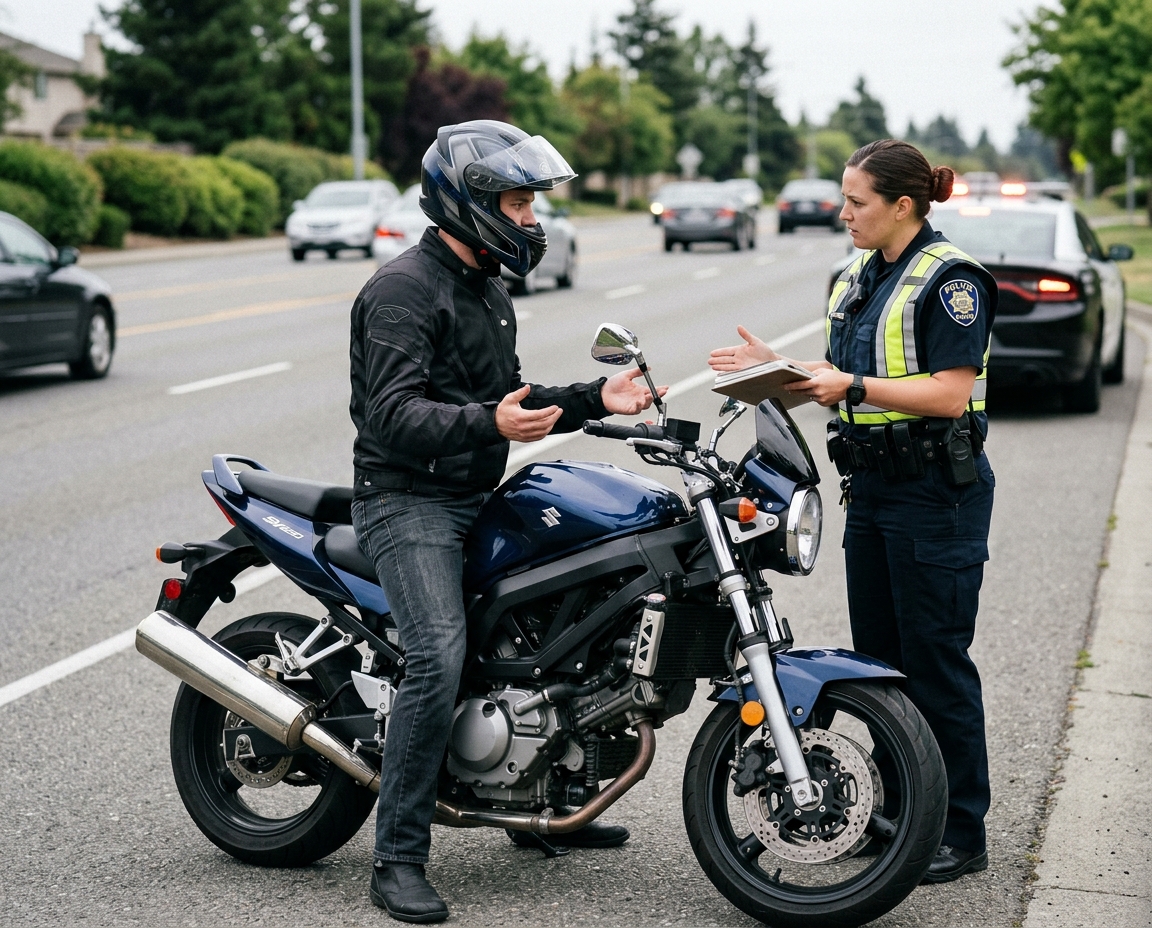
Driving is a daily necessity for many Californians, but California law requires drivers to have the appropriate and valid driving privilege before operating a motor vehicle on a highway. California Vehicle Code § 12500(a), commonly called the state’s driving without a license law, addresses situations in which a person drives without holding a valid driver’s license issued under California law, unless an applicable exemption applies.
A citation under Vehicle Code § 12500(a) does not necessarily mean the same thing in every situation. The circumstances can be important, including whether the person has ever been licensed, whether the person has an out-of-state license, whether the license expired, whether the driving privilege was suspended or revoked, and whether the person has prior qualifying violations.
This guide explains California Vehicle Code § 12500(a), potential penalties, common exceptions, related licensing offenses, and frequently asked questions about driving without a license in California.
What Is California Vehicle Code § 12500(a)?
California Vehicle Code § 12500(a) generally states that a person may not drive a motor vehicle on a highway unless the person then holds a valid driver’s license issued under California law, except for people who are expressly exempted by the Vehicle Code.
California generally requires a person to have a valid driver’s license before driving a motor vehicle on a California highway.
The statute focuses on several important concepts:
- Driving: The person must have driven the vehicle.
- Motor vehicle: The vehicle must fall within the applicable definition under California law.
- Highway: The driving must occur on a highway as that term is defined by the Vehicle Code.
- Valid driver’s license: The driver must have the required valid license at the relevant time.
- Exemptions: California law provides specific circumstances in which a person may legally drive without obtaining a California driver’s license.
Because these elements matter, a person who receives a citation should not automatically assume that every case involving a missing license is legally identical.
Is Driving Without a License a Crime in California?
It depends on the circumstances and the person’s prior record.
One of the most important points about Vehicle Code § 12500(a) is that the underlying licensing requirement and the punishment for violating it are found in different provisions of the Vehicle Code.
Vehicle Code § 40000.10 establishes the punishment for a violation of § 12500(a). Generally, a first or second violation is punishable as an infraction with a $100 fine, unless the circumstances described in subdivision (b) apply.
However, certain prior license suspensions or revocations can result in misdemeanor-or-infraction treatment under the statute. In addition, a third or subsequent violation is subject to the separate penalty provisions of Vehicle Code § 40000.10 and Penal Code § 19.8.
For that reason, it is not accurate to describe every Vehicle Code § 12500(a) case simply as a misdemeanor. The classification and potential punishment depend on the applicable statutory circumstances.
What Is the Penalty for a First or Second Violation?
Under Vehicle Code § 40000.10(a), a violation of § 12500(a) is generally punishable as an infraction with a $100 fine for a first or second violation, unless the exception in subdivision (b) applies.
This is an important distinction from older online articles that may describe driving without a license as automatically carrying misdemeanor penalties.
An infraction is generally less serious than a misdemeanor. It does not carry the same potential incarceration consequences associated with a misdemeanor conviction.
However, the statutory fine is not necessarily the same as the total amount a person may ultimately owe after court assessments and other applicable charges. The amount shown on a particular citation or court notice can therefore be different from the basic statutory fine.
When Can a § 12500(a) Violation Be Treated More Seriously?
Vehicle Code § 40000.10(b) provides an important exception to the ordinary first- or second-violation rule.
Under that provision, a violation can be punished as a misdemeanor or an infraction as prescribed by Penal Code § 19.8 when the person has a prior driver’s-license suspension or revocation for certain specified offenses. Those offenses include particular violations involving DUI, reckless driving, and other specified conduct.
This means that the person’s prior driving history can matter.
For example, two people could both be cited under Vehicle Code § 12500(a), but their potential legal exposure could be different if one person has a qualifying prior license suspension or revocation and the other does not.
What About a Third or Subsequent Violation?
Repeat violations can also receive different treatment.
Vehicle Code § 40000.10 provides specific rules for third and subsequent violations of § 12500(a). Penal Code § 19.8 also contains provisions governing when certain Vehicle Code offenses may be treated as infractions.
Therefore, someone facing a repeat allegation should not assume that the consequences will necessarily be identical to those associated with a first violation.
The exact number and nature of prior violations, as well as how they were previously resolved, can matter.
What Does the Prosecution Have to Establish?
A § 12500(a) case generally turns on whether the statutory requirements for unlicensed driving are satisfied.
Among the important questions are:
- Did the person drive a motor vehicle?
- Did the driving occur on a highway?
- Did the person hold a valid driver’s license at the relevant time?
- Was the license issued under California law or did another statutory provision permit the person to drive without obtaining a California license?
- Did an applicable exemption apply?
These questions can become particularly important when a person has an out-of-state license, recently moved to California, had a recently expired license, or has another type of authorization to drive.
Is Driving Without a License the Same as Driving With a Suspended License?
No.
California has different statutes addressing different types of unlawful driving.
Vehicle Code § 12500(a) generally addresses driving without the required valid driver’s license.
By contrast, Vehicle Code § 14601 and related provisions address various circumstances involving a person’s suspended or revoked driving privilege.
This distinction is important because the reason a person is not legally authorized to drive can affect which statute applies and what consequences may follow.
Example
Consider two drivers:
Driver A: The person has never obtained a driver’s license but drives a car on a California highway.
Driver B: The person previously had a driver’s license, but the driving privilege was suspended, and the person drives anyway.
Although both drivers may be unable to lawfully drive, the legal issues are not necessarily the same. Driver A may present a § 12500(a) issue, while Driver B may face a charge under one of California’s suspended-license statutes.
What If Someone Has Never Had a Driver’s License?
Someone who has never obtained a driver’s license may potentially violate § 12500(a) by driving a motor vehicle on a California highway when no exemption applies.
For example, imagine a 22-year-old who has never applied for a driver’s license but drives a friend’s car to work. If the person is stopped while driving on a California highway, the lack of a valid license can create a § 12500(a) issue.
Obtaining a license after the incident may be an important practical step, but getting licensed does not automatically guarantee that an existing citation or case will be dismissed.
What If Your California License Has Expired?
An expired license generally does not satisfy the requirement that the driver then holds a valid driver’s license.
Vehicle Code § 12500(a) specifically uses the requirement that the person hold a valid driver’s license at the time of driving.
For example, suppose a driver’s license expired several months before a traffic stop. The person may still physically possess the old license card, but the relevant legal question is whether the driving privilege was valid at the time of the alleged violation.
The circumstances can matter, including how recently the license expired and whether another Vehicle Code provision applies.
A driver should not assume that simply possessing an expired card means the person is legally licensed.
What If You Forgot Your License at Home?
Having a valid driver’s license but failing to have the physical license in your possession is different from never having a valid driving privilege.
Vehicle Code § 12951 addresses the requirement to have and present a driver’s license in specified circumstances. The statute provides, among other things, that a driver must present the license for examination upon demand by a peace officer enforcing the Vehicle Code.
Therefore, the situation of a properly licensed driver who accidentally left the physical license at home should not automatically be treated as though the driver had never been licensed.
Example
Suppose Maria has a valid California driver’s license but leaves her wallet at home. She is stopped for an unrelated traffic violation and cannot immediately produce the physical card.
That situation is different from Maria having never obtained a driver’s license or having an invalid driving privilege.
The exact charge and circumstances should be examined rather than assuming that all “no license” situations involve § 12500(a).
Can You Drive in California With an Out-of-State License?
Sometimes.
California Vehicle Code § 12502 establishes circumstances in which certain people may operate a motor vehicle in California without obtaining a California driver’s license. For example, qualifying nonresidents may be permitted to drive with a valid license issued by the jurisdiction where they reside, subject to the statutory requirements and other California residency rules.
Example
A person who lives in Nevada travels to California for a vacation and drives a rental car using a valid Nevada driver’s license.
That person’s situation is different from a California resident who has never obtained a California driver’s license.
The important question is not simply, “Is the license from another state?” It may also be necessary to consider whether the person is a California resident, whether the out-of-state license is valid, and whether the person qualifies for an applicable exemption.
What If You Recently Moved to California?
Moving to California can create additional licensing obligations.
California has residency rules that determine when a person must obtain a California driver’s license rather than continuing to rely on an out-of-state license.
The DMV provides information for people who are new to California and explains the process for obtaining a California driver’s license.
Someone who recently moved should therefore avoid assuming that an out-of-state license will remain sufficient indefinitely simply because it is still valid in the issuing state.
What If You Have an International or Foreign Driver’s License?
Foreign-license situations can involve additional rules and should be evaluated carefully.
California law contains specific provisions addressing nonresidents and licenses issued by other jurisdictions. Whether a foreign license permits someone to drive in California can depend on residency, the person’s age, the type of vehicle, and other applicable requirements.
A person should not assume that possession of a foreign driver’s license automatically creates an unrestricted right to drive in California.
Can Police Stop a Driver Solely to Check for a License?
California law places limitations on certain stops made solely for licensing checks.
For example, Vehicle Code § 14607.6 addresses impoundment and other consequences involving certain unlicensed, suspended, or revoked drivers, while other provisions govern the circumstances in which officers may investigate violations of the Vehicle Code.
The legality of a particular traffic stop depends on the facts surrounding that stop. A person should therefore distinguish between being stopped solely to investigate licensing status and having a lawful traffic stop occur for another reason during which an officer investigates whether the driver is properly licensed.
Can Your Car Be Impounded for Driving Without a License?
Potentially, depending on the circumstances.
A citation under § 12500(a) and vehicle impoundment are separate legal issues.
California Vehicle Code § 14602.6 provides authority for certain vehicle impoundments involving an unlicensed driver, including circumstances in which an officer determines that a person was driving without ever having been issued a driver’s license. Other statutory requirements and exceptions may apply.
Vehicle Code § 14607.6 also addresses vehicle forfeiture and certain situations involving an unlicensed driver who is the registered owner and has a qualifying prior misdemeanor conviction.
This means that it would be inaccurate to say that every § 12500(a) citation automatically results in a vehicle impoundment or forfeiture.
The circumstances of the stop, the driver’s history, vehicle ownership, and the specific statutory authority being used can all matter.
Does Driving Without a License Add DMV Points?
People frequently ask whether a § 12500(a) violation automatically adds points to their California driving record.
A driver should not automatically assume that every conviction or citation under this section results in the same DMV point consequences as offenses such as DUI, reckless driving, or other qualifying violations.
DMV consequences depend on the specific offense, conviction, and applicable DMV rules.
Because licensing and DMV-record issues can be separate from the court case, it can be useful to verify the person’s actual driving record and license status rather than relying on assumptions about points.
What Should You Do After Receiving a § 12500(a) Citation?
If you receive a citation alleging a violation of Vehicle Code § 12500(a), review the paperwork carefully.
Pay particular attention to:
- The exact Vehicle Code section listed.
- Whether the citation identifies an infraction or misdemeanor.
- The court date and location.
- Whether the citation alleges a first, second, third, or subsequent violation.
- Whether another Vehicle Code section is also listed.
- Whether the issue involves an expired license, suspended license, revoked license, or no license ever issued.
- Whether you may qualify for an out-of-state or other statutory exemption.
It is also important to avoid ignoring a court date or other required response. The citation or court paperwork should provide instructions regarding how and when to respond.
If you are eligible to obtain or renew a driver’s license, you can also review the current California DMV requirements and procedures.
Common Questions
Is VC 12500(a) a misdemeanor?
Not necessarily. A first or second violation is generally an infraction punishable by a $100 fine under Vehicle Code § 40000.10, unless the statutory exception in subdivision (b) applies. Certain prior license-suspension or revocation circumstances can result in misdemeanor-or-infraction treatment, and repeat violations have additional statutory rules.
How much is a California driving-without-a-license ticket?
The basic statutory penalty for a first or second § 12500(a) violation is generally a $100 fine, subject to the exceptions in Vehicle Code § 40000.10. The total amount shown as due can include applicable assessments and other charges.
Can I go to jail for driving without a license?
A basic first or second violation subject to the ordinary rule is an infraction with a $100 fine. However, certain circumstances can result in misdemeanor treatment. Therefore, the possibility of incarceration cannot be answered accurately without considering the applicable penalty provision and the person’s circumstances.
Is VC 12500(a) the same as driving with a suspended license?
No. Section 12500(a) generally concerns driving without the required valid license, while California has separate statutes for driving when a person’s license or driving privilege has been suspended or revoked.
What if I had a valid license but forgot it at home?
That is not necessarily the same as driving without ever having a valid license. Vehicle Code § 12951 addresses possession and presentation of a driver’s license, so the exact circumstances and citation matter.
Can I use an out-of-state driver’s license in California?
Qualifying nonresidents may be permitted to drive in California with a valid license from their home jurisdiction under Vehicle Code § 12502. Residency and other statutory requirements can affect whether the exemption applies.
Does getting a California driver’s license after the ticket make the case go away?
Not automatically. Obtaining a valid license may resolve the underlying licensing problem going forward, but it does not by itself guarantee dismissal of an existing citation or case.
Can my car be impounded if I am driving without a license?
Potentially. California law provides specific impoundment authority for certain situations involving unlicensed drivers, but impoundment is not an automatic consequence of every § 12500(a) citation. The circumstances and applicable statutory requirements matter.
Does a § 12500(a) violation put points on my license?
You should not assume that a § 12500(a) matter automatically results in DMV points. DMV consequences depend on the specific offense and applicable DMV rules.
Examples of California Vehicle Code § 12500(a) Situations
Understanding the difference between common situations can make the law easier to follow.
Example 1: A Person Who Has Never Been Licensed
John has never obtained a driver’s license. He drives his friend’s vehicle on a California highway.
If no exemption applies and the statutory elements are established, the situation may fall within Vehicle Code § 12500(a).
Example 2: A Driver With a Valid Out-of-State License
Sarah lives in another state and visits California for vacation. She has a valid driver’s license from her home state.
Her situation may fall within a statutory nonresident exemption, depending on the applicable requirements.
Example 3: A California Resident With an Expired License
David lives in California and allows his California driver’s license to expire. He continues driving.
Because § 12500(a) requires the person to hold a valid driver’s license at the time of driving, an expired license can create a licensing issue.
Example 4: A Driver Whose License Was Suspended
Lisa previously had a valid California license, but DMV suspended her driving privilege. She later drives during the suspension.
This is not necessarily treated simply as a § 12500(a) case. California has separate statutes addressing driving with a suspended or revoked license, and the reason for the suspension can affect the applicable charge.
Example 5: A Licensed Driver Who Forgot the Physical Card
Mark has a valid driver’s license but accidentally leaves his wallet at home.
That situation is different from Mark never having been licensed. Vehicle Code § 12951 addresses the possession and presentation of a driver’s license, so the applicable facts and citation should be examined.
Why the Exact Charge Matters
“Driving without a license” is a phrase that can describe several very different situations in everyday conversation.
A person may mean:
- Never having obtained a driver’s license.
- Having an expired license.
- Having a suspended license.
- Having a revoked license.
- Having a valid license but forgetting the physical card.
- Driving with an out-of-state license after becoming a California resident.
- Driving without the correct license class or endorsement.
These situations can involve different provisions of California law.
For that reason, looking only at the phrase “driving without a license” may not be enough to determine the potential legal consequences. The exact Vehicle Code section and facts should be reviewed.
Key Takeaways
California Vehicle Code § 12500(a) generally prohibits a person from driving a motor vehicle on a highway without holding a valid driver’s license issued under California law, unless the person qualifies for an applicable statutory exemption.
The most important points to remember are:
- A first or second violation is generally an infraction with a $100 statutory fine.
- Certain prior license suspensions or revocations can result in more serious treatment under Vehicle Code § 40000.10.
- Third or subsequent violations have separate statutory penalty provisions.
- Driving without ever having a license is different from driving with a suspended or revoked license.
- A valid out-of-state license may permit certain nonresidents to drive in California.
- An expired license is different from simply forgetting to carry a valid physical license.
- Vehicle impoundment is governed by separate statutory provisions and is not automatically required for every § 12500(a) citation.
- The exact citation, prior driving history, license status, residency, and circumstances can affect the legal analysis.
California’s driver’s-license laws can be more complicated than the phrase “driving without a license” suggests. Understanding the exact statute listed on a citation is an important first step in determining what the allegation means and what legal issues may need to be addressed.
Contact Southwest Legal
Need Guidance About a California Vehicle Code § 12500(a) Matter?
If you are dealing with a citation or case involving California Vehicle Code § 12500(a), reviewing the exact charge and circumstances can help clarify which California laws may apply.
Southwest Legal provides legal guidance to people dealing with California legal matters. If you need assistance understanding a Vehicle Code § 12500(a) allegation or related driving offense, contact us today for a free consultation.
Disclaimer: This article is for general informational purposes only and does not constitute legal advice or create an attorney-client relationship. No attorney-client relationship is formed unless and until the firm and client enter into an agreement for legal services. Laws may change, and legal outcomes depend on the specific facts of each case. Consult a qualified attorney for advice regarding your situation.