


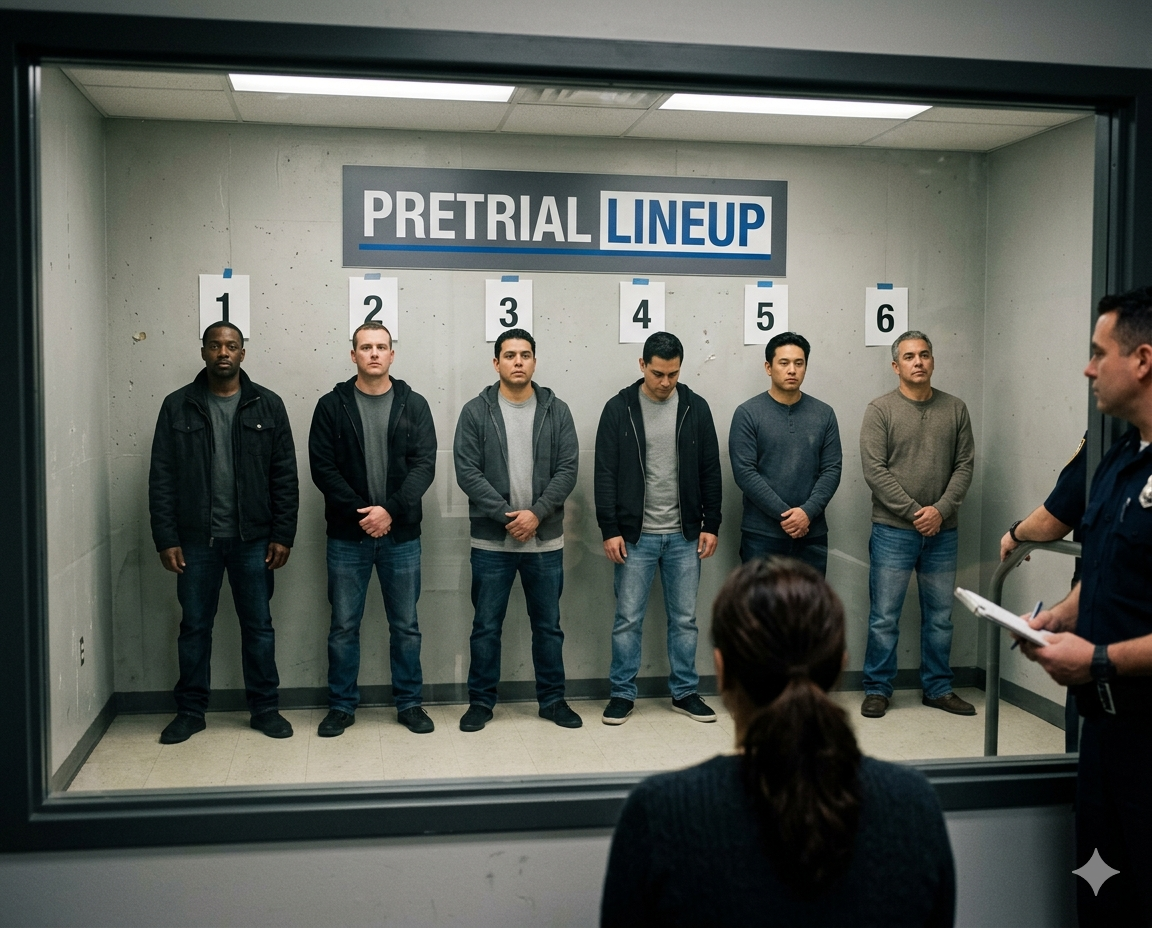
When a criminal investigation relies on eyewitness testimony, law enforcement may use a pretrial lineup to determine whether a witness can identify a suspect. While lineups can be valuable investigative tools, they are not always accurate. Mistaken eyewitness identifications have played a role in wrongful convictions throughout the United States, making the fairness and reliability of pretrial identification procedures a critical issue in California criminal cases.
If you have been accused of a crime, understanding how pretrial lineups work, what rights you may have, and how a criminal defense attorney can challenge questionable identifications may be essential to protecting your future.
What Is a Pretrial Lineup?
A pretrial lineup is an identification procedure used during a criminal investigation before a case goes to trial. During the lineup, a witness is asked to identify the person they believe committed a crime from a group of individuals or photographs.
The purpose of a lineup is to help investigators determine whether a witness can recognize a suspect based on their observations during the alleged incident.
Pretrial lineups are commonly used in cases involving:
- Robbery
- Assault
- Burglary
- Sexual offenses
- Carjacking
- Homicide
- Other crimes involving eyewitness observations
The outcome of a lineup can significantly influence an investigation and may later become important evidence in court.
Types of Pretrial Identification Procedures
Law enforcement agencies may use several different methods to obtain witness identifications.
1. Live Lineups
A live lineup involves placing a suspect among several other individuals, often called fillers or stand-ins, who generally resemble the suspect in appearance.
The witness is then asked whether they recognize anyone in the lineup as the person involved in the alleged crime.
2. Photo Lineups
A photo lineup, also known as a photo array or photographic lineup, presents a witness with a collection of photographs that includes the suspect and several similar-looking individuals.
Photo lineups are frequently used because they can be arranged more quickly and conveniently than live lineups.
3. Show-Ups
A show-up occurs when police present a single suspect to a witness shortly after a crime is reported.
For example, officers may detain an individual near the scene and ask a witness whether that person is the perpetrator.
Although show-ups may be permitted under certain circumstances, they are often viewed as more suggestive than traditional lineups because only one individual is presented to the witness.
4. Sequential and Simultaneous Lineups
Lineups may also be conducted in different formats.
- Sequential lineups present individuals or photographs one at a time.
- Simultaneous lineups present all lineup participants at once.
Each method has advantages and limitations, and the procedure used may become relevant if the identification is later challenged in court.
Why Eyewitness Identifications Matter
Eyewitness testimony can be powerful evidence in a criminal case. Jurors often place significant weight on a witness who confidently identifies a defendant.
However, decades of research have demonstrated that human memory is not perfect. Witnesses may genuinely believe they are identifying the correct person while still making a mistake.
Factors such as stress, fear, poor lighting, brief viewing opportunities, and suggestive police procedures can all affect the accuracy of an identification.
Because eyewitness testimony can strongly influence prosecutors, judges, and juries, it is important to carefully evaluate how an identification was obtained.
California Law and Identification Procedures
California courts recognize that improperly conducted identification procedures can create a substantial risk of mistaken identification.
When reviewing identification evidence, courts often examine whether law enforcement used procedures that were unnecessarily suggestive and whether those procedures may have influenced the witness’s decision.
In some situations, criminal defense attorneys may ask the court to exclude identification evidence if it was obtained through unfair or unreliable methods.
The court’s analysis generally focuses on questions such as:
- Whether the lineup was conducted fairly
- Whether the suspect stood out from the fillers
- Whether police made suggestive comments
- Whether the identification appears reliable under the circumstances
If a court determines that the procedure violated constitutional protections, the identification may be excluded from evidence.
Constitutional Rights Related to Pretrial Lineups
Individuals accused of crimes have important constitutional protections throughout the criminal justice process.
Due Process Protections
The Due Process Clause protects individuals from identification procedures that are so unnecessarily suggestive that they create a substantial likelihood of misidentification.
Courts may closely scrutinize situations where police actions appear to influence a witness toward selecting a particular individual.
Right to Counsel
In certain circumstances, a defendant may have the right to have legal counsel present during a live lineup conducted after formal criminal proceedings have begun.
An attorney’s presence can help ensure that the lineup is conducted fairly and can provide an independent record of what occurred.
Whether this right applies depends on the specific facts and procedural stage of the case.
Common Problems With Pretrial Lineups
Not all lineups are conducted properly. Criminal defense attorneys frequently examine whether any aspect of the procedure may have influenced the witness.
The Suspect Stands Out
A lineup should include individuals who reasonably resemble one another.
Problems can arise when:
- The suspect is the only participant matching the witness’s description
- The suspect has distinctive features not shared by others
- The suspect’s clothing differs significantly from the fillers
- Age, height, race, or physical characteristics vary dramatically among participants
When a suspect stands out, witnesses may feel pressure to select that person even if they are uncertain.
Suggestive Statements by Law Enforcement
Officers should avoid comments that suggest a suspect is included in the lineup or encourage a particular selection.
Even subtle statements can influence a witness’s memory and decision-making process.
Repeated Exposure to a Suspect
A witness who repeatedly sees a suspect’s photograph or image before a lineup may become more likely to select that individual later.
Repeated exposure can affect memory and increase the risk of a mistaken identification.
Poor Lineup Construction
Lineups should be designed to minimize the possibility that any participant appears noticeably different from the others.
Poorly constructed lineups may become the subject of legal challenges.
Factors That Can Affect Witness Accuracy
Even when law enforcement follows proper procedures, eyewitness identifications can still be unreliable.
Several factors may affect a witness’s ability to accurately identify a suspect.
Stress and Trauma
Witnesses and victims often experience significant stress during criminal events. High stress levels can interfere with memory formation and recall.
Presence of a Weapon
When a weapon is involved, a witness may focus primarily on the weapon rather than the person’s facial features.
This phenomenon is often referred to as “weapon focus.”
Lighting Conditions
Poor lighting may limit a witness’s ability to observe and remember important details.
Distance and Viewing Time
A witness who sees a suspect from a distance or only briefly may have difficulty making an accurate identification later.
Passage of Time
Human memory naturally fades over time. The longer the delay between the incident and the identification procedure, the greater the potential for memory-related issues.
Cross-Racial Identifications
Research has shown that individuals may sometimes have greater difficulty accurately identifying people of a different race than their own.
This factor may become relevant when evaluating the reliability of an eyewitness identification.
How Prosecutors Use Lineup Identifications
When a witness identifies a suspect during a lineup, prosecutors may use that evidence to support criminal charges.
Identification evidence may be used to:
- Establish probable cause
- Support the prosecution’s theory of the case
- Corroborate other evidence
- Strengthen witness testimony at trial
In some cases, eyewitness identification becomes one of the prosecution’s most important pieces of evidence.
Defense Strategies for Challenging Identification Evidence
A skilled criminal defense attorney will carefully analyze every aspect of the identification procedure to determine whether it can be challenged.
Motion to Suppress Identification Evidence
If a lineup was conducted improperly, the defense may ask the court to exclude the identification from evidence.
A successful suppression motion can significantly weaken the prosecution’s case.
Challenging Suggestive Procedures
Defense counsel may argue that police procedures improperly influenced the witness.
Potential issues include:
- Suggestive instructions
- Improper comments
- Unfair lineup composition
- Repeated exposure to the suspect
Cross-Examining Witnesses
Cross-examination can reveal weaknesses in eyewitness testimony.
Attorneys may question witnesses about:
- Lighting conditions
- Distance from the suspect
- Duration of observation
- Stress levels during the event
- Prior inconsistent statements
- Confidence at the time of identification
Expert Witness Testimony
In some cases, expert witnesses may explain how memory functions and discuss factors that can affect eyewitness accuracy.
Expert testimony can help jurors better understand the limitations of human perception and memory.
Independent Investigation
Defense attorneys may conduct their own investigations to uncover evidence that challenges the prosecution’s identification evidence.
This may include interviewing witnesses, obtaining surveillance footage, reviewing records, and identifying alternative suspects.
Use of Objective Evidence
Technology can sometimes provide evidence that contradicts an eyewitness identification.
Examples include:
- Surveillance video
- GPS data
- Cell phone records
- Digital communications
- Time-stamped records
Objective evidence may be particularly effective in challenging mistaken identifications.
What Happens If Identification Evidence Is Excluded?
If a court excludes lineup evidence, prosecutors may be prevented from using that identification at trial.
Depending on the strength of the remaining evidence, exclusion of identification evidence may:
- Reduce the prosecution’s leverage
- Strengthen the defense position
- Lead to more favorable negotiations
- Affect the overall viability of the case
Every case is unique, and the impact of a suppression ruling will depend on the specific facts involved.
Why Early Legal Representation Matters
The earliest stages of a criminal investigation can be critical.
An experienced criminal defense attorney can:
- Review lineup procedures
- Preserve important evidence
- Investigate potential constitutional violations
- Interview witnesses
- Challenge unreliable identification evidence
- File strategic pretrial motions
- Develop a comprehensive defense strategy
The sooner an attorney becomes involved, the greater the opportunity to identify weaknesses in the prosecution’s case and protect the accused’s rights.
Frequently Asked Questions
Can I refuse to participate in a lineup?
The answer depends on the circumstances of the case. Individuals should consult a qualified criminal defense attorney before making decisions regarding participation in any identification procedure.
Are eyewitness identifications always accurate?
No. While eyewitness testimony can be valuable, research has consistently shown that eyewitness identifications can be mistaken even when witnesses are confident in their recollections.
Can a criminal case be challenged because of an unfair lineup?
Potentially. If an identification procedure was improperly conducted, a defense attorney may seek to challenge or suppress the resulting identification evidence.
Can a witness identify someone in court after a lineup?
In some circumstances, prosecutors may attempt to obtain an in-court identification. Whether such testimony is admissible depends on the facts of the case and applicable legal standards.
Contact Southwest Legal
If you are under investigation or facing criminal charges in Southern California, it is important to have an experienced legal team review every aspect of the evidence against you—including eyewitness identifications and pretrial lineup procedures.
At Southwest Legal, we understand the serious consequences that can result from mistaken identifications and improperly conducted police procedures. Our criminal defense attorneys thoroughly analyze the facts of every case, investigate potential constitutional issues, and work aggressively to protect our clients’ rights at every stage of the criminal process.
Whether you are facing misdemeanor charges, felony allegations, or are currently under investigation, obtaining knowledgeable legal representation as early as possible can make a significant difference in your defense.
Contact us today for a free consultation. Our team is prepared to review your case, explain your legal options, and help you to protect your future.
Disclaimer: This article is for general informational purposes only and does not constitute legal advice or create an attorney-client relationship. No attorney-client relationship is formed unless and until the firm and client enter into an agreement for legal services. Laws may change, and legal outcomes depend on the specific facts of each case. Consult a qualified attorney for advice regarding your situation.