


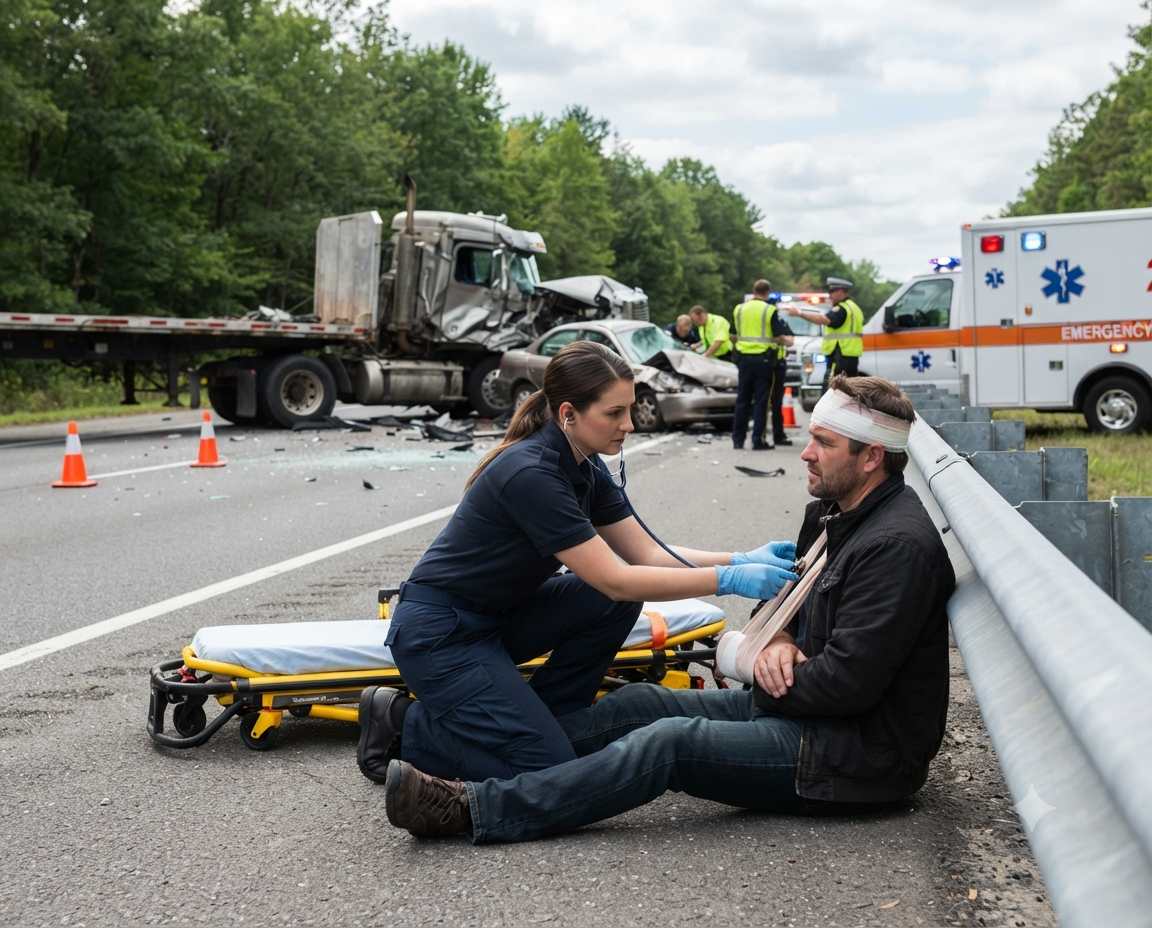
A truck accident can be far more complicated than a typical car accident. Commercial trucks are substantially larger and heavier than passenger vehicles, and collisions involving tractor-trailers, delivery trucks, and other commercial vehicles can result in severe injuries and significant property damage.
If you were injured in a truck accident in California, you may have important questions: Who is responsible for the crash? Can I file a truck accident claim? What compensation may be available? What if the trucking company or its insurance company disputes responsibility? Do I need a personal injury lawyer?
Understanding how California truck accident claims work can help you make informed decisions about your legal options.
What Makes Truck Accident Claims Different?
Many truck accident claims involve issues that do not arise in an ordinary passenger-vehicle collision.
Depending on the circumstances, an investigation may involve the truck driver, trucking company, vehicle owner, maintenance provider, cargo loader, manufacturer, or another party.
Evidence may include:
- Police and accident reports
- Photographs and video of the crash
- Witness statements
- Driver records
- Hours-of-service records
- Electronic logging device information
- Vehicle inspection and maintenance records
- Electronic vehicle data
- Cargo and loading records
- Driver qualification and training records
- Medical records and bills
- Employment and wage information
- Insurance policies and communications
Federal Motor Carrier Safety Administration (FMCSA) requirements may also be relevant when the vehicle and operation fall within federal commercial motor vehicle regulations. For example, federal hours-of-service rules generally regulate how long qualifying commercial drivers can drive and remain on duty. For property-carrying drivers covered by the rules, the general limits include up to 11 hours of driving after 10 consecutive hours off duty and a 14-hour on-duty window, subject to exceptions.
Not every commercial vehicle or driving situation is governed by identical federal requirements, so the applicable rules depend on the facts of the case.
Who Can Be Responsible for a Truck Accident in California?
Determining responsibility is one of the most important parts of a truck accident investigation.
California generally requires people to use reasonable care to avoid causing injury to others. California Civil Code § 1714 establishes this general negligence principle.
In a truck accident, however, there may be more than one potentially responsible party.
The Truck Driver
A truck driver may potentially be responsible when negligent driving contributes to a collision.
Examples can include:
- Speeding
- Distracted driving
- Unsafe lane changes
- Following another vehicle too closely
- Failing to yield
- Driving while impaired
- Failing to account for blind spots
- Fatigued driving
- Other unsafe driving conduct
For example, suppose a truck driver moves into another lane without adequately checking the truck’s blind spot and strikes a nearby vehicle. Witness statements, photographs, video footage, electronic data, and other evidence may help determine how the collision occurred.
The Trucking Company
A trucking company may also potentially bear responsibility, depending on the circumstances and the driver’s relationship with the company.
An investigation may examine issues such as whether the company:
- Properly hired or qualified the driver
- Provided appropriate training
- Properly supervised the driver
- Maintained the truck
- Followed applicable safety requirements
- Knew or should have known about a safety problem
- Engaged in conduct that contributed to unsafe operation
A trucking company is not automatically liable simply because one of its drivers was involved in a collision. The legal basis for the company’s potential responsibility depends on the facts and applicable law.
The Truck Owner or Maintenance Provider
The company operating a truck may not necessarily own or maintain it.
Commercial vehicles may be leased or owned by another business. Maintenance may also be performed by an outside company.
If inadequate maintenance or a mechanical problem contributed to the accident, investigators may need to examine inspection and maintenance records and determine who was responsible for the condition of the vehicle.
A Cargo Loader or Other Third Party
Improperly loaded or secured cargo can create serious risks.
Cargo that shifts during transportation can affect a truck’s stability or handling. Cargo that is not properly secured may also fall from a vehicle.
If loading or securing cargo contributed to a crash, the investigation may need to determine which person or company was responsible and whether applicable requirements were followed.
How Can a Personal Injury Lawyer Help After a Truck Accident?
A personal injury lawyer can help investigate the collision, identify potentially responsible parties, gather evidence, communicate with insurance companies, evaluate damages, and pursue a claim when appropriate.
1. Investigating the Cause of the Collision
Determining what happened can require more than simply comparing the drivers’ versions of events.
A personal injury lawyer may work to obtain and preserve relevant evidence, including:
- Photographs and videos
- Surveillance footage
- Witness information
- Accident reports
- Driver records
- Vehicle data
- Maintenance records
- Inspection records
- Cargo information
- Other relevant documents
For example, if a trucking company disputes the speed or conduct of its driver, available video, physical evidence, witness testimony, and electronic vehicle information may provide additional information about what happened.
2. Identifying Potentially Responsible Parties
One benefit of a thorough truck accident investigation is determining whether more than one person or company may have contributed to the accident.
Potential parties can include the:
- Truck driver
- Trucking company
- Truck owner
- Leasing company
- Maintenance provider
- Cargo-loading company
- Vehicle or component manufacturer
- Other motorists or entities
The appropriate parties depend on the facts and the legal theories available in the case.
3. Reviewing Applicable Trucking Regulations
Commercial trucking can involve federal and state safety requirements.
For example, FMCSA hours-of-service rules generally regulate driving and on-duty limits for qualifying commercial motor vehicle drivers. The rules also include requirements concerning rest periods and other circumstances.
A personal injury lawyer investigating a truck accident may review available records to determine whether applicable requirements were followed.
A regulatory violation does not automatically establish every element of a personal injury claim. However, depending on the circumstances, evidence of a safety violation may be relevant to determining what happened and whether someone’s conduct contributed to the collision.
4. Communicating With Insurance Companies
Truck accidents can involve substantial insurance coverage and multiple insurance companies.
After a collision, an insurance adjuster may request information about the accident, injuries, medical treatment, or damages.
A personal injury lawyer can handle communications with insurers and help evaluate settlement offers.
This may be especially useful when an insurance company disputes liability, questions the severity of an injury, or argues that certain medical treatment or losses were not caused by the accident.
5. Documenting Medical Treatment and Other Losses
A serious truck accident can result in expenses and losses that continue long after the date of the collision.
Depending on the circumstances, a claim may involve losses associated with:
- Emergency treatment
- Hospitalization
- Surgery
- Rehabilitation
- Medication
- Follow-up care
- Future medical treatment
- Lost wages
- Reduced earning capacity
- Property damage
- Physical pain
- Emotional distress
- Other legally recognized damages
California Courts identify medical expenses, lost wages, future problems, and emotional harm among the losses that may be relevant to a personal injury case.
Some losses are straightforward to document. Others may require additional evidence or expert analysis, particularly when an injury affects a person’s ability to work or requires long-term medical care.
6. Negotiating a Settlement or Pursuing a Lawsuit
Many personal injury claims are resolved through settlement negotiations.
However, an injured person does not have to accept every settlement offer. If the parties cannot reach an appropriate resolution, filing a lawsuit may be an option when supported by the facts and law.
A personal injury lawyer can handle legal procedures, evidence gathering, discovery, negotiations, and—when necessary—trial preparation and litigation.
What Evidence Should You Preserve After a Truck Accident?
Evidence can play an important role in establishing liability and damages.
If it is safe and you are physically able to do so, consider preserving:
- Photos of the accident scene
- Photos of vehicle damage
- Photos of visible injuries
- Contact information for witnesses
- Police or incident report information
- Medical records
- Medical bills
- Insurance correspondence
- Vehicle repair estimates
- Employment and wage records
- Relevant photographs and videos
California Courts identify photographs, medical documentation, witness statements, police reports, and bills as examples of evidence that may be useful in a personal injury case.
Your health and safety should come first. Do not put yourself at risk to obtain evidence.
Should You Talk to the Trucking Company’s Insurance Company?
You may receive a call from an insurance adjuster shortly after a truck accident.
The adjuster may ask questions about the collision, your injuries, medical treatment, or other aspects of your claim.
It is important to remember that an insurance company is evaluating the claim. Statements about the accident or your injuries may become part of the claim file.
If you are unsure about what information to provide, what documents to sign, or whether a settlement offer is appropriate, consider obtaining legal guidance before making significant decisions about the claim.
What If I Was Partly at Fault for the Truck Accident?
Being accused of contributing to a collision does not necessarily mean you cannot recover damages in California.
California follows comparative fault principles. Under California’s CACI No. 405, when a plaintiff’s negligence contributed to the harm, damages may be reduced according to the percentage of responsibility assigned to the plaintiff.
Example of Comparative Fault
Suppose a jury determines that:
- The truck driver was 80% responsible.
- The injured motorist was 20% responsible.
- The injured motorist’s total damages were $100,000.
The damages could be reduced according to the percentage of responsibility assigned to the injured motorist.
The actual analysis depends on the evidence and legal claims involved. A disputed allegation that an injured person was partly responsible does not, by itself, establish the final allocation of fault.
What Compensation Can You Recover After a Truck Accident?
The amount of compensation potentially available in a truck accident claim depends on the specific circumstances.
Factors can include:
- The severity of the injuries
- Medical expenses
- Future medical needs
- Lost income
- Impact on earning capacity
- Property damage
- Evidence establishing liability
- The extent of pain and suffering
- Other legally recognized losses
- Available insurance coverage
Economic Damages
Economic damages generally relate to financial losses that can be documented, such as medical expenses, lost income, and property damage.
Noneconomic Damages
Noneconomic damages can include losses such as physical pain, emotional distress, and other effects that do not have a simple invoice or receipt.
There is no universal formula that determines the value of every California truck accident claim. Two accidents that appear similar can result in very different claims depending on the injuries, evidence, losses, and other circumstances.
How Long Do You Have to File a Truck Accident Lawsuit in California?
California’s general statute of limitations for a personal injury action is two years. California Code of Civil Procedure § 335.1 provides that an action for injury to, or death of, an individual caused by the wrongful act or neglect of another must generally be filed within two years.
However, this should not be treated as a universal deadline for every truck accident claim.
Different rules can apply in particular situations. For example, claims involving a government entity can have significantly different requirements and deadlines. California Courts explains that a claim for personal injury against a government agency generally must be presented within six months, subject to exceptions and other requirements.
Other circumstances can also affect the applicable deadline.
If you believe you have a truck accident claim, do not wait until the deadline is approaching to investigate your rights. A personal injury lawyer can review the circumstances and identify the deadlines that may apply.
What If a Loved One Dies in a Truck Accident?
A fatal truck accident may give rise to a wrongful death claim.
California Code of Civil Procedure § 377.60 identifies various people who may be entitled to bring a wrongful death action, including certain surviving spouses, domestic partners, children, and other qualifying individuals.
Wrongful death claims can involve separate questions concerning who may file the action, what damages may be available, and how the claim should be handled.
Because the rules can be complex, families dealing with a fatal truck accident may benefit from obtaining legal guidance promptly.
How Much Does a Truck Accident Lawyer Cost?
Personal injury lawyers may use different fee arrangements.
A contingency-fee arrangement is commonly used in personal injury cases. Under this type of arrangement, the lawyer’s fee is generally based on a percentage of the recovery. The State Bar of California explains that contingency-fee agreements should specify important details, including the lawyer’s percentage and how costs are handled.
Not every personal injury lawyer uses identical terms, so prospective clients should carefully review the written fee agreement and ask questions about attorney fees, case expenses, and what happens if there is no recovery.
What Should You Do After a Truck Accident in California?
After a truck accident, consider taking the following steps when possible:
- Get appropriate medical attention.
- Report the accident as required or appropriate.
- Document the scene if it is safe to do so.
- Collect witness contact information.
- Keep medical records and bills.
- Keep documentation of missed work and other financial losses.
- Preserve photographs, videos, and relevant correspondence.
- Avoid making assumptions about who is legally responsible.
- Be cautious before signing documents or accepting a settlement.
- Consider speaking with a California personal injury lawyer about your legal options.
Frequently Asked Questions
Do I need a personal injury lawyer after a truck accident?
Not every truck accident requires an attorney. However, legal assistance may be particularly helpful when injuries are serious, liability is disputed, multiple parties may be involved, insurance coverage is complicated, or an injury could have long-term consequences.
Can I sue the trucking company if the driver caused the accident?
Potentially, but it depends on the facts and the legal relationship between the driver and company. A personal injury lawyer may investigate the driver’s employment or contractual relationship, company policies, vehicle ownership, maintenance responsibilities, and other circumstances before determining what claims may be appropriate.
What if the trucking company denies responsibility?
An insurance company’s position does not necessarily determine whether a claim has merit.
Evidence from the accident scene, witnesses, vehicle data, driver records, maintenance records, medical documentation, and other sources may help establish what happened and which parties may bear legal responsibility.
What if I did not feel injured immediately after the crash?
Some injuries may not become apparent immediately. Appropriate medical evaluation can help identify injuries and document your condition.
If symptoms develop after a collision, medical records can also help establish the timing and nature of the injury. Questions about whether an injury was caused by the accident are ultimately fact-specific.
Can I still recover compensation if I was partly responsible?
Potentially. California’s comparative fault principles can reduce damages according to the plaintiff’s assigned percentage of responsibility rather than necessarily eliminating the claim altogether.
How much is my truck accident case worth?
There is no reliable universal amount. The potential value of a claim depends on liability, injuries, medical treatment, financial losses, future consequences, available insurance, and the evidence supporting the claim.
A personal injury lawyer should not guarantee a particular result or settlement amount before evaluating the specific circumstances.
Why Early Investigation Can Matter in a Truck Accident Case
Truck accident cases can involve multiple companies, records, witnesses, insurance policies, and sources of electronic evidence.
Some evidence may become more difficult to obtain as time passes. Witness memories can fade, surveillance footage may not be retained indefinitely, and vehicles may be repaired or otherwise altered.
Early investigation does not guarantee a particular outcome. However, identifying and preserving potentially relevant evidence can help establish the facts necessary to evaluate a claim.
Final Thoughts
How a Personal Injury Lawyer Can Help
Being injured in a truck accident can create significant physical, financial, and emotional challenges. The legal process may also be complicated when multiple parties, insurance companies, commercial trucking regulations, and serious injuries are involved.
A California personal injury lawyer can help investigate the accident, identify potentially responsible parties, preserve and evaluate evidence, communicate with insurance companies, document damages, and pursue an appropriate claim through negotiation or litigation when warranted.
Contact Southwest Legal
If you or a loved one has been injured in a truck accident in Southern California, Southwest Legal encourages you to learn more about your legal options and the issues that may affect your claim.
Contact us today for a free consultation to discuss your situation and learn about potential next steps.
Disclaimer: This article is for general informational purposes only and does not constitute legal advice or create an attorney-client relationship. No attorney-client relationship is formed unless and until the firm and client enter into an agreement for legal services. Laws may change, and legal outcomes depend on the specific facts of each case. Consult a qualified attorney for advice regarding your situation.