


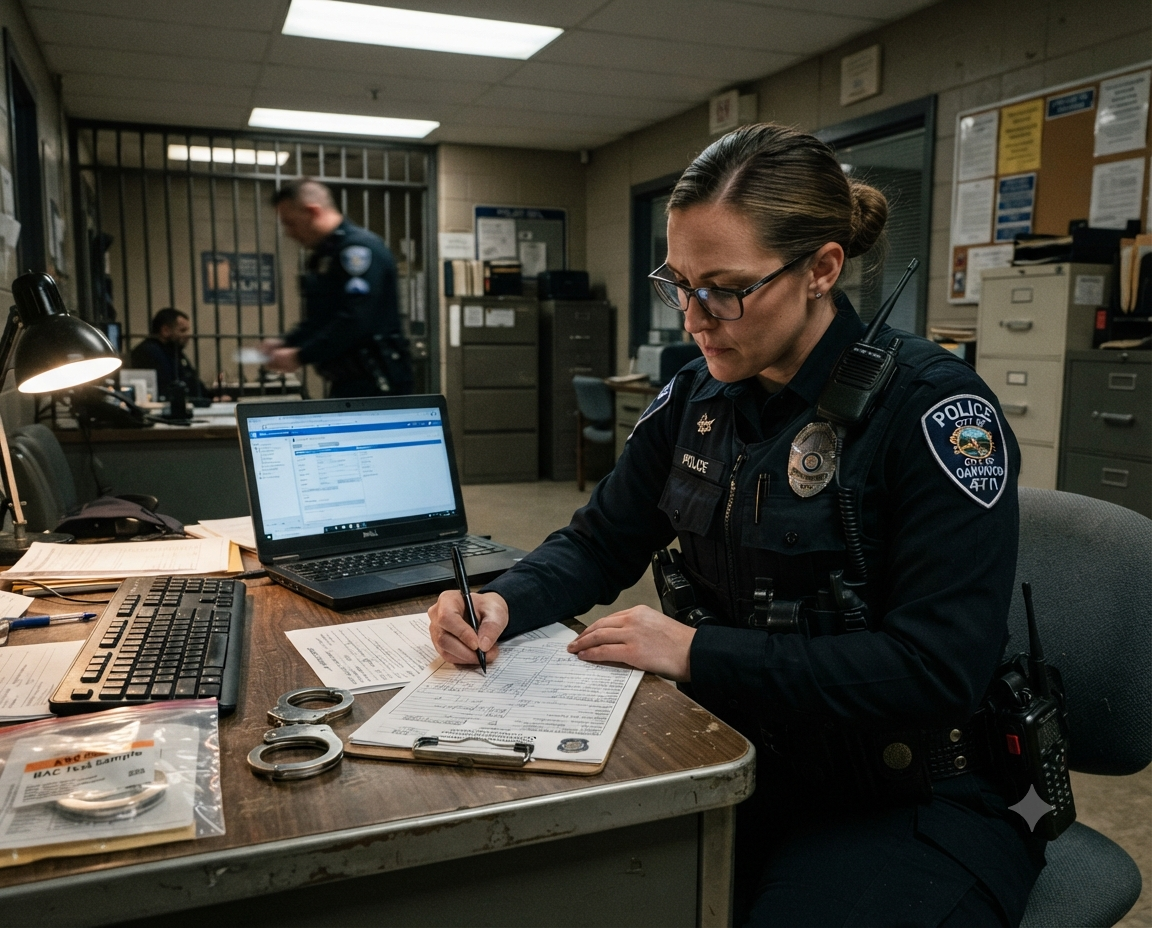
A DUI arrest in California can involve many different types of evidence, including officer observations, chemical test results, video recordings, witness statements, and police reports. Among these, the DUI police report is often one of the first documents reviewed by prosecutors and defense attorneys.
Police reports are intended to provide an accurate record of what happened during a DUI investigation. However, they are not always perfect. Officers may make mistakes, leave out important details, misunderstand a situation, or record information that does not fully match other evidence.
While a mistake in a DUI police report does not automatically mean a case will be dismissed, inaccuracies and inconsistencies may create important questions about the investigation. A careful review of the report can reveal issues that may affect how the evidence is evaluated in a California DUI defense.
What Is a DUI Police Report in California?
A DUI police report is a written record created by law enforcement after a DUI investigation or arrest. It explains the officer’s observations, actions, and reasons for believing a driver may have been impaired.
A typical California DUI police report may include:
- The reason for the traffic stop
- The driver’s behavior behind the wheel
- Statements made by the driver
- Signs of possible impairment observed by the officer
- Results of field sobriety tests
- Breath test or blood test information
- Arrest details
- Statements from passengers or witnesses
- Notes regarding video or other evidence
The report often provides the foundation for how the prosecution understands the case. Because of this, accuracy and completeness are important.
Why DUI Police Report Accuracy Matters
A DUI conviction generally requires the prosecution to prove the required elements of the offense beyond a reasonable doubt. Evidence used to support a DUI charge may include the officer’s observations, chemical testing results, and other documentation.
When a police report contains mistakes, those errors may raise questions about:
- Whether the officer’s observations were accurate
- Whether procedures were properly followed
- Whether evidence was collected and documented correctly
- Whether the officer’s memory is reliable
- Whether the facts presented match the available evidence
A defense attorney may compare the police report with other sources of information, such as body camera footage, dash camera recordings, laboratory records, and witness statements.
The significance of a mistake depends on the specific circumstances. Some errors are minor, while others may have a meaningful impact on how evidence is interpreted.
Common DUI Police Report Mistakes That May Affect a Defense
1. Incorrect Times or Timeline Errors
One common issue in DUI reports involves inaccurate timing.
A DUI investigation may involve multiple important events, including:
- The traffic stop
- Officer contact with the driver
- Field sobriety testing
- Breath testing
- Blood collection
- Arrest processing
If the timeline contains inconsistencies, attorneys may examine whether procedures were followed correctly.
For example, suppose a police report states that a chemical test occurred before the officer recorded the arrest. That type of inconsistency may require further explanation and comparison with other records.
2. Inaccurate Descriptions of Driving Behavior
Before stopping a vehicle, officers usually document the driving behavior that led them to suspect possible impairment.
Reports may describe behaviors such as:
- Swerving
- Unsafe lane changes
- Speeding
- Failing to obey traffic signals
- Nearly causing a collision
However, written descriptions do not always tell the complete story.
For example, an officer may report that a driver repeatedly crossed lane lines, but dash camera footage may show only a minor correction caused by road conditions or traffic.
A difference between the written report and video evidence may become an important issue when evaluating the reason for the stop or the officer’s observations.
3. Mistakes About Driver Statements
Police reports often summarize conversations between officers and drivers. However, summaries may not always include the full context.
Potential issues may include:
- A statement being shortened
- A comment being misunderstood
- Important surrounding details being left out
- A driver’s explanation not being recorded
Example:
A report states:
“The driver admitted drinking several alcoholic beverages.”
However, audio or video evidence may show the driver actually said:
“I had one drink earlier in the evening, several hours ago.”
The difference may matter when evaluating the officer’s interpretation of the conversation.
4. Errors in Field Sobriety Test Documentation
Field sobriety tests are commonly used during DUI investigations. These tests require officers to provide instructions and observe specific behaviors.
Police report mistakes may involve:
- Incorrectly describing which tests were performed
- Failing to document environmental conditions
- Not mentioning physical limitations
- Misstating how the driver performed
Factors such as:
- Poor lighting
- Uneven surfaces
- Weather conditions
- Foot injuries
- Medical conditions
- Age or balance issues
may affect performance.
Example:
A driver struggles during the Walk-and-Turn test because the roadside surface is uneven, but the report does not mention the condition of the area. That omission may become relevant when reviewing whether the test results accurately reflect impairment.
5. Incorrect Chemical Test Information
Chemical testing is an important part of many DUI cases in California.
Reports may contain errors involving:
- Breath test results
- Blood alcohol concentration (BAC) information
- Testing times
- Equipment identification
- Sample handling information
Because chemical testing involves technical procedures, attorneys may review supporting records, including laboratory documentation and testing procedures.
A mistake in a report does not automatically invalidate a test result, but inconsistencies may require additional investigation.
6. Failure to Include Important Information
Sometimes, what is missing from a police report can be significant.
Examples of omitted details may include:
- Medical conditions affecting testing
- Witness statements
- Weather conditions
- Road conditions
- Driver explanations
- Video evidence
- Information that may explain certain behaviors
For example, if a driver explains that their eyes are red because of allergies but the report only states “red, watery eyes,” the missing context may affect how that observation is interpreted.
How DUI Defense Attorneys Use Police Report Mistakes
A police report mistake does not automatically defeat a DUI charge. Instead, defense attorneys typically examine whether the mistake creates a meaningful issue with the evidence.
Some ways report errors may become relevant include:
Challenging Officer Credibility
If a report contains multiple factual inconsistencies, an attorney may question whether the officer’s recollection is reliable.
For example:
- The report describes a vehicle incorrectly.
- The timeline does not match records.
- Video evidence conflicts with written observations.
The goal is not simply to identify mistakes but to understand whether those mistakes affect the reliability of the evidence.
Questioning Probable Cause
California DUI investigations generally require officers to follow legal standards when stopping and arresting drivers.
If the report contains inaccurate information about the reason for a stop or the officer’s observations, attorneys may examine whether the required legal standards were met.
Comparing Reports With Video Evidence
Modern DUI investigations often involve body cameras, dash cameras, surveillance footage, or other recordings.
Video evidence may:
- Confirm parts of the report
- Provide additional context
- Reveal inconsistencies
Example:
A report states that a driver appeared unable to maintain balance while exiting the vehicle. Body camera footage may show whether that description accurately reflects what occurred.
Identifying Reasonable Doubt
In criminal cases, the prosecution must prove guilt beyond a reasonable doubt.
When evidence conflicts, such as when a police report differs from video evidence or witness testimony, those inconsistencies may become part of the overall evaluation of the case.
The importance of any inconsistency depends on the facts and circumstances involved.
Why Police Report Mistakes Happen
Police officers receive training in report writing, but mistakes can still occur.
Possible reasons include:
- Writing reports after handling multiple calls
- Relying on memory after a stressful incident
- Working long shifts
- Typographical errors
- Miscommunication
- Incomplete observations
A mistake does not necessarily mean an officer acted improperly. It simply means the accuracy of the information should be carefully reviewed.
Can a Police Officer Correct a DUI Report?
Officers may prepare supplemental reports or clarify information in some situations.
However, changes to important details may receive closer attention, especially if the corrections occur after new evidence becomes available.
For example, if an officer changes a description after reviewing body camera footage, attorneys may examine why the original report differed from the updated information.
Do Mistakes in a DUI Police Report Automatically Dismiss the Case?
No.
Courts generally consider the entire body of evidence rather than one isolated mistake.
Minor errors, such as spelling mistakes or small administrative issues, usually have little impact.
More significant issues may involve:
- Incorrect facts
- Missing important information
- Problems with evidence collection
- Conflicts between testimony and documentation
- Potential violations of legal procedures
The effect of a mistake depends on the details of the individual case.
Frequently Asked Questions
Can a DUI police report be wrong?
Yes. Police reports can contain mistakes, omissions, or inaccuracies. The importance of the error depends on whether it affects key facts or evidence in the case.
Can police report mistakes help a DUI defense?
Potentially. Inaccuracies may provide issues for an attorney to investigate, especially when they conflict with video evidence, witness accounts, or other records.
What evidence is compared with a DUI police report?
DUI defense attorneys may compare reports with:
- Body camera footage
- Dash camera footage
- Chemical testing records
- Laboratory documents
- Witness statements
- Dispatch records
- Photographs
Can an officer testify differently from the report?
Yes. Officers may provide additional details during testimony. Significant differences between testimony and written reports may be examined during legal proceedings.
Should every DUI report mistake be challenged?
Not necessarily. Some mistakes are minor and have little effect. Attorneys typically focus on errors that may affect important legal or factual issues.
The Importance of Reviewing a DUI Police Report Carefully
A DUI police report is an important document, but it is only one piece of the overall evidence. Reports can contain mistakes, incomplete information, or descriptions that require additional context.
Carefully examining the report alongside other evidence can help identify questions about the investigation, testing procedures, officer observations, and the reliability of the information presented.
Because California DUI cases involve both criminal and administrative consequences, understanding how evidence is evaluated can help individuals make informed decisions throughout the legal process.
Contact Southwest Legal
If you have questions about how errors or inconsistencies in a DUI police report may affect your situation, Southwest Legal can help you understand the legal process and the factors that may be relevant to your case. A review of the available evidence can provide a clearer understanding of your options and the next steps to consider.
Contact us today for a free consultation to discuss your DUI police report concerns and learn more about the legal guidance available for your situation.
Disclaimer: This article is for general informational purposes only and does not constitute legal advice or create an attorney-client relationship. No attorney-client relationship is formed unless and until the firm and client enter into an agreement for legal services. Laws may change, and legal outcomes depend on the specific facts of each case. Consult a qualified attorney for advice regarding your situation.