


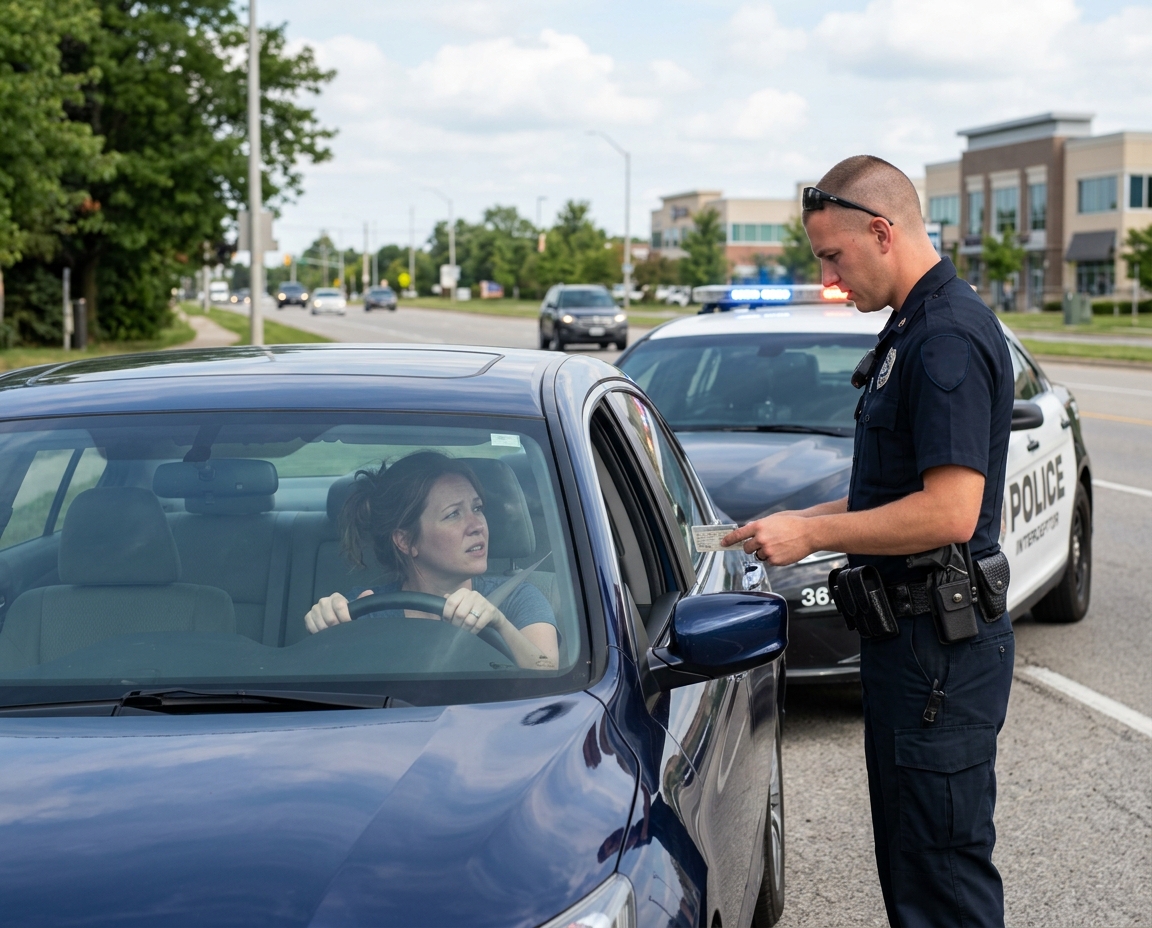
A California driver’s license does not always provide unrestricted driving privileges. When the Department of Motor Vehicles (DMV) issues a restricted driver’s license, the driver must comply with the conditions attached to that license. California Vehicle Code § 14603 makes it unlawful to operate a vehicle in violation of the restricted license provisions.
The key point is that California Vehicle Code § 14603 does not create one universal set of restrictions for every driver. The specific restrictions depend on the legal basis for the restricted license and the applicable California law or DMV action.
For example, certain DUI-related restricted licenses may allow a driver to travel to and from employment and a required DUI program. Other eligible drivers may obtain an ignition interlock device (IID) restriction that allows driving more broadly, provided the driver complies with the IID requirements.
Understanding the exact terms of a restricted license is therefore essential. Driving outside those terms can result in a violation of Vehicle Code § 14603 and may create additional DMV or court consequences depending on the circumstances.
This article explains California Vehicle Code § 14603, including what the law prohibits, common restricted-license conditions, potential penalties, DUI-related restrictions, IID requirements, and frequently asked questions.
What Is California Vehicle Code § 14603?
California Vehicle Code § 14603 states: “No person shall operate a vehicle of the provisions of a restricted license issued to him”.
In simple terms, if your California driver’s license is restricted, you must follow the conditions of that restriction when you drive.
For example, suppose a driver’s restricted license permits driving to and from employment and to and from a required DUI program. If that driver uses the vehicle for an unauthorized purpose, the conduct could potentially constitute a violation of the restricted license.
The exact legal analysis depends on the particular restriction and the circumstances of the alleged violation.
Why the Specific Restriction Matters
There is no single restricted-license arrangement that applies to everyone in California.
Depending on the circumstances, a restriction can affect:
- Where a person may drive
- Why a person may drive
- When a person may drive
- What vehicle the person may operate
- Whether an ignition interlock device is required
- Whether the driver must participate in a DUI program
- Whether proof of insurance must be maintained
- Other requirements established by the applicable licensing program
For that reason, two drivers who both describe their licenses as “restricted” may have very different driving privileges.
What Is a Restricted Driver’s License?
A restricted driver’s license is a driving privilege that allows a person to operate a vehicle subject to specific conditions.
It is different from an unrestricted driver’s license because the driver’s ability to operate a vehicle is limited by the terms of the restriction.
Some restricted licenses are connected to DUI-related suspensions. California DMV materials explain that certain eligible first-time DUI offenders, for example, may have the option of an employment/treatment-program restriction or an IID restriction, depending on the circumstances.
Other restricted-license programs apply in different situations, including certain insurance-related suspensions. The DMV states that a person whose license is suspended for certain insurance violations may be able to apply for a restricted license if the applicable requirements are satisfied.
The exact rules therefore depend on why the license was restricted and which statutory program applies.
What Are Common Restricted-License Conditions in California?
Restricted-license conditions vary. Some of the most important examples involve employment and DUI programs, ignition interlock devices, and insurance requirements.
Employment and DUI-Program Restrictions
Certain DUI-related restricted licenses limit driving to specific employment and treatment-program purposes.
For eligible drivers, the DMV describes an employment/treatment-program restriction that allows driving:
- To and from employment
- During the course of employment
- To and from the required DUI program
The length and eligibility requirements depend on the driver’s circumstances.
Example: A driver receives a restricted license allowing travel to and from work and to and from a required DUI program.
Driving from home to work may fall within the restriction. Traveling to the DUI program may also be permitted. However, an unrelated recreational trip may not be authorized under that particular restriction.
The driver’s actual restriction controls.
Ignition Interlock Device Restrictions
An ignition interlock device, commonly called an IID, is a device connected to a vehicle’s ignition system that requires the driver to provide a breath sample before starting the vehicle.
California’s statewide IID program provides for IID restrictions in specified DUI circumstances. Under the program, eligible drivers with an IID-restricted license may be permitted to drive at any time and to any location, as long as the vehicle being operated is equipped with the required IID and the driver satisfies the applicable requirements.
This is an important distinction.
A person with an employment/treatment-program restriction may have limited authorized driving purposes. A person with an IID restriction may have substantially broader driving privileges, depending on the applicable program and eligibility.
Insurance-Related Restrictions
California also provides restricted-license options for certain insurance-related suspensions.
The DMV explains that a person whose driving privilege is suspended under certain financial-responsibility provisions may be able to obtain a restricted license instead of serving the entire suspension without driving, provided the statutory requirements are met. The restriction generally remains in effect for the applicable suspension period, and required proof of insurance must be maintained.
This is another example of why the term “restricted license” does not automatically tell you what a driver may do.
What Does Vehicle Code § 14603 Prohibit?
Vehicle Code § 14603 prohibits operating a vehicle in violation of the conditions of a restricted license.
Depending on the restriction, potential violations can include:
- Driving for a purpose that is not authorized
- Operating a vehicle outside the permitted conditions
- Operating a vehicle that does not meet a required equipment condition
- Failing to comply with an applicable IID restriction
- Otherwise operating a vehicle contrary to the terms of the restricted license
The specific facts matter.
Example: Driving Outside an Employment Restriction
Suppose a person has a restricted license allowing the person to drive to and from work and to and from a DUI program.
The person decides to take the vehicle on an unrelated weekend trip.
If the trip falls outside the permitted terms of the license, the person could potentially be cited for violating the restriction.
Example: Operating a Vehicle Without a Required IID
Suppose a driver has an IID-restricted license.
The driver operates a vehicle that is not equipped with the required IID.
That conduct can raise a restricted-license issue and may also implicate other California laws governing IID requirements.
The precise consequences depend on the driver’s restriction and the applicable statutes.
Can a § 14603 Violation Affect Your Driving Privilege?
Potentially.
A restricted-license violation can be significant because the driver is already operating under a limited driving privilege. Depending on the underlying licensing action and the nature of the noncompliance, separate DMV consequences may arise.
For example, the DMV states that failure to comply with certain DUI-program requirements can result in suspension or revocation of the driving privilege for the remainder of the applicable period and until the required program documentation is provided.
IID-related noncompliance can also result in DMV action under the applicable program requirements.
Is Driving With a Restricted License the Same as Driving With a Suspended License?
No.
A suspended license generally means the person’s driving privilege has been suspended.
A restricted license allows the person to drive, but only under specified conditions.
However, the two concepts can overlap. A restricted license may be issued in connection with an underlying suspension or revocation.
The specific Vehicle Code section involved therefore matters.
Vehicle Code § 14603 addresses driving in violation of a restricted license. Other California statutes address driving while a person’s privilege is suspended or revoked under specified circumstances.
A person should therefore look at the exact statute listed on a citation or other legal document rather than assuming every restricted-license matter is the same as driving on a suspended license.
How Is Vehicle Code § 14603 Different From § 14601.2?
Vehicle Code § 14603 and § 14601.2 address different legal circumstances.
Section 14603 prohibits operating a vehicle in violation of the provisions of a restricted license.
Section 14601.2 addresses driving while a person’s driving privilege is suspended or revoked for specified DUI-related reasons and contains its own requirements and penalty provisions.
This distinction matters because the applicable statute can affect the legal requirements and potential consequences.
A person who receives a citation involving restricted driving should therefore determine which Vehicle Code section is actually alleged.
Can You Drive to Work With a Restricted License?
Some restricted licenses allow it, but not all.
For certain DUI-related restrictions, the DMV permits eligible drivers to drive to and from employment and during the course of employment, as well as to and from the required DUI program.
Other restricted-license programs can have different conditions.
For example, an IID-restricted license under the applicable statewide program may permit broader driving, including driving at any time and to any location, provided the driver complies with the IID requirements.
The answer therefore depends on the particular restricted license.
Can You Drive to the Grocery Store With a Restricted License?
There is no universal answer.
If the restriction is limited to employment and required DUI-program activities, a grocery-shopping trip may fall outside the authorized purposes.
If the driver has a qualifying IID restriction that permits broader driving, the answer may be different.
The important question is not simply whether the person has a restricted license. The question is what that specific restriction permits.
Can You Drive Anywhere With an IID-Restricted License?
Certain IID-restricted licenses can permit the driver to drive at any time and to any location, provided the vehicle is equipped with the required IID and the driver satisfies all applicable requirements. California DMV expressly describes this type of driving privilege under its statewide IID program.
However, eligibility for an IID restriction depends on the circumstances of the underlying DUI-related action.
The IID itself must also be properly maintained and serviced. California DMV states that IID-equipped vehicles generally must be calibrated and inspected by a certified installer at intervals not exceeding 60 days.
What Happens if You Do Not Maintain an Ignition Interlock Device?
IID compliance is an important part of maintaining an IID-restricted driving privilege.
California DMV requires IID participants to satisfy installation, servicing, and other compliance requirements. If an installer reports noncompliance, DMV may take action against the person’s driving privilege under the applicable program.
For example, DMV explains that an IID must generally be calibrated and inspected at intervals not exceeding 60 days. Failure to comply can result in a report to DMV and potential action against the driving privilege.
Drivers with IID restrictions should therefore understand that maintaining the device is not merely a technical requirement. It can be part of maintaining the legal ability to drive.
What Happens if You Fail to Complete a Required DUI Program?
For certain DUI-related restricted-license programs, participation in the required DUI treatment program is a condition of maintaining the driving privilege.
California DMV states that, in most cases, failure to comply with DUI-program requirements can result in suspension or revocation of the driving privilege for the remainder of the original suspension or revocation period and until the driver provides the required proof of completion.
The exact consequences depend on the applicable DUI and licensing provisions.
Can a Restricted License Be Revoked After a Violation?
Potentially, depending on the type of restricted license and the nature of the violation.
For example, DMV explains that failure to comply with certain DUI-program requirements can result in the suspension or revocation of the driving privilege. IID noncompliance can also result in DMV action under the applicable program.
The court and DMV can also have different roles in a driver’s case.
A court may handle a traffic or criminal matter, while DMV handles the person’s driving privilege and administrative licensing requirements.
What Does the DMV Have to Do With a Restricted License?
The California DMV administers California driving privileges and plays a central role in many restricted-license matters.
Depending on the circumstances, DMV may:
- Issue or record a driving restriction
- Process a suspension or revocation
- Require proof of insurance
- Require proof of enrollment in a DUI program
- Record an IID restriction
- Receive reports concerning IID compliance
- Take administrative action when applicable requirements are not satisfied
The DMV also distinguishes administrative license proceedings from criminal DUI proceedings. For example, DMV explains that an administrative hearing concerning an APS suspension addresses the person’s driving privilege and the circumstances surrounding the arrest, rather than determining criminal guilt or innocence.
This means a person can potentially have both a DMV matter and a court matter arising from related circumstances.
Those proceedings are not necessarily the same.
What Should You Do if You Receive a Citation for a Restricted-License Violation?
If you receive a citation alleging a violation of a restricted license, review the paperwork carefully.
Important information can include:
- The exact Vehicle Code section cited
- The date and location of the alleged violation
- The circumstances described by law enforcement
- The type of restricted license involved
- The conditions attached to the license
- The reason the license was restricted
- Any related DMV suspension or revocation
- Any court appearance requirement
Do not assume that the phrase “restricted license violation” tells you everything about the case.
The specific charge, the restriction, and the underlying licensing action can all matter.
Common Mistakes Drivers Should Avoid
Mistake #1: Assuming a restricted license is almost unrestricted
A restricted license is not simply a regular driver’s license with a minor limitation.
The restrictions can determine where, why, when, and how a person may drive.
Mistake #2: Assuming every personal trip is allowed
A restricted license limited to employment and DUI-program activities may not authorize unrelated personal driving.
Mistake #3: Assuming every restricted license has the same rules
California has multiple restricted-license programs with different eligibility requirements and conditions.
Mistake #4: Ignoring IID requirements
If an IID restriction applies, the driver must comply with the applicable installation, servicing, and monitoring requirements.
Mistake #5: Looking only at Vehicle Code § 14603
Section 14603 should be considered together with the laws that establish the particular restricted-license program and any other statutes that may apply.
Frequently Asked Questions About California Vehicle Code § 14603
What is California Vehicle Code 14603?
California Vehicle Code § 14603 prohibits a person from operating a vehicle in violation of the provisions of a restricted license.
Is violating a restricted license illegal in California?
Yes. Section 14603 prohibits operating a vehicle contrary to the conditions of a restricted license. The applicable consequences depend on the circumstances and any other laws that apply.
What is the penalty for VC 14603?
Section 14603 itself does not state a specific fine or jail sentence. Current California court schedules list § 14603 as a violation of license restrictions, with applicable base fines, assessments, and fees depending on the court and schedule.
Can I drive to work with a restricted license?
Some restricted licenses specifically permit driving to and from employment and during employment. Other restrictions have different conditions.
Can I drive for personal reasons with a restricted license?
Not necessarily. If the license is restricted to specific purposes, personal driving outside those purposes may violate the restriction.
Can I drive another person’s vehicle with a restricted license?
It depends on the applicable restriction. Some restrictions impose vehicle-specific requirements, particularly when an IID is required.
Can I drive anywhere with an IID-restricted license?
Certain eligible IID-restricted licenses can permit driving at any time and to any location as long as the required IID and other program requirements are satisfied.
What happens if I drive outside my restricted-license conditions?
Driving outside the conditions of a restricted license can potentially violate Vehicle Code § 14603. Depending on the circumstances, additional court or DMV consequences may apply.
Can a restricted license be taken away?
Potentially. Certain types of noncompliance can result in DMV suspension or revocation of the driving privilege. The applicable consequences depend on the restriction and the governing law.
Does a restricted license mean my suspension is over?
Not necessarily. A restricted license can provide limited driving privileges while restrictions associated with an underlying suspension or other licensing action remain in effect.
Key Takeaways
California Vehicle Code § 14603 is a straightforward statute, but its application depends heavily on the type of restricted license involved.
The most important points are:
- VC § 14603 prohibits driving in violation of the provisions of a restricted license.
- California does not have one universal set of restrictions for every restricted driver’s license.
- Some DUI-related restrictions limit driving to employment and required DUI-program activities.
- Certain IID-restricted licenses can permit substantially broader driving privileges when the applicable requirements are satisfied.
- Insurance-related restrictions can have separate requirements.
- The exact terms of the driver’s restriction are critical.
- Current California court schedules list § 14603 as a violation of license restrictions and apply the applicable base fine and assessments.
- Other Vehicle Code provisions may apply depending on the underlying suspension, revocation, or circumstances.
- A restricted-license matter can involve both DMV and court proceedings.
- IID and DUI-program compliance can affect the continuation of a restricted driving privilege.
Because California’s restricted-license laws vary depending on the underlying circumstances, understanding the specific restriction is essential before determining whether particular driving activity is permitted.
Contact Southwest Legal
Need Guidance About a California Restricted License Violation?
If you are dealing with California Vehicle Code § 14603, a restricted driver’s license, an alleged violation of your driving restrictions, or questions about the consequences of restricted driving, getting guidance about the specific circumstances can help you understand the issues involved.
Southwest Legal can help you better understand the legal process and the issues that may affect your driving privileges.
Contact us today for a free consultation to discuss your situation and learn more about your legal options.
Disclaimer: This article is for general informational purposes only and does not constitute legal advice or create an attorney-client relationship. No attorney-client relationship is formed unless and until the firm and client enter into an agreement for legal services. Laws may change, and legal outcomes depend on the specific facts of each case. Consult a qualified attorney for advice regarding your situation.