


California Penal Code § 602 covers a broad range of conduct that may constitute criminal trespassing. Although people often think of trespassing as simply entering someone else’s property without permission, California law recognizes many different forms of trespass.
Depending on the circumstances, a trespassing allegation may involve entering private property, remaining on property after being asked to leave, occupying property without consent, entering certain posted or fenced land, interfering with a lawful business, or entering restricted areas.
The specific subsection of Penal Code § 602 matters because the legal requirements can differ substantially from one type of trespass to another.
This guide explains California Penal Code § 602, California trespassing laws, potential penalties, common defenses, and frequently asked questions.
What Is California Penal Code § 602?
California Penal Code § 602 identifies numerous circumstances in which a person may be guilty of criminal trespass.
The statute generally applies when a person willfully engages in one of the prohibited acts described in the law. These acts involve different types of property and different circumstances, so there is no single set of elements that applies to every Penal Code § 602 case.
Some forms of trespass involve:
- Entering property without the required permission.
- Entering or occupying certain land or structures.
- Remaining on property after being lawfully directed to leave.
- Entering certain posted, fenced, or cultivated property.
- Entering property with an intent to interfere with or damage a lawful business.
- Entering or remaining in certain restricted public or transportation facilities.
- Entering certain areas of hospitals or other specially protected locations.
- Engaging in other conduct specifically identified in the statute.
Because the statute contains numerous subdivisions, it is important to determine which subsection of Penal Code § 602 is alleged rather than assuming that every trespassing case is treated the same way.
Is Trespassing a Crime in California?
Yes. Certain conduct described in Penal Code § 602 is criminal trespass.
The statute generally classifies violations as misdemeanors unless a particular subdivision or another applicable law provides otherwise.
A misdemeanor conviction can have consequences beyond jail or a fine. Depending on the circumstances, a criminal case may affect employment, housing, professional opportunities, immigration matters, or other areas of a person’s life.
The potential consequences depend on the particular charge, the person’s circumstances, and the applicable sentencing laws.
What Are the Most Common Types of Trespassing Under Penal Code § 602?
California Penal Code § 602 contains numerous subdivisions. Some of the provisions that commonly arise in discussions of California trespassing law include subsections (k), (l), (m), and (o).
Penal Code § 602(k): Trespass to Interfere With a Business
Penal Code § 602(k) addresses certain situations in which a person willfully enters land or a building belonging to someone else with the required intent to damage property or to interfere with, obstruct, or damage a lawful business or occupation.
Importantly, this provision is not simply a rule against being on private property.
The person’s intent when entering the property can be an important part of the offense. The conduct must also satisfy the other requirements of the statute.
For example, imagine that a person intentionally enters private business property intending to disrupt the business and actually interferes with its operations. Depending on the facts, the conduct could potentially fall within § 602(k).
By contrast, someone who accidentally walks onto property without realizing where the property boundary is may present a very different legal situation.
Penal Code § 602(l): Trespass on Certain Cultivated or Posted Land
Penal Code § 602(l) addresses specific forms of entry onto certain cultivated, fenced, uncultivated, or unenclosed property.
The statute contains detailed requirements concerning circumstances such as:
- Whether the land is cultivated or fenced.
- Whether required trespass signs are posted.
- Whether the person had written permission.
- Whether the person was asked to leave.
- Whether a gate or lock was damaged or tampered with.
- Whether a trespass or hunting sign was damaged or removed.
- Whether a firearm was discharged in circumstances covered by the statute.
This illustrates why it can be misleading to say that every person who walks onto private land has automatically committed criminal trespass.
The particular type of property and the circumstances of entry can matter.
Penal Code § 602(m): Unlawfully Entering and Occupying Property
Penal Code § 602(m) addresses entering and occupying land or a building belonging to someone else without the required consent.
This provision is different from a situation in which someone briefly crosses property or accidentally enters an area.
For a § 602(m) prosecution, the applicable legal requirements include willfully entering property belonging to someone else without the required consent, occupying the property without that consent, and continuously occupying some portion of it until removed.
For example, suppose a person knowingly enters a building belonging to another person without permission and then establishes themselves inside the building. The circumstances could potentially raise a § 602(m) issue.
The fact that a property appears vacant or unused does not automatically mean that someone has permission to enter and occupy it.
Penal Code § 602(o): Refusing or Failing to Leave Property
Another important provision concerns refusing or failing to leave certain private property after being asked to leave.
This provision applies under specific statutory circumstances. Among other things, the property generally must not be open to the public, and the request to leave must come from a person authorized under the statute or occur through the procedure specified by law.
For example, consider a person who enters a private business area that is not open to the public. If the person lawfully in control of the property tells the individual to leave and the individual refuses, the circumstances may potentially support a trespass allegation under § 602(o).
However, whether a violation occurred depends on the facts and whether all requirements of the particular subsection have been satisfied.
Does Entering Private Property Automatically Mean You Are Trespassing?
No.
California trespass law is more nuanced than simply saying, “You were on private property, so you committed a crime.”
The applicable statute may require particular circumstances involving:
- Consent or lack of consent.
- Notice that entry was prohibited.
- A request to leave.
- The type of property involved.
- The person’s purpose or intent.
- Occupation of the property.
- Interference with a business.
- Posted signs or fencing.
- Other conduct specifically identified by the statute.
For example, a homeowner may invite a guest onto private property. The guest’s presence is initially authorized.
If the homeowner later revokes permission and asks the guest to leave, the circumstances may change. Whether criminal trespass has occurred will depend on the applicable statutory provision and the facts.
What Does “Willfully” Mean in a California Trespass Case?
Several Penal Code § 602 provisions use the term “willfully.”
In this context, an act generally is considered willful when it is done willingly or intentionally. It does not necessarily mean that the person knew the conduct was illegal.
That distinction can be important.
For example, a person who accidentally crosses a property boundary while hiking may have a different legal situation from someone who knowingly enters an area after seeing signs clearly prohibiting entry.
The mental-state requirement can vary depending on the particular subdivision being charged. Some forms of trespass also require proof of a specific purpose or intent.
What Does the Prosecution Have to Prove for Trespassing?
There is no universal list of elements for every Penal Code § 602 charge because the statute describes many different offenses.
For example, a § 602(m) case generally requires proof that:
- The defendant willfully entered land or a building belonging to someone else.
- The defendant entered without the required consent.
- After entering, the defendant occupied the land or building without the required consent.
- The defendant continuously occupied some portion of the property until being removed.
A § 602(k) case involves different requirements, including the person’s intent when entering and the alleged interference, obstruction, or damage.
This is why identifying the exact Penal Code § 602 subsection is an important first step in understanding a trespassing charge.
What Are the Penalties for Trespassing in California?
Many violations of Penal Code § 602 are misdemeanors.
California’s general misdemeanor sentencing provision provides that when a misdemeanor does not have a different punishment specifically prescribed, it may be punishable by up to six months in county jail, a fine of up to $1,000, or both.
However, it is important not to assume that every § 602 offense has precisely the same punishment.
Penal Code § 602 contains exceptions and special penalty provisions for certain types of trespass. Other criminal laws may also apply depending on what allegedly occurred.
For example, conduct involving property damage, theft, threats, burglary, or other criminal activity could potentially result in charges separate from trespassing.
The actual consequences of a conviction depend on the charge, the facts, the defendant’s criminal history, and applicable sentencing laws.
Is Trespassing a Felony in California?
A standard violation of many Penal Code § 602 provisions is a misdemeanor. However, saying that “trespassing is always a misdemeanor” would be too broad.
The statute itself contains exceptions and special provisions, and conduct that occurs during a trespassing incident may also lead to separate criminal charges.
For example, a person accused of unlawfully entering a building with the intent to commit a theft or another felony could potentially face a burglary charge rather than merely a trespass charge.
Therefore, the classification of an alleged offense should be evaluated based on the specific statute and facts rather than the general label of “trespassing.”
What Is the Difference Between Trespassing and Burglary?
Trespassing and burglary are different crimes under California law.
Trespass generally concerns conduct specifically prohibited by Penal Code § 602, such as certain unauthorized entries, occupations, or refusals to leave.
Burglary generally involves entering a specified structure, room, or other location with the required intent to commit theft or another felony.
Consider two examples.
Example 1: Possible Trespassing
A person enters private property without the required permission and remains there after being lawfully instructed to leave. Depending on the circumstances, the conduct may support a trespass allegation.
Example 2: Possible Burglary
A person enters a business after hours intending to steal merchandise. The alleged intent to commit theft can create a burglary issue in addition to any trespass concerns.
Burglary can carry significantly more serious consequences than a misdemeanor trespass offense.
Can You Be Charged With Trespassing on Abandoned Property?
Potentially.
A property that looks abandoned is not necessarily legally abandoned. A building may appear vacant while still belonging to an individual, business, trust, government entity, or other legal owner or being lawfully possessed by someone.
Penal Code § 602(m), for example, specifically addresses entering and occupying property without the required consent.
Therefore, a person should not assume that an empty building or unused property is automatically available for entry or occupation.
Example
Imagine an empty commercial building that has been closed for several months. Someone enters through an unlocked door and begins staying inside.
The lack of visible activity does not by itself establish that the person had permission to enter or occupy the building. Depending on the facts, criminal trespass and potentially other legal issues could arise.
Can You Be Charged With Trespassing After Being Asked to Leave?
Yes, under circumstances covered by the applicable law.
Some California trespass provisions specifically address refusing or failing to leave property after a qualifying request.
However, the details matter.
Questions can include:
- Was the property open to the public?
- Who asked the person to leave?
- Was that person authorized to make the request?
- Was the request communicated clearly?
- Did the person actually refuse or fail to leave?
- Which Penal Code § 602 subdivision applies?
For example, a customer inside a store during normal business hours is initially present in a location generally open to the public. If management later lawfully revokes the person’s permission to remain and directs the person to leave, continuing to remain can create a different legal situation.
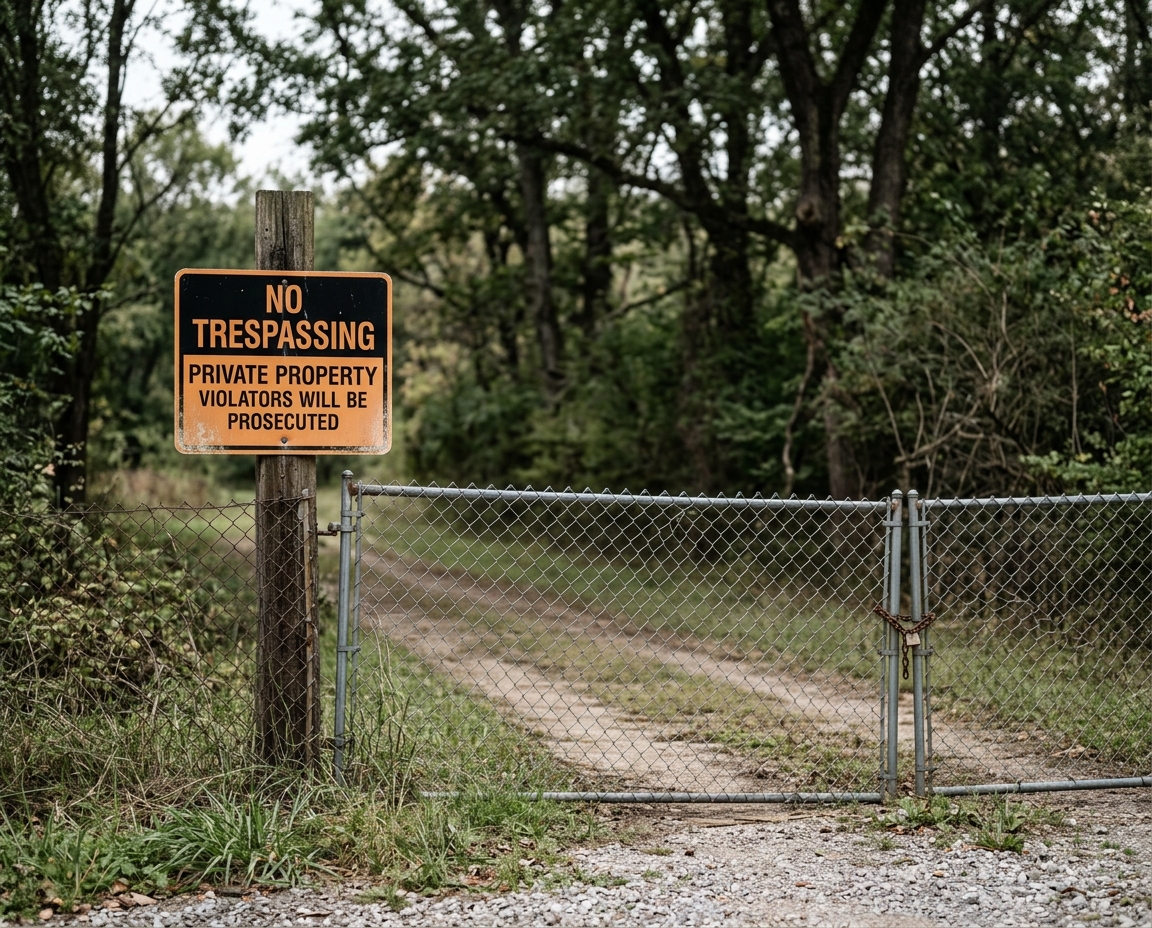
Do “No Trespassing” Signs Matter?
They can, but a sign does not automatically answer every trespass question.
Certain Penal Code § 602 provisions specifically address posted property and establish requirements concerning signs and their placement.
Other forms of trespass do not necessarily depend on a “No Trespassing” sign.
For example, a provision involving a person’s intent to interfere with a lawful business has different requirements from a provision involving posted land.
The absence of a sign therefore does not necessarily mean that a person has permission to enter, just as the presence of a sign does not by itself establish every element of every possible trespass offense.
Can You Trespass on Public Property?
Yes, under certain circumstances.
Government ownership does not mean that every area of public property is accessible to everyone at every time.
Penal Code § 602 includes provisions concerning certain public buildings, transportation facilities, airport areas, and other restricted locations.
For example, certain conduct involving a public-agency building when it is closed to the public may fall within a specific trespass provision if the statutory requirements are met.
Similarly, certain restricted areas of transportation facilities are subject to specialized trespass rules.
Whether conduct on public property constitutes criminal trespass therefore depends on the location, the circumstances, and the particular statutory provision involved.
Can Protesters Be Charged With Trespassing?
Potentially, but these situations can involve additional constitutional considerations.
The First Amendment protects certain forms of speech and expressive activity, but that protection does not automatically create a right to enter or remain on every piece of private property.
At the same time, trespass laws must be applied consistently with applicable constitutional protections.
Cases involving protests, demonstrations, labor activity, political expression, or other protected conduct can therefore require careful examination of both the trespass statute and constitutional law.
The specific location and circumstances can be especially important.
What Are Common Defenses to a Trespassing Charge?
Potential defenses depend on the exact subdivision charged and the evidence in the case.
Lack of Required Intent
Some forms of trespass require proof of a particular intent.
If the prosecution cannot establish the required mental state, that may become an important issue.
An accidental entry can be legally different from knowingly entering property for a prohibited purpose.
Consent or Permission
Consent can be significant when the applicable offense requires proof that the person lacked permission.
Questions may include:
- Who gave permission?
- Was that person authorized to give it?
- What exactly was the person permitted to do?
- Was permission later withdrawn?
- Was the defendant aware that permission had been withdrawn?
Insufficient Notice
Certain trespass provisions involve signs, fencing, requests to leave, or other forms of notice.
If the particular offense requires specific notice, whether the statutory requirements were satisfied may be relevant.
Mistaken Location or Boundary
A person may argue that an entry was accidental or that they did not knowingly enter the prohibited property.
Whether such an argument matters depends on the specific offense and its required mental state.
Lawful Right to Be Present
In some circumstances, a person may have a legal right or privilege to enter or remain on property.
This can become particularly important in disputes involving tenants, former tenants, employees, guests, family members, contractors, or other people who may have some legal relationship to the property.
Constitutional Issues
Certain cases can raise constitutional questions, particularly when the alleged conduct involves speech, protest, or other protected activity.
These issues are highly fact-specific.
Can a Tenant Be Charged With Trespassing?
It depends on the circumstances.
A landlord-tenant dispute is not necessarily the same as a straightforward trespassing case involving a stranger entering private property.
Tenants and other lawful occupants can have legal rights relating to possession and access. Similarly, former tenants, roommates, guests, and other occupants may have different legal rights depending on the circumstances.
If a trespass allegation arises from a housing or possession dispute, the underlying relationship between the people involved may be important to the legal analysis.
Can You Be Arrested for Trespassing in California?
An arrest can occur in some trespassing situations, depending on the circumstances and applicable law.
However, an arrest is not the same thing as a conviction.
A person accused of trespassing remains entitled to the protections provided by California and federal law, including the prosecution’s obligation to prove the charged offense beyond a reasonable doubt.
The precise circumstances of the encounter, the evidence available, and the specific offense alleged can all affect what happens after an arrest or citation.
What Should You Do If You Are Accused of Trespassing?
If you are facing a trespassing allegation, it can be helpful to preserve documents and information relating to the incident.
Depending on the circumstances, potentially relevant information may include:
- The citation, summons, or charging document.
- Photographs of signs, fences, gates, or property boundaries.
- Text messages or emails concerning permission to enter.
- Communications with the property owner or occupant.
- Names and contact information for potential witnesses.
- Information about when you entered the property.
- Information about why you were there.
- Details concerning any request that you leave.
- Photos or videos relating to the incident.
Avoid assuming that every trespassing case is governed by the same rules. The specific Penal Code § 602 subdivision listed in a citation or charging document can be particularly important.
Frequently Asked Questions
Is Penal Code § 602 a misdemeanor?
Many violations of Penal Code § 602 are misdemeanors, but the statute contains exceptions and special provisions. The classification should be determined by looking at the specific subdivision and applicable law.
What is the maximum jail sentence for misdemeanor trespassing?
When California’s general misdemeanor penalty applies and no different punishment is prescribed, a misdemeanor can carry up to six months in county jail and/or a fine of up to $1,000. The actual sentence in an individual case can be different and depends on the applicable law and circumstances.
Can you be charged with trespassing without a “No Trespassing” sign?
Yes, depending on the specific form of trespass alleged. Some provisions involve posted property, while other provisions have different requirements.
Is accidentally walking onto someone’s property trespassing?
Not necessarily. The answer depends on the specific offense, including its required mental state and the circumstances surrounding the entry.
Can someone be trespassing if they were initially invited onto the property?
Potentially. If permission is lawfully withdrawn and the person is required to leave, the circumstances can change. Whether remaining on the property constitutes criminal trespass depends on the applicable statute and facts.
Can you trespass on an empty or abandoned-looking property?
Potentially. A property appearing vacant does not necessarily mean that it has no owner or lawful possessor or that entry is permitted.
Is trespassing the same as burglary?
No. Trespassing and burglary are separate offenses with different legal elements. Burglary generally involves an additional intent to commit theft or another felony when entering a specified location.
Can trespassing charges be dismissed?
A particular case may be resolved in many different ways, including dismissal in some circumstances, but no particular outcome should be assumed. The available evidence, legal issues, procedural history, and circumstances of the case all matter.
Key Takeaways
California Penal Code § 602 is a broad statute that covers many different types of criminal trespass.
The most important points are:
- California recognizes multiple forms of criminal trespass.
- Penal Code § 602 contains numerous subdivisions with different requirements.
- Many § 602 offenses are misdemeanors, but the statute includes exceptions and specialized provisions.
- Consent and permission can be important depending on the offense.
- Some trespass offenses involve posted or fenced property.
- Some offenses involve refusing or failing to leave after a qualifying request.
- Some offenses involve occupying property without consent.
- Certain offenses require proof of a specific purpose or intent.
- A property that appears abandoned is not necessarily free to enter or occupy.
- Trespassing is different from burglary.
- Conduct involving damage, theft, threats, or other crimes may result in additional charges.
- Constitutional considerations can arise in cases involving protected speech or expressive activity.
- The exact Penal Code § 602 subdivision is essential to understanding the allegations.
Contact Southwest Legal
Understanding Your Rights After a California Trespassing Allegation
A trespassing allegation can appear simple at first, but California Penal Code § 602 covers a wide range of situations. Questions about permission, property ownership or possession, notice, intent, requests to leave, and the exact type of property involved can all affect the legal analysis.
If you have received a citation, been arrested, or are being investigated for an alleged violation of California Penal Code § 602, understanding the specific accusation is an important first step.
Southwest Legal is ready to help you understand what the charge means, what legal issues may be involved, and what steps may be available to you. Don’t leave important questions about your future unanswered. Contact us today for a free consultation and take the next step toward understanding your legal situation with greater clarity and confidence.
Disclaimer: This article is for general informational purposes only and does not constitute legal advice or create an attorney-client relationship. No attorney-client relationship is formed unless and until the firm and client enter into an agreement for legal services. Laws may change, and legal outcomes depend on the specific facts of each case. Consult a qualified attorney for advice regarding your situation.