


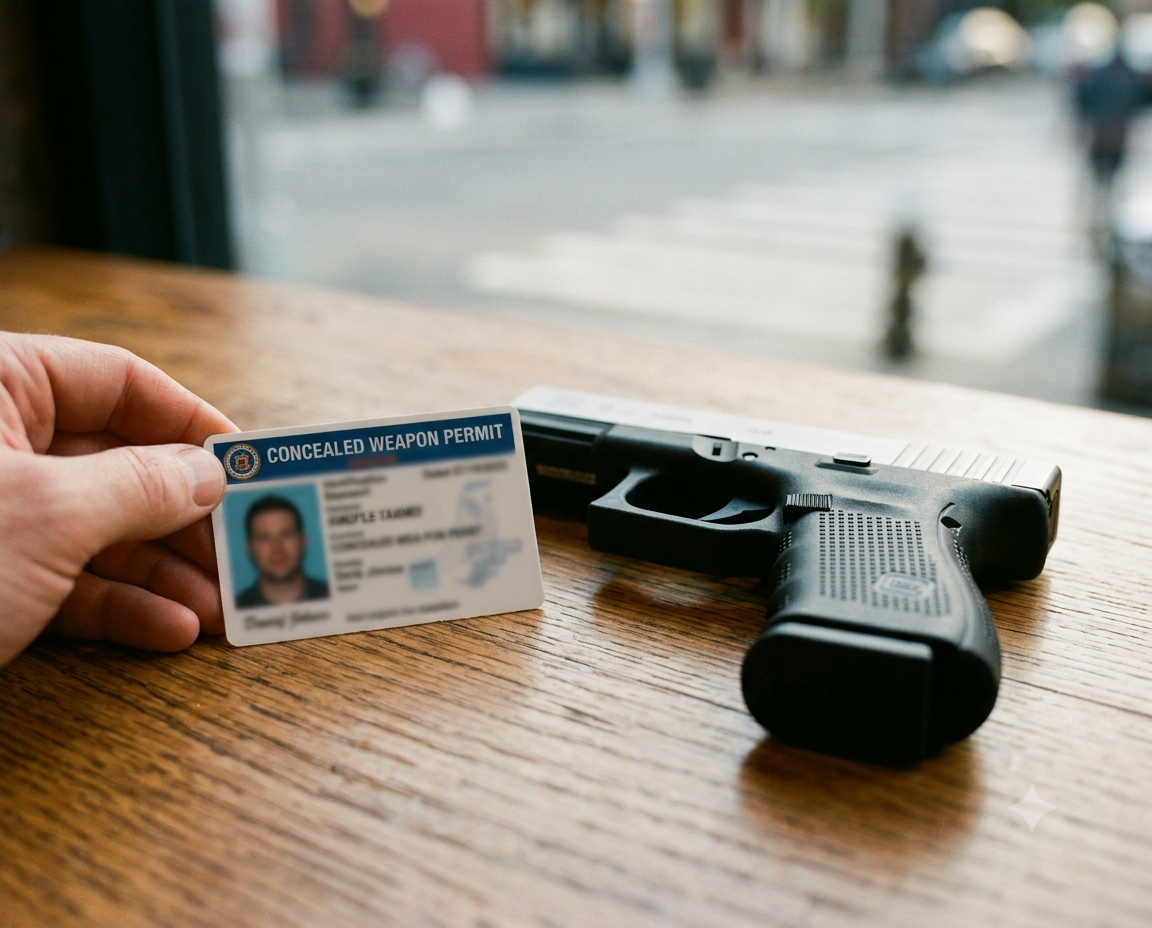
Carrying a concealed firearm in California is generally prohibited unless a person qualifies for a valid Concealed Carry Weapon (CCW) license issued by the appropriate local licensing authority. The legal authority for issuing these permits primarily comes from California Penal Code Sections 26150 and 26155.
While California has modified its concealed carry laws over the years—particularly following significant court decisions—these statutes continue to govern which local officials may issue permits and how the licensing process works.
Whether you’re applying for your first CCW permit, renewing an existing license, or simply trying to understand California firearm laws, knowing how these statutes operate can help you avoid costly mistakes.
What Are California Penal Code 26150 and 26155?
California Penal Code Sections 26150 and 26155 establish the authority for local officials to issue licenses allowing qualified individuals to carry a concealed handgun.
Generally speaking:
- Penal Code 26150 applies to county sheriffs.
- Penal Code 26155 applies to chiefs of municipal police departments.
Although the statutes designate different issuing authorities, the eligibility requirements and application standards are largely similar.
These laws work together with other California firearm statutes governing licensing, training requirements, prohibited persons, and permit restrictions.
What Is a CCW Permit?
A Concealed Carry Weapon (CCW) permit allows an eligible individual to legally carry a concealed handgun in public, subject to California law and any conditions attached to the license.
A CCW permit does not grant unlimited firearm rights.
Permit holders must still comply with:
- Restricted locations where firearms are prohibited
- California firearm transportation laws
- Permit conditions
- State and federal firearm regulations
- Renewal requirements
Violating permit conditions may result in suspension or revocation of the license.
Who Issues a California CCW Permit?
Depending on where you live, your application may be handled by:
- Your county sheriff
- Your city’s chief of police
The issuing agency generally depends on your place of residence.
Applicants typically submit their paperwork to the licensing authority serving their jurisdiction.
Who Can Apply for a California CCW Permit?
Applicants generally must satisfy several eligibility requirements before receiving a license.
Common qualifications include:
- Being at least 21 years old
- Being a California resident or otherwise meeting residency requirements
- Successfully completing required firearm training
- Passing a comprehensive background investigation
- Being legally eligible to possess firearms under state and federal law
- Demonstrating good moral character as required by California law
The licensing authority reviews each application individually.
Is California a “Shall-Issue” State?
California law has evolved significantly in recent years.
Historically, applicants often had to demonstrate “good cause” to receive a permit. Following important legal developments, California’s permitting process changed, and applicants are no longer generally required to show a special need for self-defense beyond the standard application requirements.
However, applicants must still satisfy all statutory qualifications and complete the required review process before a permit may be issued.
What Is the CCW Application Process?
Although procedures may vary slightly between jurisdictions, the application process generally includes several steps.
1. Complete the Application
Applicants submit a standardized California CCW application to the appropriate licensing authority.
The application requests information such as:
- Personal identification
- Residence history
- Employment information
- Criminal history
- Firearm information
Providing false information can result in denial and may expose an applicant to criminal penalties.
2. Background Investigation
California conducts extensive background checks before issuing a CCW permit.
The investigation may include review of:
- Criminal records
- Mental health disqualifications
- Protective orders
- Firearm eligibility databases
- Prior arrests
- Character references
- Local law enforcement records
Not every arrest results in a denial, but the licensing authority evaluates the applicant’s overall eligibility under applicable law.
3. Fingerprinting
Applicants generally complete Live Scan fingerprinting.
The fingerprints are submitted for review through state and federal databases.
4. Firearms Training
Applicants must complete approved firearms safety training.
Training often includes:
- Safe firearm handling
- California firearm laws
- Storage requirements
- Range qualification
- Legal responsibilities of carrying a concealed firearm
- Conflict avoidance
- Safe transportation
Renewal applicants may also be required to complete additional training.
5. Agency Review
The licensing authority evaluates:
- Eligibility
- Background investigation
- Training completion
- Firearm qualification
- Character considerations
If approved, the agency issues the CCW permit.
How Long Does It Take to Receive a CCW Permit?
Processing times vary considerably depending on:
- County workload
- Background investigation length
- Appointment availability
- Fingerprint processing
- Application volume
Some jurisdictions complete applications relatively quickly, while others may require several months.
How Long Is a California CCW Permit Valid?
Most California CCW permits remain valid for two years, although different renewal periods may apply in certain situations.
Permit holders should begin the renewal process before expiration to avoid lapses in licensing.
Can a CCW Application Be Denied?
Yes.
A licensing authority may deny an application if an applicant fails to meet legal requirements.
Possible reasons include:
- Disqualifying criminal convictions
- Domestic violence prohibitions
- Mental health disqualifications
- False statements on the application
- Failure to complete training
- Firearm possession prohibitions
- Failure to satisfy statutory eligibility standards
Each denial depends on the specific facts of the individual application.
Can a Felon Obtain a California CCW Permit?
Generally, no.
Individuals convicted of felony offenses are typically prohibited from possessing firearms under both California and federal law.
Because firearm possession itself is prohibited, a CCW permit generally cannot be issued unless firearm rights have been lawfully restored.
Can Certain Misdemeanors Affect a CCW Application?
Yes.
Some misdemeanor convictions may prevent firearm ownership or negatively affect eligibility.
Examples may include offenses involving:
- Domestic violence
- Firearm misuse
- Certain violent crimes
- Protective order violations
Not every misdemeanor results in automatic disqualification, but each application is reviewed individually.
Does a CCW Permit Allow Carry Everywhere?
No.
Even with a valid permit, California law restricts firearms in numerous locations.
Restricted places may include:
- Certain government buildings
- Secure airport areas
- Courthouses
- Some schools and educational facilities
- Certain public meetings
- Other locations restricted by state or federal law
Permit holders should understand where carrying remains prohibited.
Can a CCW Permit Be Revoked?
Yes.
A permit may be suspended or revoked if the holder:
- Becomes legally prohibited from possessing firearms
- Violates permit conditions
- Is convicted of certain offenses
- Provides false information
- Fails to comply with applicable laws
Losing eligibility under California or federal firearm laws may also affect permit status.
What Happens If You Carry a Concealed Firearm Without a Permit?
California generally prohibits carrying a concealed handgun without lawful authorization.
Depending on the circumstances, violations may result in:
- Criminal charges
- Jail time
- Fines
- Probation
- Loss of firearm rights
- Firearm confiscation
The severity of penalties depends on numerous factors, including criminal history and the facts of the case.
Frequently Asked Questions
Do I need a reason to apply for a CCW permit?
Current California law no longer generally requires applicants to demonstrate a unique need for self-defense beyond meeting the statutory qualifications and licensing requirements.
Can non-residents obtain a California CCW permit?
California generally requires applicants to meet residency or qualifying employment requirements established under state law. Eligibility depends on the circumstances and the issuing authority.
Does a CCW permit allow open carry?
No. A concealed carry permit authorizes concealed carry under applicable law. California maintains separate rules regarding openly carrying firearms.
Can my permit be recognized in other states?
California’s permit may not be recognized by every state. Reciprocity laws vary widely, and travelers should review the laws of any state they plan to visit before carrying a firearm.
Can I carry any handgun?
A California CCW permit typically applies only to handguns that have been properly listed or otherwise authorized under the terms of the permit. Permit holders should verify which firearms are covered by their license.
Do I need training before renewal?
Yes. Renewal generally requires additional approved firearms training and compliance with the applicable renewal procedures.
Can my employer prohibit firearms at work?
In many situations, yes. Employers may establish workplace policies regarding firearms on company property, subject to applicable laws.
Why Understanding California CCW Laws Matters
California firearm laws are complex and continue to evolve through legislation and court decisions. Even individuals who lawfully possess firearms can encounter legal issues if they misunderstand permit requirements, prohibited locations, renewal obligations, or eligibility standards.
Remaining informed about California Penal Code Sections 26150 and 26155 can help applicants navigate the licensing process more effectively and understand the responsibilities that accompany a concealed carry permit.
Because every person’s circumstances are different, legal questions involving firearm rights, permit denials, criminal charges, or license revocations often require careful review of the specific facts and applicable law.
Contact Southwest Legal
If you are facing firearm-related criminal charges or have questions about your rights under California firearm laws, the experienced criminal defense attorneys at Southwest Legal can help.
Southwest Legal provides personalized legal guidance, evaluates the details of your case, explains your available options, and works to protect your rights. Contact us today for a free consultation and learn how our team can help you navigate your firearm-related legal matter.
Disclaimer: This article is for general informational purposes only and does not constitute legal advice or create an attorney-client relationship. No attorney-client relationship is formed unless and until the firm and client enter into an agreement for legal services. Laws may change, and legal outcomes depend on the specific facts of each case. Consult a qualified attorney for advice regarding your situation.