


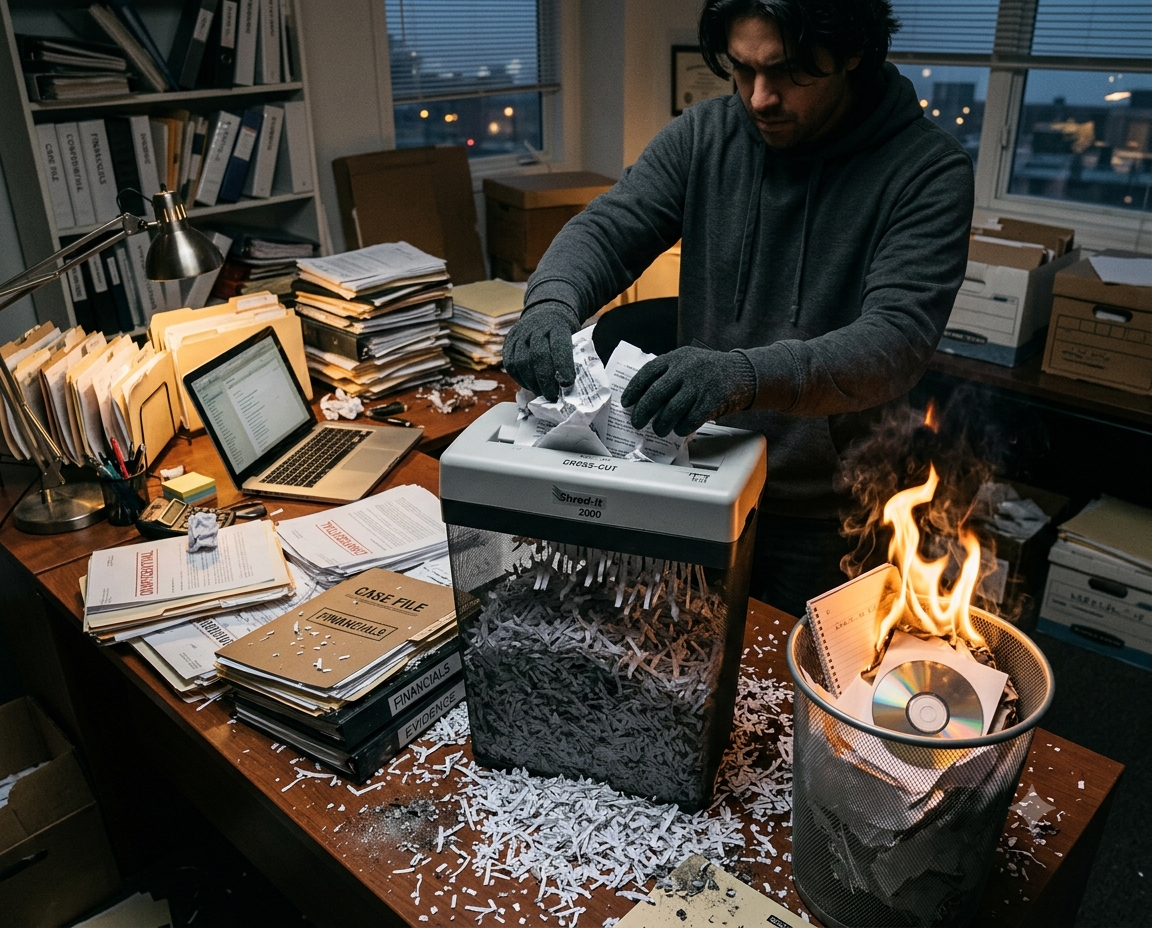
The destruction of evidence is a serious legal issue that can significantly impact criminal and civil cases. Whether it happens intentionally or accidentally, the loss, alteration, or hiding of evidence can lead to severe penalties, including criminal charges, fines, and even imprisonment.
In today’s digital and highly regulated legal environment, courts rely heavily on evidence to determine the truth. When evidence is destroyed or tampered with, it threatens the integrity of the justice system itself. This article explains everything you need to know about destruction of evidence, including its legal definition, examples, penalties, defenses, and real-world implications.
What Is Destruction of Evidence?
Destruction of evidence refers to any act that involves:
- Destroying physical or digital evidence
- Altering or tampering with evidence
- Hiding or concealing evidence
- Making evidence unavailable to investigators or courts
It can occur in both criminal and civil cases, and it is considered a form of obstruction of justice in many jurisdictions.
In simple terms, it means interfering with anything that could be used in a legal proceeding to prove or disprove a fact.
Legal Definition (General Understanding)
While laws vary by country and state, destruction of evidence is generally defined as: Any intentional act to destroy, conceal, or alter evidence with the purpose of affecing an investigation, trial, or legal proceeding.
In many legal systems, it falls under broader categories such as:
- Obstruction of justice
- Tampering with evidence
- Spoliation of evidence (civil context)
Common Examples of Destruction of Evidence
Understanding real-world scenarios helps clarify how this crime occurs. Common examples include:
1. Deleting Digital Evidence
- Deleting emails, text messages, or chat logs
- Wiping computer hard drives or phones
- Erasing surveillance footage
2. Physical Evidence Destruction
- Burning documents related to a case
- Breaking or disposing of weapons used in a crime
- Destroying financial records
3. Tampering with Evidence
- Altering documents to change dates or content
- Modifying photographs or videos
- Contaminating crime scenes
4. Concealment
- Hiding relevant objects or records from investigators
- Moving evidence to another location
- Refusing to disclose required documents
Why Destruction of Evidence Is a Serious Crime
The legal system depends on evidence to determine truth. When evidence is destroyed, it can:
- Mislead investigations
- Result in wrongful convictions or acquittals
- Delay justice
- Undermine public trust in the legal system
Courts treat these actions seriously because they interfere directly with justice itself.
Criminal vs. Civil Consequences
Criminal Cases
In criminal law, destruction of evidence is often charged as:
- Obstruction of justice
- Tampering with physical evidence
- Perverting the course of justice (in some countries)
Possible penalties include:
- Jail or prison time
- Heavy fines
- Probation
- Additional criminal charges on top of the original offense
Civil Cases (Spoliation of Evidence)
In civil litigation, destruction of evidence is often referred to as spoliation.
Consequences may include:
- Monetary sanctions
- Court penalties
- Dismissal of claims or defenses
- Adverse inference rulings (court assumes destroyed evidence was unfavorable)
For example, if a company deletes safety records in a personal injury lawsuit, the court may assume those records would have proven negligence.
Intent Matters: Accidental vs. Intentional Destruction
Courts usually distinguish between:
1. Intentional destruction
This is the most serious form and involves knowingly destroying evidence to affect a case outcome.
2. Negligent destruction
This occurs when evidence is lost due to carelessness or poor record-keeping.
3. Routine destruction policies
Some businesses have document retention policies. However, if evidence is destroyed after a legal hold is issued, it may still be illegal.
Legal Duty to Preserve Evidence
Once a person or organization reasonably anticipates litigation, they may have a legal duty to preserve evidence. This is known as a “litigation hold.”
Failure to preserve evidence after this duty arises can lead to:
- Court sanctions
- Adverse judgments
- Additional liability
This applies to individuals, corporations, and government entities.
Digital Age and Evidence Destruction
With the rise of technology, destruction of evidence now frequently involves digital data:
Examples include:
- Auto-deleting messaging apps
- Encrypted file deletion
- Cloud data manipulation
- Social media content removal
Courts increasingly use forensic tools to recover deleted data, meaning destruction does not always guarantee the evidence is gone permanently.
Defenses Against Destruction of Evidence Allegations
Common legal defenses include:
1. Lack of intent
The accused did not intentionally destroy evidence.
2. No duty to preserve
The evidence was destroyed before any legal obligation existed.
3. Routine business practice
Evidence was destroyed under a standard retention policy before litigation was anticipated.
4. Evidence not relevant
The destroyed material was not related to the legal matter.
Real-World Examples
- A company deleting internal emails after receiving notice of a lawsuit
- A suspect discarding a phone containing incriminating messages
- A business shredding financial records during an audit investigation
- A person erasing security camera footage after an incident
Each of these scenarios may lead to serious legal consequences depending on intent and timing.
How Courts Respond to Destroyed Evidence
Courts have several options when evidence is destroyed:
- Issue fines or sanctions
- Allow juries to assume the evidence was harmful to the destroying party
- Dismiss claims or defenses
- Refer the matter for criminal investigation
This ensures that parties cannot benefit from destroying evidence.
How to Avoid Legal Trouble
To avoid accusations of destruction of evidence:
- Preserve all relevant documents when litigation is expected
- Implement proper document retention policies
- Avoid deleting emails, texts, or files related to disputes
- Seek legal advice before disposing of any potentially relevant material
- Follow court-issued preservation orders strictly
Frequently Asked Questions (FAQ)
Is deleting messages considered destruction of evidence?
Yes, if those messages are relevant to an investigation or legal case and are deleted intentionally.
Can you go to jail for destroying evidence?
Yes. In many jurisdictions, it is a criminal offense punishable by imprisonment.
What is spoliation of evidence?
Spoliation refers to the destruction or alteration of evidence in civil cases.
Is accidental destruction still punishable?
It may not lead to criminal charges, but it can still result in civil penalties or court sanctions.
Final Thoughts
Destruction of evidence is a serious legal violation that can affect the outcome of criminal and civil cases alike. Whether intentional or accidental, interfering with evidence can lead to harsh consequences, including fines, sanctions, and imprisonment.
Because modern investigations increasingly rely on digital data, individuals and organizations must be extremely careful about how they handle information once legal disputes arise.
Contact Southwest Legal
If you are facing allegations involving destruction of evidence, obstruction of justice, or any other criminal defense matter, seeking legal guidance as soon as possible is important. These cases can be complex and may carry serious consequences without a careful and informed defense approach.
Contact us today for a free consultation and experienced legal assistance. Our team can evaluate the details of your situation, explain your options, protect your rights, and help you develop a defense strategy tailored to your case.
Disclaimer: This article is for general informational purposes only and does not constitute legal advice or create an attorney-client relationship. No attorney-client relationship is formed unless and until the firm and client enter into an agreement for legal services. Laws may change, and legal outcomes depend on the specific facts of each case. Consult a qualified attorney for advice regarding your situation.