


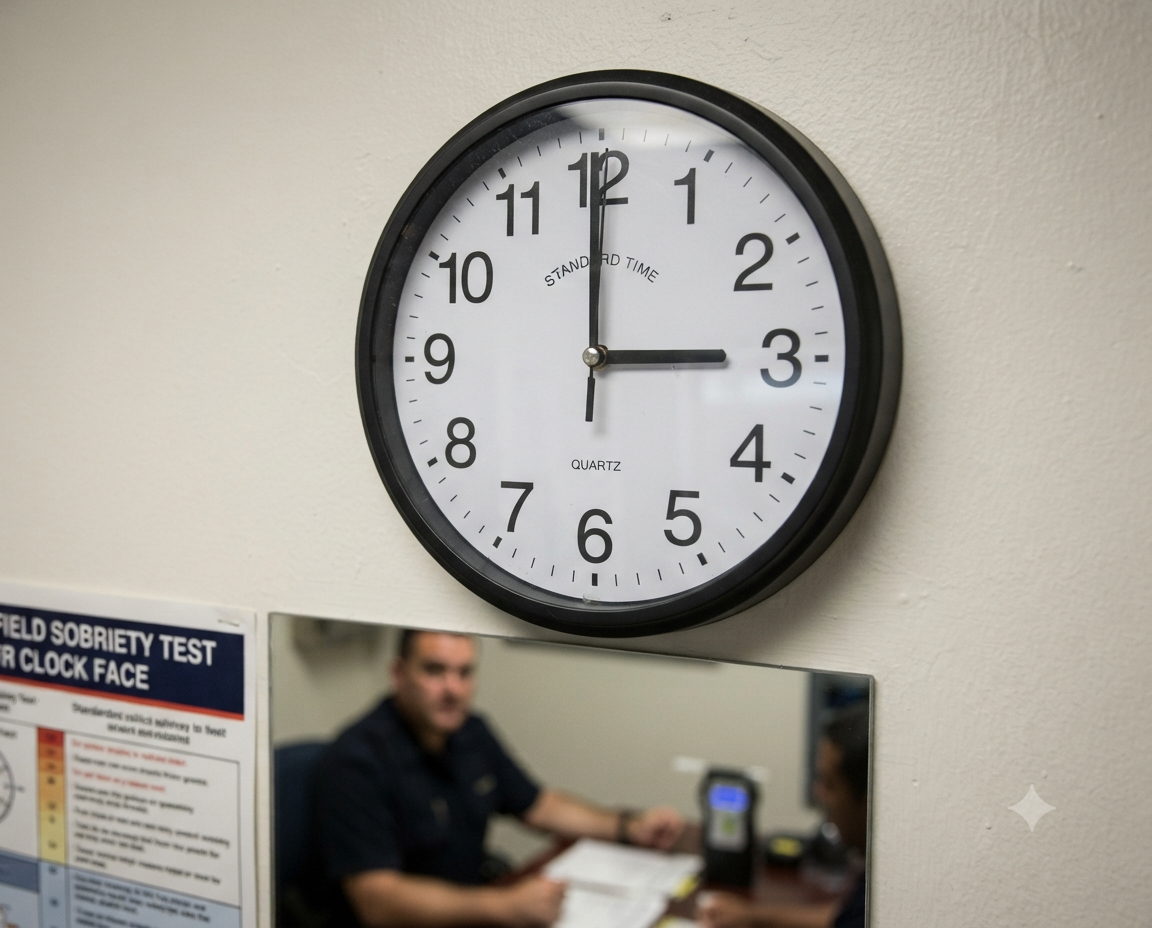
Many California drivers believe that if a blood or breath test is taken more than three hours after driving, the DUI case against them cannot continue. This is a common misconception.
The California DUI three-hour rule does not create an automatic dismissal of a DUI charge, and a delayed chemical test is not automatically invalid. However, the timing of a BAC test can become an important issue because California DUI law requires the prosecution to prove that a driver’s alcohol concentration met the legal requirements at the time of driving.
The three-hour rule is often misunderstood because it does not mean DUI evidence disappears after three hours. Instead, it involves an evidentiary presumption under California Vehicle Code section 23152(b) that may allow a chemical test result to be used as evidence of a driver’s BAC at the time of driving when certain legal requirements are satisfied.
The three-hour presumption is not automatic and is not conclusive. It is a rebuttable presumption, meaning the defense may present evidence showing that the driver’s BAC at the time of driving was different from the BAC measured during testing.
For individuals facing a DUI allegation, the timing of a chemical test, the accuracy of the driving timeline, and evidence regarding changes in BAC may all become important issues.
A DUI defense attorney may examine whether the BAC result accurately reflects the driver’s alcohol concentration while operating the vehicle or whether factors such as testing delays, rising BAC, alcohol absorption, or uncertainty about the timeline affect the reliability of that evidence.
What Is the California DUI Three-Hour Rule?
The California DUI three-hour rule refers to the legal significance of the timing of a blood or breath alcohol test after driving.
Under California Vehicle Code § 23152(b), a person may be charged with driving with a blood alcohol concentration of 0.08% or higher. When a chemical test is completed within three hours of driving, California law may allow a presumption that the test result reflects the driver’s BAC at the time of driving.
However, the presumption applies only when the required facts supporting it have been established.
The reason timing matters is that law enforcement cannot measure a person’s BAC at the exact moment they are driving. By the time a traffic stop occurs, an investigation is conducted, an arrest is made, and chemical testing takes place, time has passed.
Because BAC changes over time, the relationship between the test result and the driver’s alcohol concentration while behind the wheel becomes an important legal issue.
The three-hour rule does not mean:
- A DUI test must always occur within three hours.
- A chemical test taken after three hours cannot be used as evidence.
- A BAC result obtained within three hours automatically proves a DUI violation.
Instead, the timing of the test affects whether the prosecution can rely on the presumption and how the BAC evidence should be evaluated.
How the Three-Hour Presumption Works in California DUI Cases
The three-hour presumption generally benefits the prosecution by allowing a chemical test result taken within three hours of driving to be used as evidence of the driver’s BAC at the time of driving.
However, the presumption is not automatic. The prosecution bears the burden of establishing the facts necessary to invoke it, including evidence showing the relationship between:
- When the alleged driving occurred
- When the chemical test was administered
- Whether the test was completed within the required three-hour period
If these foundational facts are not established, the three-hour presumption may not apply.
California courts have recognized that a presumption cannot be used unless the facts supporting that presumption have been proven. As a result, disputes regarding the timing of driving and chemical testing may affect whether the BAC result can be presumed to reflect the driver’s alcohol concentration while operating the vehicle.
This issue can be especially important in cases where law enforcement did not observe the driver operating the vehicle, including certain accident investigations.
How the Three-Hour Presumption Can Benefit the Defense
Although the three-hour presumption is generally a tool used by the prosecution, it can also provide important defense opportunities.
A DUI defense attorney may challenge whether the prosecution has properly established the basis for applying the presumption or whether other evidence rebuts the assumption that the BAC test accurately reflects the driver’s alcohol concentration at the time of driving.
Defense issues may arise in situations involving:
- Vehicle collisions where the exact driving time is uncertain
- Delayed police contact
- Questions about when the vehicle was actually operated
- Delays before chemical testing
The defense may also present evidence showing that the driver’s BAC at the time of driving was different from the BAC measured during testing.
Because the three-hour presumption is rebuttable, evidence that may challenge the assumption can include:
- Rising BAC arguments
- Alcohol absorption evidence
- Timeline inconsistencies
- Questions regarding chemical testing procedures
- Other evidence affecting the reliability or interpretation of the BAC result
The three-hour presumption does not automatically determine the outcome of a DUI case. However, whether the presumption properly applies and whether it has been rebutted may become important issues when evaluating the prosecution’s evidence.
A DUI defense attorney may review the timeline, chemical testing records, and available evidence to determine whether the presumption was properly applied or whether it can be challenged.
California DUI BAC Laws
California DUI cases involving alcohol may be based on different legal theories.
Under California Vehicle Code section 23152(a), it is unlawful to drive a vehicle while under the influence of alcohol. This generally involves an allegation that alcohol impaired a person’s ability to operate a vehicle safely.
Under California Vehicle Code section 23152(b), it is unlawful to drive with a blood alcohol concentration of 0.08% or higher.
For a Vehicle Code section 23152(b) charge, the prosecution must prove that the driver’s BAC was at or above the legal limit at the time of driving. A chemical test taken after driving may be used as evidence, and the three-hour presumption may assist the prosecution if the legal requirements for applying the presumption are established.
However, the BAC number shown on a chemical test is not the only issue. The timing of the test, the circumstances surrounding the investigation, and evidence affecting the reliability of the result may all become important when determining whether the prosecution can prove the allegation.
Why Does BAC Testing Timing Matter in a DUI Case?
Alcohol levels in the body are constantly changing.
After alcohol is consumed, it is absorbed into the bloodstream before the body begins eliminating it. This means a person’s BAC may be different at several points in time:
- When alcohol was consumed
- When drinking ended
- When driving occurred
- When the traffic stop happened
- When chemical testing was completed
A chemical test measures BAC at the time the sample is collected. The legal question is whether that result accurately reflects the driver’s alcohol concentration at the time they were operating the vehicle.
For example:
A driver consumes alcohol shortly before leaving a restaurant. They drive home and are stopped shortly afterward. By the time they provide a breath sample, their BAC may be higher because alcohol was still being absorbed after they stopped driving.
In this situation, the test result may accurately measure BAC at the time of testing but may not necessarily establish what the driver’s BAC was while behind the wheel.
This type of situation may become relevant when determining whether the three-hour presumption has been rebutted.
Rising BAC and the Three-Hour Presumption
One issue that may arise in California DUI cases is whether a driver’s BAC was still increasing after they stopped driving.
Alcohol absorption does not occur instantly. Depending on factors such as the timing of alcohol consumption, food intake, and individual circumstances, BAC may continue rising after a person’s last drink.
A rising BAC argument does not automatically invalidate a chemical test result. Instead, it may provide evidence that the BAC measured during testing was higher than the driver’s BAC at the time of driving.
For example:
A person has a drink shortly before driving home. They are stopped shortly afterward. By the time they provide a breath sample, the alcohol may have continued entering their bloodstream, resulting in a higher BAC reading.
In this situation, the defense may argue that the test result does not necessarily represent the driver’s alcohol concentration when they were operating the vehicle.
Whether a rising BAC argument applies depends on the specific facts, timeline, and available evidence in the case.
Does a DUI Test After Three Hours Still Count in California?
Yes. A blood or breath test taken more than three hours after driving may still be considered evidence in a California DUI case.
A delayed chemical test is not automatically excluded simply because it occurred outside the three-hour period.
However, when a test occurs after three hours, the prosecution may face additional challenges proving that the result accurately reflects the driver’s BAC at the time of driving.
A DUI defense attorney may examine issues such as:
- Whether the driving timeline is clearly established
- Whether the test result accurately reflects BAC at the time of driving
- Whether alcohol absorption may have affected the result
- Whether proper testing procedures were followed
- Whether the evidence supports the conclusions being drawn from the BAC result
A delayed test does not automatically defeat a DUI charge. However, it may affect whether the prosecution can successfully connect the test result to the driver’s condition while operating the vehicle.
Challenging the Three-Hour Timeline in DUI Cases
The three-hour period is measured from the time of driving, not simply the time of arrest.
This distinction can become critical when the prosecution cannot clearly establish when the vehicle was operated.
The prosecution bears the burden of proving the facts necessary to apply the three-hour presumption.
A DUI defense attorney may examine whether the evidence establishes:
- The actual time of driving
- The time of the chemical test
- The connection between the test result and the alleged DUI offense
Timeline issues may arise in cases involving:
- Vehicle collisions
- Delayed police contact
- Uncertain driving times
- Situations where no officer observed the vehicle being driven
- Delays before blood or breath testing
For example, if a driver is found after a collision and the evidence does not clearly establish when the vehicle was driven, the timing relationship between the alleged driving and the chemical test may become a major issue.
If the required facts supporting the three-hour presumption are not established, the prosecution may face additional challenges proving that the BAC result reflects the driver’s alcohol concentration at the time of driving.
Chemical Testing Procedures and DUI Defense Issues
A DUI defense review may also involve examining how the chemical test was performed.
Potential issues may include:
- Whether testing procedures were followed
- Whether equipment was properly operated and maintained
- Whether samples were properly collected and handled
- Whether laboratory procedures were followed
- Whether the result accurately represents the driver’s alcohol concentration
A technical issue with testing does not automatically invalidate a BAC result. However, testing procedures and reliability may become important factors when evaluating the strength of the evidence.
Types of Chemical Tests Used in California DUI Cases
California DUI investigations may involve different types of chemical testing.
Breath Tests
Breath testing estimates BAC by measuring alcohol concentration in a person’s breath.
Because breath tests can often provide results quickly, they are commonly used during DUI investigations.
However, breath testing depends on proper procedures, equipment operation, and compliance with applicable requirements.
A DUI defense review may examine whether any factors affect the reliability or interpretation of the breath test result.
Blood Tests
Blood testing directly measures alcohol concentration from a blood sample.
Because blood samples require collection, transportation, storage, and laboratory analysis, issues involving sample handling may become important when evaluating the evidence.
A defense review may examine whether proper procedures were followed and whether the blood result accurately reflects the driver’s alcohol concentration.
Urine Tests
Urine testing may be used in certain situations, particularly when other testing methods are unavailable or when drug impairment is suspected.
Urine testing measures substances differently than blood or breath testing and may involve different considerations when interpreting the results.
California DUI Chemical Testing and Implied Consent
The three-hour presumption is separate from California’s implied consent law.
Under California Vehicle Code section 23612, drivers who are lawfully arrested for DUI are generally required to submit to a chemical test to determine alcohol or drug concentration.
Implied consent laws address the requirement to provide a chemical sample after a lawful DUI arrest.
The three-hour presumption addresses how the timing of BAC testing may affect the interpretation of alcohol concentration evidence and whether a chemical test result may be presumed to reflect the driver’s BAC at the time of driving.
Although these issues are related, they serve different legal purposes.
A person may face issues involving both implied consent requirements and BAC evidence, but the legal analysis for each issue is different.
California DUI Three-Hour Rule and Court Decisions
California courts have recognized that the three-hour presumption cannot be applied unless the necessary facts supporting the presumption have been established.
The prosecution must provide sufficient evidence regarding the timing relationship between driving and chemical testing before relying on the presumption.
In cases where the evidence does not establish when driving occurred or when the chemical test was administered, the prosecution may face challenges proving that the BAC result accurately reflects the driver’s alcohol concentration at the time of driving.
Cases such as Santos v. Department of Motor Vehicles and Yordamlis v. Department of Motor Vehicles discuss the importance of establishing the facts necessary before applying the three-hour presumption.
These cases highlight that a chemical test result alone does not automatically establish a driver’s BAC at the time of driving when the necessary timeline evidence is missing.
Common Questions About California’s DUI Three-Hour Rule
Is a DUI blood test invalid if it happens after three hours?
No. A DUI blood or breath test taken after three hours is not automatically invalid.
A delayed test may still be used as evidence. However, the timing of the test may affect whether the prosecution can prove that the result accurately reflects the driver’s BAC at the time of driving.
A defense attorney may examine whether the delay affects the interpretation and reliability of the BAC evidence.
Can a DUI charge be dismissed because the BAC test happened late?
Not automatically.
A delayed BAC test does not by itself require dismissal of a DUI charge.
However, if the prosecution cannot establish the required timeline or cannot sufficiently connect the BAC result to the time of driving, the delayed testing may create important challenges for the prosecution’s case.
The outcome depends on the specific facts, evidence, and legal issues involved.
Can the three-hour presumption help the defense?
Yes, depending on the circumstances.
Although the three-hour presumption generally provides a benefit to the prosecution, it can create defense opportunities.
The defense may challenge whether the prosecution established the facts necessary to apply the presumption, including when the driving occurred and when testing was completed.
The defense may also present evidence showing that the driver’s BAC at the time of driving was different from the BAC measured during testing.
Can BAC increase after someone stops drinking?
Yes.
Depending on factors such as the timing of alcohol consumption, food intake, and individual circumstances, BAC may continue increasing after a person stops drinking.
This may become relevant when determining whether a BAC test result accurately reflects the driver’s alcohol concentration while operating the vehicle.
Can a DUI defense attorney challenge BAC evidence?
Yes.
A DUI defense attorney may review issues involving:
- The timeline between driving and testing
- Whether the three-hour presumption properly applies
- Rising BAC arguments
- Alcohol absorption
- Chemical testing procedures
- Reliability and interpretation of BAC results
The goal is to determine whether the evidence accurately establishes the driver’s alcohol concentration at the time of driving.
Why is the DUI timeline important?
The timeline helps determine whether a chemical test can reliably establish a driver’s BAC while they were operating the vehicle.
Important events may include:
- When the alleged driving occurred
- When law enforcement contacted the driver
- When the arrest occurred
- When the chemical test was administered
When the timeline is uncertain, the application of the three-hour presumption may become an important issue.
Final Thoughts
Understanding the California DUI Three-Hour Rule
The California DUI three-hour rule is often misunderstood.
It does not mean that DUI evidence disappears after three hours, and it does not mean every BAC test completed within three hours automatically proves a DUI violation.
Instead, the rule involves whether a chemical test result can be connected to the driver’s BAC at the time of driving.
The three-hour presumption may allow the prosecution to argue that a chemical test reflects the driver’s BAC while operating the vehicle when the legal requirements are met.
However, the presumption is rebuttable. The defense may challenge whether the presumption applies, whether the required timeline has been established, or whether evidence shows that the driver’s BAC at the time of driving was different from the test result.
Because DUI cases involve technical questions about chemical testing, timing, and evidence reliability, understanding these issues can be important when evaluating a DUI allegation.
Contact Southwest Legal
Get Guidance About California DUI Defense Issues
If you are facing a California DUI charge and have questions about BAC testing, the three-hour rule, or how chemical evidence may affect your case, understanding the legal issues involved can help you make informed decisions.
Southwest Legal assists individuals with California DUI defense matters, including issues involving BAC evidence, chemical testing, rising BAC arguments, and DUI investigation procedures.
Contact us today for a free consultation to discuss your questions and learn more about your legal options.
Disclaimer: This article is for general informational purposes only and does not constitute legal advice or create an attorney-client relationship. No attorney-client relationship is formed unless and until the firm and client enter into an agreement for legal services. Laws may change, and legal outcomes depend on the specific facts of each case. Consult a qualified attorney for advice regarding your situation.