


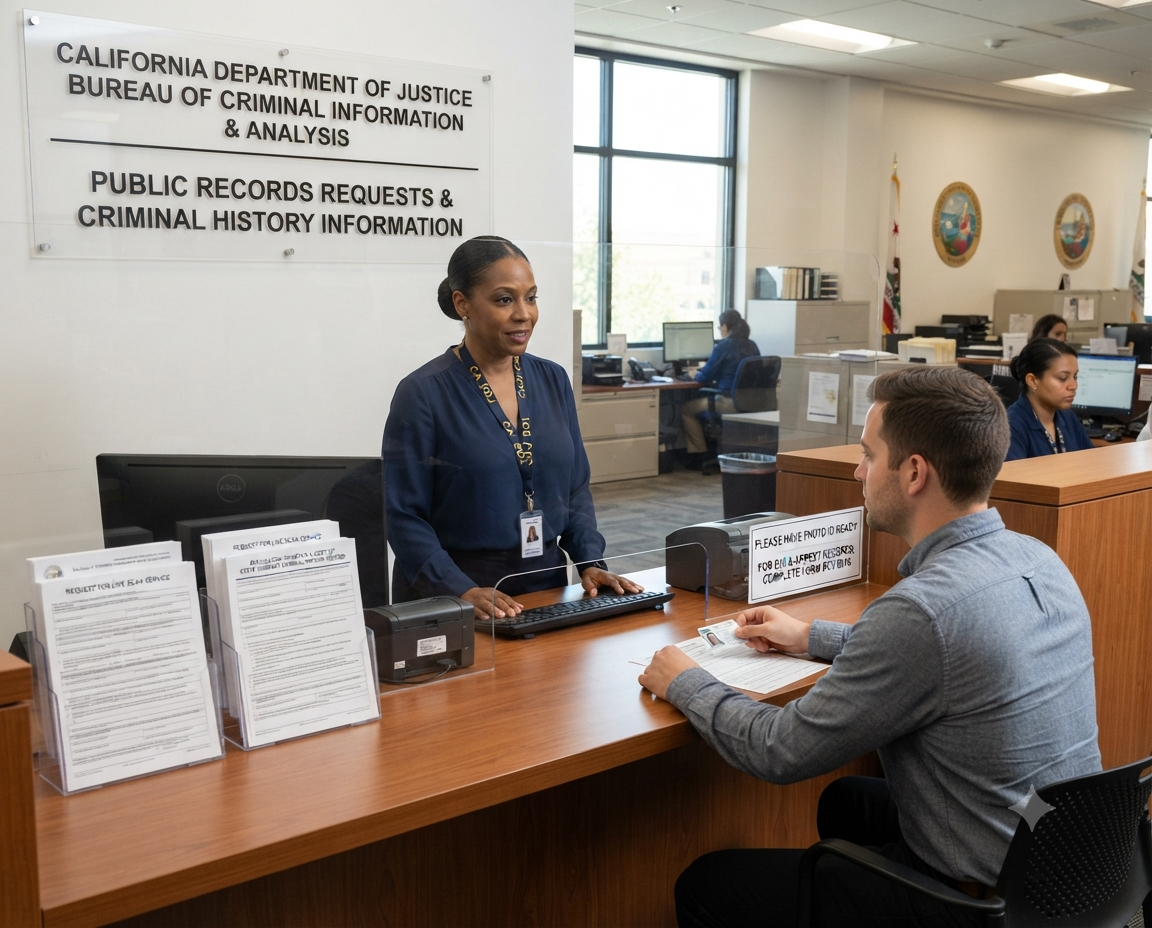
Being arrested for driving under the influence (DUI) can raise many questions, especially about what happens after the arrest. One of the most common concerns is whether the arrest becomes part of your permanent record, who can access that information, and how you can obtain a copy for your own review.
A California DUI arrest record documents that a law enforcement agency arrested someone on suspicion of driving under the influence. It is different from a criminal court record and different from a California Department of Motor Vehicles (DMV) driving record. Understanding these distinctions can help you review your legal history, prepare for employment or licensing applications, verify the accuracy of your records, or better understand the outcome of a past DUI case.
This guide explains what California DUI arrest records are, what information they typically contain, who maintains them, how to request your own records, and answers many of the questions people commonly search online.
What Is a California DUI Arrest Record?
A California DUI arrest record is an official record created after a person is arrested on suspicion of driving under the influence of alcohol or drugs. The record is typically generated by the arresting law enforcement agency and may later become part of the individual’s statewide criminal history maintained by the California Department of Justice (DOJ).
It is important to understand that an arrest record documents that an arrest occurred. It does not mean the individual was convicted of a crime.
For example, prosecutors may later decide not to file charges, or a court may dismiss the case. Even in those situations, the arrest itself may still appear in certain criminal history records unless additional legal relief is available under California law.
What Information Does a DUI Arrest Record Include?
Although the contents can vary depending on the agency involved, a DUI arrest record generally includes information such as:
Personal Identification
This section may contain:
- Full legal name
- Date of birth
- Physical description
- Fingerprints
- Booking photograph (mugshot)
Arrest Information
The arrest portion of the record often includes:
- Date and time of the arrest
- Location of the arrest
- Arresting law enforcement agency
- Arresting officer
- Initial criminal charges
- Booking number
Booking and Custody Details
If the individual was booked into jail, the record may also include:
- Booking date
- Jail location
- Custody status
- Bail information
- Release information
Criminal Justice Information
Depending on the reporting agency, the record may also reference:
- Court case number
- Filing status
- Case disposition
- Updates received from the court system
Not every record contains every item listed above, and different agencies may maintain different portions of the overall record.
DUI Arrest Record vs. Court Record vs. DMV Record
One of the biggest sources of confusion is that multiple government agencies create different records after a DUI arrest.
Although they relate to the same incident, they serve different purposes.
| Record Type | Maintained By | Typical Information Included |
|---|---|---|
| DUI Arrest Record | Local police agency, sheriff’s office, California DOJ | Arrest details, booking information, fingerprints, mugshot, arrest charges |
| Criminal Court Record | California Superior Court | Criminal charges, hearings, plea, conviction, dismissal, sentencing |
| DMV Driving Record | California DMV | Driver’s license status, administrative suspensions, driving history, DUI-related license actions |
For example:
Imagine Michael is arrested for DUI after being stopped at a sobriety checkpoint.
- The police department creates an arrest record documenting the arrest.
- The Superior Court later records whether prosecutors filed charges and how the case was resolved.
- The DMV separately handles any driver’s license suspension or administrative action.
These are three separate records maintained by three different government agencies.
Is a DUI Arrest the Same as a DUI Conviction?
No.
An arrest simply means law enforcement believed there was probable cause to take someone into custody for suspected DUI.
A conviction occurs only if:
- A person pleads guilty,
- Pleads no contest, or
- Is found guilty after a trial.
Example
Suppose Emily is arrested after an officer suspects she is driving under the influence.
Later, laboratory testing reveals evidence that leads prosecutors to dismiss the criminal charges.
Emily still experienced a DUI arrest, but she was not convicted of DUI.
This distinction is important because employers, licensing agencies, and background checks may treat arrests and convictions differently depending on the circumstances and applicable law.
Who Maintains California DUI Arrest Records?
Several agencies may possess records relating to the same DUI incident.
Local Police Departments and Sheriff’s Offices
The arresting agency creates the initial arrest and booking records.
If you need copies of booking information or arrest reports, the law enforcement agency that handled the arrest is often the starting point.
County Jails
If you were booked into custody, the county jail may maintain booking records, custody information, release records, and related administrative documents.
California Department of Justice (DOJ)
The California Department of Justice maintains statewide criminal history records using fingerprint submissions from law enforcement agencies.
These records are sometimes informally referred to as a RAP sheet (Record of Arrests and Prosecutions). A RAP sheet contains a person’s reported criminal history within California’s criminal justice system, including qualifying arrests and court dispositions that have been reported to the DOJ.
Individuals generally have the right to request a copy of their own California criminal history through the DOJ’s Record Review process.
California Superior Courts
If criminal charges are filed after a DUI arrest, the Superior Court where the case is prosecuted maintains records relating to the criminal proceedings.
Court records may include:
- Criminal complaints
- Hearing dates
- Court orders
- Plea information
- Judgments
- Sentencing
- Dismissals
California Department of Motor Vehicles (DMV)
The DMV maintains your driving record, which is separate from your criminal history.
A DMV record may show:
- License suspensions
- Administrative actions
- Driving history
- DUI-related licensing actions
However, it is not the same as your criminal arrest record.
How to Get Your California DUI Arrest Record
If you want to review your own DUI arrest record, there are several ways to obtain information depending on what records you need.
1. Request Records From the Arresting Agency
The police department or sheriff’s office that handled your arrest may provide copies of certain arrest or booking records.
Most agencies require information such as:
- Government-issued photo identification
- Full legal name
- Date of birth
- Approximate arrest date
- Booking number or case number, if available
Some agencies accept requests:
- In person
- By mail
- Through online public records portals
Procedures and fees vary by agency.
2. Request Your California Criminal History From the DOJ
If you want to review the criminal history maintained by the California Department of Justice, you may request your own record through the DOJ’s Record Review process.
This request generally requires fingerprint-based identity verification to help ensure the record is released only to the correct individual.
Reviewing your criminal history can also help you identify possible errors or outdated information that may need to be addressed.
3. Obtain Court Records
If prosecutors filed criminal charges, you may request records from the Superior Court where your case was handled.
Available documents may include:
- Criminal complaints
- Minute orders
- Court judgments
- Sentencing records
- Final disposition of the case
Court records often provide a more complete picture of how a DUI case concluded than an arrest record alone.
4. Request Your California DMV Driving Record
If you want information about your driver’s license status or DUI-related license actions, you can request your official driving record from the California DMV.
Keep in mind that a DMV driving record is different from an arrest record. It focuses on driving privileges and administrative actions rather than criminal booking information.
Can You Get Someone Else’s DUI Arrest Record?
California law distinguishes between records that may be publicly available and records that are protected by privacy laws.
For example, some court records are generally available to the public unless they have been sealed or made confidential by law.
However, statewide criminal history records maintained by the California Department of Justice are generally not available to the general public. Individuals may request their own criminal history, while employers, licensing agencies, and certain government entities may have access only when authorized by law.
In addition, ongoing investigations, sealed records, and other legal restrictions may limit what information can be disclosed.
How Long Does a DUI Arrest Stay on Your Record in California?
One of the most frequently searched questions is whether a DUI arrest remains on your record permanently. The answer depends on which record you are referring to, because different government agencies maintain different records under different rules.
For example:
- An arrest record may continue to exist within criminal justice databases unless it is sealed or otherwise addressed through a legal process available under California law.
- Court records generally remain part of the court’s records unless they are sealed or otherwise modified by law.
- DMV records follow separate retention schedules related to driving history and administrative actions.
- Prior DUI convictions may be considered during sentencing for future DUI offenses within California’s statutory look-back period.
Because these records are maintained independently, there is no single timeline that applies to every situation.
Example
James was arrested for DUI in 2018. His criminal court case ended several years ago, but his arrest may still appear in certain criminal history records maintained by law enforcement agencies. Meanwhile, his DMV record follows its own retention rules and serves a different purpose.
Understanding which record you need to review is an important first step.
Can a DUI Arrest Record Be Removed?
In some situations, California law provides legal procedures that may affect how an arrest or conviction appears in official records. However, the type of relief available depends on the specific facts of the case.
Possible forms of relief may include:
- Record sealing when authorized by law
- Dismissal-related relief
- Expungement for qualifying convictions
- Findings of factual innocence in limited circumstances
Each option has its own eligibility requirements and legal effect.
For example, obtaining an expungement generally does not erase the fact that an arrest occurred. Instead, it may change how the conviction is reflected in court records and provide certain legal benefits under California law.
Likewise, not every DUI case qualifies for record sealing or other post-case relief.
If you are considering any type of post-conviction relief, understanding your eligibility under California law is an important first step.
Can Employers See a DUI Arrest?
Whether an employer can see a DUI arrest depends on several factors, including:
- The type of background check being performed
- Whether criminal charges were filed
- Applicable California and federal employment laws
- The nature of the job
Some employers conduct fingerprint-based background checks for positions involving public trust, professional licensing, healthcare, education, or government employment.
Other employers use commercial background screening companies, which may report different information depending on applicable reporting laws and the status of the case.
Because background checks vary, two employers reviewing the same individual may not necessarily receive identical reports.
Does a DUI Arrest Show Up on a Live Scan Background Check?
A Live Scan background check is a fingerprint-based background check used for many licensing, employment, and volunteer positions in California.
Depending on the type of Live Scan requested and the agency authorized to receive the information, criminal history records—including certain arrests and case dispositions—may be available to the requesting agency as permitted by law.
The information reported can differ depending on the purpose of the background check and the legal authority of the requesting organization.
Can Landlords See a DUI Arrest?
Landlords often use tenant screening companies when evaluating rental applications.
Whether a DUI arrest appears during tenant screening depends on several factors, including:
- The screening company
- Publicly available court records
- Applicable consumer reporting laws
- Whether charges were filed or later dismissed
Not every tenant screening report contains arrest information, and reporting practices may vary.
How Much Does It Cost to Get Your California DUI Arrest Record?
The cost depends on which agency maintains the records you are requesting.
For example:
- Local law enforcement agencies may charge copying or processing fees for arrest records.
- Superior Courts may charge fees for certified copies or document reproduction.
- The California Department of Justice charges a fee for its Record Review process.
- The DMV charges a fee for official driving records.
Because agencies periodically update their fees, it is a good idea to verify current costs before submitting a request.
How Long Does It Take to Receive Your Records?
Processing times vary depending on the agency and the type of request.
Factors that may affect processing include:
- Whether the request is submitted online, by mail, or in person
- The agency’s current workload
- Whether identity verification or fingerprint submission is required
- The complexity of the request
Simple local records requests may be processed relatively quickly, while fingerprint-based criminal history requests may take longer.
What If Your DUI Arrest Record Contains Incorrect Information?
Although government records are intended to be accurate, mistakes can occur.
Examples include:
- Incorrect personal identifying information
- Duplicate entries
- Incorrect arrest dates
- Missing court dispositions
- Clerical errors
Example
After reviewing his California criminal history, Daniel notices that his DUI case is still listed as “pending” even though the court dismissed the charges several years earlier.
In situations like this, reviewing the record carefully and determining which agency maintains the incorrect information can help identify the appropriate process for requesting a correction.
Keeping your records accurate can be especially important if you are applying for employment, professional licensing, or other opportunities that require background checks.
DUI Arrest Record vs. Police Report: What’s the Difference?
People often use these terms interchangeably, but they are different documents.
A DUI arrest record primarily documents that an arrest occurred and includes booking and identifying information.
A police report is the investigating officer’s written account of the incident.
A police report may include:
- The reason for the traffic stop
- Officer observations
- Witness statements
- Field sobriety test observations
- Preliminary alcohol screening information
- Chemical testing information
- Narrative descriptions of the investigation
Although both documents relate to the same incident, they serve different purposes within the criminal justice process.
Why Would Someone Request Their DUI Arrest Record?
There are many legitimate reasons to obtain your own records.
Reviewing Accuracy
Mistakes can happen. Reviewing your records allows you to verify that the information maintained by government agencies is complete and accurate.
Employment Applications
Some employers conduct criminal background checks during the hiring process.
Obtaining your records beforehand allows you to understand what information may be reported.
Professional Licensing
Certain licensing boards require applicants to disclose criminal history or submit fingerprint-based background checks.
Reviewing your records can help you prepare accurate applications.
Immigration Matters
Some immigration matters require applicants to disclose arrests, charges, or convictions.
Official records may be needed to verify the disposition of a DUI case.
Personal Recordkeeping
Some individuals simply want copies of their legal records for future reference or peace of mind.
Frequently Asked Questions
Is a DUI arrest public record in California?
Some information related to arrests and court proceedings may be publicly available, while other criminal history information is protected by California law. Access depends on the type of record and the agency maintaining it.
Can I get my California DUI arrest record online?
Some local law enforcement agencies offer online records request systems, while others require requests by mail or in person. Procedures vary by jurisdiction.
Do I need fingerprints to request my own California criminal history?
If you are requesting your statewide criminal history from the California Department of Justice, fingerprint-based identity verification is generally required through the DOJ’s Record Review process.
Will a dismissed DUI still appear on my record?
A dismissed case may still have an associated arrest record unless additional legal relief is available under California law.
Is a DMV driving record the same as a criminal record?
No. A DMV driving record primarily concerns driving privileges, license status, and administrative actions. It is separate from criminal history records maintained by law enforcement agencies.
Can I correct errors on my criminal history record?
If you believe your criminal history contains incorrect or incomplete information, there may be procedures available to request corrections through the appropriate agency.
Do I need identification to request my own arrest record?
Yes. Most agencies require government-issued identification or other verification before releasing personal criminal history information.
Tips Before Requesting Your California DUI Arrest Record
Preparing the necessary information in advance can make the process smoother.
You may want to have:
- Your full legal name
- Any previous names you have used
- Date of birth
- Approximate arrest date
- Arrest location
- Name of the arresting agency
- Booking number or case number, if known
- Government-issued photo identification
Having complete and accurate information may help reduce delays and ensure the correct records are located.
Final Thoughts
A California DUI arrest record is an official record of an arrest—not a determination of guilt. It is separate from your criminal court record and your California DMV driving record, and each serves a different purpose within the state’s legal system.
Understanding what information these records contain, who maintains them, and how to request copies can help you verify your criminal history, prepare for background checks, or better understand the outcome of a past DUI case. If you discover inaccurate information or have questions about what your records mean, learning about the available legal processes can help you make informed decisions.
Contact Southwest Legal
If you have questions about a California DUI arrest record, how it may affect your situation, or what options may be available under California law, the team at Southwest Legal is here to help. Contact us today for a free consultation to discuss your concerns and receive clear, reliable guidance tailored to your circumstances.