


Receiving a traffic ticket in California does not always mean you must simply accept the citation or appear immediately in court. For certain eligible traffic infractions, California law allows drivers to contest tickets through a process called a Trial by Written Declaration.
A Trial by Written Declaration allows a defendant to explain their side of the case in writing instead of appearing in person for the first trial. The court reviews the written statements, evidence, and information provided before making a decision.
However, what happens if you complete a Trial by Written Declaration and the court still finds you guilty?
California law provides another option in certain circumstances: a trial de novo.
A trial de novo allows a defendant who is dissatisfied with the result of a Trial by Written Declaration to request a new, in-person traffic trial. This gives the defendant another opportunity to present evidence, question witnesses, and argue their position before the court.
This article explains what trial de novo means in California traffic cases, how the process works, the deadlines involved, and answers common questions about requesting a new traffic trial.
What Is a Trial de Novo in California Traffic Court?
The phrase “trial de novo” means “new trial” or “trial from the beginning.”
In California traffic cases, a trial de novo is a legal procedure that allows a defendant who used a Trial by Written Declaration and received an unfavorable result to request a new trial.
A trial de novo is not an appeal.
An appeal asks a higher court to review whether legal errors occurred during the original proceeding. A trial de novo, on the other hand, allows the traffic case to be heard again as a new trial.
For example:
A driver receives a speeding ticket and chooses to contest the citation through a Trial by Written Declaration using Form TR-205. The court reviews the written evidence and finds the driver guilty. The driver disagrees with the decision and requests a trial de novo using Form TR-220. The driver can then have a new in-person trial in traffic court.
The second trial is separate from the written declaration process. The court hears the matter again instead of simply reviewing the previous decision.
How Does Trial by Written Declaration Work Before a Trial de Novo?
To understand trial de novo, it is important to understand the process that comes before it.
Under California Vehicle Code section 40902, certain traffic infraction defendants may contest their citations through a Trial by Written Declaration.
Instead of appearing in court, the defendant submits a written statement explaining why they believe they should not be found responsible. The defendant may also submit supporting evidence.
The officer who issued the citation is also given an opportunity to submit a written statement.
A judicial officer then reviews the written materials and issues a decision.
Possible outcomes include:
- The defendant is found not guilty.
- The defendant is found guilty.
- The court may impose penalties allowed under California law.
If the defendant is found guilty after the Trial by Written Declaration, they may have the option to request a trial de novo.
How Do You Request a Trial de Novo in California Traffic Cases?
A defendant who wants a new trial after an unsuccessful Trial by Written Declaration generally must complete and submit Form TR-220, Request for Trial de Novo.
The form requires basic information, including details about:
- The defendant.
- The traffic citation.
- The court case.
- The violation information.
The request must be filed with the appropriate traffic court.
In California, the request generally must be made within 20 days after the clerk mails the notice of the Trial by Written Declaration decision.
Because deadlines are strict, it is important to carefully review the notice of decision and court instructions after receiving the written declaration result.
Failing to request a trial de novo within the required timeframe may result in losing the opportunity to have a new trial.
Is a Trial de Novo Another Written Trial?
No.
A trial de novo is not another Trial by Written Declaration.
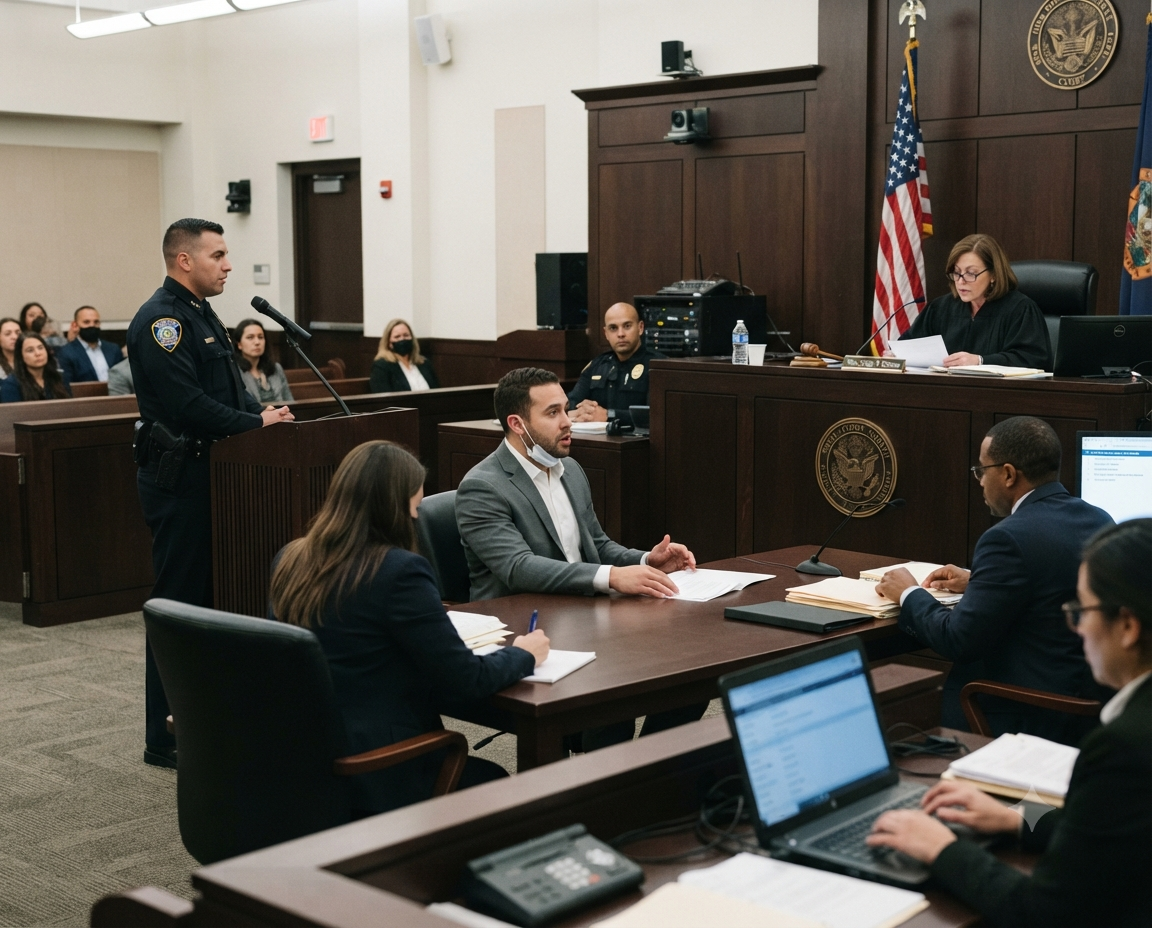
The purpose of a trial de novo is to provide a new in-person court trial.
During the new trial:
- The defendant may appear in court.
- The citing officer may be required to appear and testify.
- The defendant may question witnesses.
- The defendant may present evidence.
- The court hears arguments before making a new decision.
The original written declaration decision does not simply carry over as the final result. The case is considered again through the new trial process.
What Happens During a Traffic Trial de Novo?
A traffic trial de novo generally follows the normal process for a contested traffic infraction.
The defendant may have the opportunity to:
Present Evidence
Evidence may include:
- Photographs.
- Diagrams.
- Documents.
- Witness testimony.
- Other information relevant to the citation.
The court determines whether evidence may be considered under applicable rules.
Question the Citing Officer
A defendant generally has the right to question the officer who issued the citation.
This process allows the defendant to challenge testimony, ask questions about the circumstances of the stop, and present their version of events.
Present a Defense
The defendant may explain why they believe the citation should not result in a finding of responsibility.
The court considers the evidence and arguments before making a decision.
What Happens If the Officer Does Not Appear at the Trial de Novo?
In many traffic cases, the citing officer’s testimony is an important part of the prosecution’s evidence.
If the officer does not appear, the court may consider the applicable procedures and circumstances, which may affect how the case proceeds.
The outcome depends on the facts of the case and the court’s handling of the matter.
What Is the Difference Between Trial de Novo and an Appeal?
Although both procedures challenge an unfavorable result, they work differently.
Trial de Novo
- Creates a new traffic trial.
- Allows evidence and testimony to be presented again.
- Gives the defendant another opportunity to contest the citation.
- Does not focus only on legal errors from the first proceeding.
Appeal
An appeal:
- Reviews the previous court proceedings.
- Focuses on whether legal mistakes occurred.
- Generally does not involve presenting new evidence or retrying witnesses.
For many drivers, the key difference is:
A trial de novo gives you a new trial. An appeal asks another court to review the first trial.
Can You Request a Trial de Novo After a Regular Traffic Court Trial?
Generally, no.
A trial de novo in California traffic cases is specifically connected to the Trial by Written Declaration process.
One of the benefits of choosing a Trial by Written Declaration is that if the defendant is dissatisfied with the outcome, they may have the ability to request a new in-person trial.
However, a person who already completed a traditional in-person traffic court trial generally does not receive another trial simply because they disagree with the result.
Does Requesting a Trial de Novo Cancel the First Decision?
Yes, requesting a trial de novo generally replaces the Trial by Written Declaration decision with a new trial process.
This means the defendant should carefully consider the decision before requesting a new trial.
For example:
A defendant completes a Trial by Written Declaration and is found guilty. The court reduces the fine amount or allows a favorable outcome, such as a traffic school option when available. If the defendant requests a trial de novo, those benefits may no longer apply because the case will be considered again.
The result of the new trial may be better, the same, or less favorable than the original decision.
Is a Trial de Novo Guaranteed to Dismiss a Traffic Ticket?
No.
A trial de novo provides another opportunity to contest the citation, but it does not guarantee dismissal.
The outcome depends on:
- The evidence presented.
- The testimony of witnesses.
- The applicable traffic laws.
- The arguments made during the trial.
Every traffic case has different facts, and the court makes its decision based on the evidence and legal requirements.
Common Questions About Trial de Novo
How long do I have to request a trial de novo after a written declaration?
A defendant generally has 20 days after the clerk mails the notice of the Trial by Written Declaration decision to request a trial de novo.
The request must be properly submitted according to court procedures.
What form is used to request a trial de novo in California traffic court?
The form generally used is Form TR-220, Request for Trial de Novo.
This form requests that the court schedule a new trial after an unsuccessful Trial by Written Declaration.
Do I have to appear in court for a trial de novo?
Yes. Unlike a Trial by Written Declaration, a trial de novo is an in-person court proceeding.
The defendant may appear and present their case according to normal traffic court procedures.
Can I bring witnesses to a trial de novo?
Yes, witnesses may be presented when relevant and allowed under court procedures.
Witness testimony can be an important part of explaining the circumstances surrounding a traffic citation.
Should I request a trial de novo?
Whether requesting a trial de novo is appropriate depends on the circumstances of the individual case.
Factors to consider may include:
- The strength of the evidence.
- The reason for disagreeing with the written decision.
- The possible risks and benefits of having a new trial.
Final Thoughts
Understanding Your Rights After a California Traffic Ticket Decision
A Trial by Written Declaration can provide a convenient way to contest certain traffic citations without appearing in court. If the result is unfavorable, a trial de novo may provide another opportunity for the case to be heard through a new in-person trial.
However, trial de novo requests involve specific procedures, forms, and deadlines. Understanding these requirements can help defendants make informed decisions about their available options.
Contact Southwest Legal
If you have questions about the trial de novo process, California traffic court procedures, or your options after receiving an unfavorable traffic ticket decision, Southwest Legal can help you understand the process and the steps that may apply to your situation.
Contact us today for a free consultation to discuss your traffic case and learn more about your available legal options.
Disclaimer: This article is for general informational purposes only and does not constitute legal advice or create an attorney-client relationship. No attorney-client relationship is formed unless and until the firm and client enter into an agreement for legal services. Laws may change, and legal outcomes depend on the specific facts of each case. Consult a qualified attorney for advice regarding your situation.