


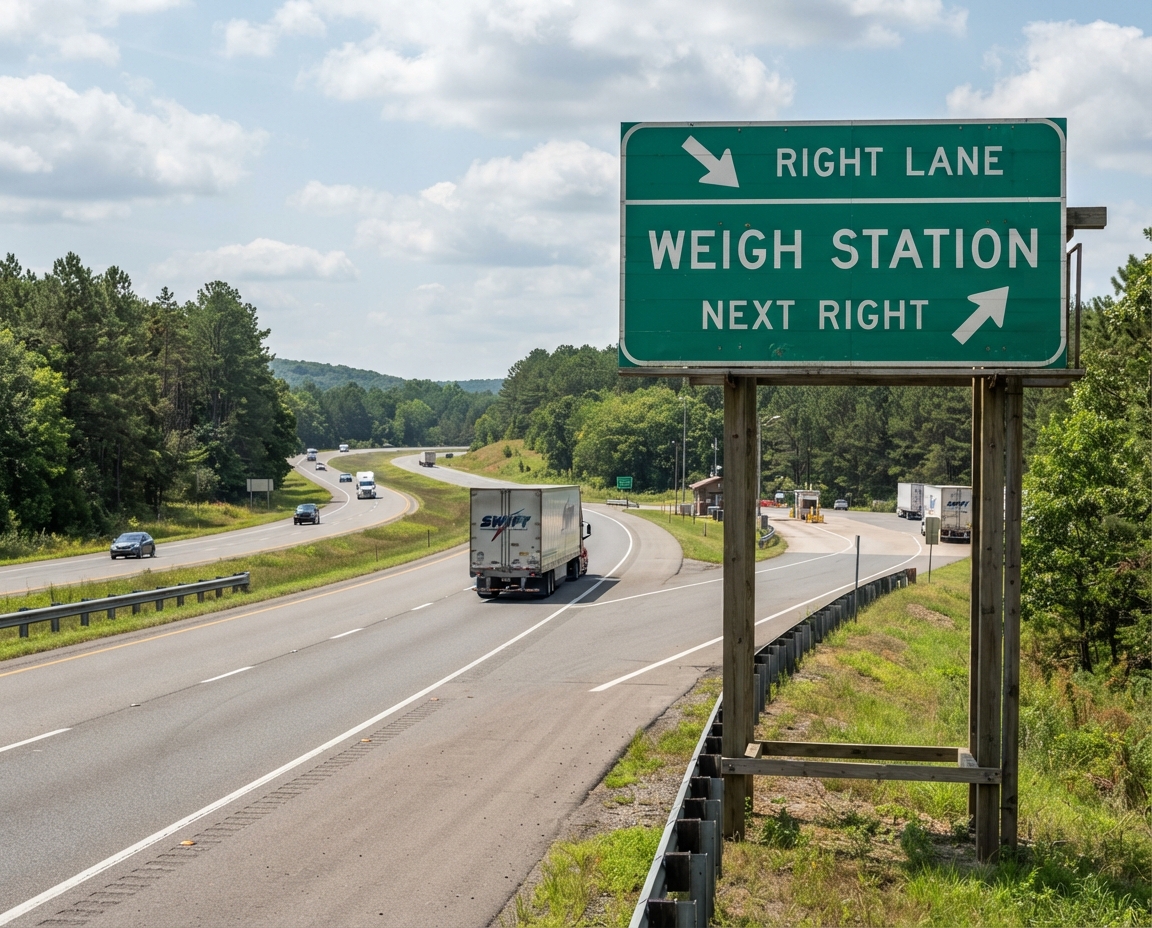
California Vehicle Code § 2813 (CVC § 2813) addresses the failure to stop of a commercial vehicle driver to for a required inspection. California law requires certain commercial vehicle drivers to stop when the California Highway Patrol (CHP) is conducting commercial vehicle inspections and signs are displayed requiring vehicles to stop.
Failing or refusing to comply with that requirement can result in a misdemeanor charge.
For commercial truck drivers and other commercial vehicle operators, understanding what CVC § 2813 requires can help clarify what constitutes a violation, when the law applies, and what may happen after receiving a citation.
What Is California Vehicle Code § 2813?
California Vehicle Code § 2813 requires a driver of a commercial vehicle to stop and submit the vehicle to an inspection when CHP is conducting commercial vehicle tests or inspections and signs are displayed requiring the driver to stop.
The statute allows the inspection to address several areas, including:
- Vehicle size
- Vehicle weight
- Equipment
- Vehicle loading
- Smoke emissions
- Driver’s license
- Medical qualifications
- Hours-of-service compliance
The key issue under CVC § 2813 is the driver’s failure or refusal to stop and submit to the required inspection.
Is Failure to Stop for Inspection a Misdemeanor in California?
Yes.
Under CVC § 2813, a driver who fails or refuses to stop and submit to an inspection when signs require the stop is guilty of a misdemeanor.
This means a CVC § 2813 violation is a criminal offense rather than simply an ordinary traffic infraction.
The consequences of a particular case can depend on the circumstances, the court process, and whether other violations are involved. The misdemeanor classification does not, by itself, establish that every driver will receive the same punishment or outcome.
Who Does CVC § 2813 Apply To?
CVC § 2813 applies to drivers of commercial vehicles.
The requirement is not limited to tractor-trailers. Depending on the circumstances, other vehicles may fall within California’s commercial vehicle requirements.
CHP also indicates that pickup trucks can be subject to the inspection requirement unless posted signs specifically exclude pickups.
Because vehicle classification can depend on applicable legal definitions and circumstances, drivers should not assume that a vehicle is exempt simply because it is relatively small.
When Must a Commercial Vehicle Stop for Inspection?
The requirement under § 2813 applies when the circumstances specified by the statute are present.
In particular, the law concerns situations where:
- CHP is conducting commercial vehicle tests or inspections; and
- Signs are displayed requiring the driver to stop.
For example, a commercial truck approaches a CHP inspection facility. Signs direct commercial vehicles into the inspection area. The driver continues past the facility without stopping.
That driver may be cited for violating CVC § 2813.
Drivers should carefully follow posted signs, lane directions, and any applicable instructions at commercial vehicle inspection facilities.
What If There Is a Bypass Signal?
Some commercial vehicle inspection facilities use bypass systems that allow eligible vehicles to proceed without entering the inspection area.
A driver should follow the instructions provided by the inspection system and posted signs.
If a driver receives an appropriate bypass indication, the driver may be permitted to continue. If the driver is required to enter the inspection facility but continues without authorization to bypass the inspection, a CVC § 2813 violation may be alleged.
The specific circumstances of the bypass system and what indication the driver received can therefore be important.
What If I Accidentally Failed to Stop?
A driver may fail to stop because of confusion, unfamiliarity with the roadway, poor visibility, or a misunderstanding of the inspection instructions.
For example, a driver might claim that:
- The inspection sign was not noticed.
- The driver misunderstood which lane to enter.
- The facility appeared closed.
- The driver believed a bypass signal had been received.
- Traffic conditions caused confusion.
Whether these circumstances affect a particular CVC § 2813 case depends on the facts and evidence.
Simply stating that the failure was accidental does not automatically resolve the charge. However, the circumstances surrounding the alleged violation may be relevant when evaluating the case.
What If There Was No Sign Requiring Me to Stop?
The wording of CVC § 2813 specifically addresses situations in which signs are displayed requiring the stop.
Consequently, signage can be an important factual issue in a failure-to-stop case.
Questions may include:
- Was a sign actually displayed?
- Was the sign visible to approaching drivers?
- What instructions did the sign provide?
- Was the inspection facility operating?
- Was a bypass signal provided?
- Did CHP personnel provide additional instructions?
The importance of these facts depends on the particular circumstances.
Is Failing to Stop the Same as Failing an Inspection?
No.
Failing to stop and having a violation discovered during an inspection are different issues.
For example, a truck driver may properly enter an inspection facility and stop. During the inspection, CHP could discover defective equipment or another regulatory violation.
In that situation, the driver complied with the requirement to stop, although the inspection could result in a separate citation.
By contrast, if the driver does not stop when required, the driver may face an allegation under CVC § 2813 regardless of whether the vehicle would otherwise have passed the inspection.
What Can Be Inspected Under CVC § 2813?
The current statute identifies several inspection areas.
Vehicle Size and Weight
CHP may inspect a commercial vehicle’s size and weight for compliance with applicable requirements.
Equipment
The vehicle’s equipment may be examined to determine whether applicable safety and equipment requirements are satisfied.
Loading
Vehicle loading is expressly included in the current version of § 2813. Improper loading may also result in separate violations under other laws.
Smoke Emissions
The statute includes smoke emissions among the matters that may be inspected.
Driver’s License and Medical Qualifications
The inspection may also address the driver’s license and applicable medical qualifications.
Hours of Service
Hours-of-service compliance is another inspection area specifically identified by the statute.
Can a Pickup Truck Be Required to Stop?
Yes.
Pickup trucks can be subject to the CVC § 2813 inspection requirement. CHP states that pickup trucks are included unless a posted sign specifically excludes pickups.
Therefore, drivers should pay attention to the instructions at an inspection facility rather than assuming that a pickup truck can automatically bypass the inspection.
What Happens After a CVC § 2813 Citation?
A person cited under CVC § 2813 should carefully review the citation and the information provided by the court.
Because the alleged violation is a misdemeanor, the matter can involve a criminal court proceeding.
Important information to review includes:
- The exact Vehicle Code section cited
- The alleged conduct
- The court location
- The court date
- Any instructions included with the citation
- Whether other violations were charged
The appropriate response depends on the circumstances of the individual case.
What Issues May Matter in a CVC § 2813 Case?
Every case is different, but several factual issues may be important.
These can include whether:
- The vehicle was subject to the inspection requirement.
- CHP was conducting the applicable inspection.
- Signs requiring the vehicle to stop were displayed.
- The signs were visible.
- The driver received a bypass signal.
- The driver was given instructions by CHP personnel.
- The inspection facility was operating.
- The citation accurately describes what occurred.
Evidence such as photographs, video, inspection records, bypass information, witness statements, and other documentation may help establish what happened.
These facts do not guarantee a defense or particular result, but they may be relevant when evaluating the allegations.
Frequently Asked Questions
CVC § 2813 is a California law requiring commercial vehicle drivers to stop and submit to a CHP commercial vehicle inspection when the statutory conditions are met and signs require the stop.
Is CVC § 2813 a misdemeanor?
Yes. Failure or refusal to stop and submit to a required inspection under the circumstances specified by the statute is classified as a misdemeanor.
Do all trucks have to stop at inspection stations?
Commercial vehicle drivers must follow applicable inspection signs and instructions. The requirement depends on the circumstances described in § 2813 and does not mean every vehicle must stop at every inspection location regardless of signage or instructions.
Do pickup trucks have to stop?
They can. Pickup trucks may be subject to the requirement unless posted signs specifically exclude them.
What if I missed the inspection station by mistake?
The circumstances matter. Issues such as signage, visibility, traffic conditions, facility status, and bypass instructions may be relevant to the case.
What if I received a bypass signal?
If the bypass system properly authorizes the vehicle to proceed, that may be important to understanding why the vehicle did not enter the inspection area. The specific facts should be reviewed carefully.
Can I be charged even if my truck has no mechanical problems?
Yes. CVC § 2813 concerns the requirement to stop and submit to an inspection. A vehicle does not have to have a mechanical defect for a failure to stop allegation to arise.
Does passing an inspection eliminate a CVC § 2813 violation?
The inspection requirement and the results of an inspection are separate issues. A driver who stops as required may still receive a citation for a separate violation discovered during the inspection.
What Should You Do If You Are Charged Under CVC § 2813?
A CVC § 2813 charge should not necessarily be treated as a routine traffic ticket because the statute classifies the specified failure or refusal to stop as a misdemeanor.
Start by reviewing the citation carefully and noting the court date and allegations. Preserve any information that may help establish what happened, including photographs, video, trip records, inspection documentation, or information concerning a bypass signal.
Because the outcome of a case depends on its specific facts, a California attorney can review the allegations and explain the legal process and potential options.
Conclusion
California Vehicle Code § 2813 makes it a misdemeanor for a commercial vehicle driver to fail or refuse to stop and submit to a required CHP inspection when signs require the stop.
The law applies to commercial vehicle inspections involving matters such as vehicle size, weight, equipment, loading, smoke emissions, driver’s licensing, medical qualifications, and hours-of-service compliance.
A failure-to-stop case can involve important factual questions, particularly concerning the inspection signs, bypass instructions, vehicle classification, and what occurred when the driver approached the inspection facility.
If you have received a CVC § 2813 failure-to-stop-for-inspection citation, understanding the specific allegation and the law that applies to it is an important first step.
Contact Southwest Legal
Don’t navigate a misdemeanor commercial vehicle charge without understanding what it means or what comes next. Southwest Legal can help you understand the allegations, the legal process, and the issues that may be relevant to your case.
Contact us today for a free consultation. Get informed about your situation, understand your options, and take the next step with confidence.
Disclaimer: This article is for general informational purposes only and does not constitute legal advice or create an attorney-client relationship unless and until the firm and client enter into an agreement for legal services. Laws may change, and legal outcomes depend on the specific facts of each case. Consult a qualified attorney for advice regarding your situation.