


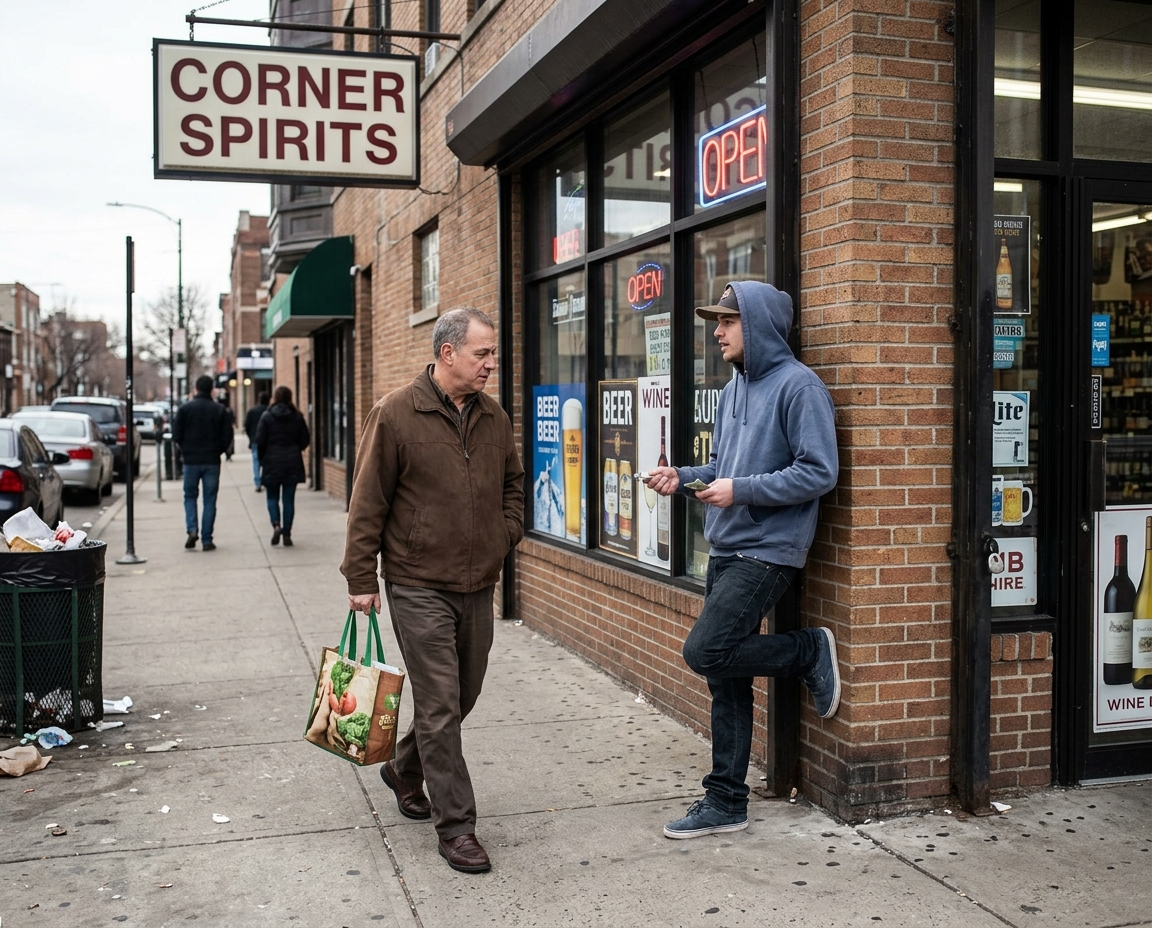
California has numerous laws governing the sale, service, and consumption of alcoholic beverages. Among these laws is California Penal Code § 303a, which addresses a specific type of conduct involving solicitation for alcoholic drinks.
Under Penal Code § 303a, it is unlawful for a person to loiter in or around a business where alcoholic beverages are sold for consumption on the premises when the purpose is to beg or solicit a patron, customer, or visitor to purchase an alcoholic beverage for the person doing the soliciting.
A violation of California Penal Code § 303a is classified as a misdemeanor.
This law can be confusing because people sometimes search for “California Penal Code 303 loitering to solicit the purchase of alcohol.” However, Penal Code § 303 and Penal Code § 303a address different conduct. Understanding that distinction is important when researching a criminal charge or an alcohol-related legal issue.
This article explains California Penal Code § 303a, including what the statute prohibits, what loitering and solicitation mean in this context, potential penalties, examples, related alcohol laws, and commonly asked questions.
What Is California Penal Code § 303a?
California Penal Code § 303a makes it unlawful for a person to loiter in or around a place of business where alcoholic beverages are sold for consumption on the premises for the purpose of begging or soliciting a patron, customer, or visitor to purchase an alcoholic beverage for the person soliciting.
The statute specifically states that violating this provision is a misdemeanor.
In simpler terms, the law addresses a situation where someone remains at or around a bar, restaurant, nightclub, or similar establishment and seeks alcoholic drinks from customers or visitors.
The statute is not written as a broad prohibition against simply asking another person for a drink. Instead, it describes a particular combination of circumstances involving:
- A qualifying business where alcohol is sold for consumption on the premises;
- A person loitering in or around that business;
- A purpose of begging or soliciting; and
- Solicitation directed toward getting a patron, customer, or visitor to purchase an alcoholic beverage for the person soliciting.
These details are important when evaluating whether conduct falls within the language of Penal Code § 303a.
Is It Penal Code § 303 or § 303a?
This is one of the most common points of confusion surrounding California’s alcohol-solicitation laws.
California Penal Code § 303
Penal Code § 303 addresses conduct involving a person engaged in selling alcoholic beverages who employs another person on the premises for the purpose of procuring or encouraging the purchase or sale of alcoholic beverages. The statute also addresses paying a percentage or commission for procuring or encouraging those purchases or sales.
That is different from the conduct described in Penal Code § 303a.
California Penal Code § 303a
Penal Code § 303a focuses on the person who loiters in or around a qualifying business for the purpose of begging or soliciting a patron, customer, or visitor to purchase an alcoholic beverage for the solicitor.
The statute expressly makes this conduct a misdemeanor.
Therefore, if someone is searching online for “California Penal Code 303 loitering to solicit alcohol,” the more precise statutory reference for loitering to solicit a drink is California Penal Code § 303a.
What Does Penal Code § 303a Prohibit?
The wording of Penal Code § 303a is important because the law does not simply say that asking someone to buy alcohol is prohibited.
The statute refers to a person who loiters in or about the premises of a business where alcoholic beverages are sold for on-premises consumption and does so for the purpose of begging or soliciting a patron, customer, or visitor to purchase an alcoholic beverage for the solicitor.
This means the circumstances surrounding the person’s presence and conduct can matter.
For example, a person who walks into a restaurant to meet friends and has someone voluntarily purchase a drink is not automatically engaging in the conduct described by Penal Code § 303a.
By contrast, a person who remains around a bar and repeatedly approaches customers specifically to ask them to purchase alcoholic beverages for that person presents a situation much more closely connected to the conduct addressed by § 303a.
What Does “Loiter” Mean?
The word “loiter” is central to Penal Code § 303a.
The statute prohibits loitering “in or about” the qualifying premises.
Generally, loitering involves lingering or remaining in a place without an ordinary or legitimate reason for being there. However, whether particular conduct constitutes loitering under a criminal statute can depend on the circumstances and applicable case law.
Simply being inside a bar or restaurant does not automatically mean someone is illegally loitering.
For example, a customer might spend two hours at a restaurant because they are eating dinner, watching a sporting event, or talking with friends. Remaining at the establishment by itself does not establish that the person was there for the prohibited purpose described in § 303a.
The purpose and circumstances surrounding the person’s presence can be important.
What Does “Solicit” Mean Under Penal Code § 303a?
In this context, solicitation generally involves asking or attempting to persuade another person to purchase an alcoholic beverage for the person making the request.
The request could potentially be direct or communicated through conduct or circumstances. The important point is that the conduct described by the statute involves seeking an alcoholic beverage from a patron, customer, or visitor.
For example, imagine someone approaches several customers at a bar and repeatedly asks each person to buy them a drink. If that person is lingering at the establishment for that purpose, the circumstances may raise an issue under Penal Code § 303a.
On the other hand, ordinary social interaction is not automatically criminal solicitation.
A person talking to another customer who spontaneously offers to buy them a drink is a different situation from someone remaining at the establishment specifically to solicit drinks from patrons.
Does Penal Code § 303a Apply to Any Business?
The statute specifically refers to a place of business where alcoholic beverages are sold to be consumed upon the premises.
This language is significant.
The law is not written as a general prohibition on asking another person to buy alcohol anywhere in California. Instead, the statute identifies a particular type of business and a particular type of conduct occurring in or around that business.
Bars, nightclubs, lounges, and restaurants that sell alcoholic beverages for consumption on the premises are examples of establishments that may fall within the type of location described by the statute.
Whether a particular location qualifies, however, depends on the facts and the nature of its alcohol sales.
Examples of Conduct That May Raise a Penal Code § 303a Issue
Understanding the statute can be easier through hypothetical examples.
Example 1: A Customer Dining With Friends
Someone goes to a restaurant, orders dinner, and spends the evening talking with friends. Another person at the table buys them a drink.
Standing alone, these facts do not describe the conduct targeted by Penal Code § 303a.
Example 2: Repeatedly Asking Customers for Drinks
A person spends an extended period around a bar and repeatedly approaches customers asking them to buy alcoholic beverages for the person.
If the person is loitering at or around the establishment for that purpose, the circumstances could potentially fall within Penal Code § 303a.
Example 3: A Voluntary Offer
A customer meets someone at a restaurant and voluntarily offers to purchase that person a drink without being asked.
A voluntary offer is different from loitering for the purpose of soliciting patrons to purchase drinks.
Example 4: Meeting Someone Outside a Business
A person waits outside a business for a friend and does not solicit customers for alcoholic beverages.
Simply being near a business does not automatically establish a violation of § 303a. The statutory language focuses on loitering in or about the premises for the specified solicitation purpose.
These examples are only illustrations. The actual legal analysis depends on the facts and evidence in a particular situation.
Is Penal Code § 303a a Misdemeanor or Felony?
A violation of Penal Code § 303a is expressly classified as a misdemeanor.
Because § 303a does not prescribe a separate punishment, California’s general misdemeanor penalty provision may apply. Under California Penal Code § 19, when no different punishment is specified, a misdemeanor may generally be punishable by up to six months in county jail, a fine of up to $1,000, or both.
The potential statutory maximum is not necessarily what happens in every case. The consequences of a criminal case depend on factors such as the circumstances of the alleged offense, the person’s criminal history, the evidence, charging decisions, and how the case is ultimately resolved.
A misdemeanor should nevertheless be taken seriously because a criminal conviction can have consequences beyond the basic statutory penalty.
Does Someone Have to Actually Receive a Drink?
Penal Code § 303a describes loitering for the purpose of begging or soliciting a patron, customer, or visitor to purchase an alcoholic beverage for the solicitor.
The statutory language therefore focuses on the prohibited conduct and purpose rather than simply stating that a person must successfully receive a drink.
Whether the prosecution can establish a violation in a particular case depends on the evidence and circumstances.
For that reason, it is not necessarily accurate to assume that there can be no legal issue simply because a requested drink was never purchased.
Is Simply Asking Someone to Buy You Alcohol Illegal?
Not necessarily.
Penal Code § 303a does not broadly prohibit every request for an alcoholic beverage. The statute describes loitering in or around a qualifying business for the purpose of begging or soliciting patrons, customers, or visitors to purchase alcohol for the person soliciting.
That distinction matters.
An isolated social request between friends is not automatically the same thing as remaining at a business for the purpose of soliciting customers for alcoholic drinks.
The context, purpose, location, and conduct involved can all be relevant.
How Is Penal Code § 303a Different From Business and Professions Code § 25657?
California has another related alcohol regulation involving the solicitation of drinks at licensed premises.
Penal Code § 303a addresses the person who engages in the prohibited loitering and solicitation.
California’s alcoholic beverage laws also contain provisions concerning the business or licensee, including restrictions involving employment or knowingly permitting certain drink-solicitation activities on licensed premises.
These provisions should not be treated as interchangeable. A situation involving a person soliciting drinks may raise different legal questions depending on whether the issue concerns the individual solicitor, an employee, a business owner, or a liquor-license holder.
Can a Bar or Restaurant Face Separate Consequences?
Potentially.
California alcoholic beverage licensees are subject to a separate regulatory system administered by the California Department of Alcoholic Beverage Control. Conduct occurring at a licensed establishment can therefore raise issues separate from the misdemeanor provision applicable to an individual under Penal Code § 303a.
A business owner or alcohol-license holder should not assume that an allegation involving drink solicitation is only an issue for the individual involved.
The potential consequences for a licensed establishment depend on the applicable alcohol laws, the facts, the license involved, and the regulatory process.
Why the Exact Facts Matter in a Penal Code § 303a Case
Cases involving California Penal Code § 303a can involve several factual questions.
For example, the circumstances may include:
- Where the person was located;
- Whether the person was inside or around the business;
- Why the person was there;
- How long the person remained there;
- Whether the person approached patrons or customers;
- What the person said or did;
- Whether the person repeatedly solicited drinks;
- Whether an alcoholic beverage was actually purchased; and
- Whether employees or management were involved or aware of the conduct.
These details can affect how the statute applies.
It is therefore important not to assume that a short description of an incident automatically establishes a criminal violation. Criminal charges must be evaluated under the applicable statute and based on the evidence in the particular case.
What Should You Do If You Are Charged Under Penal Code § 303a?
If you are facing a California Penal Code § 303a charge, it can be helpful to understand exactly what statute has been alleged and what the prosecution is claiming occurred.
Because Penal Code § 303, Penal Code § 303a, and California’s alcoholic beverage laws address related but different conduct, identifying the correct statute is an important first step.
A California criminal defense attorney can review the charging documents and circumstances of the case and explain the legal issues that may apply.
This article cannot determine whether a particular person’s conduct violated Penal Code § 303a or predict the outcome of a criminal case.
Frequently Asked Questions
What is California Penal Code 303a?
California Penal Code § 303a is a misdemeanor provision concerning loitering at or around a business where alcoholic beverages are sold for on-premises consumption for the purpose of begging or soliciting patrons, customers, or visitors to purchase an alcoholic beverage for the solicitor.
Is California Penal Code 303a a felony?
No. Penal Code § 303a expressly classifies a violation as a misdemeanor.
What is the maximum penalty for a misdemeanor under Penal Code § 303a?
Because § 303a does not prescribe a different punishment, California’s general misdemeanor penalty provision may apply. Penal Code § 19 generally provides for up to six months in county jail, a fine of up to $1,000, or both, unless another law provides a different punishment.
Is Penal Code 303 the same as Penal Code 303a?
No. Penal Code § 303 and Penal Code § 303a address different conduct. Section 303a specifically concerns loitering to solicit another person to purchase an alcoholic beverage for the solicitor.
Does being inside a bar violate Penal Code § 303a?
No. Simply being inside a bar or another qualifying establishment does not, by itself, establish the conduct described in the statute. Section 303a concerns loitering for the specified purpose of begging or soliciting a patron, customer, or visitor to purchase alcohol for the solicitor.
Can a person be charged if nobody buys them a drink?
The statute addresses loitering for the purpose of begging or soliciting someone to purchase an alcoholic beverage. It does not state that a drink must actually be purchased before a violation occurs. Whether the evidence establishes a violation depends on the circumstances of the case.
Does the law apply to employees?
Penal Code § 303a itself refers to “any person.” Other California laws separately address employment and conduct involving licensed alcoholic beverage establishments. The applicable statute can therefore depend on the facts and the person’s role.
Key Takeaways
California Penal Code § 303a is a specific alcohol-related misdemeanor provision. It addresses loitering in or around a business where alcoholic beverages are sold for consumption on the premises for the purpose of begging or soliciting patrons, customers, or visitors to purchase alcoholic beverages for the solicitor.
The most important points to remember are:
- Penal Code § 303a, rather than § 303, specifically addresses loitering to solicit the purchase of an alcoholic beverage.
- A violation of § 303a is a misdemeanor.
- The statute concerns a particular type of business where alcoholic beverages are sold for consumption on the premises.
- The statute specifically refers to loitering and a purpose of begging or soliciting.
- Simply being present at a bar or restaurant does not automatically violate § 303a.
- Simply receiving a drink from another person does not automatically establish a § 303a violation.
- Penal Code § 303 addresses different conduct involving employment and encouraging the purchase or sale of alcoholic beverages.
- California’s alcoholic beverage laws may create additional issues for businesses and licensees.
- The potential consequences of a criminal case depend on the applicable law, evidence, circumstances, and resolution of the case.
Contact Southwest Legal
A California alcohol-related misdemeanor charge can raise important questions about the statute involved, the allegations, potential penalties, and what happens next. Understanding those issues early can make the legal process easier to navigate.
If you or someone you care about is facing an allegation involving California Penal Code § 303a, loitering to solicit the purchase of alcohol, Southwest Legal can help you better understand the legal process and the issues that may affect your case.
Don’t leave important questions about your criminal charge unanswered. Contact us today for a free consultation and take the next step toward understanding your legal options, your rights, and the path forward.
Disclaimer: This article is for general informational purposes only and does not constitute legal advice or create an attorney-client relationship unless and until the firm and client enter into an agreement for legal services. Laws may change, and legal outcomes depend on the specific facts of each case. Consult a qualified attorney for advice regarding your situation.