


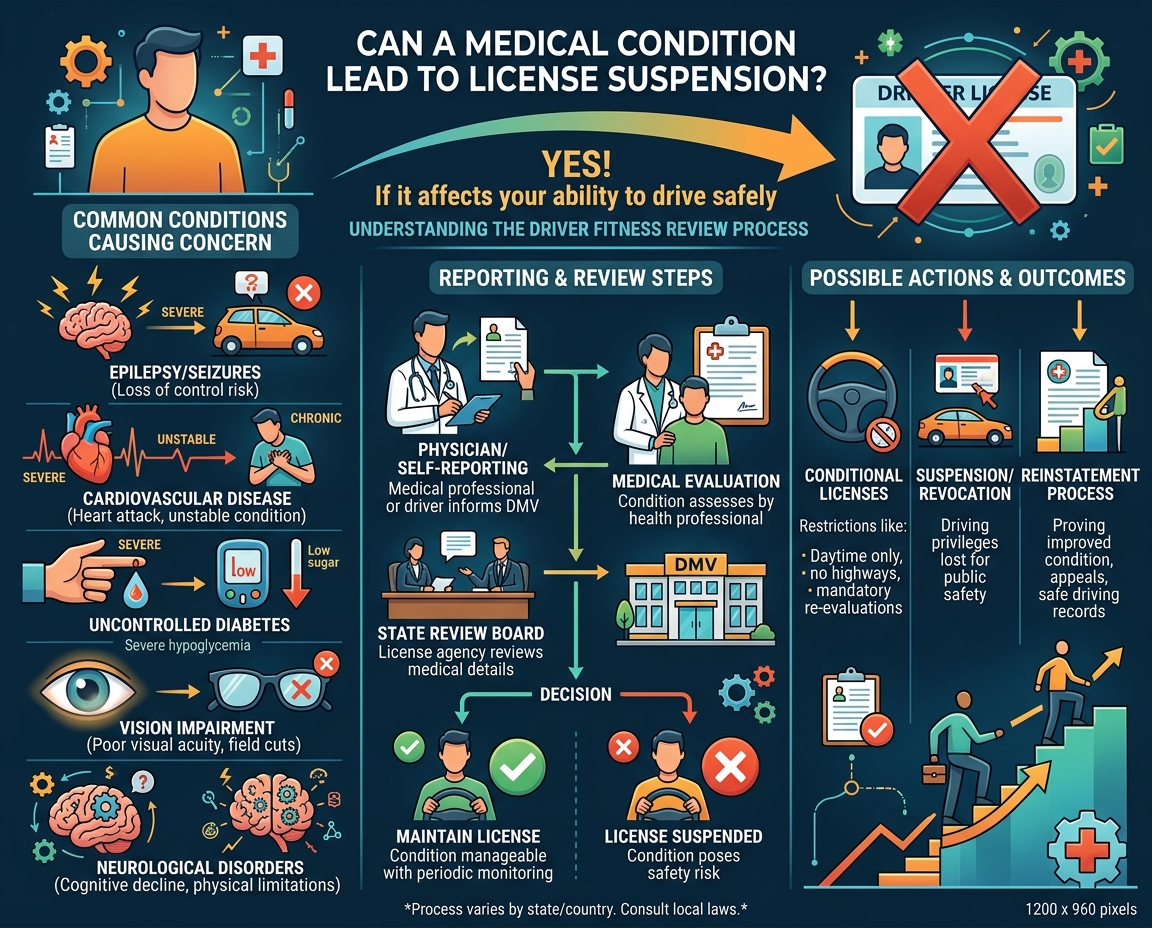
Yes, a medical condition can cause your driver’s license to be suspended or revoked in California if the Department of Motor Vehicles (DMV) determines that you cannot safely operate a vehicle. However, having a medical diagnosis does not automatically mean you will lose your driving privileges. The DMV evaluates how a condition affects driving ability and may consider medical evidence, impose restrictions, or take licensing action when necessary.
Losing your license can make it difficult to work, attend appointments, and manage daily responsibilities. Understanding California’s medical driving rules can help you protect your rights and respond appropriately if the DMV questions your ability to drive.
What Medical Conditions Can Cause a License Suspension in California?
Medical conditions that impair consciousness, vision, coordination, judgment, or reaction time may lead to a California DMV review. The DMV focuses on whether a condition creates a risk to safe driving rather than simply whether a person has a particular diagnosis.
Conditions that may prompt a medical review include:
- Seizures and epilepsy: Episodes that affect awareness or physical control may interfere with safe driving.
- Diabetes: Severe hypoglycemia can impair judgment, coordination, or consciousness.
- Heart conditions: Certain cardiac problems can cause fainting or sudden incapacitation.
- Vision impairments: Significant vision loss may prevent a driver from meeting California’s vision requirements.
- Dementia and cognitive disorders: Impaired memory, judgment, or decision-making may affect driving ability.
- Neurological conditions: Some disorders can affect muscle control, coordination, or awareness.
- Mental health conditions: Symptoms that substantially impair judgment or behavioral control may raise safety concerns.
- Medication side effects: Drowsiness, confusion, blurred vision, or slowed reaction time may make driving unsafe.
These conditions do not automatically result in a suspension. The DMV considers the severity of symptoms, treatment effectiveness, medical stability, and the driver’s ability to operate a vehicle safely.
Can the California DMV Suspend Your License Just Because You Have a Medical Condition?
No. A diagnosis alone does not automatically justify a license suspension in every case. The DMV evaluates the available information to determine whether the condition affects driving safety.
California Vehicle Code Sections 12806 and 12809 address circumstances in which the DMV may refuse to issue or renew a driver’s license. Other provisions, including Sections 13800 and 12818, authorize investigations and reexaminations when a driver’s physical or mental condition may affect safe driving.
Depending on the circumstances, the DMV may:
- Request medical records or a physician’s evaluation.
- Require a medical reexamination or driving test.
- Allow the driver to continue driving without changes.
- Impose driving restrictions or medical probation.
- Suspend or revoke the driver’s license.
For example, a driver with a controlled medical condition may be permitted to continue driving if the available evidence supports safe operation. A driver experiencing unpredictable episodes of unconsciousness may face greater restrictions because of the risk of sudden impairment.
How Does the California DMV Find Out About a Medical Condition?
The DMV may receive information about a medical condition through licensing procedures, law enforcement referrals, driving incidents, or medical reports.
California Health and Safety Code Section 103900 addresses mandatory reporting of certain disorders characterized by lapses of consciousness, subject to applicable statutory requirements and exceptions.
A report does not automatically mean the driver’s license will be suspended. The DMV evaluates the information and determines whether further investigation is necessary.
Drivers who receive a medical inquiry should read the notice carefully and provide accurate information within the required timeframe.
What Happens During a California DMV Medical Review?
A medical review helps the DMV determine whether a driver can safely operate a vehicle. The process varies depending on the medical condition and the information available.
1. The DMV Reviews Your Medical Information
The DMV may request medical records or a completed Driver Medical Evaluation form, commonly known as Form DS 326. The information may cover the condition, symptoms, treatment, and likelihood of future episodes that could affect driving.
2. You May Need to Complete Additional Testing
Depending on the circumstances, the DMV may require an interview, vision test, written knowledge test, or behind-the-wheel driving test.
3. The DMV Decides Whether Action Is Necessary
After reviewing the evidence, the DMV may allow you to keep driving, impose restrictions, require monitoring, or suspend or revoke your license.
The outcome depends on the individual circumstances and the applicable legal requirements.
What Are Your Legal Rights if Your License Is Suspended for Medical Reasons?
If the California DMV suspends or revokes your license because of a medical condition, you may have the right to challenge the decision through an administrative hearing.
Your available rights depend on the type of action taken and the notice you receive.
Can You Request a DMV Hearing?
California Vehicle Code Section 14100 provides a right to request a hearing for certain DMV actions, including qualifying suspension or revocation orders involving documented medical conditions or disabilities. The applicable deadline is generally 10 days after receiving notice of the qualifying order.
Read your notice immediately because missing a deadline may affect your ability to challenge the decision.
Can You Submit Medical Evidence?
Yes. You may be able to provide medical records, test results, and a physician’s assessment explaining how your condition is managed and whether it affects your ability to drive safely.
For example, a driver whose medical condition has improved with treatment may submit updated records addressing the DMV’s concerns. The DMV will evaluate the evidence, but submitting medical documentation does not guarantee that a suspension will be reversed.
Can You Challenge the DMV’s Decision?
Depending on the circumstances, you may be able to challenge inaccurate information, present evidence at a hearing, or seek further review through available legal procedures.
Consider consulting a California attorney if you are unsure about the deadline, the evidence required, or the options available in your case.
Important: Requesting a hearing does not automatically restore your driving privileges or stop every suspension. Under California Vehicle Code Section 13953, the DMV may take immediate action when a condition presents an immediate driving hazard or risk. Do not drive unless your license is legally valid.
Can the DMV Restrict Your License Instead of Suspending It?
Yes. In appropriate cases, the DMV may allow a driver to continue driving under restrictions or medical probation rather than suspend or revoke the license.
Depending on the driver’s needs and the applicable requirements, restrictions may include:
- Wearing corrective lenses.
- Driving only under specified conditions.
- Using required vehicle equipment.
- Providing updated medical information or attending follow-up evaluations.
Medical probation may require the driver or physician to provide updated medical information or comply with specified monitoring conditions.
Restrictions and probation are not available in every case. The DMV must determine whether they adequately address the safety concern.
How Can You Get Your License Reinstated After a Medical Suspension?
You may be able to regain your driving privileges by meeting the DMV’s requirements and providing sufficient evidence that the medical safety concern has been addressed.
The steps depend on the reason for the suspension and the conditions imposed by the DMV.
- Review your suspension notice. Identify the reason for the suspension, the reinstatement requirements, and any deadlines.
- Consult your healthcare provider. Discuss your condition, treatment, and ability to drive safely.
- Gather medical documentation. Obtain records that address the specific concerns identified by the DMV.
- Complete required evaluations. Attend any medical appointments, examinations, or hearings required by the department.
- Confirm your license status. Do not assume that submitting records automatically restores your driving privileges.
If the medical condition continues to create a significant safety risk, the DMV may keep the suspension in place.
What Should You Do if Your License Is Suspended for Medical Reasons?
If you receive a DMV notice concerning your medical fitness to drive, take the following steps:
- Check the deadline. Determine whether you must request a hearing or respond by a specific date.
- Read the notice carefully. Identify what information or action the DMV requires.
- Gather relevant medical records. Make sure the information addresses the condition and the concerns raised.
- Attend required appointments. Failure to comply with certain reexamination requirements may result in suspension.
- Verify your license status. Do not drive while your license is suspended or revoked.
- Consider legal guidance. A California attorney can help you understand your rights and available procedures.
Certain priority reexamination notices require drivers to contact DMV Driver Safety within five working days. Follow the instructions and deadline stated in your specific notice.
Frequently Asked Questions
1. Can a medical condition get your license suspended in California?
Yes. The DMV may suspend or revoke a license if a medical condition affects the driver’s ability to operate a vehicle safely. A diagnosis alone does not automatically result in suspension.
2. What medical conditions can cause a license suspension?
Conditions involving seizures, loss of consciousness, serious vision impairment, cognitive difficulties, or sudden incapacitation may prompt a DMV review. Medication side effects can also be relevant.
3. Can the DMV suspend my license without an accident?
Yes. The DMV may take action when the evidence indicates a driving safety risk, even if the driver has never caused an accident.
4. Can my doctor report my medical condition to the DMV?
Yes. California law requires reporting of certain disorders characterized by lapses of consciousness, subject to statutory requirements and exceptions. A report may prompt a review, but it does not automatically result in suspension.
5. How long does a medical license suspension last?
There is no standard suspension period for every medical condition. The duration depends on the circumstances, the DMV’s order, and whether the driver satisfies the applicable requirements for reinstatement.
6. Can I challenge a medical license suspension?
Yes. You may have the right to request an administrative hearing and submit evidence. Certain qualifying medical-condition suspension or revocation orders generally have a 10-day hearing request deadline after notice.
7. Can I get a restricted license instead?
Possibly. The DMV may allow restricted driving or medical probation when the evidence supports continued driving under specific conditions. This depends on the condition and the safety risks involved.
8. Do I need a lawyer to challenge a medical suspension?
You are not necessarily required to hire a lawyer for a DMV administrative hearing. However, a California attorney may help you understand the legal requirements, prepare evidence, and identify available review options.
Key Takeaways
- A medical condition can cause a license suspension in California, but a diagnosis alone does not automatically disqualify you from driving.
- The DMV evaluates whether the condition affects your ability to drive safely.
- Depending on the evidence, the DMV may request medical information, impose restrictions, or suspend or revoke your license.
- You may have the right to challenge a suspension through an administrative hearing.
- Hearing deadlines can be short, so read your DMV notice promptly.
- Reinstatement may require medical documentation, further evaluation, and compliance with DMV requirements.
Understand Your Legal Rights With Southwest Legal
A medical license suspension can disrupt your independence, work, and daily routine. Understanding why the DMV is taking action, what evidence may be relevant, and which deadlines apply can help you make informed decisions about your driving privileges.
Southwest Legal can help you understand the DMV process, clarify your legal options, and determine the next steps you may be able to take.
Contact us today for a free consultation to discuss your concerns, get a clearer understanding of the DMV process, and learn what legal options may be available for your situation.
Disclaimer: This article is for general informational purposes only and does not constitute legal advice or create an attorney-client relationship unless and until the firm and client enter into an agreement for legal services. Laws may change, and legal outcomes depend on the specific facts of each case. Consult a qualified attorney for advice regarding your situation.