


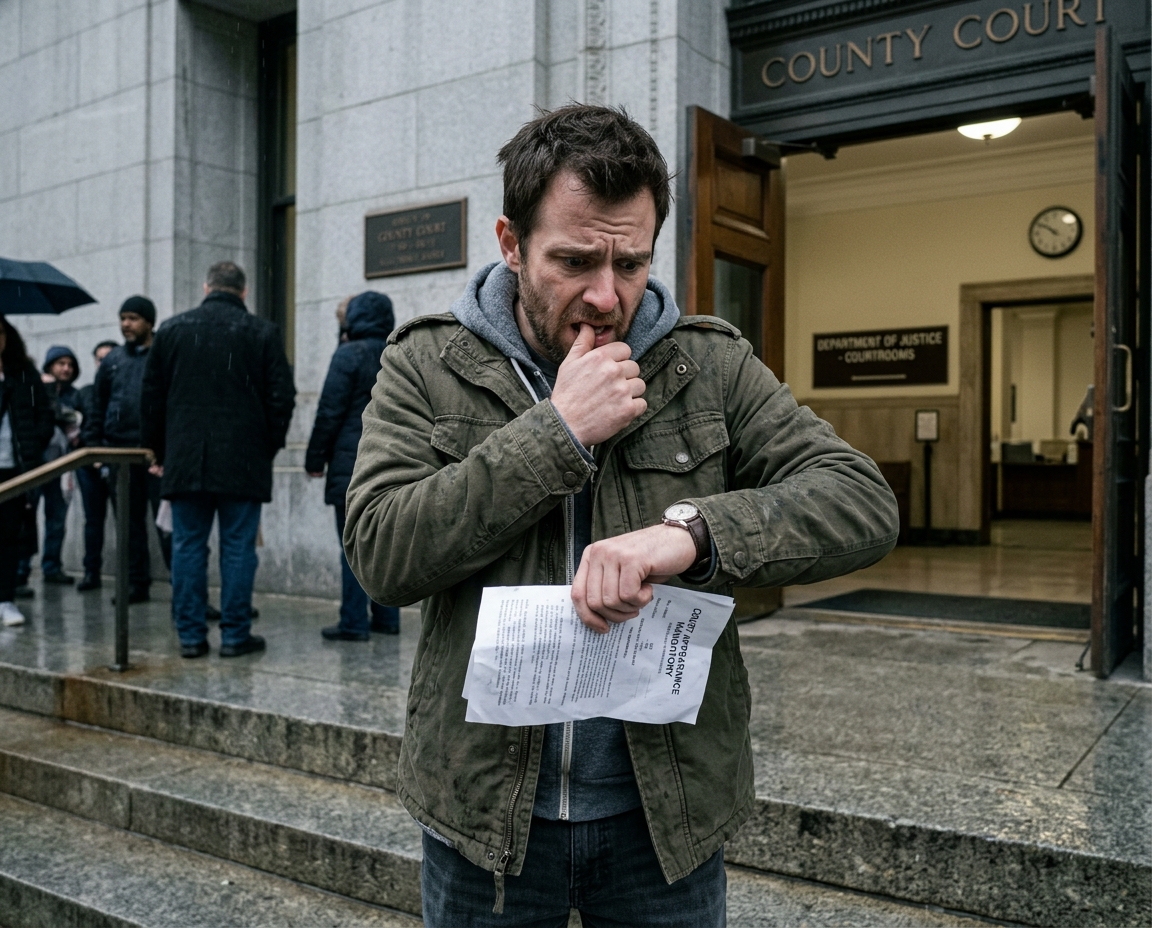
Missing a court appearance in California can be frightening. You may be wondering whether the judge will issue a warrant, whether you can get another court date, or whether there is anything you can say to explain why you were not there.
The answer depends on several factors, including the type of case, the reason you missed court, whether you received proper notice, what the judge did after you failed to appear, and how quickly you take steps to address the situation.
If you are asking, “What might convince a judge after I missed court?”, there is no explanation that guarantees a favorable result. However, a truthful explanation supported by credible evidence may help the court understand why you were unable to appear.
California law and court procedures also recognize certain circumstances that may constitute good cause in particular types of cases. The rules are not identical for criminal cases, traffic infractions, and other civil proceedings.
This article explains what generally matters after a missed court appearance in California and what factors may help demonstrate that your failure to appear was not intentional.
What Happens If You Miss a Court Date in California?
The consequences of missing court depend on the type of case.
In a criminal case, the court may issue a bench warrant when a defendant fails to appear as required. Depending on the circumstances, a failure to appear can also create additional legal consequences.
In traffic and other infraction matters, a missed appearance can lead to a civil assessment and other consequences depending on the case and the court’s orders.
A person who misses a criminal hearing should not assume that the same rules apply to a traffic ticket.
What Might Convince a Judge That You Had Good Cause?
A judge generally needs a legitimate basis for excusing a missed appearance or granting a request for relief. The specific standard depends on the type of proceeding.
In certain California infraction proceedings, the rules identify circumstances such as hospitalization, incapacitation, incarceration, required military duty, certain serious family emergencies, caregiver responsibilities, and extraordinary circumstances beyond the person’s control as examples that may support good cause.
Other types of cases have their own standards.
The strongest explanations are generally those that are:
- Truthful
- Specific
- Supported by reliable documentation when appropriate
- Consistent with the court record
- Connected to circumstances that genuinely prevented the person from appearing
- Addressed promptly after the missed hearing
None of these factors guarantees that a judge will excuse the missed appearance.
1. A Serious Medical Emergency
A medical emergency may be an important explanation for missing court, particularly when the emergency made it physically impossible to attend.
For example, suppose you were scheduled to appear in court in the morning but suffered a serious medical emergency several hours beforehand and were taken to a hospital. If you were unable to communicate with the court or arrange for someone to notify the court, the circumstances may be relevant when the court considers what happened.
Documentation can be particularly important in this situation.
Depending on the circumstances, records might establish:
- When the emergency occurred
- When you were admitted for treatment
- Whether you were incapacitated
- When you were released or became able to communicate
The fact that someone was sick does not automatically excuse a missed appearance. The circumstances must be considered in light of the type of case and applicable court rules.
2. Hospitalization or Incapacitation
Hospitalization and incapacitation are specifically recognized as potential good-cause circumstances in certain California infraction proceedings.
Consider an example where a person has a mandatory court appearance but is unexpectedly hospitalized and physically unable to travel to court.
That situation is substantially different from simply deciding not to attend.
If possible, documentation should accurately establish why the person could not appear and the relevant dates.
It is also important not to assume that a medical issue automatically eliminates every consequence of a missed appearance. The court may still require a formal request, petition, motion, or appearance before deciding what relief is available.
3. A Serious Family Emergency
A serious emergency involving an immediate family member or dependent may also be relevant.
For example, imagine that a parent is scheduled to appear in court but their child is suddenly hospitalized that morning. If the parent is the child’s necessary caregiver and there is no reasonable opportunity to make alternative arrangements, the circumstances may be relevant to the judge’s decision.
California rules applicable to certain infraction cases specifically recognize certain family emergencies and caregiver responsibilities as potential good-cause circumstances.
The key is to explain what actually happened rather than simply stating that there was a “family emergency.”
A clear explanation might identify:
- Who experienced the emergency
- When it occurred
- Why your presence was necessary
- Why you could not reasonably attend court
- Whether you notified the court when possible
4. Incarceration
Being incarcerated can also be relevant to a missed court appearance.
For example, someone may be required to appear in one court while being held in custody elsewhere. Whether that circumstance excuses the absence depends on the facts and the applicable procedure.
California rules governing certain infraction matters identify incarceration as a circumstance that may support good cause.
If incarceration prevented the appearance, records concerning custody and the relevant dates may help establish what occurred.
5. Required Military Duty
Required military duty may provide a legitimate explanation in circumstances where it prevented a person from attending court.
California’s rules for certain infraction matters specifically identify required military duty as a possible good-cause circumstance.
As with other explanations, documentation may be important. The issue is not simply whether someone serves in the military, but whether a specific military obligation prevented the person from appearing as required.
6. An Extraordinary Circumstance Beyond Your Control
Not every legitimate emergency fits neatly into one category.
California court rules applicable to certain infraction proceedings also recognize extraordinary circumstances beyond a person’s control as a possible basis for good cause.
For example, a sudden and serious event that could not reasonably have been anticipated or prevented may be relevant.
However, ordinary inconvenience is generally different from an extraordinary circumstance.
Being busy at work, forgetting the date, having difficulty arranging transportation, or having another appointment may not carry the same weight as a documented emergency that genuinely made attendance impossible.
The judge will evaluate the circumstances under the rules applicable to the particular proceeding.
What If You Simply Forgot Your Court Date?
Forgetting a court date can be a difficult explanation because attending court is generally the person’s responsibility once they have been properly notified.
That does not mean you should ignore the situation.
If you discover that you missed court because you forgot the date, the safest approach is to address the matter promptly and honestly.
Do not create a medical emergency, family emergency, or other explanation simply because you believe it will sound more convincing.
A false explanation can create additional problems and may undermine your credibility.
Instead, determine what happened in court and find out what procedure applies to your case.
What If You Never Received Notice of the Hearing?
Failure to receive proper notice can be an important issue.
For example, a person may have moved, experienced a problem with mail, or otherwise never received information about a scheduled proceeding.
Under California law, if the court failed to send the notic to your last known address, or if an administrative error occurred, this may constitute good cause to vacate a warrant or civil assessment.
However, if you moved and failed to update your address with the DMV or court as required by law, the court may rule that you received “constructive notice” and hold your responsible for the missed date.
Does Evidence Help After Missing Court?
It can.
A judge must often determine whether a person’s explanation is credible. Supporting documentation can help establish the facts.
Depending on the situation, useful documentation could include:
- Hospital or medical records
- Proof of incarceration
- Military-duty records
- Documentation concerning a serious family emergency
- Records supporting a claim that notice was not received
- Court notices and correspondence
- Documents establishing when you learned about the missed hearing
- Other reliable records showing why you could not attend
The goal is not to submit unnecessary paperwork. The goal is to provide reliable evidence that helps explain what happened, when it happened, and why it prevented you from appearing.
What Should You Tell the Judge After Missing Court?
A judge may want to know:
- Why did you miss court?
- Did you know about the hearing?
- What prevented you from attending?
- Was the situation within your control?
- When did you learn that you had missed the hearing?
- What did you do after learning about it?
- Do you have documentation supporting your explanation?
The best approach is generally to be respectful, direct, and truthful.
For example, a person who experienced a documented medical emergency can explain what happened and provide supporting documentation.
A person who simply forgot the date should not manufacture a medical emergency. The explanation may be less compelling, but honesty is still important.
Can a Missed Court Date Result in a Bench Warrant?
Yes, in appropriate criminal cases, a judge may issue a bench warrant after a defendant fails to appear as required.
A bench warrant is an order authorizing law enforcement to arrest the person named in the warrant.
However, not every missed court appearance automatically results in a warrant.
The consequences depend on the type of proceeding, the reason for the hearing, the defendant’s status, applicable law, and the judge’s actions.
If you missed a criminal court date, it is important to find out what happened rather than assuming that no warrant was issued.
If you have an attorney, contacting the attorney promptly may help determine the current status of the case and what procedures are available.
Can a Judge Recall or Clear a Bench Warrant?
Potentially, but there is no universal procedure that applies to every California case.
Depending on the circumstances, the court may have procedures for addressing a warrant, requesting a new hearing, or asking the court to take other action.
The appropriate procedure can depend on the county, the type of criminal case, the reason for the missed appearance, and whether the person is represented by counsel.
A person should not assume that simply walking into a courthouse will automatically resolve an outstanding warrant.
Before taking action, it can be important to determine the status of the case and understand the procedure that applies.
What Happens If You Missed Traffic Court?
Traffic and infraction cases have their own rules.
A failure to appear or failure to resolve a traffic matter can result in a civil assessment and other consequences.
California’s rules provide procedures for certain defendants to ask the court to vacate a civil assessment based on good cause. The rules identify several circumstances that may qualify as good cause, including hospitalization, incapacitation, incarceration, military duty, certain family emergencies, caregiver responsibilities, and extraordinary circumstances beyond the person’s control.
There are also procedures that may allow the court to address the underlying infraction.
Importantly, a person should not assume that paying a civil assessment automatically resolves every issue associated with the underlying case.
If you missed traffic court, determine exactly what the court has ordered and what deadlines apply before deciding what to do next.
What Makes an Explanation More Persuasive?
Although no explanation guarantees a particular result, certain qualities can make the circumstances easier for a judge to evaluate.
Be truthful
Never invent facts.
If you forgot the hearing, say so rather than creating an emergency that did not happen.
Be specific
Explain the relevant facts and dates instead of simply saying that you had a “good reason.”
Provide documentation
When documentation exists, it can help verify the explanation.
Act promptly
Waiting weeks or months before addressing the missed appearance can create additional complications.
Take responsibility
Showing that you understand the importance of appearing in court and are taking reasonable steps to address the problem can help present the circumstances clearly.
Follow the correct procedure
A convincing explanation does not replace the legal procedure required to ask the court for relief.
You may need to file a form, motion, petition, or other request, depending on the case.
What Should You Do Immediately After Missing Court?
If you realize that you missed a California court appearance, consider these general steps.
1. Confirm the case information
Find the courthouse, case number, hearing date, department, and type of proceeding.
2. Find out what happened
Determine whether the court issued a warrant, entered a judgment, imposed a civil assessment, continued the matter, or took another action.
3. Review any notices you received
Look for information about new dates, deadlines, warrants, assessments, or instructions from the court.
4. Gather evidence
If an emergency caused you to miss court, collect documentation that accurately establishes the circumstances.
5. Determine the applicable procedure
The correct response may be different for a criminal case, traffic infraction, small claims case, family law matter, or other civil proceeding.
6. Address the matter promptly
Do not assume that the problem will disappear on its own.
7. Consider speaking with a California attorney
If the consequences could include arrest, a judgment, significant financial penalties, or other serious legal consequences, professional legal guidance may help you understand the available options.
What Should You Avoid After Missing Court?
A few common mistakes can make the situation more difficult.
Do not ignore the missed appearance. Waiting may allow additional consequences or deadlines to arise.
Do not assume there is no warrant because you have not been arrested. A warrant may exist even if law enforcement has not contacted you.
Do not invent an excuse. False statements can seriously undermine your credibility.
Do not assume every case follows the same rules. Criminal, traffic, small claims, family law, and other civil matters have different procedures.
Do not assume that paying a fee resolves the entire case. Depending on the proceeding, additional action may still be necessary.
Do not miss another court date. Once you learn about a new hearing, take reasonable steps to attend or seek a continuance when legally available.
Frequently Asked Questions
Can I explain to the judge why I missed court?
In many situations, there is a procedure through which you can explain why you failed to appear or ask the court for appropriate relief. The specific procedure depends on the type of case and what happened at the missed hearing.
What is considered good cause for missing court in California?
There is no single definition that applies to every California court proceeding.
For certain infraction matters, California rules identify circumstances such as hospitalization, incapacitation, incarceration, required military duty, certain family emergencies, caregiver responsibilities, and extraordinary circumstances beyond a person’s control as circumstances that may support good cause.
Other types of cases have different legal standards.
Will a judge forgive me if I forgot my court date?
There is no guarantee.
Forgetting a court date may be less persuasive than a documented emergency that made attendance impossible. Nevertheless, the appropriate response is to address the missed appearance promptly and truthfully.
Can missing court result in a warrant?
Yes. In a criminal case, a judge may issue a bench warrant after a required appearance is missed.
However, not every missed court appearance automatically results in a warrant.
Can I get a new court date?
Sometimes.
Whether you can obtain a new date depends on the type of case, what happened at the missed hearing, applicable deadlines, and the procedure established by the court.
What if I had a medical emergency?
A genuine medical emergency may be relevant to whether the court finds good cause or grants other relief, depending on the proceeding.
Documentation may help establish the nature and timing of the emergency.
What if I never received the court notice?
If you genuinely did not receive notice, explain the circumstances and determine whether the court’s notice requirements were satisfied.
Do not assume that saying you did not receive the notice automatically cancels the consequences of missing court.
Is a missed court date the same as being found guilty?
No.
Failing to appear and the underlying charge or claim are separate issues, although a missed appearance can lead to significant consequences depending on the case.
Should I contact the court after missing my hearing?
Generally, promptly determining the status of the case is important. The correct method of addressing the missed appearance varies by court and case type.
If you have a defense attorney, contact the defense attorney promptly.
Final Takeaway
If you missed a court appearance in California, the most important thing is to determine what happened and address the matter promptly.
A judge may give serious consideration to a legitimate explanation, particularly when the circumstances genuinely prevented you from appearing and can be supported by credible evidence. Medical emergencies, hospitalization, incarceration, military obligations, certain serious family emergencies, caregiver responsibilities, and extraordinary circumstances may be relevant in appropriate proceedings.
But there is no guaranteed excuse and no single procedure for every missed court date.
The right next step depends on whether you are dealing with a criminal case, traffic infraction, or another type of proceeding. The consequences can also depend on whether the court issued a warrant, entered a judgment, imposed a civil assessment, or set another hearing.
The most important things to remember are simple: be truthful, act promptly, preserve supporting documentation, determine what the court has already done, and follow the procedure that applies to your particular case.
Contact Southwest Legal
Need Help After Missing a California Court Appearance?
A missed court date can leave you unsure about whether a warrant was issued, whether a judgment was entered, or what you need to do next. Getting a clear understanding of your legal situation can help you make informed decisions before the problem becomes more complicated.
If you have missed a California court appearance and are concerned about the consequences, Southwest Legal is here to help you understand your options.
Contact us today for a free consultation to discuss your situation, learn what steps may be available, and move forward with greater clarity and confidence.
A consultation does not guarantee a particular outcome, but it can provide an opportunity to discuss the circumstances of your missed appearance and understand the legal process that may apply.
Disclaimer: This article is for general informational purposes only and does not constitute legal advice or create an attorney-client relationship unless and until the firm and client enter into an agreement for legal services. Laws may change, and legal outcomes depend on the specific facts of each case. Consult a qualified attorney for advice regarding your situation.