


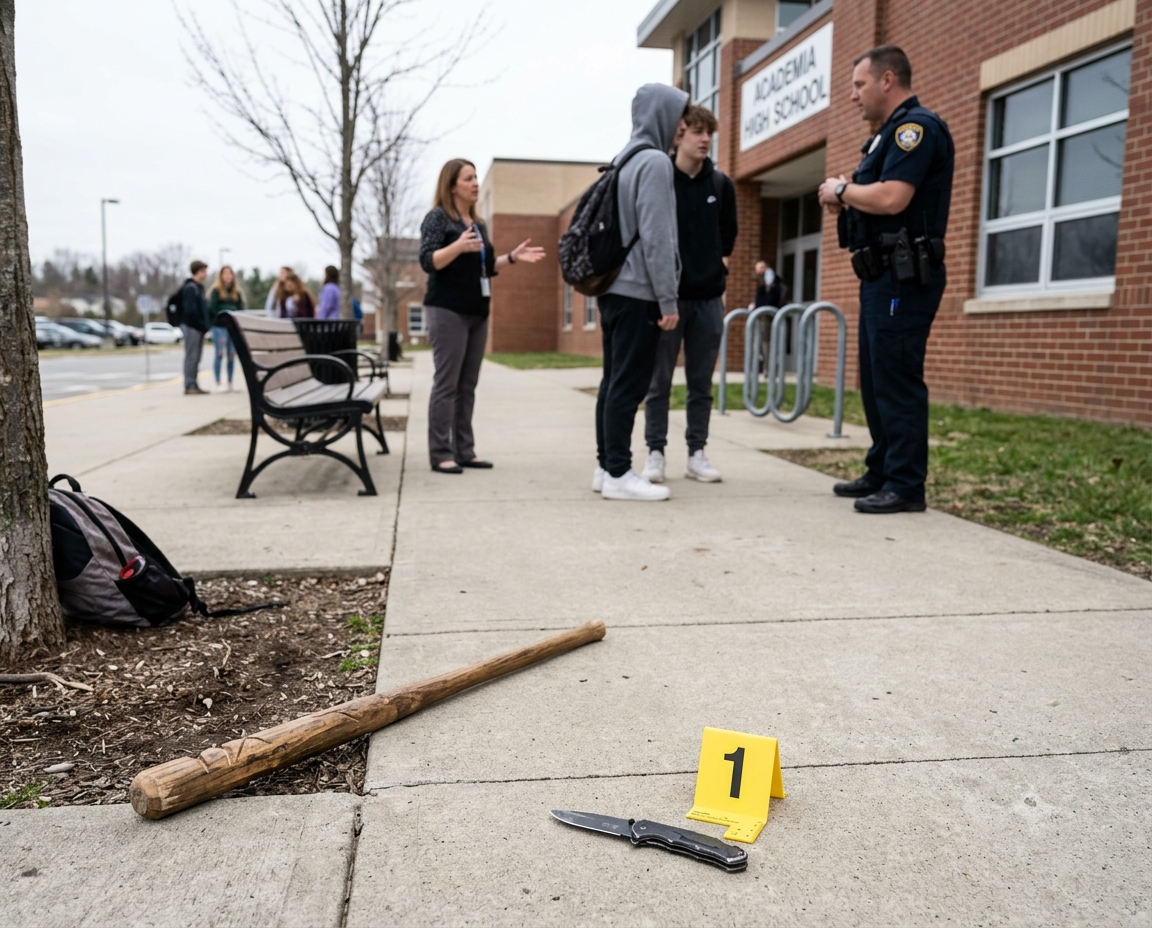
California has some of the strictest school safety laws in the United States, and one of the most important is California Penal Code § 626.10. This law makes it illegal to bring or possess certain weapons on school grounds or school-related activities.
If you are searching for information like “Can I carry a knife on school property?”, “What weapons are illegal in California schools?”, or “What happens if you bring a weapon to school?”, this guide explains everything in simple, accurate terms.
This article covers what the law means, what items are prohibited, penalties, exceptions, and frequently asked questions.
What Is California Penal Code § 626.10?
California Penal Code § 626.10 is a criminal law that prohibits possessing or bringing specific weapons onto school grounds or school-related activities. The purpose of the law is to maintain a safe environment for students, teachers, staff, and visitors.
In general, the law applies to:
- Elementary schools
- Middle schools
- High schools
- Private schools
- School events and activities
- Certain school parking areas and facilities
Under this law, it does not matter whether the weapon is:
- Visible or hidden
- Carried on your body or inside a bag
- Stored in a vehicle on school property
Simply having the weapon on school grounds can be enough for a violation.
What Weapons Are Prohibited?
California Penal Code § 626.10 specifically prohibits several categories of weapons, including:
1. Dirks and Daggers
These are stabbing weapons or knives that can be used to cause serious injury. Even if carried for self-defense, they are generally prohibited on school grounds.
2. Ice Picks and Sharp Stabbing Tools
Any pointed instrument designed or capable of stabbing is restricted under this law.
3. Certain Knives
The law covers multiple types of knives, including:
- Fixed-blade knives
- Folding knives in certain conditions
- Knives that can be used as stabbing weapons
- Utility knives or box cutters in some cases
Even small knives can become illegal depending on intent and circumstances.
4. Razor Blades and Straight Razors
Loose razor blades or unprotected razors are prohibited due to their potential to cause harm.
5. Stun Guns and Tasers
Electronic weapons such as stun guns and Tasers are also prohibited on school grounds.
6. Other Dangerous or Improvised Weapons
The law also includes a broad category for any object that can be used to inflict serious injury if carried with harmful intent.
This means everyday items can potentially become illegal if used or intended as weapons.
Where Does the Law Apply?
The law applies to any location used for school-related purposes, including:
- School campuses (K–12)
- Athletic fields and gymnasiums
- School parking lots
- School buses and transportation areas
- Off-campus school events
If the area is being used for educational purposes, the law generally applies.
Does This Law Apply to Colleges?
This statute primarily applies to K–12 schools. However, colleges and universities often have their own strict weapons policies.
Public universities and colleges may enforce separate rules, and violations can still lead to:
- Criminal charges under other laws
- Campus disciplinary action
- Arrest or removal from property
So even if § 626.10 is not the main statute used in college cases, weapons are still heavily restricted.
Penalties for Violating Penal Code § 626.10
Violating this law can be charged as either a misdemeanor or felony depending on the situation. This is known as a “wobbler” offense.
Misdemeanor Penalties:
- Up to 1 year in county jail
- Fines
- Probation
- Mandatory counseling or education programs
Felony Penalties:
- 16 months, 2 years, or 3 years in state prison
- Higher fines
- Formal probation conditions
Factors That Affect Charges:
- Type of weapon involved
- Whether it was used or displayed
- Criminal history
- Intent to use the weapon
- Location and circumstances
Legal Exceptions
There are limited situations where possession may be allowed:
1. Law Enforcement Officers
Police officers and authorized security personnel are exempt while performing official duties.
2. Authorized School Staff
Certain school employees may possess tools or items for work purposes if properly authorized.
3. Written Permission
In rare cases, school authorities may grant written permission for specific educational or authorized purposes.
4. Work-Related Tools (Limited Cases)
Some tools may be allowed if they are part of an approved work activity, but this is highly restricted on school grounds.
Common Misunderstandings
“I didn’t take it out, so it’s okay”
False. Possession alone is enough for a violation.
“Small knives are allowed”
Not necessarily. Even small knives can be illegal depending on context.
“I can carry for protection”
Self-defense is not a legal justification for carrying weapons on school property.
“It only applies during class hours”
Incorrect. It applies whenever the property is being used as a school facility.
Why This Law Exists
The purpose of Penal Code § 626.10 is to:
- Prevent violence in schools
- Protect students and staff
- Reduce the risk of injuries
- Maintain safe educational environments
California law prioritizes school safety, and this statute is part of a broader legal framework designed to prevent weapons-related incidents.
Related Laws
This law works alongside other California statutes that regulate:
- Firearms (strictly prohibited on school grounds under separate laws)
- Assault weapons
- Concealed carry restrictions
- School disturbance and safety violations
Together, these laws create a strict zero-tolerance approach to weapons in schools.
What to Do If You Are Charged
If someone is accused of violating this law, it is important to:
- Remain silent and avoid self-incrimination
- Contact a criminal defense attorney immediately
- Understand whether the charge is a misdemeanor or felony
- Preserve any relevant evidence or context
Possible defenses may include lack of knowledge, unlawful search, or lack of intent, depending on the case.
Frequently Asked Questions
Can I bring a pocket knife to school in California?
In most cases, no. Even small folding knives can violate the law.
What if I forgot a knife in my backpack?
Accidental possession can still lead to charges, though intent may affect how the case is handled.
Are tools like box cutters allowed?
Generally no, unless specifically authorized for a legitimate and approved purpose.
Can students carry self-defense items?
Most self-defense weapons are restricted or prohibited on school property.
Conclusion
California Penal Code § 626.10 is a strict school safety law designed to prevent weapons from entering educational environments. It covers a wide range of items, from obvious weapons like daggers and stun guns to everyday tools that may become illegal depending on use or intent.
Because penalties can be severe—including jail or prison time—it is essential to fully understand and comply with this law when entering any school property in California.
Contact Southwest Legal
If you or someone you know is facing charges related to weapons on school grounds under California law, the consequences can be serious and long-lasting. Every case depends on specific facts, intent, and legal circumstances.
For professional legal guidance, defense strategies, and case evaluation, contact Southwest Legal. Our legal team can help you understand your rights, evaluate your situation, and determine the best possible defense options under California law.
Disclaimer: This article is for general informational purposes only and does not constitute legal advice or create an attorney-client relationship. No attorney-client relationship is formed unless and until the firm and client enter into an agreement for legal services. Laws may change, and legal outcomes depend on the specific facts of each case. Consult a qualified attorney for advice regarding your situation.