


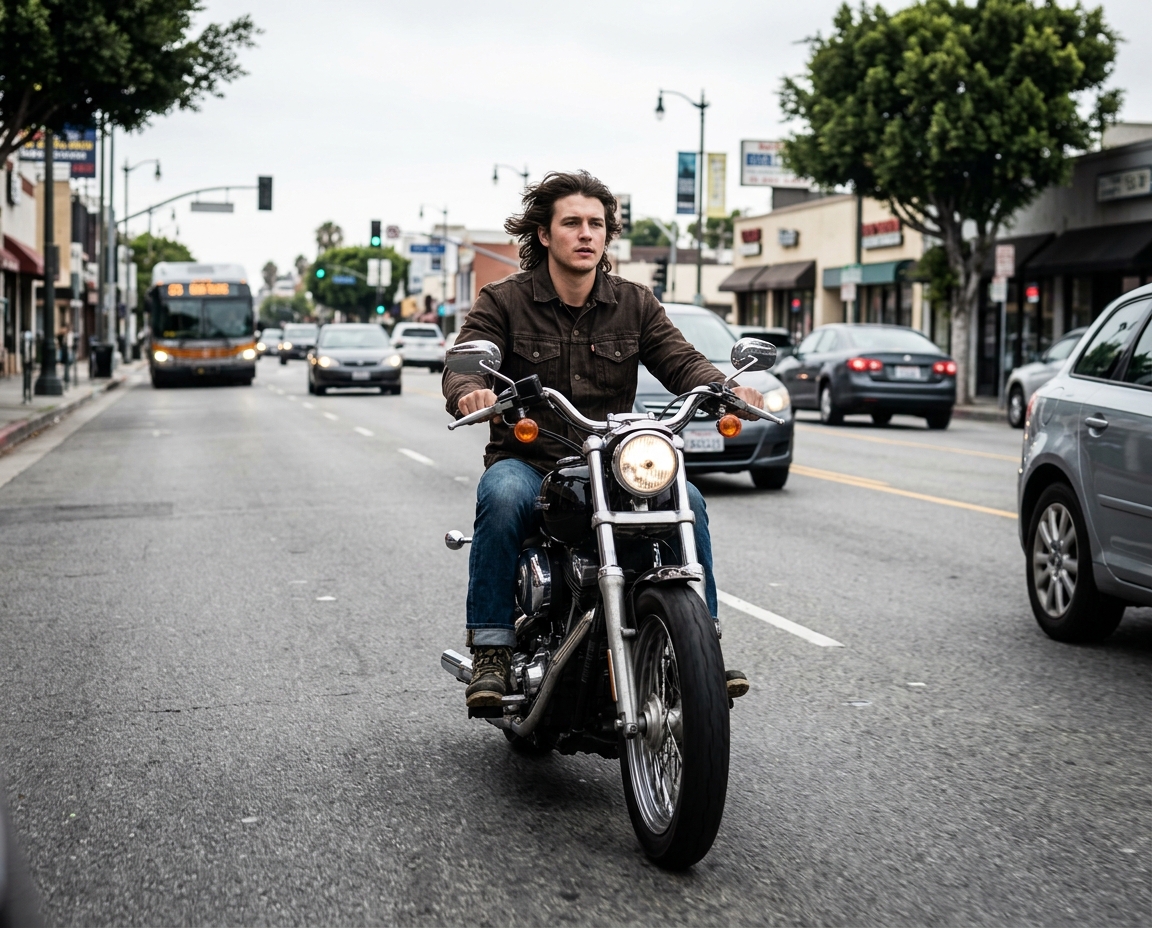
California has strict motorcycle helmet requirements designed to protect riders and passengers from serious injuries. California Vehicle Code § 27803 generally requires the driver and passengers of a motorcycle, motor-driven cycle, or motorized bicycle to wear a qualifying safety helmet when riding on a California highway.
Unlike some states that allow certain adults to ride without helmets, California’s general motorcycle helmet requirement applies broadly. A rider cannot avoid the requirement simply because the trip is short, the rider is experienced, or the person is over a particular age.
A violation can result in a traffic citation and monetary penalties. In some circumstances, a helmet violation may also be treated as a correctable infraction, although a rider should not assume that every citation qualifies for a fix-it procedure.
This article explains California Vehicle Code § 27803, including who must wear a helmet, what constitutes a properly worn helmet, helmet standards, possible penalties, exemptions, fix-it citations, and California motorcycle helmet law.
What Is California Vehicle Code § 27803?
California Vehicle Code § 27803 is the state’s primary statute governing motorcycle helmet use.
Under subdivision (a), a driver and any passenger must wear a safety helmet meeting the requirements established under Vehicle Code § 27802 when riding on a motorcycle, motor-driven cycle, or motorized bicycle.
Subdivision (b) makes it unlawful to operate a motorcycle, motor-driven cycle, or motorized bicycle if the driver or any passenger is not wearing the required safety helmet.
Subdivision (c) separately makes it unlawful for a passenger to ride when the driver or any passenger is not wearing the required helmet. Subdivision (d) specifies that the section applies to covered vehicles operated on highways.
In California law generally requires everyone riding a covered motorcycle-type vehicle on a highway to wear a qualifying helmet.
Who Has to Wear a Motorcycle Helmet in California?
California Vehicle Code § 27803 applies to both motorcycle operators and passengers.
This means:
- The motorcycle driver must wear a qualifying safety helmet.
- A passenger must wear a qualifying safety helmet.
- A driver cannot legally carry a passenger who is not wearing the required helmet.
- A passenger cannot simply choose to ride without a helmet because the driver is wearing one.
- The requirement applies to motorcycles, motor-driven cycles, and motorized bicycles covered by the statute.
The California Highway Patrol also identifies a DOT-compliant helmet requirement for motorcycles, motor-driven cycles, and motorized bicycles/mopeds.
Does a motorcycle passenger have to wear a helmet?
Yes.
This is one of the most common questions about California motorcycle helmet law. Vehicle Code § 27803 expressly applies to both the driver and passenger.
For example, suppose two people are traveling on a motorcycle. The driver is wearing a compliant helmet, but the passenger is not.
The driver cannot assume that the passenger is responsible only for their own safety. Section 27803(b) makes it unlawful to operate the vehicle if the driver or any passenger is not wearing the required helmet, while subdivision (c) separately addresses the passenger’s conduct.
What Does It Mean to “Wear” a Motorcycle Helmet?
California law does more than require a helmet to be somewhere on the rider’s body.
Vehicle Code § 27803(e) specifically defines what it means to “wear” a safety helmet. The helmet must:
- Meet the requirements of Vehicle Code § 27802.
- Be on the person’s head.
- Have the helmet straps fastened.
- Be the appropriate size and fit securely without excessive lateral or vertical movement.
This means putting a helmet loosely on your head without securing the straps may not satisfy the statutory requirement.
Example: An unfastened helmet
Imagine a motorcycle rider puts a compliant helmet on their head but leaves the chin strap hanging loose.
Even though the rider technically has a helmet on their head, California’s statutory definition specifically requires the helmet straps to be fastened. The way the helmet is worn therefore matters, not just whether the rider possesses a helmet.
What Type of Helmet Is Required in California?
Vehicle Code § 27802 authorizes California to establish safety helmet standards and expressly incorporates requirements imposed by Federal Motor Vehicle Safety Standard No. 218 (FMVSS 218). The statute also addresses labeling and manufacturer certification requirements.
The California Highway Patrol states that a helmet meeting FMVSS 218 and displaying the DOT emblem must be worn by riders of motorcycles, motor-driven cycles, and motorized bicycles/mopeds.
The important point is that a motorcycle helmet should not be selected merely because it looks like a motorcycle helmet. Riders should use equipment that complies with the applicable legal safety standards.
Does California Require Helmets on Short Motorcycle Trips?
Generally, yes.
California Vehicle Code § 27803 does not create a general exception for short trips.
A rider does not become exempt from the helmet requirement because the destination is only a few blocks away or because the rider expects to travel at a low speed.
Example: A two-minute ride
Suppose someone rides a motorcycle from home to a nearby convenience store. The rider decides not to wear a helmet because the trip will take less than two minutes.
The short distance does not by itself create an exception to § 27803. If the vehicle and circumstances fall within the statute, the helmet requirement still applies.
Is It Illegal to Ride a Motorcycle Without a Helmet in California?
Generally, yes.
Under Vehicle Code § 27803(b), it is unlawful to operate a motorcycle, motor-driven cycle, or motorized bicycle if the driver or any passenger is not wearing a safety helmet as required by subdivision (a).
This is why California is considered a mandatory motorcycle helmet state.
There is no general adult-age exception in § 27803 that allows someone to stop wearing a motorcycle helmet after turning 18, 21, or another particular age.
Does a Motorcycle Helmet Violation Add Points to Your Driving Record?
The 2026 Uniform Bail and Penalty Schedules list zero DMV points for the cited § 27803 helmet offenses.
That does not mean a rider should ignore the citation.
A person may still have a financial obligation or a requirement to respond to the citation. Other traffic violations arising from the same stop may also have different consequences.
The safest approach is to follow the citation’s instructions and determine what response is required by the court.
Can a Motorcycle Helmet Ticket Be a Fix-It Ticket?
Potentially, but this subject requires caution.
California case law has addressed whether a violation of Vehicle Code § 27803 can be treated as a correctable infraction, sometimes informally called a “fix-it ticket.”
In California Highway Patrol v. Superior Court (Quigley), the California Court of Appeal concluded that a § 27803 violation was potentially a correctable offense under the applicable statutory framework. However, the court also held that the particular violations before it were properly treated as standard citations because the circumstances supported the officers’ findings that the violations were not appropriate for correction.
This distinction is important.
A rider should not assume that purchasing a compliant helmet after receiving a citation automatically results in dismissal.
Whether a violation can be corrected may depend on the citation, the circumstances, applicable statutory requirements, and the court or issuing agency’s procedures.
What If I Was Wearing a Helmet but Received a Citation?
A rider may have questions about a helmet citation if they believe they were wearing a helmet at the time of the stop.
California law specifically addresses the manner in which the helmet must be worn. The helmet must be on the person’s head, properly secured with its straps, and appropriately sized so that it fits securely without excessive movement.
For example, questions could arise if:
- The rider was wearing a helmet but did not fasten the straps.
- The helmet did not fit securely.
- The rider was using a helmet that did not meet the applicable requirements.
- The rider disputes what the officer observed.
- The citation describes circumstances that the rider believes are inaccurate.
A person who disputes a citation should review the exact allegation and the applicable court procedures rather than assuming that the citation will automatically be dismissed.
Does California Vehicle Code § 27803 Apply to Electric Motorcycles?
It depends on how the vehicle is legally classified.
Not every electric two-wheeled vehicle is legally considered a motorcycle for purposes of California Vehicle Code § 27803.
The California Highway Patrol distinguishes among motorcycles, motor-driven cycles, mopeds or motorized bicycles, electric bicycles, motorized scooters, and electrically motorized boards. Different categories have different helmet and operating requirements.
For example, CHP states that motorcycles, motor-driven cycles, and motorized bicycles/mopeds require a helmet meeting FMVSS 218 requirements, while electric bicycles and motorized scooters are subject to different bicycle-helmet requirements.
Consequently, the correct legal analysis may depend on the vehicle’s classification rather than simply whether the vehicle uses an electric motor.
Does California’s Motorcycle Helmet Law Apply to E-Bikes?
Not necessarily in the same way.
California treats electric bicycles separately from motorcycles and motorized bicycles. CHP explains that electric bicycles are subject to the bicycle provisions of the Vehicle Code. Under its current guidance, riders under 18 must wear a properly fitted and fastened bicycle helmet when riding an electric bicycle on a public roadway or bikeway.
This is different from the rule applicable to motorcycles, motor-driven cycles, and motorized bicycles under § 27803.
Therefore, an article that says “all electric two-wheelers are covered by California motorcycle helmet law” would be overly broad.
Does California Require a Helmet on a Motorized Scooter?
California’s motorized scooter rules are separate from § 27803.
The California Highway Patrol states that a properly fitted and fastened bicycle helmet is required when operating a motorized scooter.
That distinction matters because a motorized scooter is not automatically treated as a motorcycle simply because it has an electric motor.
When determining which helmet law applies, the vehicle’s statutory classification should be considered.
Is There an Exception to California’s Motorcycle Helmet Law?
Yes. Vehicle Code § 27803(f) contains a specific exception for certain fully enclosed three-wheeled motor vehicles.
The statutory exception applies when the vehicle:
- Is fully enclosed;
- Has three wheels;
- Is at least seven feet long;
- Is at least four feet wide;
- Has an unladen weight of at least 900 pounds; and
- Meets or exceeds applicable California Vehicle Code, federal motor vehicle safety, and applicable U.S. Department of Transportation and National Highway Traffic Safety Administration requirements.
This is a narrow statutory exception and should not be interpreted as a general exemption for ordinary three-wheeled motorcycles or other open vehicles.
A three-wheeled vehicle does not automatically qualify merely because it has three wheels.
What Happens If You Get a Motorcycle Helmet Citation?
The citation should be reviewed carefully for the specific Vehicle Code section, alleged violation, response deadline, and instructions from the issuing court.
Depending on the circumstances, a rider may have different procedural options, which can include paying the applicable amount, appearing in court, or seeking to address a potentially correctable violation where the law and citation permit it.
A person should not assume that failing to respond will make the citation disappear. Under California court rules, bail and penalties can have consequences if forfeited or otherwise handled as provided by law.
If the citation is disputed or involves unusual circumstances, legal guidance may help the rider understand the available procedures.
What Happens If You Get Into a Motorcycle Accident Without a Helmet?
A motorcycle helmet violation and an accident claim are not necessarily the same legal issue.
For example, imagine a motorcyclist is struck by another vehicle at an intersection while not wearing a required helmet.
The fact that the motorcycle rider may have violated § 27803 does not, by itself, establish that the rider caused the collision. At the same time, helmet use could potentially become relevant to questions concerning injuries, causation, damages, or comparative responsibility, depending on the facts and the claims being made.
This is an important distinction.
A helmet violation does not automatically mean that another driver’s responsibility for causing a crash disappears.
Likewise, the fact that another driver caused a collision does not eliminate the rider’s separate obligation to comply with California’s helmet law.
Motorcycle accident cases can involve multiple legal questions, including negligence, causation, insurance coverage, damages, and comparative fault. The relevance of helmet use can depend on the specific facts and the type of claim involved.
Examples of California Vehicle Code § 27803 Violations
Example 1: Riding without any helmet
A rider operates a motorcycle on a California highway without wearing a safety helmet.
This is the most straightforward example of conduct covered by § 27803.
Example 2: Passenger without a helmet
A driver wears a compliant helmet, but the passenger does not.
Section 27803 applies to both people. The driver and passenger are not treated as though the passenger’s helmet requirement disappears simply because the driver is wearing one.
Example 3: Helmet on the head but not fastened
A rider puts a helmet on their head but leaves the straps unfastened.
California’s statutory definition of “wearing” a safety helmet specifically requires the helmet straps to be fastened.
Example 4: Helmet that moves excessively
A rider wears a helmet that is too large and moves substantially from side to side or up and down.
Section 27803(e) requires the helmet to be appropriately sized and to fit securely without excessive lateral or vertical movement.
Example 5: Short trip without a helmet
A rider decides to travel only one or two blocks without a helmet.
The short distance does not create a general exception to § 27803.
Example 6: Three-wheeled enclosed vehicle
A person operates a fully enclosed three-wheeled motor vehicle that satisfies all of the specific requirements in § 27803(f).
This is the type of unusual vehicle for which the statute expressly provides an exception. The exception should not be assumed to cover ordinary three-wheeled motorcycles.
Frequently Asked Questions
Is California a mandatory motorcycle helmet state?
Yes. California generally requires motorcycle drivers and passengers to wear qualifying safety helmets when riding covered vehicles on highways.
Can I ride a motorcycle without a helmet if I am over 21?
Generally, no. California Vehicle Code § 27803 does not provide a general age-based exemption allowing adults over 21 to ride motorcycles without helmets.
Does a motorcycle passenger have to wear a helmet in California?
Yes. The statute expressly requires the driver and any passenger to wear the required safety helmet.
Does the helmet have to be strapped?
Yes. California’s statutory definition of wearing a safety helmet requires the helmet straps to be fastened.
Does the helmet have to fit properly?
Yes. Section 27803(e) requires the helmet to fit securely without excessive lateral or vertical movement.
Is riding without a helmet a misdemeanor in California?
A § 27803 helmet violation is handled as an infraction in the applicable traffic penalty schedules, rather than as a misdemeanor, and the 2026 schedules identify zero DMV points for the listed § 27803 offenses.
Other conduct associated with the same incident could potentially involve different laws and penalties.
Does a motorcycle helmet ticket put points on your license?
The 2026 Uniform Bail and Penalty Schedules list zero DMV points for the identified § 27803 offenses.
Can a California motorcycle helmet ticket be dismissed if I buy a helmet afterward?
Not automatically. California case law has recognized that a § 27803 violation can potentially be correctable, but whether a particular citation qualifies for correction depends on the circumstances and applicable procedures.
Does a DOT sticker mean a helmet is legal?
California’s helmet requirements incorporate FMVSS 218, and CHP states that helmets for motorcycles, motor-driven cycles, and motorized bicycles/mopeds must meet the applicable federal standard and display the DOT emblem.
However, helmet compliance is not determined solely by appearance. Riders should use a helmet that meets the applicable safety requirements and ensure that it is properly worn under § 27803(e).
Does Vehicle Code § 27803 apply to e-bikes?
Not automatically. Electric bicycles are regulated separately from motorcycles and motorized bicycles. California’s helmet requirements for an electric bicycle depend on the applicable Vehicle Code provisions and the rider’s age.
Does Vehicle Code § 27803 apply to electric scooters?
Not necessarily. California regulates motorized scooters separately and requires a properly fitted and fastened bicycle helmet for their operation.
How Can Motorcycle Riders Avoid a Helmet Violation?
The simplest way to comply with California’s motorcycle helmet law is to make helmet use part of every ride.
Before riding:
- Use a helmet that meets the applicable legal safety requirements.
- Make sure the helmet fits securely.
- Fasten the helmet straps.
- Make sure every passenger is properly equipped.
- Do not assume that a short trip creates an exemption.
- Do not assume that being over a certain age eliminates California’s helmet requirement.
- If you receive a citation, review the citation and comply with its response instructions.
- If you believe the citation is incorrect or you are unsure about your options, consider obtaining legal guidance.
The California Highway Patrol also recommends additional protective equipment for motorcyclists, including eye protection, gloves, protective clothing, and appropriate footwear.
Why California’s Motorcycle Helmet Law Matters
California Vehicle Code § 27803 is relatively straightforward in its basic requirement, but questions can become more complicated when a rider receives a citation, disputes the alleged violation, operates a specialized vehicle, or is involved in a motorcycle collision.
The most important points to remember are:
- California generally requires motorcycle drivers and passengers to wear qualifying safety helmets.
- Vehicle Code § 27803 applies to motorcycles, motor-driven cycles, and motorized bicycles operated on highways.
- The helmet must be properly worn, including being on the rider’s head, secured with its straps, and properly fitted.
- California incorporates federal motorcycle helmet safety standards through Vehicle Code § 27802.
- The 2026 penalty schedules identify zero DMV points for the listed § 27803 helmet offenses.
- A helmet violation may potentially be correctable in some circumstances, but a rider should not assume that every citation qualifies for a fix-it procedure.
- There is a narrow statutory exception for certain fully enclosed, qualifying three-wheeled motor vehicles.
- Electric bicycles and motorized scooters are subject to separate legal classifications and helmet requirements.
- A helmet violation does not automatically determine responsibility for a motorcycle accident or eliminate another party’s potential liability.
Contact Southwest Legal
Need Guidance About a California Motorcycle Helmet Citation?
A motorcycle helmet citation may appear straightforward, but questions about the applicable Vehicle Code section, citation procedures, potential correction, court requirements, or a related motorcycle accident can involve additional legal considerations.
If you have received a citation under California Vehicle Code § 27803 or have questions about a motorcycle-related legal matter, consider speaking with a qualified legal professional who can evaluate the specific circumstances of your situation.
If you need guidance about California motorcycle helmet law or a related legal issue, Southwest Legal is here to help. Contact us today for a free consultation to discuss your questions with our legal team and learn more about your options.
Disclaimer: This article is for general informational purposes only and does not constitute legal advice or create an attorney-client relationship. No attorney-client relationship is formed unless and until the firm and client enter into an agreement for legal services. Laws may change, and legal outcomes depend on the specific facts of each case. Consult a qualified attorney for advice regarding your situation.